Tomato sunscald: 5 ways to protect Bekaa Valley crops
Once the afternoon thermometer in the Bekaa Valley crosses 86°F (30°C) and holds, every tomato left exposed on your vines becomes a write-off in waiting.
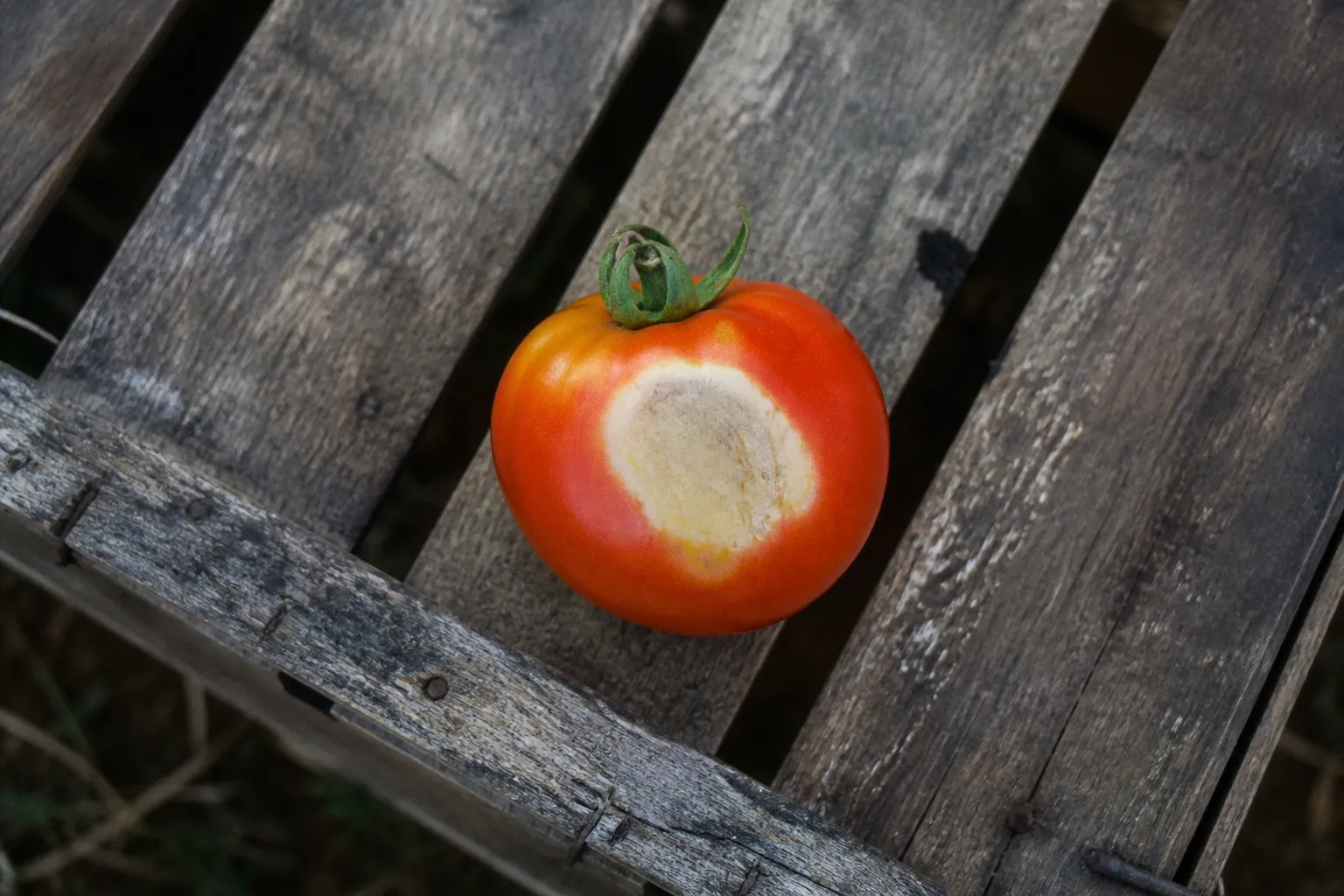
Sunscald is the white, papery, leathery lesion that appears on fruit skin after sustained direct solar radiation — and it doesn't announce itself in the field. You find it at grading, two days before harvest, on fruit you thought was export-grade. What looked like sound tonnage turns into culls. Contract weight falls short. The next buyer's spec sheet gets tighter.
For cooperative managers running summer plantings in the central Bekaa, this is the operational fault line of the season. The five tactics below are field-proven interventions you can deploy before the next heat spike. Some are cheap and same-day. Others need capex. All of them protect the same asset: the marketable skin of the tomato you're about to ship.
Sunscald is not a disease. There is no spray that reverses the damage. Your only leverage is prevention, applied before the temperature moves.
The Physiology: Why Bekaa Heat Damages Fruit
Sunscald is a non-infectious physiological disorder, not a fungus and not a virus. It happens when direct solar radiation strikes exposed fruit surfaces and the tissue temperature rises high enough to break down chlorophyll and rupture the epidermal cells. The visible result: pale yellow or white patches that turn papery as the fruit ripens, sometimes collapsing into secondary bacterial rot once the damaged tissue opens a path in.
Two thresholds govern field risk, and both are routine in any Bekaa summer:
- At sustained air temperatures above 86°F (30°C), sunburn risk on exposed fruit increases sharply. This is the canary in the mine — the moment protection stops being optional.
- At sustained air temperatures above 90–95°F (32–35°C), you also lose fruit set. Pollination fails, flowers drop, and yield collapses from the opposite side of the curve. You burn the current truss and lose the next one in parallel.
So the operational problem isn't a freak heat dome. It's a predictable summer pattern. Any afternoon that pushes the thermometer past those thresholds is a candidate day for sunscald damage on exposed fruit. The question is whether your canopy, your netting, and your spray program are doing their job when it does.
A second risk worth naming: once sunscald lesions open the fruit skin, opportunistic bacteria move in. What looks like a grading issue becomes a shelf-life issue at the receiving warehouse. Export buyers don't separate the two causes — they mark the lot down once and add you to a closer-scrutiny list for the next shipment.
Strategic Foliage Management and Pruning Discipline
Your leaf canopy is the first line of defense. The temptation after a heavy fruit load is to open the canopy up — more airflow, more light penetration, faster color. That instinct is exactly what creates a sunscald problem. Every leaf you remove between flowering and fruit sizing is one less shield between the fruit and the afternoon radiation.
Operational rules for the pruning shears:
- Don't over-prune. Keep the canopy intact through the fruit-development window. Airflow is good; defoliation is expensive. If you walk the rows and see green-mature fruit directly exposed to a 2 p.m. sun, you've already under-protected the lot.
- Time your pruning in the vegetative stage, not the reproductive stage. If you must prune to manage plant architecture, do it before fruit set. Once the green-mature fruit is sizing, the canopy it has is the canopy it needs to finish.
- Choose heavy-foliage cultivars when you build the next planting plan. Potato-leaved varieties and other dense-foliage types naturally shade developing fruit. If you're planting for the August–September export window, weigh cultivar choice toward canopy coverage, not just the yield numbers on the seed packet.
- Differentiate determinate from indeterminate. Determinate types set fruit in a narrower window and tolerate heavier early pruning. Indeterminate types need continuous canopy renewal through the season. A blanket pruning protocol across both will cost you yield on one side and sunscald on the other.
If the fruit is exposed by your hand, the sunscald is on you.
Deploying Reflective Barriers: Kaolin Clay and Shade Netting
When the canopy isn't enough — and during a long Bekaa afternoon, it often isn't — you need a physical barrier between the fruit and the incoming radiation.
Kaolin clay (commonly sold as Surround WP and similar products) is a reflective mineral particle film. Sprayed onto the canopy at the labeled rate, it dries to a white coating that reflects a portion of incoming UV and lowers leaf and fruit surface temperature. In practice, it reduces sunburn incidence on tomatoes when applied ahead of a heat event. The coating is not permanent — rain, overhead irrigation, and a fresh flush of growth all dilute or remove the protective layer. Treat it as a heat-event tool, not a one-pass program, and log every application with the date and weather conditions.
Shade netting is the structural answer and the heavier capex line item. Two specifications matter:
- 30% to 50% shade rating. This is the operational sweet spot. Higher shading cuts too much photosynthetic light and you'll bleed yield. Lower shading doesn't meaningfully reduce heat load on the fruit.
- Install above the canopy, on posts, with adequate ventilation between the net and the top of the plants so you don't trap heat in the air layer below. A shade net installed at canopy level is half a shade net.
- Frame spacing matters for the wind loads common in the Bekaa. A 30% net on a tight frame survives a shamal; a loose frame doesn't. Build for the wind, not for the brochure photo.
For cooperative blocks larger than half a hectare, shade netting is a capital decision, not a seasonal input. Make it before the first 35°C day, not after the first round of culls.
Irrigation and Mulching: Keeping the Canopy Functional
A heat-stressed plant drops leaves. A leafless plant has no canopy. A canopy-less plant has no protection. Your irrigation program is not just a watering program — it is a canopy-preservation program. Treat it that way in your weekly ops review.
Operational protocol:
- Drip or soaker hose at the base only. No overhead irrigation on fruit-bearing vines. Wet foliage invites Septoria leaf spot and early blight (Alternaria), both of which defoliate from the bottom up and expose the fruit load to direct sun exactly when you can least afford it.
- Maintain a 1-inch layer of organic mulch under the plants. Straw, chopped stalks, aged compost — anything that holds soil moisture and stops soil splash onto lower leaves. Mulch buys you two things at once: even soil moisture (which keeps transpiration steady under heat load) and a physical barrier against the fungal spores living in the topsoil.
- Water timing matters. Early morning irrigation lets the canopy transpire through the peak heat hours with a full soil-moisture buffer. Late afternoon overhead watering — a habit in some blocks for dust control — is the worst of both worlds: it wets foliage and pushes the canopy into the night wet, which is when fungal infection takes hold.
- Calibrate your drip lines before the heat, not during it. A clogged emitter in a heat wave is a sunscald risk on the vines it was supposed to water. Walk the lines weekly when fruit is sizing.
If you see a defoliation event starting — yellowing from the base, spotted leaves, leaf curl from whitefly — treat it as a sunscald risk before you treat it as a disease problem. Saving the leaf is cheaper than losing the fruit.
Pest and Disease Control as a Defense Against Defoliation
Every defoliating pest and every fungal outbreak is a sunscald multiplier. You may think you're fighting whitefly or early blight, but you are actually fighting the loss of the canopy that shades your fruit. Reframe the spray program accordingly, and your field team will stop treating canopy protection as a side task.
If-then protocol for the field tech:
- If you scout whitefly, aphids, or spider mites above threshold, treat within 48 hours. The visible damage isn't the sucking — it's the leaf curl and drop that follows. Once a leaf is gone, no insecticide brings it back.
- If you see early blight (Alternaria) or Septoria leaf spot in the lower canopy, get a protectant fungicide on the schedule before the infection climbs. Once 20–30% of the lower leaves are gone, the fruit load above is exposed. The next 35°C day then does the rest.
- If a dust storm or a localized hail event strips leaves, assume a sunscald emergency on the remaining fruit. Deploy kaolin clay or shade netting the same week. Don't wait for visible lesions on green fruit; by then the cull is already decided.
- If you're exporting under a buyer's protocol, document every spray pass and every scouting note. Sunscald culls at grading are often disputed. The spray and scouting log is your evidence that the field was managed, not abandoned. Photos dated and geotagged close the loop with the buyer's quality team.
Field Deployment Checklist — Before the Next Heat Spike
Run this list before each forecast heat event, not after the first round of culls. Sunscald does not give you a second pass on the same fruit.
- Canopy intact on fruit-bearing vines. No late-season pruning on plants carrying green-mature tomatoes.
- Kaolin clay on hand, label rate confirmed, last application date logged. Reapplication triggered by rain, overhead irrigation, or a new flush of growth.
- Shade netting installed at 30–50% rating, suspended above the canopy with ventilation clearance. No canopy-level installation. Frame rated for regional wind loads.
- Drip lines running at the base; no overhead irrigation scheduled. Early-morning cycle only. Emitters checked weekly.
- Mulch layer at 1-inch depth across the row, no bare soil showing. Topped up after any cultivation pass.
- Pest and disease scouting on a 48-hour response window, with thresholds written down and a treat/no-treat decision logged for each pass.
- Cultivar mix for the next planting weighted toward heavy-foliage types — potato-leaved or comparable dense-canopy varieties — for blocks facing the August–September export window.
If the list isn't green, you have time to make it green before the temperature does. Once the cull starts at the grading line, the season's economics are already moving against you.