Greenhouse heat stress: 5 ways to cool Lebanese crops
Summer reaches the Bekaa and the coastal plain early. By mid-morning in an unventilated polyethylene tunnel, the air can move past 40°C while the crop is still expected to set fruit, hold quality…
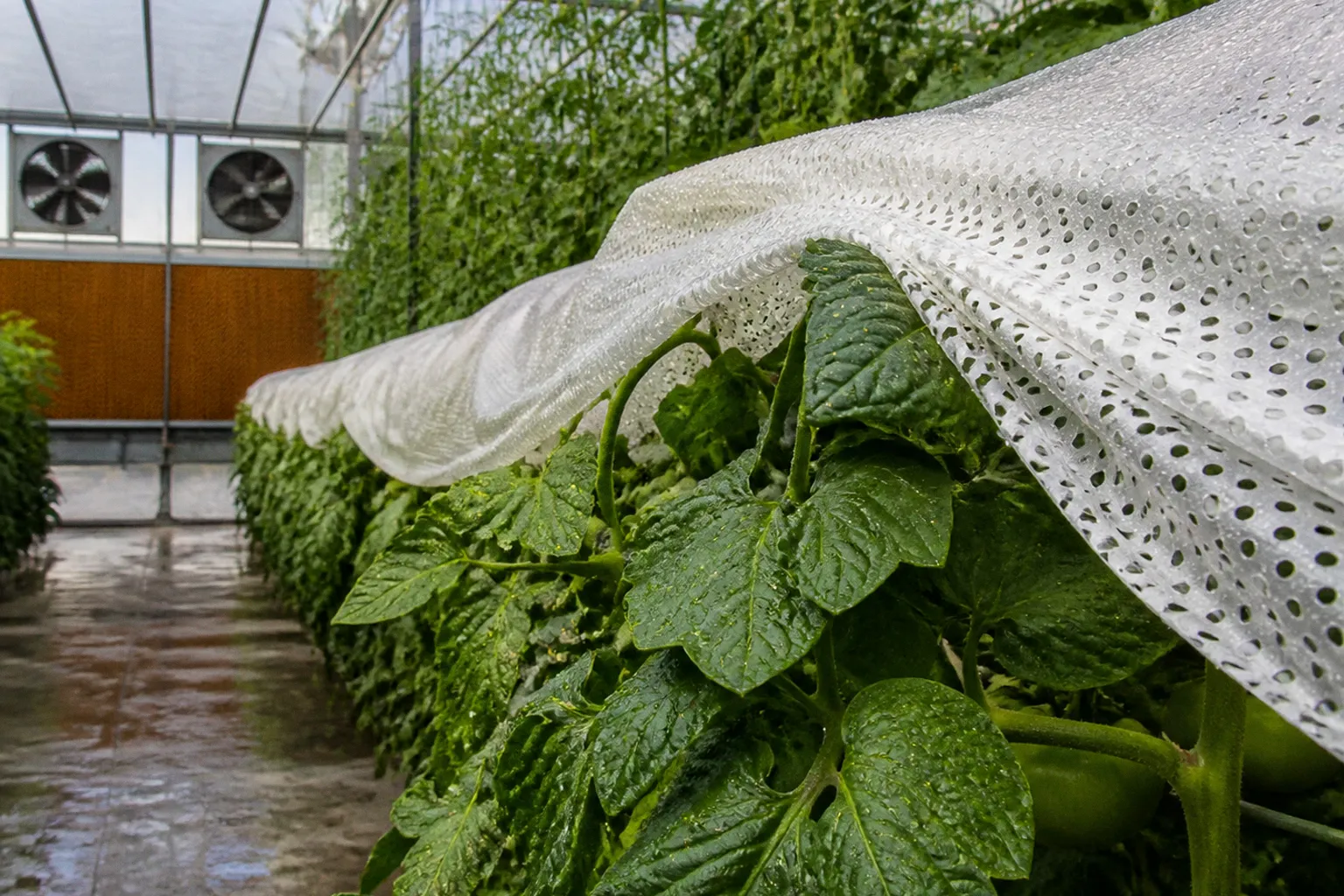
Summer reaches the Bekaa and the coastal plain early. By mid-morning in an unventilated polyethylene tunnel, the air can move past 40°C while the crop is still expected to set fruit, hold quality, and keep workers harvesting through the hottest part of the day.
That is where greenhouse cooling methods in Lebanon have to be judged: not as isolated pieces of equipment, but as a sequence. Ventilation, shade, evaporative cooling, fogging, and a tighter greenhouse envelope each address a different part of the heat load. Used in the right order, they reduce stress on crops and crews without turning every hot afternoon into a diesel and water problem.
When the greenhouse stays hot and still, both the crop and the crew pay for it. Cooling works best as a layered system, not as one expensive machine.
The heat math: what summer does inside a Lebanese greenhouse
Three conditions shape most cooling decisions:
- Leaf temperature: Tomatoes and other fruiting crops can continue growing under warm conditions, but excessive leaf and canopy temperatures interfere with photosynthesis, pollen performance, fruit set, and sugar accumulation.
- Worker heat exposure: A high Wet Bulb Globe Temperature, or WBGT, indicates that heat, humidity, radiant load, and air movement are combining to make work more hazardous. A 2024 study of Lebanese greenhouse farmworkers linked WBGT above 26.6°C with increased heat-related illness risk.
- Solar load: A single layer of clear polyethylene admits a large amount of solar radiation. In the Bekaa, Akkar, and parts of the South, outdoor summer heat can become a much more severe problem once it is trapped inside a closed tunnel.
The first visible crop symptoms are not always dramatic. Pollen may lose viability before the plant looks damaged. Transpiration can accelerate faster than the root system can supply water and calcium, increasing the risk of blossom-end rot. Respiration also rises, consuming part of the sugars produced during the cooler morning period.
For a cooperative selling through a packhouse, those stresses eventually appear as softer fruit, weaker colour, lower consistency, and more difficult grading. The problem is not simply that the greenhouse feels uncomfortable. It is that heat changes the crop’s performance at exactly the point where uniformity matters most.
The same distinction matters for people. Air temperature alone does not describe the conditions inside a greenhouse. A site with moderate air temperature but high humidity and no air movement can be more dangerous than a hotter, well-ventilated site. That is why WBGT monitoring is more useful than relying on a thermometer mounted near the door.
Method 1 — Move the air first: natural ventilation as the baseline
Before installing cooling pads, fogging lines, or additional pumps, check whether the greenhouse can exchange air properly. In many structures, the cheapest cooling upgrade is not a new device. It is opening the area that was never designed to open far enough.
A functional ventilation layout may include:
- side roll-up walls that can be opened quickly;
- continuous roof vents or ridge vents;
- four-sided air access where the structure and site allow it;
- a double-door entry area to limit pest entry and reduce uncontrolled drafts;
- insect netting selected for the crop and local pest pressure.
Roof ventilation is particularly important because hot air rises and accumulates under the roof. Side openings help replace that air, especially when there is a reliable afternoon breeze. In the Bekaa, natural wind can make side ventilation highly effective during parts of the day. Coastal sites may need a more deliberate orientation and a backup plan for humid, still afternoons.
The long axis of the greenhouse should be considered in relation to prevailing air movement, adjacent structures, windbreaks, and the slope of the site. A tunnel placed directly behind a wall, warehouse, or dense line of trees may have much less effective ventilation than the same tunnel in an exposed position.
Insect netting introduces a necessary compromise. Finer mesh improves exclusion of whitefly, leafminer, and other pests, but it also increases resistance to airflow. The right mesh is not automatically the finest mesh available. It has to match the pest problem, the crop, and the ventilation capacity of the structure.
A vent that is technically present but blocked by a screen, poorly tensioned, or difficult for workers to operate is not a functioning cooling system. Audit the openings at midday, when the greenhouse is under real stress. Check whether the roof vent opens across its full length, whether side curtains roll evenly, and whether the crop canopy has grown high enough to obstruct the air path.
No active cooling system compensates for a vent that stays shut. Check airflow before specifying equipment.
Ventilation has limits. It cannot fully overcome high solar radiation on a windless afternoon, and it becomes less effective when outside humidity is already high. But it should still come first. Every later cooling method performs better when hot air has somewhere to go.
Method 2 — Cut the solar load: external and internal shade nets
Shading is the second line of defence and, for many Lebanese cooperatives, one of the most practical passive upgrades. The basic principle is simple: prevent part of the solar energy from entering the greenhouse instead of trying to remove it later.
External and internal shading are not interchangeable.
| Deployment | Typical use | Where it is mounted | Main advantage | Main limitation |
|---|---|---|---|---|
| External shade | Around 30–50% shading for many tomato systems, adjusted to crop and season | Above the polyethylene cover | Stops radiation before it enters the greenhouse | Requires a frame, anchoring, and exposure to wind |
| Internal shade | Around 30–40% as a supplementary layer | Beneath the roof, above the crop | Easier to retrofit and useful as a worker heat shield | Absorbs heat inside the greenhouse and can reduce light near the canopy |
External shading normally deserves priority. It intercepts radiation before the roof and interior surfaces heat up. It can also reduce ultraviolet exposure on the polyethylene cover, although its actual effect on cover life depends on the plastic, installation, wind, and maintenance.
Internal cloth is often easier to install in an existing tunnel. It can be useful when the structure cannot support an external frame or when the cooperative needs a flexible seasonal solution. The disadvantage is that the net heats up inside the envelope and can radiate some of that heat back toward the crop. Internal shading is therefore better treated as a supplement than as a replacement for external shading.
For tomatoes, excessively heavy shade creates a different problem. It may reduce canopy temperature while also reducing the light available for photosynthesis and fruit development. The correct percentage depends on the variety, planting density, roof material, season, and local radiation. A fixed net that is appropriate during the sharpest summer peak may be too restrictive on a cloudy day or during the morning fruit-set period.
Retractable systems give the grower more control. The net can remain open during lower-load morning hours and be deployed when the roof begins to absorb intense radiation. That flexibility is valuable, but only if the system is simple enough for workers to use consistently. A sophisticated mechanism that remains permanently in one position because it is difficult to operate is not providing the value its specification promises.
Material choice also matters. UV-stabilized HDPE monofilament nets are designed for repeated sun exposure. Low-cost material may appear attractive at purchase but can stretch, tear, or lose its shading pattern under Lebanese conditions. For a cooperative, the relevant comparison is not only the price per square metre. It is the cost of installation, seasonal removal, repairs, storage, and replacement.
Method 3 — Use evaporative pad-and-fan cooling where the climate allows it
Pad-and-fan cooling is the workhorse option for hot, relatively dry inland conditions. A wet cellulose or corrugated pad is installed on one side of the greenhouse, while exhaust fans on the opposite side draw air through it. As the air passes across the wet surface, water evaporates and the dry-bulb temperature falls.
The system is especially suited to the Bekaa, where dry afternoon air gives evaporation room to work. Under suitable conditions, the temperature reduction can be substantial. The exact result depends on outside humidity, pad condition, fan capacity, greenhouse tightness, air speed, and the distance between the pad wall and the crop.
The coastal limitation is straightforward: evaporative cooling loses effectiveness as outdoor humidity rises. A system that performs well in Zahle or the central Bekaa may provide a much smaller reduction in Sour, Tyre, or the Akkar plain during a humid August afternoon. That does not make pad-and-fan useless on the coast, but it changes the calculation. The design should be based on difficult local conditions, not on the most favourable dry afternoon.
Several details decide whether the installation cools evenly or creates a wet, noisy room with poor results.
Airflow and pad design
Air must pass through the pad at a suitable speed and be distributed across the full face. If the fans are oversized for the pad wall, the system may pull air through too quickly, carry water into the greenhouse, and leave parts of the pad underused. If the fans are too weak, the greenhouse remains hot on the fan side and the cooling potential is wasted.
Pad face velocity in the region of 1.0–1.5 m/s is commonly used as a design window, but the final specification should follow the pad manufacturer’s performance data and the actual fan curve. The important point is balance: the pad area, fan capacity, air inlets, and greenhouse volume have to be designed together.
Water quality
Hard water is one of the most persistent maintenance problems. Mineral deposits reduce wetting, restrict airflow, and shorten pad life. Groundwater quality varies from site to site, so the cooperative should test it before choosing the water-treatment approach.
A basic treatment system may include filtration and softening. In some locations, operators may accept more frequent pad replacement instead. The right option depends on water chemistry, replacement access, labour, and the cost of downtime during the season.
Pumps, power, and backup
The circulation pump and exhaust fans have to be included in the farm’s power plan. A greenhouse that depends on a diesel generator cannot treat cooling equipment as a minor accessory load. The cooperative should calculate the demand of fans, pumps, controls, and any water-treatment equipment together.
Backup power is also a crop-protection decision. A short interruption during a mild morning may have little consequence; a failure during the afternoon peak can quickly reverse the temperature gains. At minimum, operators need a procedure for opening vents and sidewalls when the fans stop.
Hygiene and algae
Warm, illuminated water circuits encourage algae and biofilm. Regular cleaning, appropriate filtration, and a documented water-treatment routine help prevent blocked lines and uneven pad wetting. Chemical treatment must follow the equipment supplier’s instructions and be handled safely. The goal is a stable circulation system, not simply the strongest possible dose.
Pad-and-fan cooling is not a licence to close every vent. It still requires an intentional air path and sensible humidity management. When the greenhouse becomes too humid, cooling performance falls and disease pressure rises.
Method 4 — High-pressure fogging for targeted cooling
High-pressure fogging uses fine nozzles to produce droplets small enough to evaporate before they settle on the crop. When the air is dry enough, evaporation reduces temperature while adding a controlled amount of humidity. The system can be useful where the cooperative needs targeted cooling rather than the continuous air movement of a large pad wall.
Fogging is particularly relevant to propagation areas, nurseries, herbs, ornamentals, and other high-value crops where short periods of heat can damage young plants. It can also support fruiting crops during sensitive parts of the day, provided that humidity and leaf wetness remain under control.
The trade-off is precision. Fine nozzles, high-pressure pumps, filters, and clean water all demand regular maintenance. Poorly filtered water can block nozzles quickly. Uneven pressure can leave one section dry while another receives excessive moisture. A system that produces visible droplets on leaves is not necessarily working better; it may be wasting water and increasing disease risk.
Two operating principles are essential:
1. Use sensor-based bursts rather than an indiscriminate timer. The system should respond to temperature, humidity, or a suitable combined measure such as WBGT. Short cycles allow the air to absorb moisture without keeping the canopy permanently wet.
2. Treat water quality as part of the design. Softened or suitably treated water reduces mineral deposits in fine nozzles. Reverse osmosis may be appropriate for some sites, but its value depends on the source-water analysis, membrane and pump costs, reject-water handling, and maintenance capacity. It should be evaluated through a local cost comparison rather than assumed to pay for itself within a particular season.
This is also where a cooperative needs to distinguish between air cooling and humidity control. Fogging can lower air temperature in dry conditions, but it cannot overcome already saturated air. On humid coastal days, more water in the greenhouse may create a disease problem without delivering meaningful cooling.
Hybrid systems can work well when each component has a defined job. Pad-and-fan may provide the main temperature reduction, while carefully controlled fogging handles short periods of extreme load or supports propagation. The controls should prevent the two systems from fighting each other—for example, fogging heavily while ventilation is trying to remove the same moisture.
Method 5 — Hold the cooling: double polyethylene and thermal films
Cooling air is expensive if the greenhouse immediately gains the heat back through a weak envelope. Roof condition, film type, gaps, doors, and poorly sealed edges all influence how long the cooling effect lasts.
Double-layer inflated polyethylene
Two layers of polyethylene separated by an air gap can reduce conductive heat transfer compared with a single layer. A small blower maintains the gap, and the system can also improve the stability of the roof during temperature changes and moderate wind.
The practical benefits depend on installation quality. Torn film, open edges, a failed blower, or an air gap that is not maintained will reduce the expected performance. The blower itself is a small but continuous electrical load, and it should be included in the maintenance schedule.
Double polyethylene is often considered for winter production as well. In the Bekaa, retaining more heat at night may reduce heating demand during cooler periods. The same envelope improvement can therefore support both summer cooling efficiency and shoulder-season production, although it does not replace ventilation or shade during a hot day.
Infrared-reflective films
IR-reflective films are designed to filter part of the near-infrared radiation while allowing useful photosynthetically active radiation to reach the crop. Their performance depends on the specific film, its PAR transmission, the crop, and the local light environment.
The important question is not whether a film is marketed as “thermal.” It is whether the film reduces unwanted heat without taking too much useful light away from the canopy. A film with high visible-light transmission may be a better fit for a tomato house than a heavier thermal treatment that lowers light during already marginal periods.
Film replacement is a useful moment to compare options. If the cooperative is already budgeting for new polyethylene, it can examine the incremental cost of a double layer or a reflective film alongside the expected effect on cooling demand, winter heat retention, crop quality, and maintenance. That is a more reliable decision than treating any film as a guaranteed payback.
The cheapest kilowatt-hour on the site is the one the greenhouse never needs. Improve the envelope before buying more active cooling.
How the five methods work together
The most reliable greenhouse temperature control in the Bekaa and other Lebanese production areas comes from sequencing the methods rather than switching everything on at once.
A practical operating logic looks like this:
| Greenhouse condition | First response | Additional response |
|---|---|---|
| Mild morning temperatures | Open roof and side vents as conditions allow | Keep shade retracted when the crop benefits from the light |
| Rising solar load | Deploy external shade gradually | Maintain an unobstructed path for hot air to leave |
| High temperature with dry outside air | Start pad-and-fan cooling | Keep monitoring humidity and water circulation |
| Short peak of heat in a sensitive crop | Use controlled fogging bursts | Stop if droplets persist or humidity remains too high |
| High humidity or coastal still conditions | Prioritise ventilation and avoid adding unnecessary moisture | Use shade and envelope improvements to reduce the incoming load |
| Fan or pump failure | Open all available vents and sidewalls | Move workers to cooler tasks and activate the power-failure procedure |
The exact thresholds should be set from site measurements, crop stage, and equipment capability. A number displayed by a sensor is useful only when it triggers a defined action. The cooperative should decide in advance who opens the vents, who checks the pump, who moves the workers, and who records the event.
Automation helps, but it does not remove the need for observation. Sensors can drift, a vent motor can jam, and a water tank can empty while the controller continues to call for cooling. Each shift needs a simple visual check of fans, pads, shade position, water level, and canopy condition.
Worker protection belongs inside the cooling plan
A greenhouse cooling project is incomplete if it measures only crop temperature. Workers experience the combined effect of heat, radiant load, humidity, clothing, and physical effort. Harvesting, pruning, and carrying crates can become hazardous even when the crop still appears marketable.
The WBGT reading above 26.6°C should be treated as a signal to strengthen controls, not as a promise that every worker will face the same risk or that a universal time limit applies. Local conditions, acclimatisation, workload, protective clothing, and access to shade all matter.
A cooperative’s protocol should include:
- WBGT monitoring in representative greenhouse blocks, with sensors placed where workers actually perform tasks rather than only near a wall or doorway;
- a written response for rising heat levels, including more frequent shaded recovery, water and electrolyte access, and changes to task intensity;
- early-morning or late-afternoon scheduling for demanding harvest work when daytime conditions become severe;
- a shaded cool-down area close to the production blocks;
- training on warning signs such as dizziness, unusual fatigue, confusion, nausea, and changes in sweating;
- a clear escalation procedure for suspected heat illness, including who contacts medical support and who remains with the affected worker.
The study linking WBGT above 26.6°C with increased heat-related illness risk is useful because it gives cooperatives a measurable warning point. It should not be turned into an invented two-hour rule or treated as a direct yield-loss threshold. Worker schedules should be based on monitoring, risk assessment, and the actual work being performed.
This documentation also strengthens the cooperative’s position with buyers and packhouses. A buyer may never ask to see the cooling design, but labour and safety procedures increasingly form part of supply-chain scrutiny. Good records show that heat is being managed as an operational risk rather than discovered only after an incident.
The practical order of investment
For a cooperative working with limited capital, the sequence is usually more important than the brand of equipment.
Start with the parts that reduce heat without consuming power:
1. Repair or enlarge the effective ventilation openings.
2. Check greenhouse orientation, obstructions, door seals, and roof condition.
3. Add external shade where solar load is the main problem.
4. Improve the envelope during the next polyethylene replacement.
5. Install pad-and-fan cooling in dry inland sites where water and power are available.
6. Add fogging only where the crop and climate justify the maintenance burden.
7. Install sensors and write the operating procedure alongside the hardware, not after it.
Water is a design constraint, especially for cooperatives sharing a borehole or storage system. Evaporative cooling may reduce temperature but still consume water during every operating hour. Fogging uses less water than a wet wall in some applications, but its nozzles and pump are less forgiving of poor water quality. The correct choice depends on source-water analysis, seasonal availability, electrical reliability, and the crop’s tolerance for humidity.
The same principle applies to fuel. A diesel generator can run fans and pumps, but the cooperative should calculate whether it can support them during the most demanding period and what happens if fuel delivery is delayed. A passive measure that reduces the active load may be more valuable than a larger cooling unit.
Conclusion
Cooling a Lebanese greenhouse is not a single equipment purchase. It is a controlled chain: move the hot air, reduce the solar load, use evaporative cooling where the climate supports it, apply fogging selectively, and keep the cooled air from escaping through a weak envelope.
The Bekaa’s dry summer conditions can favour pad-and-fan systems. Coastal humidity makes ventilation, shading, and careful moisture control more important. Neither location can be managed well from a catalogue specification alone. The greenhouse needs its own temperature, humidity, WBGT, water-quality, and power observations.
The most expensive mistake is to buy the active system first and decide how to operate it later. A cooperative gets more from its investment when sensors, maintenance, worker protection, and a written response protocol are treated as part of the cooling system itself. That is what turns a tunnel from a heat trap into a workable production environment for Lebanese crops through the summer.