Greenhouse plastic: choosing the right film for Lebanese climates
Lebanon has approximately 2,815 hectares of greenhouse production, and more than 90% of that area is concentrated in four governorates: Akkar, North, Mount Lebanon, and South. That scale changes the decision. Greenhouse plastic is not a minor consumable.
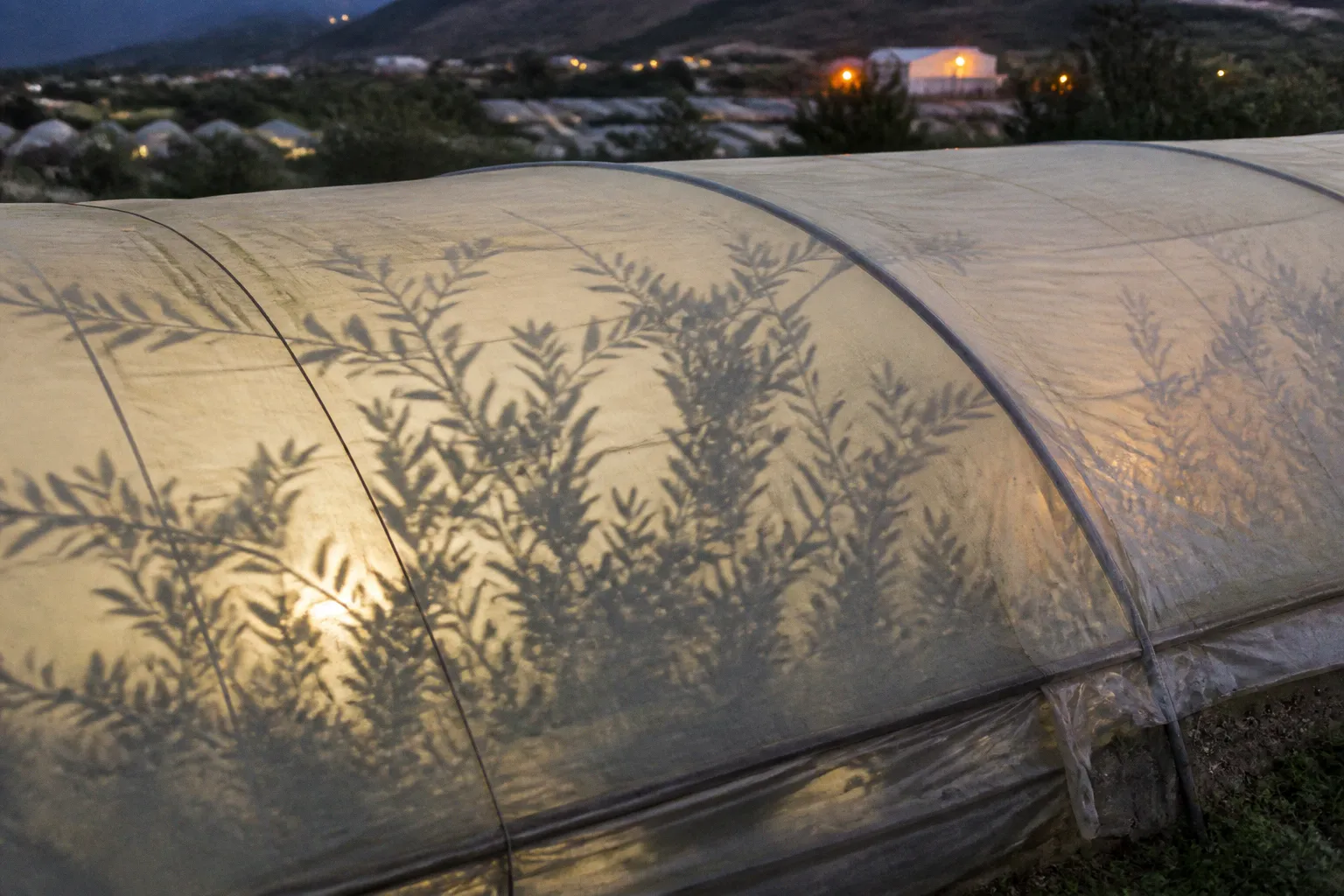
It is a production-control layer, a heat-management tool, and a direct variable in crop quality, harvest timing, and replacement cost.
The wrong film creates predictable failures: condensation dripping onto leaves, excessive heat under clear plastic, brittle covers after a short UV cycle, and thermal loss during cold Bekaa nights. The right specification starts with greenhouse film thickness for Lebanese farms, then moves to UV stabilization, light transmission, diffusion, thermal retention, and compatibility with the local crop cycle.
Do not buy a roll because the supplier calls it “heavy-duty.” Translate the specification into an operating protocol.
Start with the Lebanese production zone, not the catalogue
A greenhouse in the coastal belt is not operating under the same load as one in the Bekaa Valley. The film must handle the site’s solar exposure, temperature swing, humidity pattern, agrochemical environment, and replacement access.
The first decision is geographic.
- Coastal and southern sites: High solar load makes heat management and condensation control immediate priorities. A clear film with maximum transmission can push internal temperatures beyond the crop’s useful range if ventilation and shading are not properly managed.
- Akkar and northern production: With a large share of Lebanon’s greenhouse area, these sites need a film specification that balances light availability, winter performance, and repeated exposure to moisture and crop-protection products.
- Bekaa Valley: Cold winter nights and wider day-to-night temperature swings increase the value of thermal retention and a mechanically reliable cover. If the site is exposed or elevated, treat thin film as a replacement-risk decision, not a saving.
- Mount Lebanon: Terrain, access, and fragmented production blocks can make maintenance more expensive. A film that survives longer reduces downtime and the labor burden of recovering multiple structures.
FAO’s 2024 geospatial assessment places greenhouse area at approximately 1,084 hectares in Akkar, 706 hectares in the North, 448 hectares in Mount Lebanon, and 348 hectares in the South. Those figures are not just a map. They indicate where purchasing decisions are being repeated at scale—and where standardized film specifications can improve cooperative procurement.
If several growers are buying independently, the result is usually a mixed inventory: different thicknesses, different UV packages, incompatible replacement cycles, and no common performance record. A cooperative can do better. Define the operating zone, standardize two or three approved film specifications, and buy against the crop calendar rather than the cheapest available roll.
The correct greenhouse cover is not the thickest film on the market. It is the film whose optical, thermal, and service-life specification matches the site.
Film thickness: the first filter, not the final decision
Commercial polyethylene greenhouse films typically range from 75 to 250 microns, or approximately 3 to 10 mil. For commercial multi-season greenhouses, 150 to 200 microns, or 6 to 8 mil, is the practical standard range.
That range matters because thickness affects handling, mechanical resistance, installation behavior, and expected service life. But thickness alone does not tell you whether the cover will perform. A 200-micron film with poor UV stabilization can fail earlier than a properly formulated 150-micron product. A thick clear film can also create a heat problem if the structure lacks adequate ventilation.
Use thickness as a procurement gate:
| Operating condition | Starting film specification | Operational reason |
|---|---|---|
| Short-cycle or temporary protected cultivation | 75–125 microns | Lower material commitment, but higher replacement exposure |
| Standard commercial multi-season greenhouse | 150–200 microns | Normal working range for durable commercial coverage |
| Exposed site or difficult replacement access | 200 microns or a documented heavy-duty specification | Reduces the operational risk of premature replacement |
| Cold production with major night heat loss | 150–200 microns with thermal-retention properties | Thickness alone does not guarantee heat retention |
| High-light crop with controlled ventilation | Clear film with over 90% PAR transmission | Maximizes usable light where excess heat is manageable |
| Heat-sensitive crop or hot site | Diffused film with a defined scattering range | Reduces concentrated radiation and distributes light more evenly |
Do not default to a thin 4-mil film for a long-term commercial structure in a high-wind or high-altitude location. The apparent material saving can disappear through tearing, emergency patching, crop exposure, and an unplanned replacement cycle.
The procurement document should state thickness in microns and mil, not just a product name. “Premium agricultural film” is not a specification. Require:
- Nominal thickness.
- Film width and roll length.
- Number of layers.
- UV stabilization period.
- Light transmission or diffusion performance.
- Anti-drip or anti-condensation treatment.
- Thermal properties, if claimed.
- Recommended use with sulfur, chlorine, or other agrochemicals used on the farm.
- Warranty conditions and exclusions.
If the supplier cannot provide those details, you do not have a comparable offer. You have a sales description.
UV stabilization determines the replacement window
Lebanese greenhouse covers receive sustained solar exposure. Polyethylene without an appropriate UV package loses strength and becomes brittle. UV stabilization additives can support a design life of one to five years, depending on exposure levels, formulation, installation, and agrochemical use.
That is a wide interval. Do not treat “five-year film” as a universal promise.
The service-life calculation should include four variables:
1. Radiation exposure. A cover exposed to intense direct sun is operating under a different UV load from one frequently shaded by adjacent structures or crop canopy.
2. Agrochemical compatibility. Some chemicals accelerate film degradation. Sulfur and chlorine-based products deserve specific attention because they can interact with stabilizer packages and shorten the useful life of the cover.
3. Installation tension. Loose film flaps, rubs against the structure, and accumulates stress at fixing points. Excessive tension can also create damage around channels and clips.
4. Replacement logistics. A film that is technically durable but difficult to source locally can still create a production gap when it fails.
Build replacement planning around the farm’s actual risk. If the crop is high-value and the greenhouse cannot be left uncovered, keep the replacement order window ahead of the expected failure period. If a cooperative has several hundred structures, align film procurement with a rolling replacement schedule instead of waiting for visible degradation across the entire block.
A film lifespan claim should be recorded as a controlled assumption:
- Expected service life under the stated UV conditions.
- Approved chemical-use conditions.
- Inspection frequency.
- Evidence required before warranty acceptance.
- Replacement stock held locally or within the cooperative.
The cover should be inspected before it becomes visibly brittle. Look for loss of elasticity, whitening, cracking around fixing points, tears near structural contact areas, and changes in condensation behavior. A cover that still looks intact from the ground may already be losing mechanical reserve.
Clear, diffused, thermal, and anti-drip: select the optical package
Film affects the greenhouse climate through light transmission, scattering, condensation behavior, and heat retention. These properties should be selected as a package.
Clear film
High-transparency clear films can transmit more than 90% of PAR, or Photosynthetically Active Radiation. That is useful for light-demanding crops that do not grow excessively tall and for production periods when available light is a limiting factor.
But maximum transmission is not automatically maximum output. If the greenhouse already runs hot, a highly transparent film may increase heat-management pressure. The question is not simply whether more light enters. The question is whether the crop can convert that light without crossing its temperature and humidity limits.
Use clear film when:
- The crop benefits directly from high light.
- Ventilation capacity is adequate.
- Internal temperature can be managed.
- Winter or low-light production is part of the business model.
- The structure does not need aggressive light diffusion.
Diffused film
Multilayer films can provide light scattering in the range of approximately 35% to 65%. Diffusion distributes incoming light more broadly through the canopy instead of concentrating it on the upper leaves and structural surfaces.
This can be useful where:
- The crop has a dense canopy.
- Upper-leaf exposure is excessive.
- The greenhouse experiences strong direct radiation.
- You need more even light distribution across the growing area.
Do not select a diffusion percentage by habit. A 35% scattering specification and a 65% scattering specification are not interchangeable. The correct level depends on crop architecture, season, ventilation, and the site’s available light.
Thermal films
Thermal-retention properties reduce long-wave heat loss during cold periods. This is especially relevant to greenhouse production in the Bekaa Valley, where night temperatures can create a sharp heating requirement even when daytime light is adequate.
Thermal performance should be documented in the technical sheet. Do not infer it from thickness. A thicker film is not automatically a thermal film.
If winter production is central to the farm, specify thermal retention alongside:
- Night temperature target.
- Heating system capacity.
- Ventilation schedule.
- Crop sensitivity to condensation.
- Expected internal humidity.
Thermal retention without humidity control can move the problem from heat loss to disease pressure. The film must work inside a complete climate-management system.
Anti-drip and condensation control
Condensation on the inner surface can fall onto foliage, pathways, and equipment. Anti-drip treatments are designed to manage droplet formation and direct moisture away from the crop surface. In a humid production environment, this is not a cosmetic add-on.
Ask how the anti-drip layer is formed and how long it is expected to remain effective. Condensation performance can decline with age, cleaning, dust accumulation, and chemical exposure.
For crops sensitive to leaf wetness, anti-drip film should move from optional to required. If the greenhouse is used for propagation or dense vegetable production, record condensation performance as part of the acceptance inspection.
Light transmission is a crop input. Condensation is a disease-management variable. Thermal retention is a fuel and yield variable. Treat all three as operating costs.
Three purchasing scenarios for Lebanese farms
Use an if-then protocol rather than a generic “best film” recommendation.
If the greenhouse is in the Bekaa and runs through winter
Then start with 150–200 microns, add documented thermal-retention performance, and review the structure’s ventilation and heating capacity before selecting maximum-transparency film.
The cover decision is only complete when you know:
- How the film behaves during cold nights.
- Where condensation will go.
- Whether the structure can purge humidity in the morning.
- Whether the fixing system can tolerate the expected tension and weather exposure.
- How quickly replacement material can reach the site.
If the greenhouse is exposed or difficult to access, prioritize the upper end of the commercial thickness range or a documented heavy-duty construction. Do not use a thin temporary film as a long-term solution simply because installation is easier.
If the greenhouse is in a hot coastal or southern site
Then prioritize heat management and optical control. A clear film with over 90% PAR transmission may be appropriate for a light-demanding crop, but only if ventilation, shading, and irrigation can handle the resulting solar load.
If the crop shows heat stress or the canopy receives uneven radiation, evaluate a diffused multilayer film. A film with 35% to 65% light scattering may distribute light more effectively, but the selection must be tied to the crop and season.
Do not confuse diffusion with cooling. Diffusion changes how light is distributed. It does not replace ventilation or a heat-management plan.
If the cooperative needs one specification across several governorates
Then do not force one film onto every microclimate. Create a controlled standard:
- Base specification: 150–200 microns for commercial multi-season structures.
- Optical option: clear or diffused, selected by crop and heat load.
- Climate option: thermal-retention specification for winter-focused or cold sites.
- Chemical compatibility: approved list for each film formulation.
- Replacement protocol: one documented inspection and ordering window.
This approach keeps procurement manageable without pretending that Akkar, the South, and the Bekaa have identical production conditions.
Multilayer construction adds functions—but raises the need for documentation
Three-layer and five-layer co-extruded films can combine functions in one cover. Depending on the formulation, the film may include anti-drip condensation control, light diffusion, and thermal heat retention.
That is useful when the greenhouse needs several performance characteristics at once. It also creates more room for vague marketing. Require the supplier to identify what each performance claim means in operational terms.
Ask for:
- The number of layers.
- The function assigned to each layer, if disclosed.
- PAR transmission.
- Light-scattering percentage.
- UV stabilization design period.
- Anti-drip treatment and expected duration.
- Thermal-retention claim and test basis.
- Chemical restrictions.
- Installation instructions.
- Repair and warranty conditions.
Do not pay a premium for “five-layer technology” without a measurable benefit for your crop. Layer count is a construction detail. It becomes a business advantage only when it delivers better service life, better climate control, fewer crop-wetness events, or a more stable production window.
A cooperative can improve this process by collecting performance data from installed covers:
- Installation date.
- Film specification.
- Structure location.
- Crop cycle.
- Chemical exposure.
- First signs of degradation.
- Repairs and failures.
- Replacement date.
- Crop disruption caused by failure.
That record will become more useful than supplier claims after the first full replacement cycle.
Installation can erase the value of a good film
A correctly specified film can fail early if installation is poor. The common failure points are mechanical, not chemical:
- Film rubbing against sharp structural edges.
- Loose sections flapping under wind.
- Uneven tension across the span.
- Fasteners cutting into the cover.
- Contact with incompatible materials.
- Damage during unrolling or lifting.
- Poor sealing around doors, vents, and end walls.
- Water pooling because the roof geometry or tension is wrong.
Before installation, inspect the frame. Remove burrs, replace damaged clips, and identify every point where the film can contact metal under movement. Install in suitable conditions so the cover can be tensioned correctly without overstressing the material.
A roll should be traceable to its specification and installation date. Mark the greenhouse or bay, not just the invoice. When a problem appears six months later, you need to know which formulation is installed and which chemical program it experienced.
For multi-structure operations, use a repeatable installation protocol:
1. Confirm roll dimensions against the greenhouse bay.
2. Inspect the film for transport damage before opening.
3. Verify thickness and product identification against the purchase order.
4. Prepare the frame and remove abrasion points.
5. Install with controlled tension and consistent fixing.
6. Seal openings and service penetrations.
7. Record the batch, date, structure, and installer.
8. Inspect after the first significant weather event.
9. Photograph fixing points and roof condition for the maintenance record.
This is basic infrastructure discipline. It is also where many film warranties are won or lost.
Build the specification around transit windows and crop risk
For exporters and cooperative packhouses, the greenhouse cover affects the harvest window before the produce ever reaches a cold chain. A film that creates unstable temperatures, persistent leaf wetness, or premature crop stress can damage consistency at harvest. That becomes a logistics problem downstream.
Tie film selection to the crop’s shipping schedule:
- If the crop must meet a narrow export window, favor a cover specification that supports predictable climate control over the cheapest material.
- If the production cycle crosses the hottest part of the year, evaluate diffusion and ventilation together.
- If the crop is harvested during cold-season demand, evaluate thermal retention and humidity management together.
- If a film failure could interrupt a contracted supply program, maintain replacement stock or a confirmed supplier transit window.
- If several farms feed one cooperative packhouse, standardize film records so production variation can be traced to the greenhouse rather than misattributed to grading or cold-chain handling.
The objective is not to buy the most advanced cover. It is to remove avoidable volatility from the supply chain.
Final compliance pass before purchase and installation
Do not release the order until the following points are documented:
- Film thickness is stated in microns and mil.
- The specification sits within the intended operating range; for commercial multi-season use, the normal reference range is 150–200 microns.
- UV stabilization is documented, including the stated design lifespan and chemical-use limitations.
- Clear versus diffused performance is selected for the crop and site, not the sales label.
- PAR transmission or light-scattering data is available where optical performance drives the decision.
- Thermal-retention performance is documented for winter-focused production.
- Anti-drip performance is specified where condensation can affect crop health.
- The supplier has stated compatibility limits for the farm’s agrochemicals.
- Roll dimensions, layer construction, and batch identification are recorded.
- The frame has been inspected for abrasion points before installation.
- Installation tension, fixing method, and sealing details are assigned to a responsible crew.
- Replacement timing is linked to crop cycles and expected greenhouse film lifespan.
- The cooperative has a record of installed film by site, date, formulation, and crop.
The purchasing decision is straightforward when you reduce it to operational consequences. Use 150–200 microns as the commercial starting range. Add UV stabilization for the actual exposure period. Choose clear or diffused film according to crop light demand and heat load. Add thermal and anti-drip functions where the climate and crop require them. Then protect the investment with proper installation and a replacement plan.
For Lebanese growers, greenhouse plastic is not a sheet laid over a frame. It is a climate-control component with a defined service window. Specify it that way, and the cover becomes infrastructure instead of another emergency expense.