Lessons for Lebanese Cooperatives from the Mexican Avocado Export Halt
As reported by KEYT-TV, the United States has suspended government avocado inspections in Mexico's Michoacán state following an unspecified threat against American interests — and the pause is…
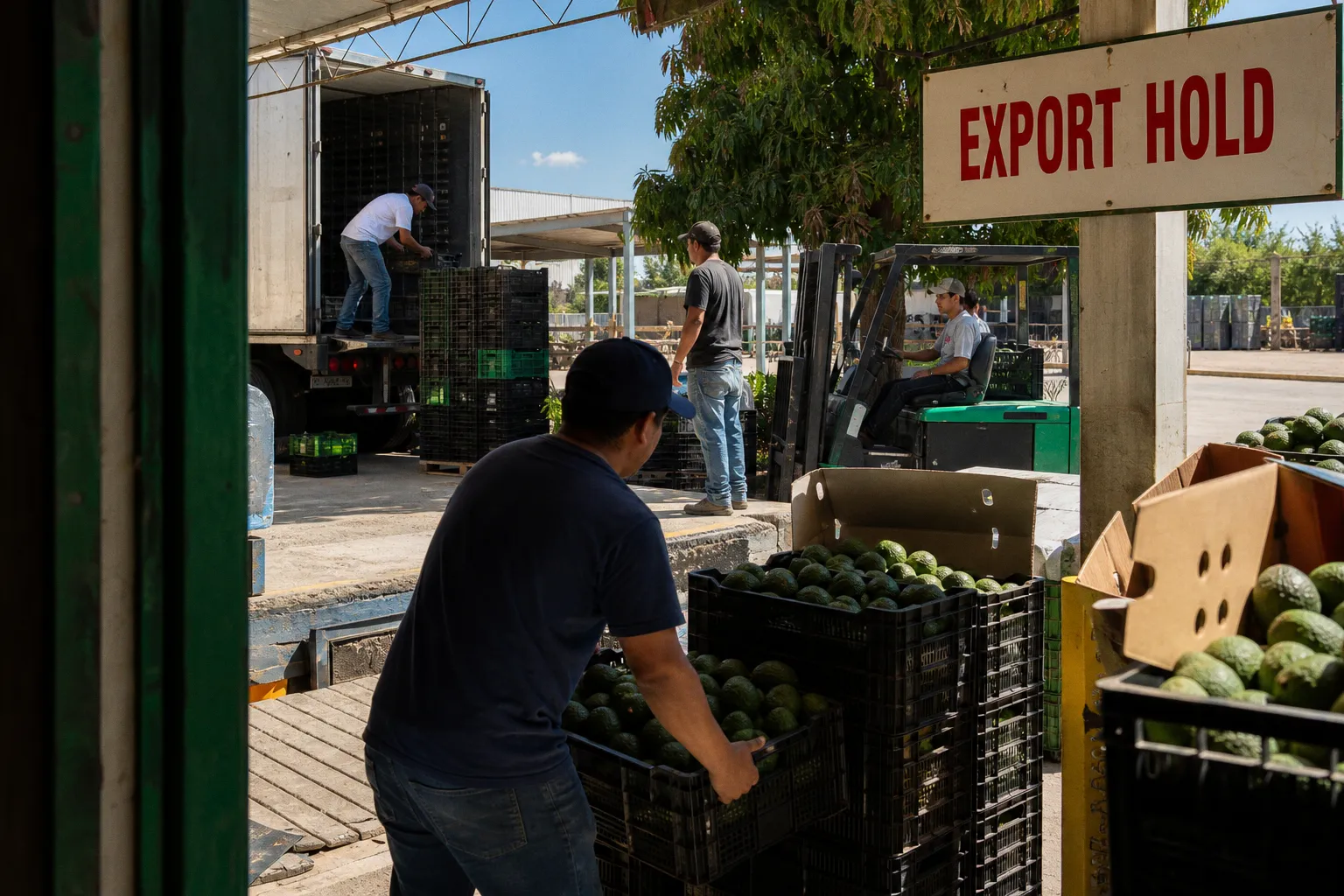
As reported by KEYT-TV, the United States has suspended government avocado inspections in Mexico's Michoacán state following an unspecified threat against American interests — and the pause is already rippling outward from the packing houses. For our growers and cooperative boards here in Lebanon, watching how a fellow producing region absorbs sudden trade friction isn't just news; it's a working case study in what resilience looks like when phytosanitary access shuts off without warning.
What actually happened on the ground
Michoacán Governor Alfredo Ramírez Bedolla confirmed that the halt disrupts US Department of Agriculture personnel who normally inspect avocado exports bound for American buyers. KEYT-TV notes that any produce still requiring USDA onsite approval is no longer eligible for import, while shipments already in motion elsewhere can still clear. APEAM, Mexico's avocado producers' association, told its member packing plants that each facility must now decide for itself whether to keep harvesting today — because fruit destined for export cannot be authorized during the pause. Only avocados received on Tuesday under USDA observation will move forward through the system.
The stakes behind the headlines
Michoacán is Mexico's leading avocado-producing state, and the trade there supports more than 200,000 jobs — the kind of concentrated, single-commodity corridor that any cooperative board recognizes on sight. KEYT-TV reports that a comparable 2024 pause, triggered after two USDA inspectors were assaulted and briefly detained at a police roadblock, left Mexican growers out of tens of millions of dollars and pushed US carton prices up by roughly 40 percent in the weeks that followed. Cartel-linked extortion of producers has been documented in the region, which is why the current security operation is unfolding in parallel with the inspection halt.
What our collective can take from APEAM's playbook
The lesson worth lifting from this week's response is simple and practical. When inspection access tightens, the cooperative that already keeps clean lot records, packing-house traceability, and a direct line to its importer absorbs the shock better than the one sorting it out mid-crisis. We can't control security conditions across an ocean, but we can make sure our own phytosanitary paperwork, harvest logs, and buyer communications are crisp enough that a one-week pause never becomes a full season's loss.