Systematic Wildfires Devastate Southern Lebanon’s Farmland and Forests
As reported by The Guardian, firefighters and environmental groups across southern Lebanon have accused the Israeli military of deliberately igniting wildfires that have consumed forests and farmland…
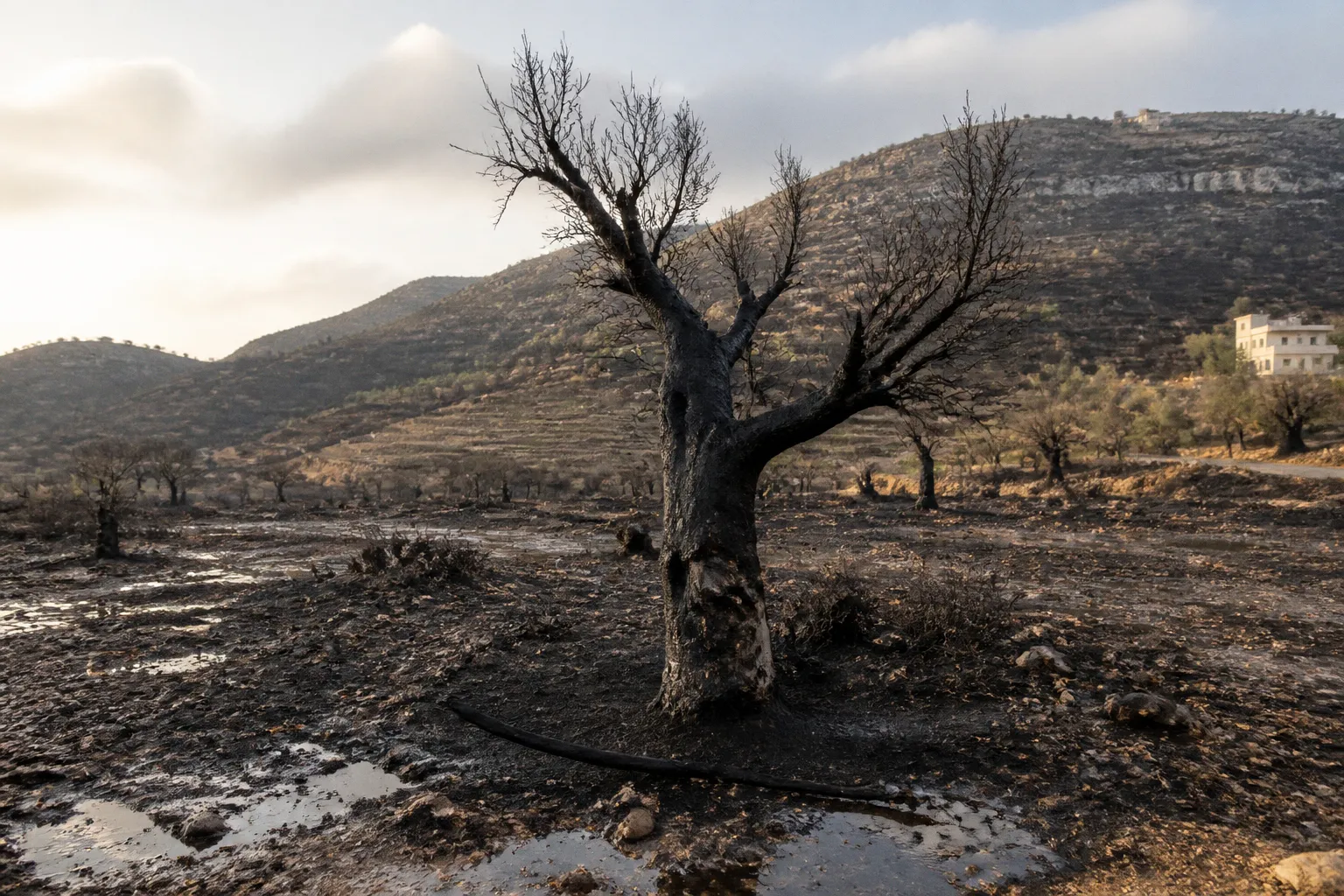
As reported by The Guardian, firefighters and environmental groups across southern Lebanon have accused the Israeli military of deliberately igniting wildfires that have consumed forests and farmland in the weeks since the 17 June ceasefire. The pattern, they say, is systematic: daytime illumination flares, incendiary munitions, and white phosphorus shells dropped into dry scrub, olive groves, and mature stone pine woodlands, with strikes continuing even when crews attempt to respond.
What the land is losing
Hussein Fakih, who heads civil defence operations in the Nabatieh region, told The Guardian that most of his crews' missions now involve fire response. He estimates that roughly 30 to 40 percent of land close to the frontline has been affected by blazes. In the Khiam area, a wooded stretch outside the town burned after flares were dropped earlier this week; when firefighters moved in to extinguish the flames, a drone struck nearby and forced a withdrawal. Similar accounts come from Kfarchouba, near the border, and from the forested corridor between Jezzine and the western Bekaa valley, where station chief Samir Hardan battled one fire overnight, contained it, then watched a second drone start another the following day.
Hisham Younes, founder of the conservation group Green Southerners, described the woodlands as long-established stands dominated by productive stone pine alongside oak, supporting migratory bird passage and performing ecological functions that take generations to replace. He framed the broader pattern as an ecocide, arguing that repeated destruction progressively erodes the ability of ecosystems to regenerate and, with it, the capacity of communities to remain on their land.
Why this matters for the export pipeline
For the cooperative networks that aggregate olives, herbs, and fresh produce from the southern districts, the damage lands exactly where volume decisions get made. Olive groves sit inside the same fire-affected belt as the pine woodlands, and a 30 to 40 percent frontline impact across one dry season translates directly into a thinner harvest cycle for the packing houses and overseas buyers who count on consistent Lebanese supply. When cooperative members lose productive trees, the shortfall does not stay local; it reaches contracted orders within a single marketing year.
The bottleneck is coordination as much as ignition. According to The Guardian, fire crews must route their movements through the Lebanese army and a deconfliction channel that includes the Israeli military; permission to fight blazes was granted at only two locations in one district, even as fires burned elsewhere in the same area. Until crews can reach active blazes without negotiating access, each flare dropped into dry vegetation is a standing subtraction from next season's cooperative throughput.
What to track
Three signals will tell the export side how deep the cuts run. First, the September regrowth on scorched olive groves once autumn moisture returns; that flush is what sets up the following year's flowering and fruit set. Second, whether any movement loosens the deconfliction protocol so crews can operate across the full frontline rather than at two approved points. Third, early satellite imagery of pine canopy in the border belt. Stone pine does not reseed quickly after crown fire, and mature stand loss is the slowest piece of this damage to reverse, with consequences that stretch well beyond the current export season.