Organic olive transition: a step-by-step orchard project
An organic olive farming transition in Lebanon is not a matter of replacing one spray with another and printing a new label.
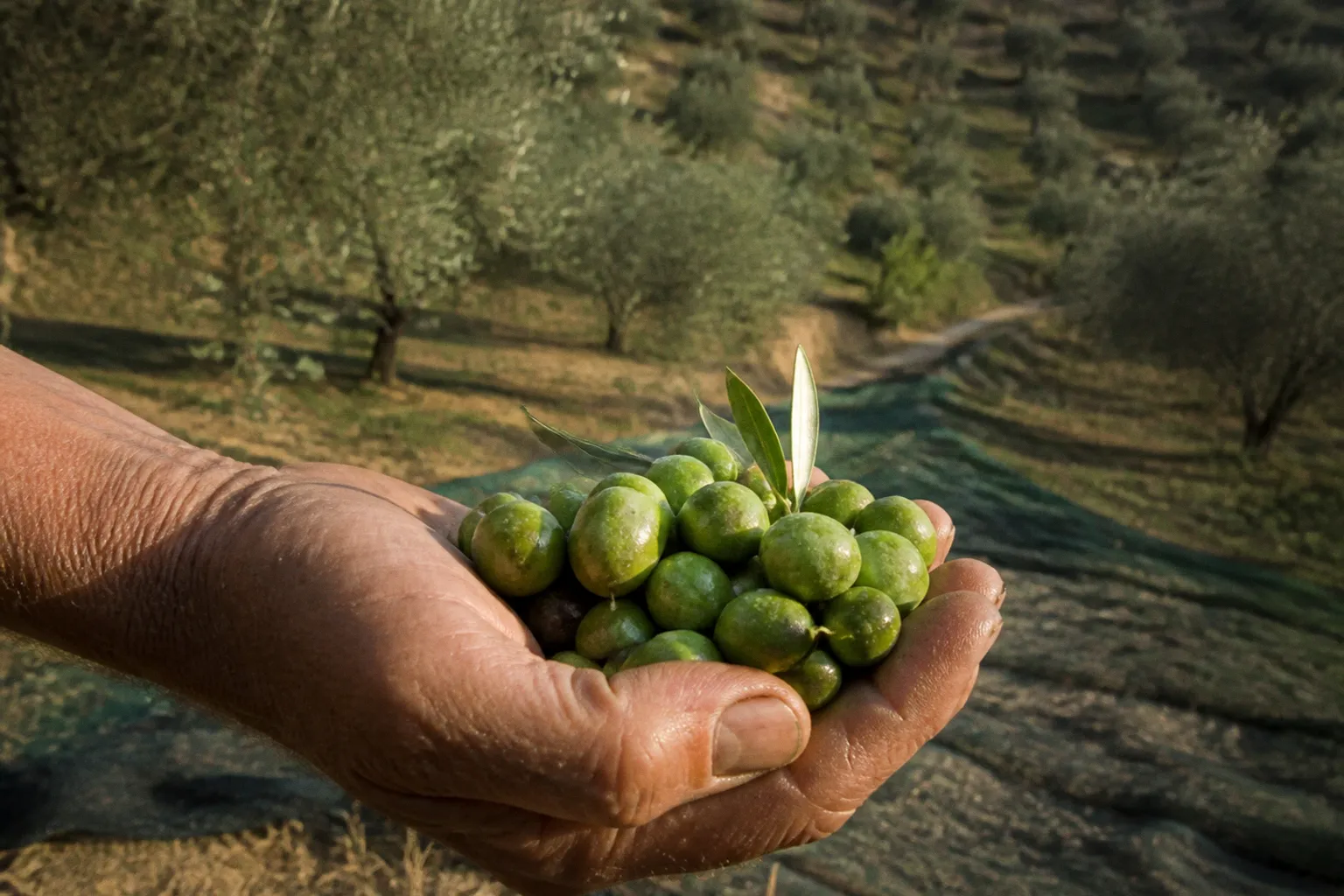
It is a three-year orchard project, and the difficult work begins before certification: recording what has been applied to the soil, understanding how water reaches each tree, preparing for olive fly pressure, and agreeing on shared practices across the grove.
For our growers, especially those working with the Souri—or Souriana—cultivar, the opportunity is substantial. Souri olives are deeply suited to Lebanese conditions and valued for their high polyphenol content, which can support the production of distinctive organic extra virgin olive oil. But the route from a traditionally managed orchard to a certified organic one must be orderly, documented, and collective. A single neglected corner, an unapproved input, or a harvest handled without traceability can weaken the work of an entire cooperative.
Lebanon’s olive sector already has the scale to matter. Olive trees cover around 22% of the country’s agricultural area, or approximately 5.4% of its total land area, and the sector involves nearly 100,000 farmers. That means organic conversion is not only an individual farm decision. Done well, it can become a shared system for improving soil, protecting water, reducing pesticide use, and presenting Lebanese olive oil to buyers who want a clear and credible story behind the bottle.
Start with the orchard, not the certificate
The first step is an honest baseline. Before we discuss certification, we need to know what the orchard is doing today.
Walk every block of trees and record the basics:
- The age and variety of the trees, with particular attention to Souri and mixed plantings.
- The slope, soil texture, drainage, and areas where water collects or disappears quickly.
- Irrigation sources, storage tanks, pumping arrangements, and any restrictions affecting access to water.
- Previous applications of herbicides, synthetic pesticides, mineral fertilizers, or other prohibited inputs.
- Existing ground cover, weeds, flowering plants, hedgerows, and signs of beneficial insects.
- Olive fly damage, fungal symptoms, rodent activity, and weak or declining trees.
- The location of roads, storage areas, livestock, compost piles, and neighboring conventional plots.
This inventory is practical rather than ceremonial. Organic certification depends on a controlled production system, and a cooperative cannot control what it has not mapped. A simple orchard file for each plot—kept on paper, digitally, or both—should include field maps, input receipts, treatment dates, harvest quantities, irrigation notes, and photographs of recurring problems.
For a cooperative, the most useful improvement is often to create one shared orchard record template. Every grower should use the same fields and the same vocabulary. “Sprayed recently” is not enough. We need the date, product, rate, reason for application, plot, weather conditions, and person responsible. This creates a common language between growers, the agronomist, the certifier, the mill, and eventually the buyer.
The conversion period is not a waiting room. It is the first production cycle in which the orchard learns to function without prohibited synthetic chemicals or pesticides.
What the three years should accomplish
Certified organic olive farming requires a strict three-year conversion period. During this time, prohibited synthetic chemicals and pesticides cannot be applied to the land. The orchard may continue to produce olives, but the farm must demonstrate that its management is moving consistently toward organic compliance.
A useful way to organize the period is by priorities rather than by calendar alone:
1. Year one: establish control.
Stop prohibited inputs, create field records, identify pest and water risks, and begin improving soil cover. The goal is not a perfectly tidy orchard. It is a documented orchard where every intervention has a reason.
2. Year two: strengthen the biological system.
Build compost capacity, reduce bare soil, improve pruning and ventilation, monitor olive fly populations, and establish a repeatable harvest and transport routine. This is where the grove should begin relying less on emergency treatments.
3. Year three: prove consistency.
Keep records complete, correct any gaps identified during inspections, verify input approval, coordinate with the mill, and prepare the traceability system required for certified sales. The orchard should now be operating as a complete system rather than a collection of individual changes.
The exact certification outcome depends on inspection and compliance, but the cooperative’s internal standard should be higher than “we hope this passes.” A grower who is unsure whether an input is permitted should pause and ask before applying it. In an organic system, a product’s label, a neighbor’s recommendation, or a supplier’s assurance is not enough on its own.
The three-year conversion is valuable because it turns organic production from a promise into a record of repeated decisions.
Build compliance into the cooperative’s daily work
Lebanon’s organic production framework is governed by Organic Production Regulation Law No. 158 of 2020, alongside national standards NL 724-1:2003, NL 724-2:2003, NL 724-3:2003, and NL 724-4:2003. These standards are not distant legal language for an office file. They shape what may be used in the field, how production is inspected, and how organic claims can be made in the market.
Organic certification for Lebanese olives should therefore be treated as a group operating system. The certifier will inspect farms, but the cooperative should not wait for an inspection to discover that growers have been keeping different records or purchasing inputs from unverified sources.
A workable structure usually assigns responsibility to several people rather than placing the entire burden on one cooperative manager.
| Area of responsibility | Practical cooperative task | Evidence to keep |
|---|---|---|
| Field production | Confirm approved inputs and record every treatment | Input register, receipts, plot notes |
| Internal monitoring | Visit member orchards during the season | Visit dates, observations, corrective actions |
| Pest management | Track olive fly and other pressures before treatment | Trap counts, photographs, monitoring sheets |
| Water and soil | Record irrigation sources and soil-building work | Water notes, compost records, soil observations |
| Harvest | Keep organic and non-organic fruit separated where necessary | Harvest tickets, lot numbers, transport records |
| Milling | Reserve clean equipment and traceable processing slots | Mill date, tank number, batch record |
| Sales and labeling | Match each bottle to an orchard and production lot | Labels, invoices, storage records |
This division of labor protects the cooperative from a familiar problem: one person knows the farms, another knows the mill, another manages documents, and nobody sees the full chain. Organic integrity depends on the connections between those tasks.
Make an approved-input decision before the season
A cooperative should maintain an input register containing the product name, active ingredient, supplier, intended use, approval status, and storage location. The register should be updated before the growing season, not after a grower has already treated the trees.
This is particularly important for products sold as “natural.” Natural does not automatically mean permitted in organic production, and an approved product can still be misused if the application rate, timing, or target crop is wrong. We need to look at the production rules and the certifier’s requirements together.
Storage also matters. Keep approved inputs clearly identified and separated from any prohibited materials still present on the farm. If a member manages both conventional and converting plots, those plots need clear physical and documentary separation. The simpler the layout, the easier it is for workers to follow and for an inspector to understand.
Internal inspections should be supportive but real. A cooperative mentor is not there to punish a grower for a missing note; the purpose is to catch a problem while it can still be corrected. At the same time, records cannot be treated as optional. If a treatment was not recorded, the cooperative should investigate immediately rather than quietly reconstructing the story months later.
Let the Souri orchard work with nature
The Souri cultivar gives Lebanese growers a strong foundation, but it does not remove the need for careful management. Organic cultivation succeeds when the orchard is made less hospitable to pests and stress, not when every problem is treated after it becomes visible.
The olive fly is one of the central challenges. Chemical-free management can include kaolin clay, organic compost, and biological controls, combined with monitoring. No single method should carry the entire burden. A grove with weak soil, irregular harvest timing, poor sanitation, and no monitoring will not be rescued by placing a few traps at the edge of the field.
A practical pest-management rhythm
Start monitoring before damage becomes obvious. Cooperative field teams can inspect representative trees in each orchard block and use traps or visual checks to follow activity. The purpose is to understand where pressure is increasing and whether management is working.
A practical sequence looks like this:
1. Map the hot spots.
Record blocks with a history of fruit damage, warmer exposures, dense canopies, or delayed harvests.
2. Monitor on a fixed rhythm.
Visits should occur often enough to show a trend, rather than taking one snapshot at the end of the season. The same trees or zones should be checked where possible.
3. Improve the tree environment.
Prune crowded growth, remove fallen fruit where feasible, and keep harvesting organized. A healthy, open canopy is easier to monitor and harvest.
4. Use physical and biological tools early.
Kaolin clay can form a protective barrier, while biological controls and trapping can help reduce pressure without relying on prohibited synthetic pesticides. Application must follow the approved product instructions and certification requirements.
5. Review the result collectively.
If one orchard has lower damage, ask what changed: timing, canopy management, trap placement, soil condition, harvest speed, or a combination. The cooperative’s value lies in transferring that knowledge.
Soil is part of pest management too. Organic compost contributes to soil structure and fertility, but it should be mature, well-managed, and traceable. Fresh or poorly prepared material can create new problems rather than building resilience. Apply compost according to the condition of the soil and the needs of the trees, not according to a generic quantity repeated every year.
Ground cover deserves the same practical attention. Bare soil may look neat after repeated cultivation or herbicide use, but it is vulnerable to erosion, evaporation, and heat. Managed cover crops, retained plant residues, and carefully timed mowing can protect the soil while avoiding excessive competition for water. In sloping Lebanese orchards, this is not an aesthetic choice. It is a way to keep fertile soil in place.
Pruning, biodiversity, and harvest quality
A Souri orchard does not need to be stripped clean beneath every tree to be productive. Flowering margins and selected ground vegetation can support pollinators and beneficial insects, provided they do not compete aggressively with young trees or consume scarce water in the dry season.
Pruning should create a canopy that allows air movement and light penetration without exposing the tree unnecessarily to heat. Remove dead, damaged, or crossing wood, and coordinate pruning across cooperative members so the work is done at an appropriate time rather than in scattered emergency bursts.
Harvest handling is where organic cultivation meets the quality of the final oil. Crisp, sound olives harvested at the right stage and moved quickly to the mill have a better chance of producing clean, expressive oil. Fruit left on the ground, packed in unsuitable containers, or held for too long in heat can lose quality even when the orchard management was excellent.
Use clean, ventilated crates where possible, keep lots identified by grower and plot, and agree on a delivery schedule with the mill before the harvest begins. A collective harvest calendar can prevent the familiar late-season rush in which sound fruit waits beside damaged fruit and the mill receives more olives than it can process well.
Water management in the Bekaa is a governance problem as much as a farming problem
Water availability is one of the hardest parts of intensive olive cultivation in the Bekaa Valley. A 1994 agreement with Syria restricts the drilling of new wells, and some organic farmers have had to negotiate local exemptions to irrigate their crops. This makes water planning a legal and cooperative matter, not simply an engineering project.
A grower cannot solve a restricted water supply by installing more pipes. Before investing in irrigation equipment, the cooperative should map what water is legally and practically available, how much storage exists, and which orchards are most vulnerable during heat and fruit development.
A water plan that starts with the soil
The most affordable water savings often come from reducing the amount lost between the source and the root zone.
Begin with:
- Repairing leaks in tanks, pipes, and connections before expanding the system.
- Using mulch or suitable organic residues to reduce evaporation around the trees.
- Improving soil organic matter so the soil can hold water for longer.
- Maintaining ground cover where it does not compete heavily with the olives.
- Irrigating according to tree condition, soil moisture, and growth stage rather than by habit alone.
- Prioritizing young, stressed, or fruit-bearing trees when water is limited.
- Scheduling irrigation during cooler periods to reduce avoidable losses.
The orchard should be divided into management zones. A deep soil on a sheltered slope will not behave like shallow, stony ground exposed to wind. Giving both zones the same irrigation schedule may feel fair, but it is not efficient. Equity in a cooperative means allocating limited water according to transparent rules and real crop needs.
Our growers should also agree in advance on what happens during a shortage. Who receives priority? How are emergency costs shared? Which trees can be maintained with minimal irrigation, and which young plantings require protection? These are difficult conversations, but they are healthier than allowing water access to become an informal contest between neighbors.
Water quality and source records belong in the orchard file as well. A certifier may need to understand the production system, while cooperative managers need the information to plan irrigation improvements. If the group is considering storage or shared distribution, calculate the budget in stages:
1. Measure current losses and storage capacity.
2. Repair the least expensive failures first.
3. Improve delivery to the root zone.
4. Add storage only after demand and supply are understood.
5. Review the system after one full dry season.
This approach protects the cooperative from spending scarce funds on equipment that cannot overcome a basic shortage of permitted water.
Keep the mill, label, and export file connected to the grove
An organic olive transition is completed in the market only when the oil can be traced and described accurately. The work does not end when the olives leave the orchard.
Lebanese mandatory standard 756:2007 regulates the sale and labeling of olive oil. Labels must specify the oil grade, farmer details, mill location, pressing date, and an expiration date that does not exceed two years. For a cooperative, these requirements are also a useful quality-control framework. If we cannot identify who grew the olives, where they were milled, and when they were pressed, we do not have a strong batch system.
Before harvest, agree with the mill on:
- The date and time each grower’s olives will arrive.
- How organic lots will be separated from other fruit.
- Whether the equipment will be cleaned or dedicated before processing.
- How tanks and batches will be numbered.
- What records will accompany each delivery.
- How samples will be retained for quality review.
The cleanest system is one in which the orchard lot number follows the olives from harvest ticket to mill intake, storage tank, bottling record, and invoice. A small cooperative may manage this with printed forms and a shared spreadsheet. The technology matters less than consistency.
If the cooperative is preparing for export, certification through a recognized body operating in Lebanon is part of the commercial pathway. CCPB Middle East s.a.l. is one certification body working with producers whose certification can support access to the European Union, United States, and Japanese markets. Certification does not guarantee a sale, a premium price, or easy access to those markets. It provides documented assurance that can be considered alongside oil quality, packaging, volume, reliability, and buyer requirements.
Export buyers will also look closely at practical matters that do not fit neatly into the word “organic”: whether lots arrive on time, whether labels are accurate, whether cartons survive transport, whether each shipment matches its documents, and whether the cooperative can provide the same quality next season. A blemish-free bottle design cannot compensate for inconsistent oil or missing traceability.
A shared harvest budget
Cooperatives often focus on certification fees and overlook the operational costs around them. Build a season budget that includes:
- Internal orchard visits and record administration.
- Soil improvement materials and transport.
- Pest-monitoring supplies and approved treatments.
- Irrigation repairs, storage, and energy.
- Harvest labor and clean crates.
- Transport from orchard to mill.
- Milling, storage, bottling, and laboratory testing where required.
- Certification inspections and corrective work.
- Label updates, packaging, and export documentation.
Shared purchasing can reduce the cost of crates, monitoring supplies, compost transport, or laboratory services. Shared scheduling can reduce idle time at the mill. Shared records can reduce repeated administrative work. These are not small efficiencies; they are how a group makes a demanding conversion possible for growers who could not comfortably carry every cost alone.
A cooperative conversion calendar
A clear calendar gives the project momentum and makes responsibilities visible.
Before the first conversion season
Complete the orchard map and baseline survey. Gather past input records, identify uncertain applications, and contact the certification body early enough to understand inspection and documentation requirements. Establish the cooperative input register and choose the person responsible for maintaining it.
At the same time, form small working groups for soil, water, pest monitoring, harvest, and records. These groups should report back in practical language: what was observed, what was changed, what remains unresolved.
During the first year
Focus on stopping prohibited inputs, improving documentation, and reducing the orchard’s dependence on bare soil and emergency pest control. Begin compost planning, repair irrigation leaks, and establish monitoring points for olive fly pressure.
Do not measure success only by yield. The first year may expose weaknesses that were hidden by conventional inputs. A more honest measure is whether the cooperative now knows what is happening in each orchard and can respond before the problem spreads.
During the second year
Compare orchards. Which blocks have stronger ground cover? Where is compost improving moisture retention? Which growers are seeing less pest damage? Which practices are creating too much competition for water?
This is the year for refinement. Adjust pruning schedules, improve monitoring, and agree on harvest standards. If one member is struggling with records, pair them with another grower rather than leaving the problem until inspection.
During the third year
Treat traceability as seriously as field management. Verify that every plot, input, harvest lot, mill record, tank, and label can be connected. Review the full file before inspection. Correct gaps openly and promptly.
The cooperative should also begin speaking with potential buyers about volume, oil profile, packaging, delivery windows, and certification documentation. Market conversations belong in the third year because they help determine whether the product and the production system are ready for the buyer being approached.
The real harvest is a stronger farming community
Organic olive farming transition in Lebanon asks for patience, but patience alone is not a strategy. The transition succeeds when the orchard, the cooperative, the mill, and the market begin working from the same set of decisions.
For our growers, the Souri cultivar offers a meaningful foundation: a local variety with character, resilience, and a strong place in Lebanese agricultural identity. The three-year conversion offers the discipline to protect that identity with credible practices. Soil health, careful water use, pesticide reduction, timely harvest, and accurate labeling are not separate projects. They are parts of one chain.
No cooperative should promise that certification will be cheap or effortless. The records take time. Inspections require preparation. Water restrictions cannot be wished away, and organic pest management demands observation rather than a quick intervention. But the collective effort changes what is possible. A group can share monitoring, negotiate mill access, purchase materials more efficiently, train members, and present a consistent product to buyers.
The goal is not simply to place the word “organic” on a bottle. It is to produce oil whose quality can be followed back through a clean, living orchard—to trees rooted in healthier soil, managed with less chemical dependence, harvested with care, and supported by growers who know that the strength of one grove is increased by the integrity of the whole community.