Soil health restoration: 5 organic methods for Bekaa
The 2022 water test from the Al Ammiq River came back at 39.8 mg/L of nitrate. That is not a number you negotiate with — it is a fertilizer runoff problem that contaminates aquifers, kills soil…
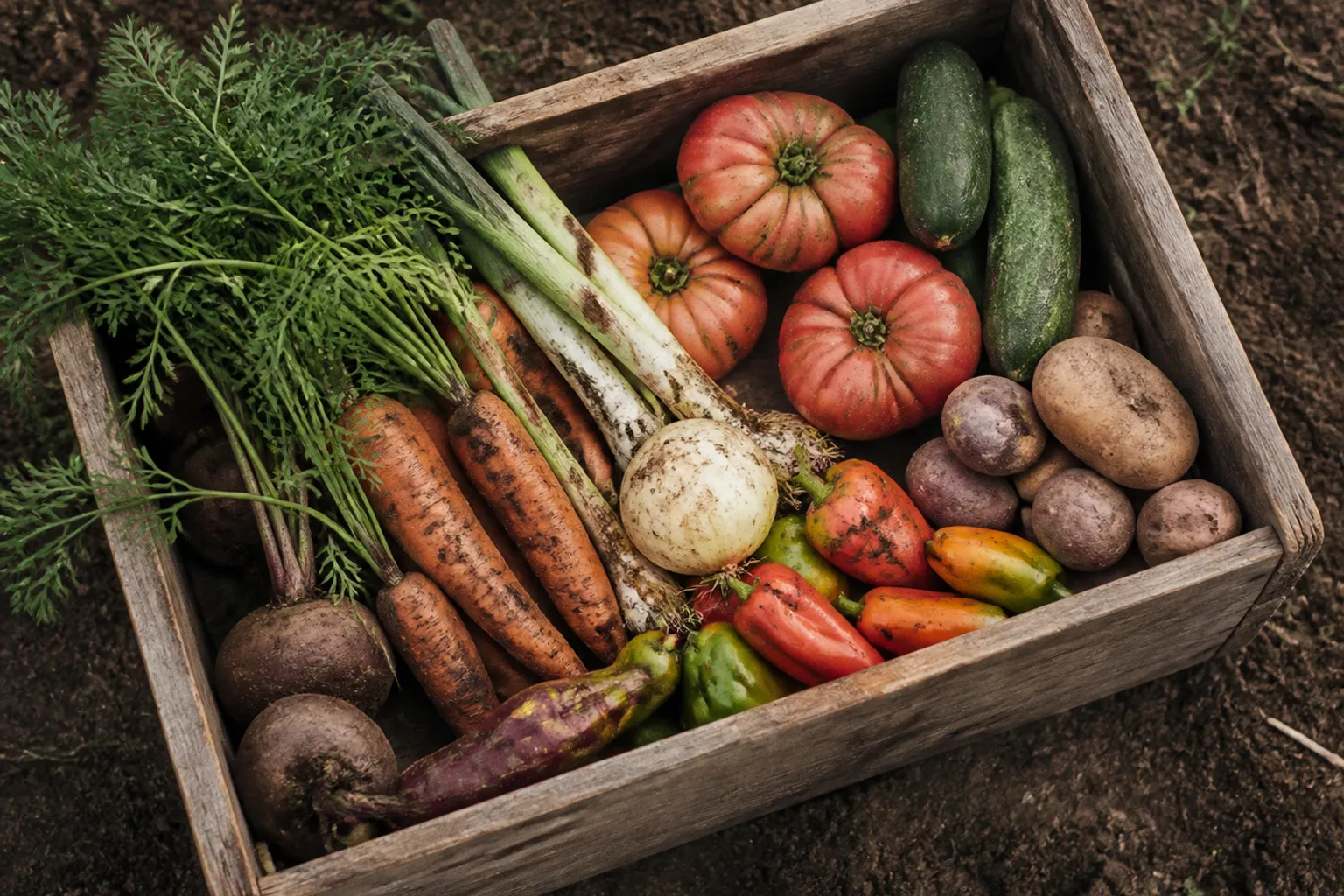
Restoring Bekaa Valley Soil: 5 Proven Organic Techniques
The 2022 water test from the Al Ammiq River came back at 39.8 mg/L of nitrate. That is not a number you negotiate with — it is a fertilizer runoff problem that contaminates aquifers, kills soil biology, and burns the organic matter your next export contract depends on. The Bekaa Valley holds 150,000 hectares of farmland, 80% of it irrigated, and the Upper Litani Basin alone delivers 42% of Lebanon's total agricultural output. If the soil biology on those plots collapses, the pipeline collapses with it. While some agroecological farms in the Bekaa have demonstrated significant improvements in soil organic matter, the remaining acreage has considerable ground to cover. These five techniques are the operational protocol to make meaningful progress toward healthier, more resilient soil.
The target is not "organic certification." The target is measurable improvements in soil organic matter, reduced nitrate runoff, and the elimination of synthetic inputs from the rotation cycle.
Cut the Tillage and Plant a Cover
No-till and reduced tillage preserve the fungal hyphae and aggregate structure that hold water in the root zone. Published field comparisons show up to 60% lower greenhouse gas emissions versus conventional plowing, and the soil moisture retention gains are immediate. You trade fuel cost and time for biology and water — a clean swap if you are running a cooperative with thin margins.
The cover crop is what feeds that biology between cash crops. Plant oats, vetch, and legumes as a winter mix. The protocol:
- Sow window: mid-October to mid-November, directly after the last summer cash crop clears.
- Seed mix: oats (60% by weight) for biomass, vetch (25%) for nitrogen fixation, legume blend (15%) for diversity.
- Termination: roll-crimp at full bloom in early April, leave residue as mulch, no tillage, plant summer crop directly into the mat.
- Cost per hectare: seed runs roughly $80–$120 depending on the mix; you save $40–$60 in diesel and labor on a single tillage pass.
If you farm below 1,000 mm annual rainfall, terminate the cover earlier and reduce the oats ratio — vetch stays because it fixes nitrogen without aggressive water draw. Do not disc the cover under. That buries the benefit.
If you terminate the cover and till the residue, you have just paid for a cover crop and lost the soil structure benefit. Roll-crimp or mow. Never invert.
Close the Nutrient Loop with Vermicomposting
Synthetic fertilizer is the line item that drains cooperative cash and contaminates groundwater at the same time. Vermicomposting — using earthworms to break down organic waste into stable, nutrient-rich castings — closes that loop on-farm. Mature worm castings are widely recognized to contain significantly higher concentrations of plant-available nutrients compared to bulk soil, and the biological activity they introduce supports the soil food web throughout the growing season.
The architecture is straightforward:
- Windrow system: layered horse manure, food scraps, crop residue, and carbon bedding (straw, cardboard). Maintain moisture at 70–80%, turn every 10 days.
- Vermicomposting toilet integration: on-farm units filter urine through worm beds and can substantially reduce pollutant loads before the liquid fraction is applied. Two practical wins here — improved sanitation for the farm crew and diverted nitrate from the aquifer.
- Application rate: 2–3 tons of finished castings per hectare, broadcast before planting, light incorporation only.
If you run livestock, your manure is your feedstock. If you don't, explore local sourcing from stables or dairies. Sourcing arrangements will vary by location and relationship, but the core principle remains: turning a waste stream into a fertility input improves the farm's nutrient economics.
Diversify the Rotation and Intercrop by Design
Monoculture is what got the soil here in the first place. The fix is structured diversity, not nostalgia. The reference operation is Buzuruna Juzuruna, the agroecological farm-school established in 2016 in Saadnayel — 150 crop varieties on a 2-hectare plot, including 13 types of heirloom wheat. Turba Farm, a women-led regenerative operation in Zahle founded in 2021, runs 70 varieties on similar acreage. The number is not a vanity metric. Every additional species is a different root depth, a different nutrient draw, a different pest profile. The soil biology fills in the gaps.
Operational template for a 1-hectare equivalent:
- Three-block rotation: legumes (fava, lentil, chickpea) → leafy brassicas (kale, radish, turnip) → fruiting crops (tomato, pepper, squash). Cover crop between blocks.
- Intercropping protocol: basil in alternating rows between tomato vines — disrupts whitefly and hornworm pressure, adds a secondary cash crop, no synthetic pesticide required.
- Heirloom integration: swap one commercial wheat line for a heritage variety per season. The genetics are deeper-rooted, the seed can be saved, and the flour commands a premium in specialty export channels.
| Parameter | Monoculture baseline | Diversified rotation |
|---|---|---|
| Soil organic matter | 1.5–2.5% | Potential for significant improvement |
| Synthetic N input | 80–120 kg/ha | Reduced or eliminated |
| Pest management cost | High | Lower (via biocontrol & ecology) |
| Export channel access | Commodity | Specialty/premium |
If export buyers are asking for traceability and residue-free certification, the diversified rotation is a strong foundational strategy. Shifting away from continuous synthetic-input monocultures simplifies the path toward meeting stringent testing requirements.
Run the Baal Method for Drought Resilience
The Baal method is dryland farming on heirloom, drought-tolerant genetics — ancient wheat, okra, tomatoes — grown without active irrigation. The plant is forced to push roots deeper into the soil profile, pulling moisture from strata that conventionally-irrigated crops never access. In a drought-stressed basin where the Litani flow is no longer reliable, this is not a heritage curiosity. It is risk mitigation.
Operational rules:
- Seed selection: source heirloom varieties with documented dryland performance — local wheat landraces, Palestinian okra, dryland-adapted tomato lines.
- Planting density: reduce by 20–30% versus irrigated spacing. Wider spacing reduces competition for stored soil moisture.
- Soil prep: one shallow pass to break crust, terminate winter cover, no deep tillage. Maintain residue cover at 60%+ surface area.
- Expectation: yield per plant is often lower than irrigated monoculture. Net per-hectare margin can be higher because input cost collapses and the drought-tolerant output is not easily substituted.
If your cooperative is in the 20% of Bekaa farmland that is rainfed, Baal method is the default, not the experiment. If you are currently irrigated, converting 10–15% of acreage to Baal serves as a hedge against the next water allocation cut.
Replace Synthetic Pesticides with Kitchen-Deck Biocontrol
The last input to cut is the pesticide pass. The substitution set is low-cost, fast to mix, and can be effective against common pressure points in the Bekaa — aphids, whitefly, powdery mildew, early blight.
- Garlic-pepper spray: 100 g crushed garlic + 50 g hot pepper steeped in 1 L water for 24 hours, strain, dilute 1:10. Knockdown for soft-bodied insects.
- Baking soda fungicide: 1 tbsp baking soda + 1 tsp liquid soap + 4 L water. Apply at first sign of powdery mildew on cucurbits and grape.
- Whey foliar: 1 part whey to 5 parts water. Triggers systemic acquired resistance in tomatoes and squash, suppresses downy mildew.
- Soap emulsion: 2 tbsp pure castile soap per 1 L water. Suffocates whitefly nymphs on eggplant and pepper.
Spray window: early morning or late afternoon, never at peak sun. Reapply after rain. When synthetic pesticide use ceases, soil biodiversity begins a gradual recovery process — mycorrhizal colonization, earthworm activity, and beneficial predator populations all tend to increase over subsequent seasons. Note that the substitution is not always one-to-one on heavy infestations. Rotate the sprays, do not blanket-apply, and treat the biocontrol as a system, not a product.
Implementation Protocol
The five methods stack. Tillage reduction and cover cropping set the soil structure. Vermicomposting closes the fertility loop. Diversified rotation and intercropping rebuild biology and break pest cycles. Baal method insulates against water risk. Biocontrol closes the synthetic input exit. Running any one in isolation gets partial results. Running them in combination addresses the interconnected drivers of soil degradation.
If you are a cooperative lead, the rollout sequence is:
1. Year 1: Cut tillage, establish cover crop on 100% of acreage, mix the first batch of vermicompost.
2. Year 2: Convert monoculture blocks to three-block rotation, add intercropping rows, deploy biocontrol rotation.
3. Year 3: Convert 10–15% of acreage to Baal method with heirloom seed, scale vermicompost to full-acreage broadcast.
4. Year 3 onward: Track soil organic matter twice annually (spring and fall), nitrate in adjacent water sources annually, and input cost per hectare quarterly. The numbers move before the soil does — trust the protocol.
The 39.8 mg/L nitrate reading in 2022 is a baseline. The next sample is your scorecard. Run the protocol, sample the water, weigh the output. The Bekaa soil responds when the operator does.