Organic Vineyard Conversion: A Lebanese Field Roadmap
A vineyard does not become organic when the farmer stops spraying. It becomes organic when the whole production system can function without relying on prohibited inputs—and when that change has been…
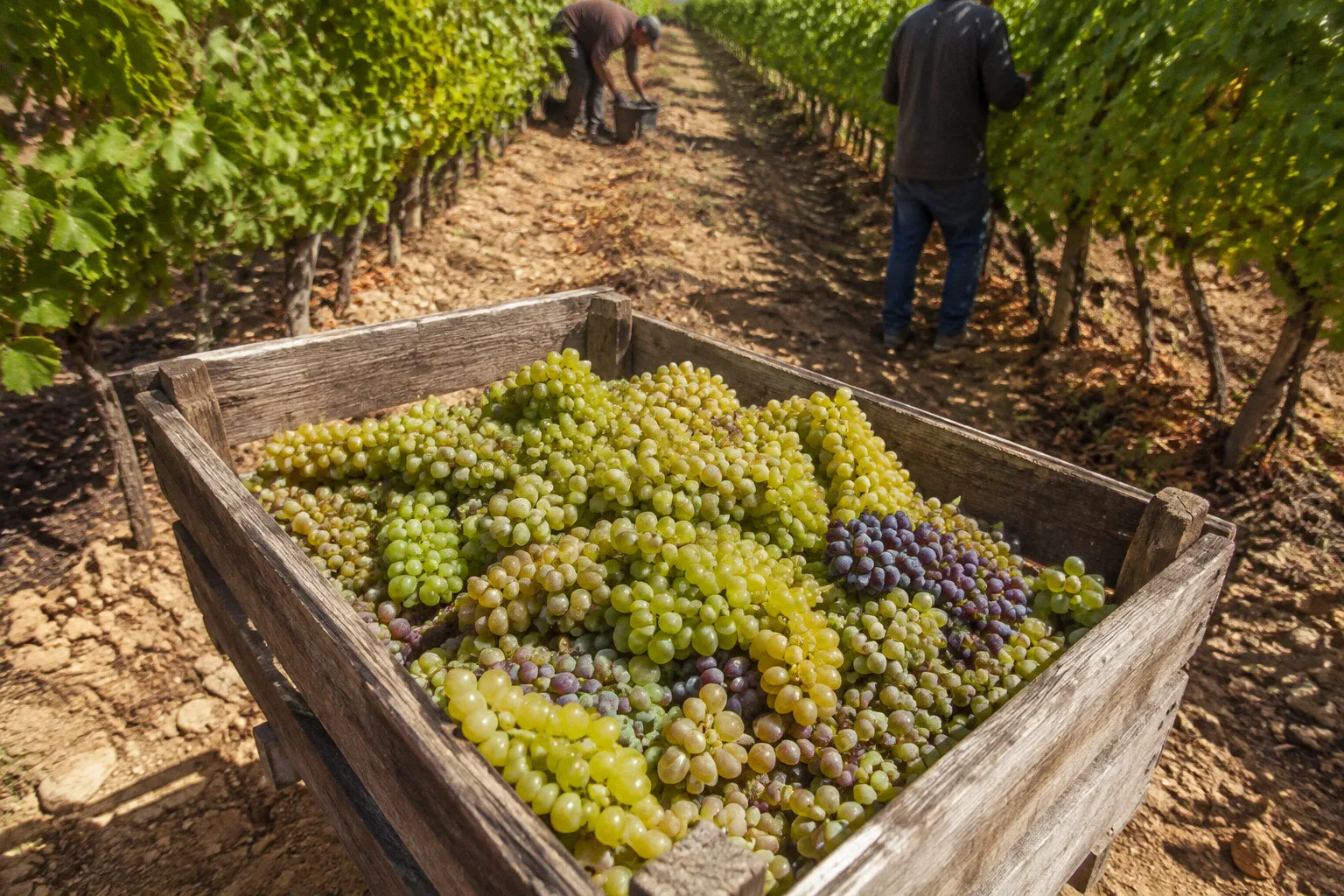
A vineyard does not become organic when the farmer stops spraying. It becomes organic when the whole production system can function without relying on prohibited inputs—and when that change has been documented long enough for a certifier to recognize it.
For Lebanese grape growers, that means planning around a mandatory 36-month conversion period for perennial crops. The clock matters, but it is not the difficult part. The harder work is rebuilding soil biology, controlling weeds without defaulting to herbicides, protecting vines from disease in changing weather, and keeping records precise enough to satisfy both a certification body and an export buyer.
Lebanon has a strong natural starting point. Around 60% of the country’s planted vineyard area lies in the Bekaa Valley, much of it above 1,000 metres between the Mount Lebanon and Anti-Lebanon ranges. The region can receive up to 300 sunny days a year and generally has low atmospheric moisture. Those conditions reduce pressure from some fungal diseases, although they do not remove the need for close monitoring.
The opportunity is significant. Lebanon has roughly 14,000 hectares of vineyards, including about 3,000 hectares used for wine production. The transition to organic viticulture is therefore not a niche exercise for a handful of estates. It is a practical question for growers who want healthier soils, a more resilient crop, and access to markets where certification is becoming part of the commercial conversation.
The 36-month transition: what actually changes
The first principle is simple: organic vineyard conversion in Lebanon is a managed transition, not a label change.
For grapevines, the required conversion period is three years, or 36 months, of organic management before harvested grapes can be certified as organic. During that period, the grower must follow the applicable organic rules even though the harvest may not yet carry the full organic claim. This creates a financial and operational gap: the vineyard bears the cost and discipline of the new system before the market necessarily pays a premium for the result.
That is why the conversion should begin with a block-by-block assessment rather than a whole-farm declaration made in a single season.
A vineyard manager needs to know:
- Which blocks have a history of herbicide use, synthetic fertiliser, or repeated fungicide applications.
- Where soil compaction is limiting infiltration and root growth.
- Which slopes are losing soil during intense rainfall.
- Where irrigation is uneven or creating excessive vegetative growth.
- Which varieties are most vulnerable to heat, drought, mildew, or delayed ripening.
- Whether the farm can separate converted fruit from conventionally managed fruit during harvest and storage.
The last point is especially important for cooperatives and mixed-production estates. Certification is attached to a controlled production system, not simply to a farmer’s intention. Equipment cleaning, harvest bins, storage areas, spray records, input invoices, and field maps all become part of the evidence.
Year one: establish the baseline
The first growing season should be treated as a diagnostic year, even if the vineyard has already been farmed for decades.
Begin with soil sampling by block. A single composite sample for the entire property can hide the differences between shallow limestone soils, deeper alluvial areas, irrigated rows, and eroded headlands. The useful questions are not limited to nutrient levels. Soil structure, organic matter, salinity, pH, and infiltration help explain why vines are weak, excessively vigorous, or uneven in ripening.
The aim is not to feed the vineyard more aggressively. It is to understand which biological and physical constraints are reducing its resilience.
A practical first-year programme may include:
1. Mapping the vineyard. Record varieties, vine age, row direction, elevation, slope, irrigation zones, and areas of poor growth. A basic map is enough if it is accurate and updated.
2. Recording the existing input history. List products used during previous seasons, including herbicides, fertilisers, adjuvants, and disease-control materials. If records are incomplete, mark the uncertainty rather than pretending the history is known.
3. Reducing disturbance. Avoid unnecessary cultivation that breaks soil aggregates and leaves the surface exposed to heat and erosion.
4. Establishing ground cover carefully. Cover crops can protect soil and add root activity, but they also compete for water. In dry Bekaa blocks, the timing of mowing or rolling is as important as the seed mixture.
5. Improving irrigation observation. Check whether emitters are delivering evenly and whether the wetted zone matches the active root zone. Water conservation begins with seeing where water is actually going.
6. Starting a field log. Note weather, phenology, disease symptoms, mowing, irrigation, pruning, harvest dates, and every permitted input.
The field log is not bureaucratic decoration. It gives the grower a way to connect cause and effect. If a mildew event appears after a period of unusual humidity, or if a cover crop causes stress during an early heat wave, the record makes the next decision more intelligent.
The first year of organic conversion is less about replacing one product with another than about learning which pressures the vineyard has been masking.
Year two: build the biological system
By the second season, the objective should move from stopping prohibited inputs to making the vineyard less dependent on intervention.
Soil microbiology becomes central here. A living soil is not simply soil with more organic matter. It is a system with active roots, decomposing residues, microbial communities, stable aggregates, and enough pore space for both air and water. These functions help vines cope with dry periods, but they cannot be created by applying compost once and walking away.
Organic matter should be added according to soil need and material quality. Poorly matured compost can introduce weed seeds, excessive salts, or unstable nutrients. Excessive additions can also push vine vigour in the wrong direction, particularly where irrigation is already generous. The question is not how much organic material can be spread, but what biological function it is expected to support.
Ground cover requires the same discipline. In a high-altitude vineyard with limited rainfall, a winter cover crop can reduce erosion and improve soil structure, yet become a serious competitor if it remains active into the dry season. The management decision is therefore seasonal:
- Keep living cover when rainfall and soil moisture allow it to protect the surface.
- Mow, roll, or terminate it before vine water demand becomes critical.
- Leave residue where it can shade the soil and reduce evaporation.
- Avoid leaving a dense, dry layer in contact with trunks if it increases pest or disease risk.
- Use different cover strategies on deep valley soils and shallow slopes rather than forcing one treatment across the farm.
Vine balance also matters. Excessive nitrogen, over-irrigation, and aggressive pruning can create a canopy that is dense, soft, and difficult to ventilate. Organic disease management begins before a disease-control product is considered. Canopy positioning, shoot spacing, leaf removal around fruit zones, and timely pruning all influence how long leaves and clusters remain wet.
The intention is not to expose fruit unnecessarily to intense sun. In Lebanon’s bright climate, excessive leaf removal can increase heat stress and sunburn. The better approach is measured canopy management: enough airflow to reduce humidity around clusters, enough foliage to protect fruit from peak heat.
Year three: stabilise and prepare for certification
The third year should confirm that the vineyard can maintain the system under pressure.
This is where growers should test their procedures rather than simply hope the season remains easy. The Bekaa’s low humidity can reduce fungal pressure, but weather patterns are not fixed. A single period of unseasonal rain or humidity can expose weaknesses in scouting, canopy management, or spray timing.
The farm should now be able to answer practical questions without searching through memory:
- When was each block last treated, and with what approved material?
- Which product batch and application rate were used?
- Who applied it, and under what weather conditions?
- Where were untreated buffer areas located?
- How were bins, machinery, and storage spaces cleaned between lots?
- Which grapes came from conversion blocks and which did not?
- Can the harvest be traced from the field to the winery or cooperative collection point?
The certification body will have its own procedures and documentation requirements. In Lebanon, Law No. 158 of May 2020 provides a national legal framework for organic production, including standards, inspection systems, and official certification registries. A producer should therefore contact the chosen certifier early, not at the end of the third year. The certifier’s interpretation, inspection schedule, approved-input list, and destination-market requirements need to shape the farm’s records from the beginning.
Using Bekaa climate as an advantage without treating it as a guarantee
The Bekaa Valley offers conditions that can make organic viticulture more manageable than in wetter wine-growing regions. High solar exposure and low atmospheric moisture generally reduce the persistence of fungal infections. That can lower the number of disease-control interventions required during a season.
But climate is an advantage only when it is read accurately.
Dry conditions can create a different set of stresses:
- Water scarcity can slow shoot growth, reduce berry size, and interrupt ripening.
- High temperatures can damage exposed clusters and reduce acid retention.
- Strong seasonal contrasts can produce rapid shifts between drought stress and disease-favourable weather.
- Bare soil can heat rapidly and lose structure through erosion.
- Excessive irrigation can produce vigorous canopies that create their own disease microclimate.
The field response should be based on monitoring rather than on a fixed calendar. Walk blocks regularly, especially after irrigation, rainfall, and sharp temperature changes. Look inside the canopy, not only at the exposed leaves. Check shaded clusters, basal leaves, shoot tips, and areas near irrigation lines. Disease often begins where the vineyard is least ventilated or where growth is most vigorous.
Water management is particularly important in organic conversion because a stressed vineyard is harder to manage with a narrower input toolbox. Drip systems can help deliver water precisely, but they do not solve poor scheduling or uneven pressure. Use soil observations, vine growth, weather, and phenological stage together. Young vines, shallow soils, and fruit-bearing blocks may require different timing even when they share the same irrigation line.
A useful conversion target is not minimum irrigation at all costs. It is stable vine function with less waste. Severe stress can weaken the crop and reduce the plant’s ability to recover; chronic overwatering can damage soil structure and create excess canopy growth. Resilience sits between those extremes.
Crop rotation still has a place in vineyards
A mature vineyard cannot be rotated in the same way as an annual vegetable field, but crop rotation can still support the wider farm system.
Where a cooperative manages adjacent annual crops, cover-crop planning can alternate species and rooting patterns across suitable parcels. Legumes, grasses, and broadleaf species contribute differently to soil structure, residue quality, and nutrient cycling. The selection should reflect local water availability and the risk of excessive vigour.
Within the vineyard, rotation can be understood as rotating management functions rather than uprooting vines. For example, a grower may vary cover-crop species, alternate mowing dates, maintain permanent vegetation on erosion-prone margins, and leave selected areas undisturbed for beneficial insects. This is not a substitute for proper vineyard sanitation, but it can reduce the ecological uniformity that makes farms more vulnerable.
Biodiversity should also be planned around the working vineyard. Flowering margins and hedgerows can provide habitat, but they must not become unmanaged reservoirs for pests or compete heavily for scarce water. The useful question is always practical: what function does this non-crop vegetation perform, and how will it be managed through the dry season?
Law No. 158, certification, and the export chain
Organic production is often discussed as though the farm gate is the finish line. For Lebanese producers, it is closer to the beginning of a traceability chain.
Law No. 158, enacted in May 2020, created a formal Lebanese framework for organic production. It addresses the architecture needed for a credible system: production standards, inspection, certification, and registries. International certification bodies, including CCPB, may also be involved where producers need certification recognised by particular buyers or markets.
The details matter because the term organic has commercial consequences. Exporters, wineries, importers, and retailers may require more than a general statement that the vineyard uses natural methods. They may ask for current certification, field records, input documentation, segregation procedures, and evidence that the grapes came from an eligible production period.
A grower should think about three separate questions:
| Question | Why it matters during conversion |
|---|---|
| Is the field managed under the organic rules? | The 36-month transition only has value if prohibited inputs are excluded and the system is documented. |
| Has the production period been inspected and recognised? | Certification depends on inspection and records, not on management claims alone. |
| What does the destination market require? | A Lebanese certificate may not answer every buyer’s requirements for imported grapes, wine, or processed products. |
For cooperatives, group organisation can reduce the burden on individual farms, but it also increases the need for internal control. Members need shared rules for input purchasing, spray equipment, harvest containers, storage, and record submission. A single undocumented treatment can create uncertainty across a collection network.
The cooperative should maintain:
- A current member and field register.
- Maps identifying each conversion block.
- A common list of permitted inputs.
- Training records and attendance.
- Internal inspection notes.
- Procedures for handling non-conforming produce.
- Clear separation between certified, in-conversion, and conventional grapes.
This administrative work is closely tied to soil health. A buyer cannot see microbial activity in a soil report alone, and a certifier cannot verify a farmer’s intention. Both rely on evidence. Good records are what connect ecological practice to market trust.
Choosing varieties during the shift
Lebanese vineyards include indigenous varieties such as Merwah and Obeidi alongside international grapes including Cinsault, Syrah, and Cabernet Sauvignon. Organic conversion does not require replacing one variety with another, but it does expose differences between them.
Variety selection should be considered alongside site, elevation, soil depth, water access, disease history, and the intended product. A variety that performs well on a dry, ventilated slope may behave differently in a deeper irrigated parcel. Likewise, a canopy that is manageable for one variety may become overly dense in another under the same fertilisation and irrigation programme.
During conversion, collect block-level observations rather than relying only on winery reputation or historical yield. Record:
- Budbreak and flowering timing.
- Véraison and harvest date.
- Canopy density.
- Cluster exposure.
- Disease incidence.
- Water stress symptoms.
- Berry composition at harvest.
- Yield consistency across different weather conditions.
This information helps distinguish a genuine site-and-variety fit from a temporary good season.
Indigenous varieties deserve particular attention because they can strengthen the identity of Lebanese organic wine rather than turning certification into a purely compliance-driven exercise. That does not mean assuming local varieties are automatically drought-proof, disease-resistant, or commercially superior. It means testing their behaviour honestly under the farm’s conditions and preserving useful genetic and cultural diversity where it performs well.
International varieties may remain important for established markets, blends, and winery contracts. The agronomic question is not whether one category is more authentic. It is whether the vineyard can produce healthy, marketable grapes with a level of intervention compatible with organic rules and the farm’s water and labour resources.
Certification opens the market door, but soil structure, canopy balance, and reliable records determine whether the vineyard can keep walking through it.
What the first certified harvest should—and should not—promise
The first eligible harvest is a milestone, not proof that every problem has been solved.
A vineyard can receive organic certification and still have uneven soils, inefficient irrigation, weak biodiversity, or excessive dependence on purchased inputs. Organic status describes compliance with a defined production standard. It does not automatically certify that the farm has reached regenerative soil health or climate resilience.
That distinction is useful for producers and buyers. It keeps the conversation precise.
A mature organic vineyard programme should continue improving:
- Soil cover and erosion control.
- Root-zone water retention.
- Nutrient cycling through compost and plant residues.
- Canopy airflow without excessive heat exposure.
- Pest monitoring and habitat management.
- Input efficiency.
- Harvest traceability.
- Worker safety and equipment hygiene.
The economic side also needs realism. The exact cost of organic conversion per hectare will vary by vineyard age, labour availability, irrigation condition, weed pressure, certification arrangement, and whether the farm must invest in new equipment. There is no reliable single figure to apply across Lebanon. A grower should build a three-year budget that separates recurring costs from one-time improvements.
Recurring costs may include additional scouting, mowing, record keeping, soil amendments, certification, and targeted disease-control inputs. One-time costs may include irrigation repairs, compost infrastructure, sprayer calibration, storage separation, mapping, or machinery cleaning. The budget should also allow for the possibility that yields or market access will not respond immediately.
For a cooperative, the shared investment may be more efficient. A common field technician, soil-testing programme, composting area, or harvest-traceability system can spread the cost across members while improving consistency. The risk is that central systems become too distant from the fields. The best arrangement keeps technical support close to the blocks and makes each grower responsible for timely records.
A seasonal roadmap for the next three years
The conversion is formally measured in months, but farm decisions are seasonal. A practical timeline helps keep the legal period connected to the biological rhythm of the vines.
Before the first season
- Select the blocks for conversion and confirm their previous input history.
- Contact the intended certification body and ask for the applicable Lebanese and destination-market requirements.
- Take soil samples by meaningful management zone.
- Inspect irrigation lines, pressure, filtration, and emitter uniformity.
- Map slopes, drainage problems, erosion scars, and weak-growth areas.
- Separate equipment and storage procedures where conventional and converting grapes will coexist.
- Prepare field logs before the first treatment or cultivation decision.
Dormancy and pruning
Prune with vine balance and disease sanitation in mind. Remove clearly diseased material from the vineyard where appropriate, and avoid creating an unnecessarily vigorous canopy through excessive spur or bud retention. Pruning decisions should reflect water availability and the variety’s growth habit, not only last year’s yield.
Review the previous season’s records while the vines are dormant. This is the quiet period in which the next season becomes manageable.
Budbreak to flowering
Scout frequently for uneven growth, nutrient symptoms, and early disease signs. Maintain ground cover where it is protecting soil without competing excessively for water. Repair irrigation before demand rises. Avoid reacting to weak growth with automatic fertilisation; first determine whether the cause is poor root-zone aeration, compaction, salinity, water distribution, or pruning imbalance.
Flowering to véraison
This is the period when canopy density and water management have a strong influence on fruit health. Maintain airflow through measured shoot positioning and canopy work. Monitor weather and disease conditions closely rather than applying treatments by habit. Any permitted input must be documented with the product, rate, date, block, operator, and reason for use.
Véraison to harvest
Protect clusters from excessive heat while preserving ventilation. Review harvest segregation procedures, clean bins and transport equipment, and confirm that block identities are clear. Sample fruit by block if the winery or cooperative requires separate handling. Harvest records should connect the field to the receiving point without relying on memory.
After harvest
Return to the soil. Assess residue management, compaction from machinery, erosion after rainfall, and the performance of the cover crop. Review which interventions were genuinely necessary and which were simply inherited from conventional practice. Update the conversion plan before the next pruning season, when adjustments are easier to implement.
At the end of 36 months, the certifier will determine whether the vineyard has met the relevant requirements for organic recognition. The farm’s work does not end there. Certification is renewed through continued compliance, inspection, and traceability.
Lebanon’s organic vineyard opportunity rests on a useful combination: high-elevation sites, strong sunlight, established wine-growing knowledge, and a legal framework that now recognises organic production formally. But climate alone will not convert a vineyard, and a certificate alone will not make it resilient.
The practical route is slower and more reliable: measure the soil, reduce disturbance, manage water precisely, shape the canopy for the actual climate, choose varieties by evidence, and document every decision. After three seasons, the vineyard may carry an organic certification. More importantly, it should also have a clearer biological foundation and a production system that can withstand the next difficult year.