Stone fruit bruising: 5 ways to protect Lebanese harvests
Lebanon can lose up to 30%–40% of fresh produce after harvest, and stone fruit is particularly exposed because its commercial value depends on surface appearance, firmness, and remaining shelf life.
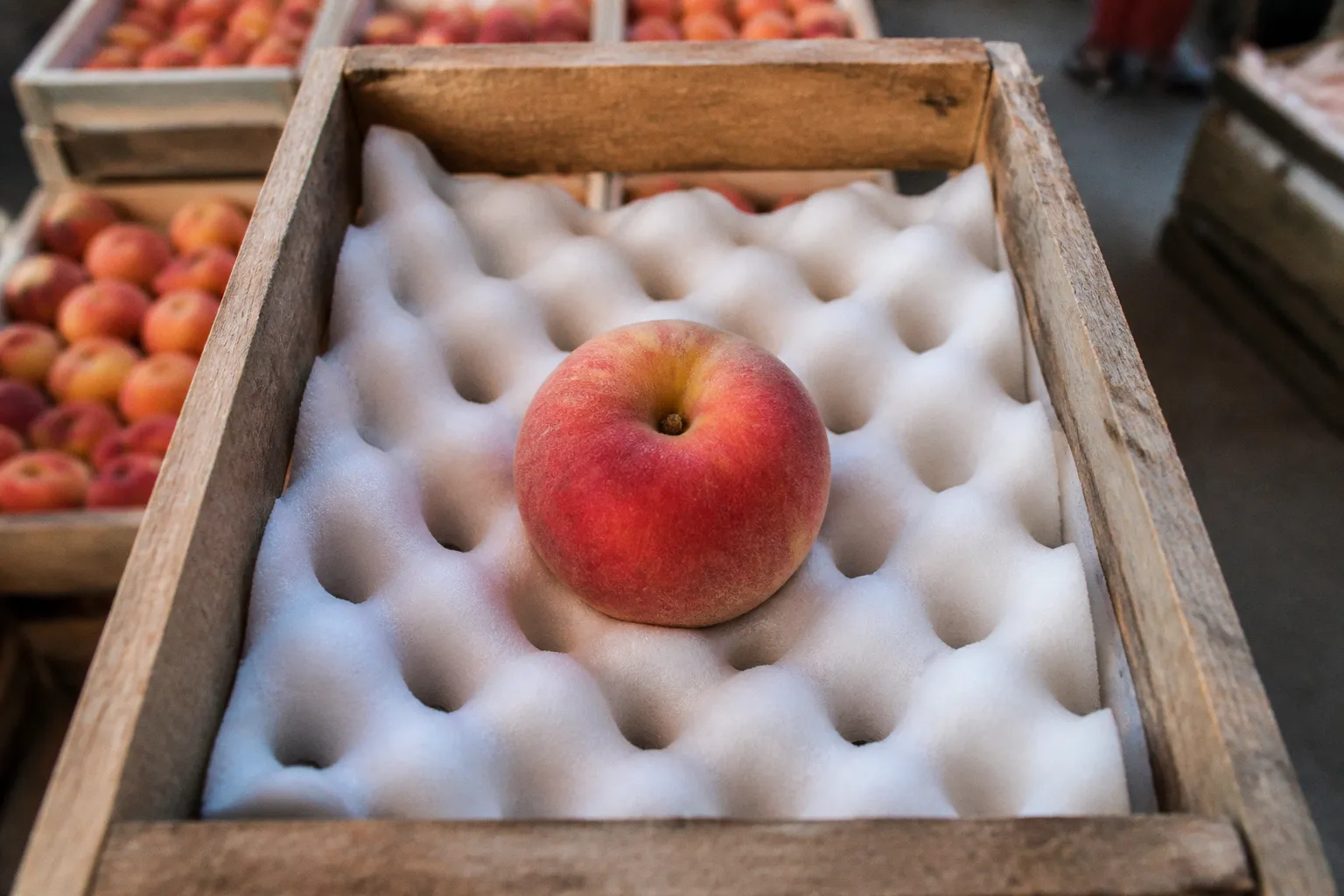
A cherry or peach does not need to be visibly crushed to become unmarketable: repeated vibration, heat accumulation, pressure from overfilled containers, or a delayed cooling cycle can convert a sound fruit into a rejected export unit within days.
The Bekaa Valley concentrates approximately 80% of Lebanon’s cherry production, including local varieties such as Feraouni, Moukahal, and Benni. That concentration makes post-harvest handling a systems problem rather than an isolated farm practice. When the harvest leaves the orchard, it enters a chain involving field containers, farm roads, vehicles, packing areas, cold rooms, wholesalers, and export routes. A weakness at any stage can erase the value created during the growing season.
The practical objective is not to eliminate every mark. That is unrealistic. The objective is to reduce the number and severity of mechanical impacts, control fruit temperature, and preserve enough firmness for the intended market. Lebanese stone fruit post-harvest handling improves most when these variables are managed as one operating system.
Bruising is usually not caused by one dramatic impact. It is the accumulated result of heat, vibration, compression, and delay.
1. Harvest within a controlled temperature window
Harvest timing is the first control point because fruit condition at removal determines how much mechanical stress it can absorb later. The common assumption that earlier is always safer is incomplete. Stone fruit picked during the heat of the day is more vulnerable when fruit temperature rises above 28°C, but fruit collected extremely early, while it is fully turgid, can also mark easily under pressure.
The operative target is a stable, moderate fruit temperature rather than the earliest possible clock time. Each cooperative should establish a local harvest window based on orchard exposure, variety, irrigation status, and the cooling capacity available after picking. A farm with immediate access to shade and rapid cooling can operate differently from one where crates remain beside the orchard for several hours.
Measure the fruit, not only the air
Ambient temperature is an inadequate proxy. Fruit exposed to direct sunlight can be materially warmer than the surrounding air, while fruit inside a dense canopy may remain cooler. A basic probe thermometer used on representative fruit from different orchard positions provides a more useful baseline.
The measurement routine should include:
- Fruit temperature at the start of picking.
- Fruit temperature when the first filled container leaves the orchard.
- Time between picking and shade.
- Time between picking and cooling.
- Reject rate after sorting, separated into bruising, decay, cracking, and other defects.
These measurements create a baseline against which changes can be evaluated. Without them, a cooperative may invest in better packaging while the primary loss continues to originate in harvest heat or transport delay.
Harvest crews should avoid leaving filled bins in direct sunlight. A simple shaded staging area can have a higher operational return than a more expensive packaging change if the existing process allows containers to heat for long periods. Shade should not be treated as storage, however. It is a buffer that buys time until cooling or dispatch.
Match handling pressure to maturity
Ripe cherries, peaches, and nectarines have different tolerance levels, but the same mechanical principle applies: pressure must be distributed across a broad, cushioned surface. Fingertips, sharp container edges, and overfilled bins create concentrated loads that become brown bruises later.
Fruit should be placed into containers rather than dropped from height. Harvest workers should not pour fruit from one bin into another unless the transfer point is padded and the drop distance is controlled. A cooperative can often reduce damage by standardizing these details across crews instead of relying on individual technique.
The useful metric is not the speed of picking in isolation. It is saleable kilograms per worker-hour after grading. A faster harvest that increases bruised fruit is a false efficiency because the added volume does not become exportable product.
2. Replace high-friction containers with cushioned, ventilated systems
Container design determines how impacts are transmitted through the load. Wooden bins may be available and familiar, but rough surfaces, splinters, rigid corners, and poor ventilation increase friction and heat accumulation. Plastic harvest bins with smooth internal walls provide a more consistent platform, particularly when combined with perforated liners designed to cushion the fruit.
Smooth, cushioned, perforated bin liners—such as FruitGuard-type liners—reduce direct contact between the fruit and the container surface. Perforation remains necessary because cushioning without airflow can trap heat and moisture. The goal is not to wrap the fruit tightly. It is to reduce abrasion while allowing ventilation and rapid movement of cold air.
The container specification matters
A workable field container for Lebanese stone fruit should provide:
- Smooth internal surfaces without exposed fasteners or sharp corners.
- Sufficient rigidity to prevent collapse when stacked.
- Ventilation openings aligned between containers.
- A liner that cushions rather than compresses the fruit.
- A size that workers can lift without excessive tilting or dropping.
- A fill depth compatible with the fruit’s maturity and destination.
Overfilling is one of the most common mechanical errors. The bottom layer carries the load of everything above it, and pressure increases when containers are stacked or transported over uneven roads. A container that appears efficient by volume may be inefficient by saleable yield if the lower layers suffer compression damage.
For export-oriented cooperatives, packaging should be tested with the actual fruit, not evaluated only by catalogue specifications. A cherry load and a peach load do not respond identically to the same liner or fill depth. Trials should compare bruising immediately after transport and again after a defined holding period, because some internal damage is not visible at arrival.
Separate harvest, packing, and export containers
Repeated transfers are additional impact events. If fruit is picked into a field bin, emptied into a packing crate, moved to another container, and then loaded into an export carton, every transfer introduces a potential drop, pinch point, or friction surface.
The preferred system limits handling stages:
1. Pick into a smooth, cushioned field container.
2. Move the container under shade without tipping.
3. Cool the fruit in a container compatible with airflow.
4. Pack into the final market format with a controlled transfer.
5. Keep finished packages stable during loading and transport.
This is a capital expenditure decision, but it should be assessed against the value of recovered saleable fruit rather than against the purchase price alone. A cooperative can calculate the return by recording the number of containers used, their service life, the cost of liners, and the change in bruising-related downgrades. The relevant ROI is the value of additional accepted produce divided by the annualized cost of the handling system.
Standardize the line before expanding it
A modern packing line cannot compensate for unstable field inputs. If fruit arrives with inconsistent maturity, variable temperature, and container damage, optical sorting or automated grading will simply process an unstable product more efficiently.
The sequence should therefore begin with low-complexity controls: container condition, fill depth, liner placement, stacking height, and transfer technique. Once those variables are stable, additional equipment can be evaluated against measured losses.
3. Reduce vibration between the orchard and the market
Transport damage is frequently misdiagnosed as a packaging failure. In the Bekaa Valley, the vehicle, road surface, tire pressure, suspension, and load arrangement operate together as a mechanical system. A container that performs acceptably on a smooth road can generate substantial bruising when subjected to dust, potholes, repeated lateral movement, and abrupt braking.
Farm roads should be leveled where practical, particularly on the routes used during peak harvest. This is not merely an infrastructure improvement for vehicles. It is a post-harvest intervention because road vibration transfers energy directly into the fruit load.
Vehicles used for fresh produce should have pneumatic suspension or torsion bars where available. Tire pressure should be maintained in the range of 2–3 bar, according to the vehicle and load specification. The target is controlled suspension response, not simply a softer ride. Tire pressure that is too high can transmit more vibration; pressure that is too low can create instability, heat, and handling risks.
Load stability is as important as suspension
Containers should be secured so they cannot slide, rotate, or collide during acceleration and braking. Stacks need even support, and empty spaces should not allow lateral movement. Heavy equipment or unrelated cargo should not be placed against produce containers.
The transport protocol should define:
- Maximum stack height for each container type.
- Whether containers may be mixed between varieties or maturity groups.
- Acceptable vehicle loading time.
- Maximum exposure to direct sun before departure.
- Inspection points for damaged or shifted stacks.
- The route and expected transit duration.
A driver who is told only to “drive carefully” has no measurable operating standard. A cooperative can instead record transit duration, arrival temperature, visible bruising, and the condition of the top, middle, and bottom layers. Those data can identify whether damage is concentrated at the rear axle, in the lowest stack, or during loading rather than during road travel.
Account for longer export routes
Transit time has become a more serious variable for Lebanese exporters. During the Red Sea crisis, the journey to Jebel Ali in Dubai increased from approximately 7 days to 17 days. A load that survives a short domestic movement may fail commercially when exposed to an additional ten days of vibration, temperature variation, and delayed distribution.
The implication is not that every shipment requires the same packaging. It is that packaging and cooling specifications must be linked to the route. A cooperative should classify shipments by destination and expected transit duration, then validate the handling system against the longest credible route.
For short domestic sales, a container may be judged mainly on immediate bruising. For export, the test must include delayed inspection after storage and transit simulation. Mechanical damage often becomes more visible as tissue softens, so an arrival check conducted only at the loading point can produce an overly optimistic result.
A shipment is not protected because it leaves the orchard intact. It is protected when it remains saleable at the receiving market.
4. Use stem-down orientation for ripe stone fruit
Orientation is a low-cost intervention with a measurable effect. Ripe stone fruit stored stem-side down, in a single uncrowded layer and in rigid ventilated containers, can experience up to 72% less mechanical bruising. The method works by limiting contact pressure and placing the stem scar against the support surface. The stem scar also acts as a small barrier to moisture loss, which helps limit weight reduction.
This technique is most relevant when the fruit is already ripe or approaching the firmness threshold for sale. It should not be applied as a universal substitute for good packaging. If fruit is piled deeply, compressed by a lid, or exposed to poor ventilation, correct orientation will not resolve the larger system failure.
Implementation requires an uncrowded layer
The critical terms are “single” and “uncrowded.” Fruit should not be forced into position, and containers should not be filled to a depth that causes the upper fruit to press onto the lower fruit. Rigid, ventilated containers are preferable because they preserve the geometry of the layer during handling.
A practical trial can be conducted at cooperative level:
1. Divide a uniform lot into a control group and an orientation group.
2. Use the same variety, maturity stage, container, temperature, and transport route.
3. Place the test group stem-side down in one layer.
4. Inspect both groups immediately after transport.
5. Reinspect after a defined holding period.
6. Record bruising by count and by weight of downgraded fruit.
The comparison should distinguish superficial rub marks from deeper bruises and decay that develops later. If the cooperative records only the number of visually damaged pieces at dispatch, it may miss the economic effect that appears during wholesale handling or retail display.
Integrate orientation with grading
Fruit that is already soft, cracked, or damaged should not be forced into an export-oriented handling stream. Grading before final packing prevents compromised fruit from creating pressure points or decay sources within an otherwise stable load.
For cherries, the stem and surrounding skin are also relevant to appearance and moisture retention. For peaches and nectarines, surface contact and compression can become more damaging as the fruit advances in ripeness. The same operating method therefore requires different thresholds by crop and market.
The cooperative should define separate routes for:
- Firm fruit intended for longer transit.
- Ripe fruit intended for rapid domestic sale.
- Fruit with cosmetic defects but acceptable eating quality.
- Fruit unsuitable for fresh sale and requiring another outlet.
This segmentation prevents the highest-risk fruit from being exposed to the longest route.
5. Build a cold-chain protocol that includes preconditioning
Cooling slows respiration and decay, but temperature management is not simply a matter of placing fruit in the coldest available room. Ripe stone fruit performs best under a strict cold chain at approximately 32–34°F, or 0–1°C, with 90%–95% relative humidity. The humidity range limits skin desiccation, while the low temperature slows quality deterioration.
However, immediate exposure to very low temperatures can create internal disorders, including flesh browning or mealiness in susceptible fruit. Preconditioning at 12–18°C for 48 hours directly after harvest can reduce these storage disorders before the fruit enters colder storage. The correct protocol depends on variety, maturity, destination, and planned storage duration; cold storage alone is not a complete quality strategy.
Separate field heat removal from long-term storage
The first objective after harvest is to remove field heat. The second is to maintain stable conditions. These are related but distinct operations.
A cooperative should record:
- Harvest-to-shade time.
- Harvest-to-cooling time.
- Fruit temperature before entry into the cold room.
- Cold-room temperature and relative humidity.
- Time required for the load to reach the target range.
- Temperature during dispatch and loading.
A cold room set to the correct temperature does not guarantee that the fruit itself has reached that temperature. Large, warm loads can cool slowly, especially when containers block airflow or are stacked against walls. Sensor arrays placed at representative points—near doors, in the center of the load, and within different stack levels—provide a more credible picture than a single wall-mounted display.
The minimum useful instrumentation is not necessarily complex. Several calibrated temperature and humidity sensors, a written logging schedule, and defined corrective actions can expose failures that were previously attributed to “unavoidable spoilage.”
Maintain humidity without creating condensation
Relative humidity of 90%–95% helps limit water loss, but excessive free moisture encourages decay. Condensation can occur when warm fruit enters a cold environment or when cold packages are exposed to humid air during loading. Ventilation and staged temperature transitions are therefore part of the cold-chain design.
Packaging must support airflow. Dense liners, blocked vents, and tightly packed containers can create warm pockets even when the room average appears acceptable. The packing format should be tested at the expected maximum load, not only with a small sample in an empty room.
Define the decision point for each market
Not all fruit should be held under the same regime. A domestic wholesale shipment with rapid turnover may justify a shorter cooling process and a different maturity threshold from a cherry export moving through a longer route. The cooperative needs a product specification that connects:
- Variety and harvest maturity.
- Intended destination.
- Maximum planned transit time.
- Preconditioning requirement.
- Target storage temperature.
- Relative humidity range.
- Acceptable bruising and decay thresholds.
This is where technology becomes useful rather than decorative. A sensor array, digital log, or automated alarm has value only if it changes an operating decision. If the temperature record is never reviewed against rejection rates, the equipment is measurement without management.
A phased implementation plan for cooperatives
The five interventions do not require simultaneous deployment. In fact, implementing them in sequence is more reliable because it identifies which control points produce the largest reduction in loss.
Phase one: establish baseline metrics
For one harvest cycle, record the existing process without changing every variable at once. Measure fruit temperature, time to shade, time to cooling, container type, transport duration, arrival condition, and grading outcomes. Separate bruising from decay, cracking, and other defects.
The baseline should cover multiple loads rather than a single demonstration batch. Variation between orchards, crews, varieties, and destinations is operationally significant.
Phase two: correct low-cost handling failures
Begin with controls that require limited capital:
- Harvest outside the hottest part of the day.
- Keep filled containers under shade.
- Eliminate uncontrolled drops between containers.
- Reduce overfilling.
- Stabilize stacks during vehicle loading.
- Maintain tire pressure at the specified 2–3 bar range.
- Use single-layer stem-down storage for ripe fruit where appropriate.
These measures produce the clearest evidence of whether mechanical damage is being generated in the field, during loading, or on the road.
Phase three: test packaging and transport upgrades
Run controlled comparisons using plastic bins, cushioned perforated liners, improved vehicle suspension, and leveled routes. The test should use the same produce grade and similar maturity. Results should be expressed as saleable kilograms, not only as a percentage of visible bruises.
The economic calculation can then include:
- Additional equipment cost.
- Liner and maintenance cost.
- Labor changes.
- Reduced rejection or downgrade.
- Additional marketable volume.
- Effect on transit reach and destination access.
This is the point at which capital expenditure should be approved or rejected. A cooperative does not need the most advanced system. It needs the system whose recovered value exceeds its annual operating and financing burden.
Phase four: install cold-chain monitoring
Once the physical handling system is stable, add temperature and humidity logging at the points where decisions are made. Sensors should be placed in the fruit load, not only in the room. Review data against the timing of cooling, route duration, and final quality.
If preconditioning is introduced, it should be validated by variety and storage duration. The purpose is to reduce internal disorders without sacrificing firmness or extending exposure to decay. A single temperature recipe applied to every stone fruit category is unlikely to be optimal.
Phase five: document the cooperative standard
The final result should be a short operating specification used by growers, harvest crews, drivers, packers, and buyers. It should define the container, fill depth, harvest temperature window, shade requirement, transport configuration, cooling sequence, and inspection points.
Documentation has a commercial function. International buyers do not evaluate only the appearance of one shipment. They assess whether the supplier can reproduce the same quality across multiple loads. Consistency is a trade asset because it reduces the buyer’s risk.
What the numbers indicate
The available data support a clear hierarchy of intervention.
Lebanon’s post-harvest loss range of 30%–40% establishes the scale of the problem. It does not mean that every load loses the same proportion or that bruising alone accounts for the full amount. Losses also arise from a broken cold chain, inconsistent quality standards, decay, cracking, and inadequate handling. The exact share attributable specifically to bruising remains uncertain and should be measured at cooperative level.
The Bekaa Valley’s concentration of cherry production means that improvements there can affect a substantial portion of Lebanon’s export pipeline. The export figures also show why durability matters: Lebanese cherry exports reached approximately USD 4.532 million in 2021, fell to USD 1.088 million in 2023, and recovered only slightly to USD 1.306 million in 2024. These movements have multiple causes, including logistics and regional disruption, but post-harvest resilience determines how much of the available market opportunity survives the route.
The most concrete technical result is the potential 72% reduction in mechanical bruising associated with stem-down storage under the specified conditions. That figure should be treated as a tested handling effect, not as a guarantee for every farm, variety, or transport route. Its value lies in its low implementation complexity: the method can be trialed without rebuilding an entire packing facility.
The temperature parameters are equally specific. Fruit temperatures above 28°C increase bruising susceptibility during harvest. Cold storage at 0–1°C and 90%–95% relative humidity slows deterioration, while preconditioning at 12–18°C for 48 hours can reduce internal storage disorders in susceptible fruit. These values provide starting points for operating protocols, but they still require validation against local varieties and intended transit duration.
Final assessment
Lebanese stone fruit post-harvest handling does not require a single breakthrough technology. It requires control over five measurable variables: harvest temperature, contact friction, transport vibration, fruit orientation, and cold-chain stability.
The lowest-cost improvements should come first: harvest outside heat stress, move fruit into shade, stop uncontrolled drops, reduce container compression, stabilize loads, and apply stem-down storage to ripe fruit in a single layer. The next investment should target the largest measured loss source, whether that is plastic containers, cushioned liners, vehicle suspension, road preparation, or cold-room monitoring.
A cooperative that reduces mechanical bruising by even a fraction of the current loss burden can recover saleable volume without expanding cultivated acreage. A cooperative that combines the documented 72% bruising reduction from correct orientation with controlled transport and a verified 0–1°C cold chain has a more credible route to longer-distance markets.
The definitive verdict is operational rather than rhetorical: protect the fruit before it enters the cold room, measure the load while it moves, and validate quality after the full journey. Technology earns its place only when the final grading sheet shows more marketable kilograms than the previous system.