Citrus fruit decay: simple steps to extend shelf life
A citrus harvest can look perfect when it leaves the orchard and still arrive at the buyer with soft spots, leaking juice, or a rind already turning green with mold.
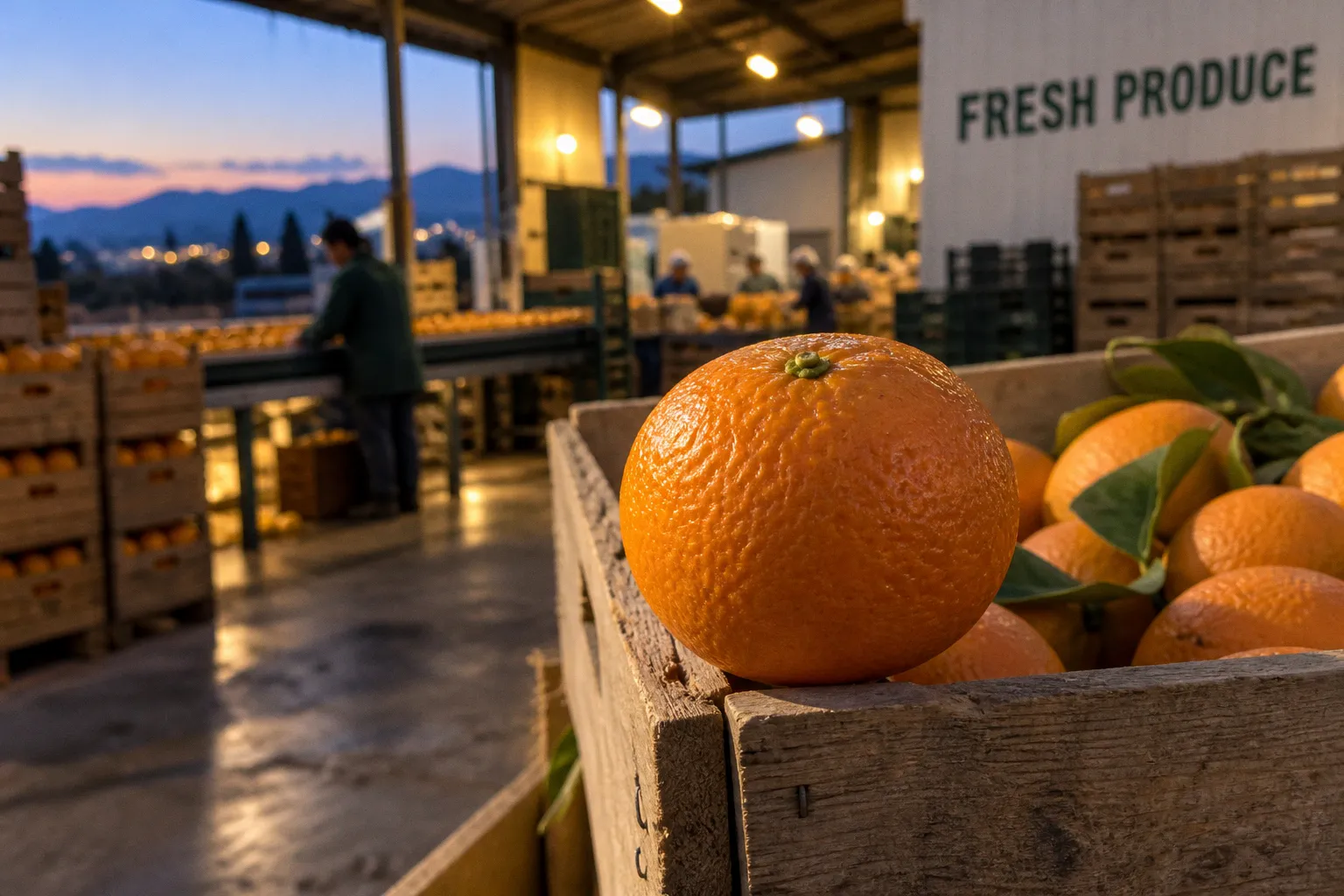
The damage often begins long before anyone sees it: a small abrasion during picking, fruit placed in a warm bin, a wash tank that is no longer clean, or a cold room set to the wrong temperature for the species inside.
Across global citrus production, postharvest losses from disease and metabolic disorders can reach roughly 30% to 50% of the harvest. For Lebanese growers in the Bekaa, Akkar, and the coastal belt, that is not an abstract statistic. It represents a season of labor, irrigation, sorting, packing, and transport gradually losing value between the orchard and the final market.
The main threat is well understood. General postharvest research attributes roughly 90% of citrus decay to green mold caused by Penicillium digitatum. That figure describes the broader citrus industry, not a measured breakdown of losses for any particular Lebanese cooperative. The distinction matters: a useful industry benchmark can guide a packhouse protocol, but it should not be mistaken for a local audit.
The practical response is a chain of decisions made in the right order: handle fruit gently, remove damaged pieces early, cool each species within its safe range, sanitize the wash system, manage degreening carefully, and keep humidity high without allowing condensation. None of these steps is dramatic on its own. Together, they determine whether citrus remains saleable for days, weeks, or months.
The strongest protection against decay is not one expensive treatment. It is a sequence that leaves the fruit fewer opportunities to fail.
The 90% Threat: Managing Penicillium Digitatum in Orchards
Green mold earns its dominance through a weakness that citrus cannot hide: the fruit is highly resistant when the rind is intact and highly vulnerable once the rind is wounded. Spores of Penicillium digitatum are present in orchards, packing areas, bins, equipment, and dust. They do not need a large cut. A puncture from a harvesting tool, a scrape against a branch, or pressure damage inside an overloaded crate can provide enough access for infection to begin.
The first visible sign is often a soft, water-soaked patch. Under suitable conditions, the affected area expands quickly and develops the familiar green sporulation associated with the disease. In a packed bin, one infected fruit can become a source of contamination for its neighbors, especially when the fruit is warm and surfaces remain damp.
The most effective control begins before the fruit reaches the packhouse. Harvesting practices influence every later stage of storage. Clippers should be kept sharp and used in a way that avoids tearing the rind or leaving long stems that puncture nearby fruit. Fruit should not be thrown into field bins, and bins should not be filled so heavily that the lower layers carry unnecessary pressure. The goal is not merely to avoid visible bruises. It is to preserve the rind as a functioning barrier.
Sorting at the orchard or immediately after arrival is equally important. Fruit with clear cuts, leaking juice, soft areas, or signs of decay should be removed from the commercial stream. A damaged fruit that is isolated early is a limited loss. The same fruit left in a warm, crowded bin can become a source of decay for an entire load.
A useful receiving routine includes:
1. Inspecting bins as they arrive. Look for heat, condensation, crushed fruit, and any soft or leaking pieces before the load enters long-term storage.
2. Separating damaged fruit immediately. Do not wait for the wash line or the final packing table to deal with obvious sources of infection.
3. Keeping equipment and floors clean. Spores accumulate in organic debris, especially around drains, conveyor edges, brushes, and corners that are difficult to reach.
4. Reducing the time between harvest and cooling. Warm fruit respires faster and gives fungal infections more favorable conditions.
5. Recording recurring damage. If the same orchard block, crate type, or handling point repeatedly produces wounded fruit, the remedy is operational rather than chemical.
The point is not to create a sterile orchard. That is neither realistic nor necessary. The point is to reduce the number of wounds, remove the fruit that can spread decay, and prevent contamination from being carried efficiently from one stage to the next.
Species-Specific Temperature Protocols for Maximum Shelf Life
Treating all citrus as one commodity is one of the fastest ways to shorten shelf life. Oranges, mandarins, lemons, limes, and grapefruits do not share the same tolerance for cold. A temperature that slows mold on oranges may produce chilling injury in lemons. A room that protects lemons may be too warm to hold mandarins in good condition.
The practical ranges below provide a working framework rather than a substitute for testing the specific cultivar, maturity stage, and storage duration.
| Citrus type | Typical holding range | Main risk outside the range |
|---|---|---|
| Oranges and many sweet citrus varieties | 32–34°F (0–1.1°C) | Warmer conditions accelerate decay; excessively cold conditions can injure the rind |
| Mandarins and easy-peelers | Around 40°F (4.4°C) | Lower temperatures can increase pitting and drying; higher temperatures favor mold and faster quality loss |
| Lemons, limes, and grapefruits | 50–60°F (10–15.6°C) | Cold storage near zero can cause chilling injury, brown staining, rind damage, and juice loss |
The correct set point is only the beginning. The fruit must actually reach that temperature. A cold room display may show the intended air temperature while the center of a tightly stacked pallet remains considerably warmer. For this reason, temperature probes should be placed inside representative stacks, not only on the wall or near the evaporator.
Pre-cooling also deserves more attention than it usually receives. Citrus entering from the field carries heat into the room. If warm bins are placed directly into a full cold store, they raise the temperature and moisture load around them. The cooling system then spends hours correcting a problem that could have been reduced through staging, ventilation, or a separate pre-cooling step.
Air movement matters as well. Pallets should allow space for circulation, and packaging should not block every route through the load. A room packed to its physical limit may have a satisfactory reading at the door and poor conditions in the middle. The warmest, most humid pockets are often where decay develops first.
Mixed-species storage creates another common problem. If a room contains lemons requiring a warmer range and mandarins requiring a cooler one, the compromise may be convenient but technically weak. When possible, separate rooms or zones should be used. When that is not possible, the cooperative should decide which fruit is most vulnerable to the compromise and shorten its holding period accordingly.
Research on Kütdiken lemons has reported storage at 10°C with relative humidity between 85% and 90% for eight to nine months after harvest while maintaining useful firmness, acidity, and juice content. That is a storage finding for the cultivar under defined conditions. It should not be presented as a firsthand result from Lebanese-grown fruit, but it does show why cultivar-specific protocols are more useful than a single citrus-wide temperature rule.
Sanitization and Surface Treatments to Curb Blue Mold
Green mold is usually the main postharvest concern, but blue mold caused by Penicillium italicum can follow the same wounds and spread through the same handling system. Both diseases become more difficult to control when fruit arrives warm, wet, or already damaged.
The wash line is therefore not just a cosmetic stage. It is a point where the packhouse can reduce contamination, provided the solution, temperature, contact time, and equipment hygiene are controlled together.
One studied approach uses a heated sodium carbonate wash. Research on postharvest oranges has examined a 3% to 4% sodium carbonate solution held at approximately 45°C and applied for around 150 seconds. Under those conditions, blue mold decay was reduced by more than 90% in the relevant trials. The treatment works through a combination of alkaline conditions and heat, which can interfere with spore germination and weaken early infections.
That result should be handled carefully. A treatment that performs well in a controlled study may behave differently when the wash temperature fluctuates, the solution becomes loaded with soil and organic matter, or the fruit enters with a different maturity and injury profile. A cooperative considering the approach should verify the procedure against its own equipment and confirm that the treatment is permitted for the crop, destination market, and intended use.
Where regulations permit and buyers accept the practice, targeted fungicide treatments may also be used. Research on Nagpur mandarins has reported that treatment with Bavistin at 1000 ppm extended room-temperature shelf life to approximately 25–26 days. The product, concentration, application method, and residue requirements must be checked locally; a research result is not a blanket authorization for commercial use.
The sequence around the treatment is as important as the active ingredient:
- Clean and sanitize the dump tank, brushes, conveyors, and contact surfaces before the day’s work begins.
- Monitor the wash temperature rather than relying on the heater setting alone.
- Measure concentration accurately and keep a record of solution changes.
- Replace or refresh the bath when it becomes visibly dirty or has processed a heavy volume of fruit.
- Avoid carrying contaminated water into later lots.
- Give the fruit enough time to drain and dry before tight stacking.
- Inspect the system for hidden organic buildup around drains, seals, rollers, and brush housings.
A wash cannot repair severe mechanical injury. Nor can it compensate for fruit that sits warm for hours after treatment. Sanitization works best as one part of a system that starts with careful harvest and ends with prompt cooling.
A measured wash bath is useful. A measured wash bath followed by dry, promptly cooled fruit is what protects the commercial load.
Degreening Best Practices: Balancing Ethylene and Fungicide Use
Some early-season mandarins and oranges reach acceptable internal maturity while the peel still carries a green tint. In markets that expect a uniform orange appearance, degreening may be commercially necessary. Ethylene encourages chlorophyll breakdown and helps the peel develop the expected color, but it also increases the importance of decay control.
The reason is simple: degreening rooms are warm and humid environments designed to accelerate a biological process. Those conditions can also accelerate latent infections. Ethylene exposure may increase the risk of stem-end rot, including infections associated with Diplodia, while warm, moist air gives existing wounds a more favorable environment.
Where degreening is required, a protective treatment is generally applied before the fruit enters the room, subject to local regulations and buyer requirements. A working protocol described for citrus uses a room temperature of approximately 82–85°F (27.8–29.4°C), ethylene at 3–5 ppm, and relative humidity around 90–95%. The exact schedule depends on cultivar, maturity, color stage, ventilation, and the condition of the fruit entering the room.
The key is to treat degreening as a controlled process rather than as a final cosmetic adjustment. The room needs reliable sensors, even airflow, and a way to prevent condensation from settling on the fruit. Excess humidity does not improve color indefinitely. Once the surface remains wet, the same environment that supports peel coloration can support decay.
The pre-treatment step is easy to skip when the packinghouse is under pressure. It adds labor and requires another handling decision during the busiest part of the season. But fruit that leaves the degreening room with an attractive color and an active infection has only gained appearance, not shelf life.
For markets that accept the natural green-skin appearance of early mandarins, skipping degreening can be the more conservative option. It removes one warm, humid stage and reduces handling. The commercial decision then depends on the buyer, the cultivar, and the internal maturity of the fruit. Natural color is not automatically proof of better quality, but neither is a bright orange peel proof that the fruit will travel well.
A cooperative can make this decision more rational by separating three questions:
1. Is the fruit internally mature enough for the intended market?
2. Does the buyer require a particular external color?
3. If degreening is necessary, can the room maintain the required temperature, humidity, ethylene level, airflow, and decay-control treatment consistently?
If the answer to the third question is no, the problem is not the color target. It is the process used to reach it.
Optimizing Humidity and Storage Environments for Long-Term Quality
Temperature slows biological activity, but humidity determines how much quality the fruit gives up while it waits. A cold room that is too dry pulls moisture from the peel. The rind shrinks, weight loss increases, the surface becomes less resilient, and the segments gradually lose juiciness. A room that is too humid creates condensation, especially when warm fruit enters a colder space. That free water gives mold an ideal surface on which to develop.
For many citrus storage situations, a relative humidity range of approximately 85% to 90% offers a workable balance between limiting moisture loss and avoiding persistent condensation. The correct range still depends on species, cultivar, temperature, packaging, and storage duration. The room should be managed as a system rather than by humidity alone.
Airflow is one of the most overlooked parts of that system. A tightly packed pallet can create a warm center even when the room appears uniform. Humid pockets form where air cannot move, and those pockets may remain invisible until decay becomes obvious. Slotted plastic crates can improve air passage compared with solid or poorly ventilated containers, but they do not replace correct stacking. Air needs a route through the load and a route back to the cooling system.
Packaging decisions should also account for mechanical pressure. Crates that are too deep encourage compression in the bottom layers, while containers with rough edges create new wounds during movement. Reusable equipment must be inspected for splinters, broken corners, and surfaces that retain organic matter. A container can be structurally sound and still be a significant source of contamination if it is difficult to clean.
The moisture load entering the room is equally important. Field-warm citrus releases heat and water vapor as it cools. If a full load is brought into a closed room at once, the humidity may rise sharply before the refrigeration system stabilizes it. Pre-cooling or staged loading reduces that shock. It also makes it easier to identify fruit that is already failing before the entire lot is committed to long-term storage.
Condensation deserves a specific warning. It can appear when warm fruit enters a cold room, when doors are opened frequently, when air circulation is uneven, or when temperature changes occur during loading. The response is not simply to lower the room temperature. Lowering the temperature without managing dew point and airflow can make the problem worse. The priority is to stabilize the load, reduce warm-air entry, and keep surfaces dry.
Long-term storage also requires inspection rather than blind trust in the original settings. A room may begin the season correctly and drift as the load changes, the evaporator frosts, doors are opened, or sensors become inaccurate. Checks should include:
- Air temperature at several points in the room.
- Product temperature inside representative bins or pallets.
- Relative humidity away from the direct air stream.
- Visible condensation on fruit, walls, ceilings, and packaging.
- Evidence of shriveling, pitting, rind collapse, or soft decay.
- Airflow around the center and edges of the stack.
- Cleanliness of drains, fans, coils, and contact surfaces.
These observations turn the cold room from a passive storage box into a managed environment. They also help distinguish between different causes of loss. Shriveling suggests excessive moisture loss. Pitting and brown staining may point to chilling injury. Soft, spreading lesions suggest decay. A single humidity or temperature adjustment will not correct all three.
Closing the Loop: A Cooperative Season That Lasts
Citrus fruit postharvest decay prevention is not one invention waiting in a laboratory. It is a chain of small decisions made at the orchard, during transfer, on the wash line, in the degreening room, and inside the cold store. The general research finding that roughly 90% of postharvest citrus decay is associated with Penicillium digitatum explains why green mold deserves priority. It does not establish that the same percentage accounts for losses in any particular Lebanese cooperative.
The same caution applies to the widely cited 30% to 50% range for global postharvest losses. It is a broad industry estimate, not a forecast for every orchard or packhouse. A cooperative needs its own records to understand where value is disappearing: bruising in the field, delays before cooling, poor sanitation, unsuitable temperatures, excess humidity, or decay during transport.
That record does not need to begin with complicated software. A simple receiving sheet can capture harvest time, arrival time, orchard block, fruit temperature, visible damage, treatment details, and the condition of the load after storage. Over several seasons, those observations can reveal patterns that no single end-of-season percentage can show.
The most useful operational questions are direct:
- Which orchards deliver the cleanest, least-wounded fruit?
- How long does fruit remain warm before cooling?
- Which species are being stored outside their preferred range?
- Does decay appear before or after washing?
- Are certain crates, pallets, or handling points linked to damage?
- Does degreening improve market access without creating unacceptable losses?
- Is the cold room dry enough to shrink the peel or humid enough to create condensation?
- Do transport conditions continue the storage protocol, or undo it?
The answers determine where investment should go. One cooperative may need better harvesting tools. Another may need a cleaner wash system. A third may gain more from temperature probes inside pallets than from a larger refrigeration unit. The right intervention is the one that removes the largest recurring cause of loss.
For Lebanese citrus operations, the advantage of a cooperative model is the ability to standardize these decisions across multiple growers. A shared packhouse can establish one receiving routine, one sanitation record, one temperature map, and one set of rules for damaged fruit. It can also compare results between lots instead of leaving every grower to solve the same decay problem alone.
The work remains practical and unglamorous: protect the rind, sort early, cool promptly, use species-appropriate temperatures, keep treatment baths under control, manage degreening with discipline, and prevent condensation. But those habits are precisely what carry fruit from the orchard to a distant buyer in the condition promised.
Shelf life is not created at the moment the crate enters the cold room. It is built from every careful decision that comes before it.