Citrus mold prevention: the 5-minute baking soda dip
Green mold shows up on a lemon before the picker can finish the row. One bad fruit in the bin, and by morning the whole crate is dusted in olive-green spores — Penicillium digitatum doing what it…
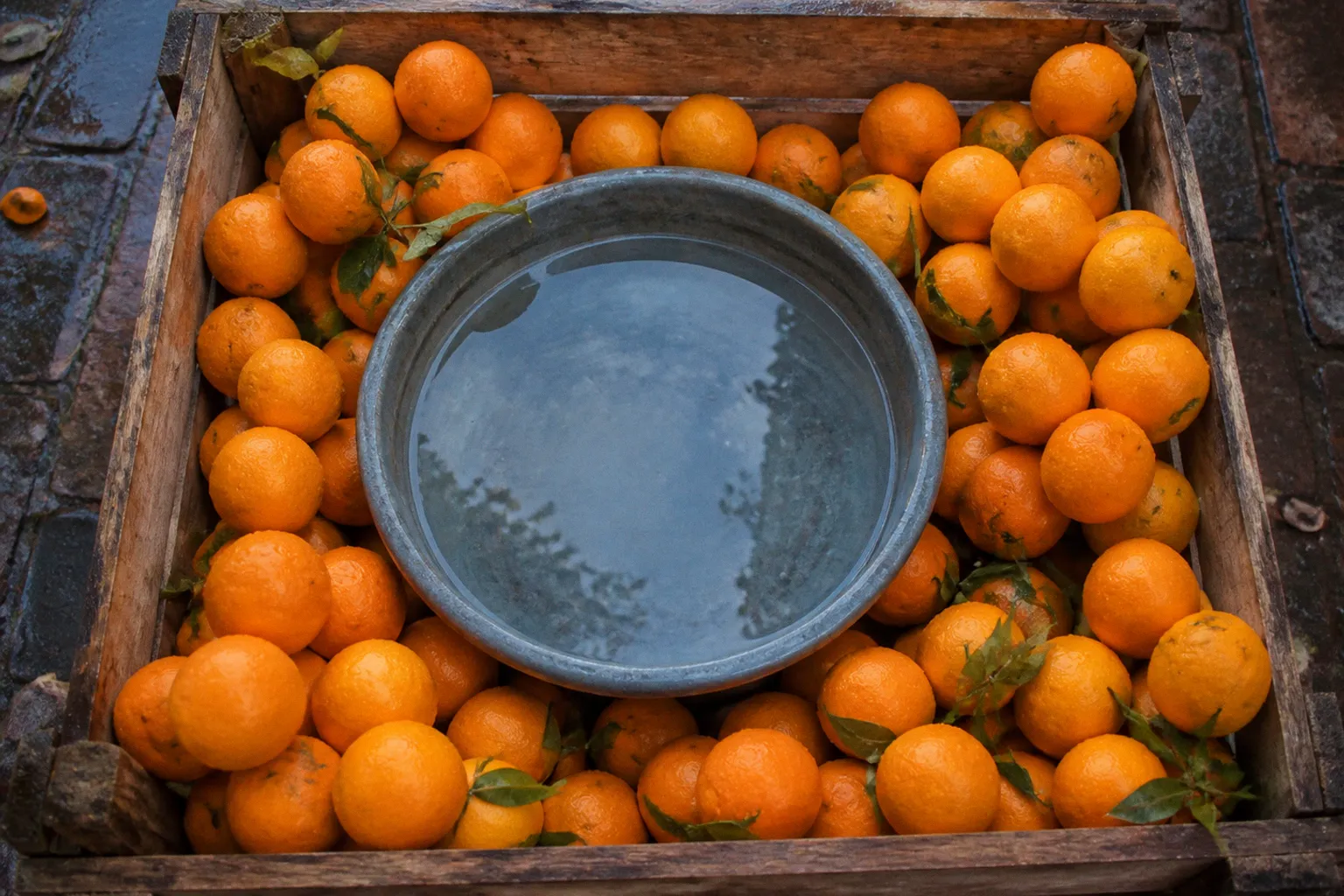
Green mold shows up on a lemon before the picker can finish the row. One bad fruit in the bin, and by morning the whole crate is dusted in olive-green spores — Penicillium digitatum doing what it does best in warm, humid packing sheds from the Bekaa to the coastal plain. The orchardist sees it as a tax: a percentage of every harvest lost between tree and shipment. The agronomist sees it as a sanitation problem with a chemistry solution, and the cheapest, most accessible compound on the shelf is sodium bicarbonate — common baking soda. Below is what the dip actually does, where it falls short, and how a five-minute immersion, properly prepared, fits into a commercial Lebanese citrus line without inviting rind injury or wasting labor on a treatment that cannot hold up against a heavy spore load.
The science of sodium bicarbonate as a fungistatic agent
Baking soda — sodium bicarbonate, NaHCO₃ — sits in that rare category of post-harvest inputs that is food-grade, inexpensive, and well-mapped in the peer-reviewed literature on citrus pathology. The landmark work published in Plant Disease in 1999 put carbonate and bicarbonate salts on the map for green mold control, and subsequent trials have refined the picture considerably since then.
What the compound actually does is prevent spores from germinating on the fruit surface. It does not sterilize the rind in the way a broad-spectrum disinfectant does. Baking soda lifts the surface pH and disrupts the ionic environment the spore needs to crack open and start a colony, but the moment you remove the fruit from the solution, those quiescent spores are still viable on the rind. That is a fungistatic action, not a fungicidal one, and the distinction matters when you scale a treatment up to commercial throughput.
A baking soda dip buys you time, not sterilization — it holds spores dormant on the rind long enough for cold-chain logistics to do the rest.
The dose threshold is well characterized. Published work puts the effective concentration for inhibiting 50% of P. digitatum spore germination — the ED50 — at roughly 14.1 millimolar sodium bicarbonate. In practical terms, that translates to about a 1.0% weight-to-volume solution in plain tap water, which yields a pH right around 8.3. That is alkaline enough to push the rind environment past the comfort zone of the fungus without entering the alkalinity (and handling hazards) of stronger chemistries.
Understanding this limit shapes every downstream decision. If your target is the residual spores clinging to a fruit from the field, the dip works. If your target is a fruit already colonized at the stem end or with a micro-lesion from harvest bruising, the dip will not reach it. That asymmetry is why pre-wash preparation matters so much, which we will come back to.
Optimizing the dip: concentration and pH balance for maximum efficacy
Walk into three different packing sheds and ask what concentration they run, and you will get three different answers. That is the part that makes me uneasy, because concentration is doing most of the work here. Push it too low and you have added a step that does nothing. Push it too high and you have wasted material and triggered residues that nobody needs.
| Parameter | Working range | What happens outside the range |
|---|---|---|
| Sodium bicarbonate | ~1.0–2.0% w/v (≈ 119–238 mM, well above the 14.1 mM ED50) | Below ~1% — protection drops sharply; above ~2% — diminishing returns, residue concerns |
| Solution pH | 7.5–8.5 | Below 7.5 — fungal spores recover; above 9 — risk of alkaline rind damage on prolonged contact |
| Dip duration | 3–5 minutes typical | Under 2 min — insufficient contact; over 10 min — moisture uptake, micro-cracking risk |
| Water source | Clean potable water, low organic load | Hard water with high calcium — precipitates carbonate; high organic load — neutralizes the buffer |
A pH of around 8.3 is the natural outcome of a 1% sodium bicarbonate solution in clean water, and that is the number to aim for. If you are co-dosing with sodium hypochlorite (the subject of a later section), you will want to lock pH at 7.5 — outside the bicarbonate-buffered zone — because the chemistry of the two compounds shifts under alkaline conditions.
The 5-minute figure circulates widely in extension talks and trader conversations. It is not, to my knowledge, a regulatory mandate in any Lebanese phytosanitary code. It is a practical compromise — long enough for the rind surface to equilibrate with the buffered solution, short enough to keep the line moving. Set yourself a target between three and five minutes, validated against the spore load in your specific packing environment rather than a fixed clock reading.
Pre-wash preparation and high-pressure cleaning
The literature is unusually specific about a sequencing detail that most growers miss. The order matters.
High-pressure water washing performed before the bicarbonate dip improves green mold control. High-pressure washing performed after the dip reduces efficacy. The mechanism is straightforward: a pressurized rinse ahead of treatment physically dislodges spores, soil debris, and conidia lodged in the stem-button area and in the oil-gland punctures along the rind. Once that physical load is reduced, the bicarbonate solution reaches the residual spores with a clean field. Reverse the order and you blast off the active compound you just deposited, leaving the spore with nothing between it and the rind.
In our cooperative packing sheds that translates into an order of operations like this:
1. Dump-crate pre-rinse with potable water to remove field dust and leaf fragments.
2. High-pressure wash bar or rotary brush at moderate pressure — enough to dislodge, not enough to bruise.
3. Sodium bicarbonate dip at the concentration and timing described above.
4. Drain on a sloped or mesh rack — no towel-wiping, which reintroduces spores.
5. Move to waxing, grading, or cold storage within the same shift.
There is a temptation to use brushes inside the dip itself to "improve contact." I would resist that. Mechanical action in solution pulls the active compound out faster than it works, and on softer rinds it can drive spores deeper into the lenticels rather than off the surface.
Temperature thresholds and avoiding rind injury in Lebanese orchards
This is the failure mode I see most often when a cooperative adopts bicarbonate dips for the first time and immediately sees phytotoxicity. Rind injury is real, and the numbers are unforgiving.
Postharvest immersion treatments using carbonate and bicarbonate salts produce visible rind injury when bath water reaches the 56°C to 61°C range. That is not a soft limit. It is a hard threshold driven by the chemistry of the bicarbonate ion at elevated temperature, which begins to hydrolyze the wax and pectin layers of the flavedo. Below 50°C, you have a comfortable margin. Above 56°C, you start seeing bronzing, softening, and lenticel breakdown on the most sensitive fruit in the batch — the thin-rinded mandarins and the early-season navel selections.
The practical compromise for Lebanese conditions is a 1% sodium bicarbonate bath at ambient or mildly warmed temperature (20°C to 40°C) for the full five minutes. That delivers the bulk of the protection without the phytotoxicity risk. If the line carries persistent inoculum and warmer water feels tempting, log bath temperature every batch. Anything above 45°C deserves a flag.
I keep this rule of thumb on the wall of the line: if an operator can comfortably hold their hand in the bath for thirty seconds, the chemistry is likely safe for the fruit for a full dip.
Stay below 50°C. Above 56°C the bicarbonate stops working with the rind and starts working against it.
Synergistic treatments: combining baking soda with sodium hypochlorite
For sheds carrying heavy inoculum — repeated outbreaks, late-season fruit with high field spore loads, packed-out runs shipped to distant markets — the bicarbonate dip alone may not be enough. The upgrade the research points to is a co-treatment with low-dose sodium hypochlorite, buffered to pH 7.5.
| Treatment | P. digitatum control | Operational notes |
|---|---|---|
| 1% SBC alone | Moderate — ED50 baseline protection | Food-grade, no residue, simple disposal |
| 1% SBC + 200 µg/ml NaOCl at pH 7.5 | Significantly improved — synergistic | Requires pH adjustment with a food-grade acid; PPE for handlers; chlorine residuals in effluent |
| SBC dip after high-pressure pre-wash | Improved over SBC alone | Sequencing matters — pre-wash only |
| Hypochlorite alone at typical sanitizing doses | Surface sanitization but limited residual protection | Rind compatibility generally better than alkaline chemistries |
The 200 microgram-per-milliliter figure for sodium hypochlorite, paired with bicarbonate and buffered to pH 7.5, keeps active chlorine low enough to manage in effluent while still delivering measurably better green-mold suppression. pH is the hinge: chlorine chemistry shifts with alkalinity, and the synergy falls apart if the bath drifts above 8. You will need to monitor with a simple pH meter or strip and adjust with citric acid or another food-grade acidifier.
Effluent handling is non-trivial and beyond what I can fit here, but it deserves acknowledgement: cooperative sheds that move to chlorinated bicarbonate baths should plan for a settling or neutralization step before discharge. Skipping that step creates a different kind of regulatory exposure than the post-harvest pathogen problem you started with.
A seasonal timeline for transitioning the dip protocol
Lebanese citrus harvests in the coastal and interior groves run on a predictable rhythm. The protocol that fits that rhythm looks something like this:
- Late summer (orchard prep, pre-harvest): Pull leaf and fruit samples to assess in-field disease pressure. Clean and calibrate bins, brushes, and dip tanks before the first fruit arrives. Source food-grade sodium bicarbonate in the quantity your line throughput requires.
- Early autumn (mandarin and early orange harvest): Run the simple 1% sodium bicarbonate, ambient-temperature dip. Log pH and bath temperature every batch. Treat this as your baseline year — establish the data.
- Mid-autumn through early winter (peak orange and grapefruit harvest): If disease pressure on the line rises, transition to the SBC + low-dose NaOCl at pH 7.5 protocol. The pre-wash step becomes mandatory at this stage.
- Late winter (close-down): Strip the dip tank, descale brushes, dispose of residual solution according to local guidance. Review the season's logs and identify which batches of fruit carried the highest post-storage decay — those are the blocks to scout more carefully in the next pre-harvest round.
The five-minute number, used as a working minimum rather than a fixed mandate, gives a commercial line what it actually needs from a bicarbonate dip: enough contact time for the buffered solution to act, short enough to keep the line moving, and compatible with the rest of a hygiene protocol that begins in the orchard and ends at the cold-room door. It will not eliminate green mold. It will not replace cold-chain discipline. What it will do — used deliberately, pre-washed into place, and matched to the season's inoculum pressure — is shrink the gap between what leaves the tree and what reaches the buyer in good condition.