Lebanese citrus degreening: fruit quality before and after
A citrus fruit can be perfectly mature inside and still arrive at the packinghouse wearing a green coat.
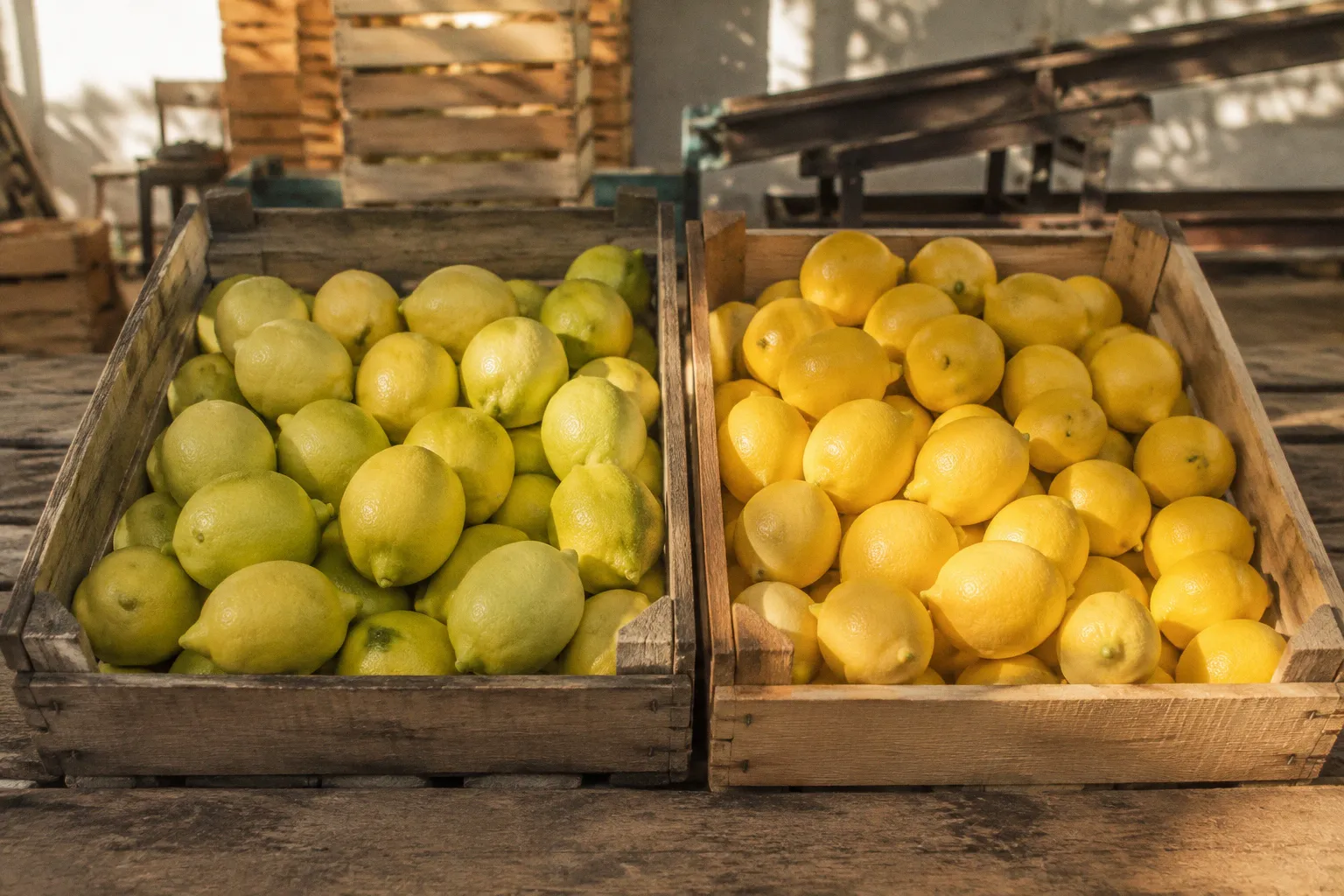
For growers and cooperatives moving Lebanese oranges, grapefruits, and other citrus toward demanding markets, that mismatch between external color and internal quality creates a familiar postharvest dilemma: harvest too late and the fruit may lose firmness or shelf life; harvest at the right internal maturity and the rind may not yet have developed the yellow or orange color buyers expect.
The Lebanese citrus degreening process addresses that visual gap after harvest. It is a controlled treatment with ethylene gas that breaks down green chlorophyll in the rind and allows yellow or orange pigments to show. Done properly, it changes appearance without making the fruit sweeter, juicier, or more mature inside. That distinction sits at the heart of good cooperative practice.
Our growers are not treating a green fruit to rescue an immature harvest. We are giving a commercially mature fruit a more consistent presentation.
The color on the outside is not the whole harvest story
Citrus behaves differently from fruits such as bananas, pears, or avocados. It is non-climacteric, which means the fruit does not continue its internal ripening process in the same way after it has been picked. Once harvested, it will not use an ethylene room to synthesize new sugars or transform an immature interior into a fully developed one.
This is the first principle every packing team should understand:
Degreening can reveal the maturity the fruit already has; it cannot create maturity that was never reached in the orchard.
The peel and the flesh are connected, but they do not change at the same pace. A citrus fruit may meet the required internal standards for sweetness, acidity, and juice content while the rind still holds too much chlorophyll. Weather, tree condition, crop load, harvest timing, and orchard position can all influence the speed of external color development.
For a cooperative, this creates a practical need for two separate decisions:
1. Is the fruit internally mature enough to harvest?
2. Does the fruit need controlled degreening to meet appearance expectations?
Those questions should not be collapsed into one visual judgment. A deeply green peel does not automatically mean the flesh is immature, just as an attractive orange peel does not prove that the fruit has good flavor.
What degreening changes—and what it leaves alone
The treatment works on the rind. Ethylene encourages the breakdown of chlorophyll, the pigment responsible for green coloration, while yellow and orange carotenoids become more visible. The result is a more uniform surface color, often with fewer green patches and a stronger visual impression of readiness.
The treatment does not, by itself, increase:
- sweetness or total soluble solids, measured as Brix;
- juice content;
- internal maturity;
- vitamin C levels;
- total phenols;
- the basic balance between sugars and acidity.
Research-based assessments of oranges and grapefruits have found no negative effect from properly managed ethylene degreening on these internal and sensory qualities. In other words, a crisp, juicy, well-balanced fruit should remain that fruit after treatment. The peel may look different, but the juice does not become richer simply because the rind has changed color.
That is why the orchard and the packinghouse must work as one system. A chamber cannot correct poor harvest timing, weak nutrition, drought stress, disease pressure, or fruit that was picked before it reached the cooperative’s internal maturity standard.
The Lebanese citrus degreening process is a controlled room, not a storage shortcut
A degreening chamber is not simply a warm warehouse with gas added. The process depends on a narrow relationship between ethylene concentration, temperature, exposure time, humidity, air movement, and ventilation. When one part is pushed too far, the visual improvement can come at the cost of rind condition and storage life.
Standard operating ranges for citrus degreening are:
| Parameter | Practical operating range | Why it matters |
|---|---|---|
| Ethylene concentration | 1–10 ppm | Provides the signal for chlorophyll breakdown without unnecessarily intensifying treatment |
| Common reference target | Around 5 ppm | A widely used standard point for controlled degreening |
| Chamber temperature | 20–30°C | Supports the color response; the ideal target is often around 28–29°C |
| Treatment duration | 24–72 hours | Allows time for color development while limiting prolonged exposure |
| Ventilation | Planned air exchange after treatment | Clears residual ethylene and helps prevent excessive exposure and heat accumulation |
These figures are operating guidance, not permission to run every load at the upper limit. A cooperative should establish its own treatment records by citrus type, harvest condition, lot history, and desired color result. The right program for a firm early-season orange may not be the right program for fruit already showing softening or rind stress.
Why temperature and concentration must be managed together
Ethylene is a signal, not a seasoning. More gas does not automatically produce a better result. Excessive concentration, excessive time, or poor ventilation can accelerate physiological decline rather than simply accelerating color.
Temperature has a similar role. At roughly 20–30°C, the fruit can respond to the treatment, with a commonly cited target near 28–29°C. But a chamber that is hot in one corner and cool in another will not deliver a uniform lot. Fruit stacked tightly against a wall, packed too densely, or exposed to uneven airflow may emerge with different color development across the same pallet.
For our cooperatives, chamber discipline often matters more than sophisticated equipment. A workable system should include:
- a reliable method of measuring ethylene concentration;
- temperature sensors placed in more than one chamber location;
- a written start time and treatment end time for every lot;
- clear loading limits so air can move around containers;
- a ventilation procedure before workers enter and before fruit moves onward;
- a record of peel condition before treatment and after treatment.
A shared logbook can be surprisingly powerful. It turns a treatment from an improvised decision into a repeatable cooperative practice. Over several harvests, the group can see which lots needed longer exposure, which orchards produced more sensitive fruit, and where rind disorders began to appear.
Keep the chamber clean and the lot identity clear
Degreening starts before the door closes. Fruit should enter the chamber with a known harvest date, orchard or grower identity, variety, and basic quality assessment. If lots are mixed without records, the cooperative loses the ability to understand why one batch developed bright color and another developed stem-end problems.
The chamber should also be treated as part of the postharvest hygiene chain. Damaged, leaking, or visibly diseased fruit should not be allowed to turn a shared treatment room into a source of wider contamination. Degreening is not a replacement for sorting, sanitation, careful handling, or sound cold-chain planning.
The same principle applies to packaging. A fruit with a clean, blemish-free rind can still be bruised by rough transfer, overloaded bins, or careless pallet movement. Color consistency only has value when the fruit arrives with firmness and surface integrity intact.
Pre-harvest maturity decides the ceiling of postharvest quality
The most expensive mistake in degreening is asking the chamber to solve an orchard problem. If fruit has not reached commercial internal maturity, ethylene treatment will not supply the missing sugars. The rind may become more yellow or orange while the juice remains sharp, thin, or underdeveloped.
That can be especially misleading in a market where buyers judge a shipment first by its appearance. A visually attractive load may pass an initial inspection and then disappoint at the point of sale if flavor does not support the promise made by the peel.
Before a cooperative schedules a lot for treatment, its team should agree on a simple maturity gate. The exact requirements will depend on variety and market, but the decision should draw from several observations rather than color alone:
- Brix or total soluble solids;
- titratable acidity and the resulting flavor balance;
- juice content;
- fruit firmness and handling condition;
- size distribution within the lot;
- signs of disease, abrasion, or dehydration;
- expected transport and selling window.
Brix matters because it reflects soluble solids in the juice, including sugars, but it is not a complete description of eating quality. Acidity remains part of the picture. A citrus fruit with good sweetness but excessive acidity may not taste balanced; a fruit with modest Brix and well-managed acidity can still be more pleasant.
For a cooperative, sampling should be organized collectively. One grower’s estimate of readiness should not determine the treatment program for an entire mixed load. If the fruit is harvested from different orchards, varieties, or picking dates, lot separation gives the packing team a better chance of matching treatment to condition.
A practical maturity workflow
A small group can make the process more consistent without turning the packinghouse into a laboratory.
1. Define the lot. Record grower, orchard, variety, harvest date, and intended market.
2. Sample across the load. Do not select only the brightest fruit or the easiest boxes to reach.
3. Check internal quality. Use the cooperative’s agreed measurements for Brix, acidity, juice content, and condition.
4. Sort out damaged fruit. Degreening should not hide decay, bruising, or serious rind defects.
5. Choose a conservative treatment program. Start within the established range rather than chasing rapid color.
6. Inspect after treatment. Record peel color, firmness, stem-end condition, calyx appearance, and visible soft spots.
7. Release by quality, not by clock. A fruit that has spent 48 hours in a room is not automatically ready for dispatch if the lot still needs sorting or cooling.
This shared workflow protects both growers and buyers. It makes the quality conversation more precise: if a lot is too acidic, the answer lies in harvest timing or orchard management, not in raising ethylene levels.
When degreening goes wrong, the rind tells us first
The risks of citrus ethylene treatment are usually not mysterious. They come from applying too much pressure to fruit that is already stressed, or from allowing the chamber environment to drift without anyone noticing.
Improper conditions can contribute to:
- stem-end rot;
- calyx senescence;
- soft spots;
- faster rind breakdown;
- increased weight loss;
- uneven color development;
- loss of firmness during subsequent handling.
These disorders do not always appear immediately when the chamber door opens. Some become more visible during storage or transport, which is why a cooperative should assess treated fruit again after a short holding period whenever its logistics allow. A bright peel on day one is not the only measure of success. The real question is whether that finish survives the journey to the buyer.
The most common operational causes
Excessive exposure. Extending treatment simply because a few green patches remain can expose the whole lot to unnecessary stress. Color development is not always uniform, and chasing the last green area may reduce the quality of the fruit that has already responded.
High ethylene concentration. Stronger treatment is not a substitute for good maturity or good chamber distribution. If the dose rises without a clear reason, the team may gain little visually while increasing the risk of rind disorders.
Poor ventilation. Residual gas, accumulated heat, and stale air can complicate both worker safety and fruit quality. Ventilation belongs in the written procedure, not in someone’s memory at the end of a long shift.
Overloaded chambers. A full room may look efficient, but tightly packed containers restrict air movement and create uneven temperature and exposure. The lot may leave with several shades of color and inconsistent condition.
Weak pre-treatment sorting. Fruit with cracks, punctures, disease, or dehydration is less able to tolerate a demanding postharvest environment. Degreening does not restore a compromised rind.
Mixed maturity. A load containing fruit from different harvest stages will respond unevenly. Some pieces may be ready for release while others are still green, yet the entire lot has undergone the same treatment.
Uniform color is a packinghouse achievement, but durable quality begins with a mature, well-handled fruit.
A cooperative response to uneven results
When a lot shows problems, the answer should not be blame assigned after the fact. Cooperative systems work best when each step leaves a record that the next person can use.
The grower can report orchard conditions and harvest decisions. The receiving team can document temperature, visible damage, and time from picking to intake. The chamber operator can log gas concentration, temperature, loading pattern, and ventilation. The quality lead can inspect the fruit after treatment and again before dispatch. Together, those records show whether the weakness began in the orchard, during transport, in sorting, or inside the chamber.
This division of responsibility is not bureaucracy. It is how a group turns individual experience into shared knowledge.
Internal quality after degreening: what buyers should actually taste
The strongest myth around degreening is that a more orange peel must mean a sweeter fruit. It is an understandable assumption, but it is not how citrus physiology works.
Ethylene treatment can make the fruit look more mature without raising its Brix or juice content. Properly managed degreening has not been shown to reduce total soluble solids, titratable acidity, vitamin C, total phenols, or overall flavor in oranges and grapefruits. The treatment is cosmetic in its main action, while the eating experience remains grounded in the quality established before harvest.
That gives buyers and cooperatives a better way to talk about Lebanese citrus postharvest quality. Instead of presenting color as proof of flavor, we can present color and internal measurements as two parts of the same quality system.
A strong lot should offer:
- a consistent external finish suited to the market;
- firm fruit with no widespread softening;
- sound stem ends and calyxes;
- balanced sweetness and acidity;
- sufficient juice content;
- a clean rind with limited blemishes;
- traceability back to the grower and harvest lot.
This is also where sensory evaluation earns its place. Instruments tell us about Brix and acidity; people tell us whether the fruit tastes balanced, fresh, and satisfying. A cooperative does not need to choose between technical measurement and human judgment. The most useful release decision uses both.
Color standards should be agreed before treatment
Different buyers may describe the desired finish differently: bright orange, yellow-orange, mostly colored, or free from visible green areas. If the cooperative waits until after treatment to discover that everyone had a different idea of acceptable color, the chamber will become a place for arguments rather than consistency.
A shared visual reference can help. It does not need to be expensive. The group can retain representative samples or photographs for each variety and market program, then pair that reference with written internal quality limits. The aim is not to make every fruit identical down to the last pixel. The aim is to prevent a market requirement from being interpreted differently by every shift.
For export-oriented programs, this shared language becomes part of commercial reliability. Global buyers do not only purchase a box of citrus; they purchase confidence that the next box will behave similarly.
Building a Lebanese model around shared postharvest work
The technology of degreening is manageable. The harder work is organizational: agreeing who measures what, who owns the decision, and how the cooperative responds when the crop does not behave uniformly.
A practical shared framework can be built around five responsibilities:
Growers: harvest for internal quality
Our growers set the foundation through orchard care, irrigation decisions, pest and disease management, and harvest timing. The packinghouse can improve presentation, but it cannot replace sound fruit development.
Receiving teams: protect the first hours after harvest
Fruit quality begins to move as soon as the fruit leaves the tree. Gentle handling, prompt intake, lot separation, and accurate records keep the cooperative from losing useful information before treatment even begins.
Chamber operators: follow a repeatable program
The operator should work from recorded concentration, temperature, time, loading, and ventilation procedures. A familiar room still needs measurement; experience is strongest when it is written down and shared.
Quality teams: judge the fruit twice
Inspection immediately after degreening captures color response and visible disorders. A second review before dispatch reveals whether the finish is holding and whether firmness or rind condition is changing.
Cooperative leaders: invest in learning, not only equipment
A modern chamber can improve control, but equipment alone does not create a quality system. Training, calibration, maintenance, lot records, and honest review of failures often deliver the more durable gains. When a small grower can understand how a decision made in the orchard affects treatment in the chamber, the whole group becomes stronger.
This is the collective advantage: one farm may notice a pattern, but a cooperative can confirm it across many lots and turn it into practice.
The right question is not whether the fruit looks ripe
Lebanese citrus has to travel through several judgments before it reaches a customer: the grower’s judgment in the orchard, the packing team’s judgment at intake, the chamber operator’s judgment during treatment, and the buyer’s judgment at arrival. Degreening sits in the middle of that chain. It can make a good, internally mature fruit present itself more consistently, but it cannot carry the chain by itself.
The best Lebanese citrus degreening process therefore begins with maturity, continues with measured treatment, and ends with a quality check that looks beyond peel color. Ethylene levels between 1 and 10 ppm, chamber temperatures between 20°C and 30°C, and treatment lasting roughly 24 to 72 hours provide a controlled working range, but disciplined observation decides where within that range each lot belongs.
Our goal is not simply an orange-looking shipment. It is fruit that is crisp and sound in the hand, balanced in the juice, clean and blemish-free on the rind, and dependable enough for a buyer to welcome the next harvest from the same cooperative.
When we treat degreening as one shared step in a larger quality system, the technology becomes less about hiding green peel and more about coordinating the work that gives Lebanese citrus its strongest route to market.