Cold chain logistics: 5 ways to prevent export spoilage
A shipment of fresh produce can leave the farm in perfect condition and still arrive unsaleable. The damage rarely comes from one dramatic breakdown.
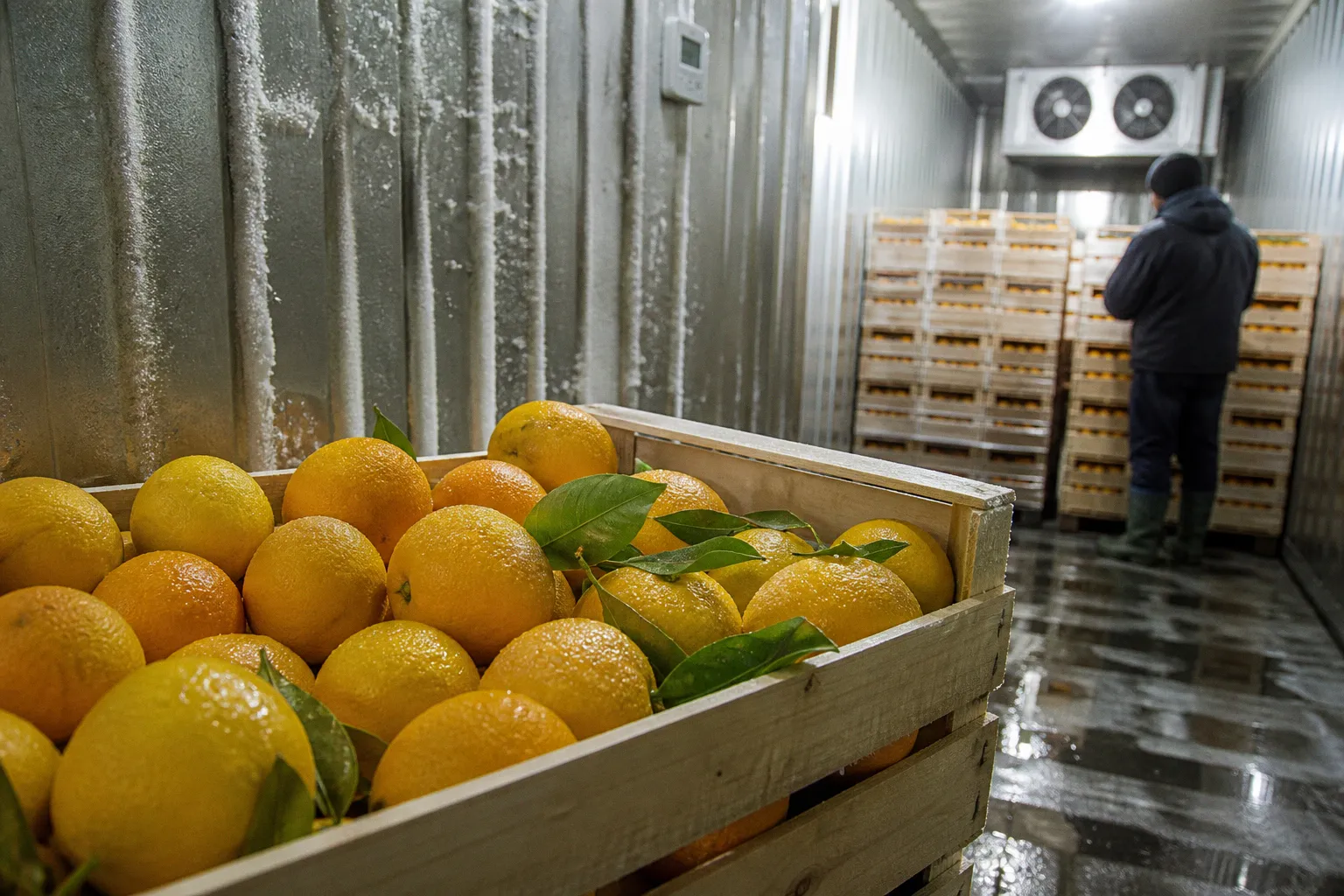
More often, it accumulates through a warm loading bay, an uncalibrated sensor, mixed commodities with incompatible storage needs, or a container that waits too long before the cooling system is properly engaged.
That is the practical meaning of the Lebanese agricultural export cold chain requirements. Temperature control is not a single setting on a refrigeration unit. It is a managed sequence that begins at harvest and continues through packing, cold storage, loading, port handling, transit, and delivery. If one link is weak, the exporter carries the risk all the way to the destination market.
Lebanese produce exporters also work within a regulatory perimeter. Decision No 1/87 of the Ministry of Agriculture is part of the framework governing cold-storage and handling operations, while relevant LIBNOR standards support the broader food-safety and management system. The exact obligation depends on the facility, the product, and the destination market, so operators should work from the current regulatory text and the requirements attached to their certification file—not from assumptions borrowed from another warehouse.
The five pressure points below are where spoilage prevention becomes operational rather than theoretical.
1. Build the facility around Decision No 1/87
Decision No 1/87 should be treated as the starting point for facility design and operating procedures, not as paperwork to be completed after the building is finished. A cooperative that waits until an inspection is approaching will usually discover that compliance is not one missing document. It is a chain of linked decisions involving rooms, equipment, water, hygiene, records, product separation, and staff practices.
The first step is to map which provisions actually apply to the facility. That means identifying the products handled, the activities performed on site, the storage conditions required, the source and use of water, the equipment installed, and the destination markets served. A warehouse that only receives packed produce does not present exactly the same risks as one that washes, grades, cuts, repacks, and stores produce before export.
Operators should keep a controlled compliance file containing:
- the current text of the applicable Ministry decision and any related instructions;
- facility plans showing product flow, personnel movement, storage rooms, packing areas, and waste routes;
- equipment inventories and maintenance records;
- sanitation procedures and completed cleaning logs;
- water-test results and corrective actions;
- temperature and humidity records;
- training records for employees and temporary workers;
- non-conformity reports and evidence that each issue was closed.
This is more useful than a generic “compliant” label. During an audit, the question is rarely whether the operator intended to follow the rules. The question is whether the facility can demonstrate, through consistent records, that it did so.
Decision No 1/87 should also not be stretched beyond what it actually says. Claims about exact corridor dimensions, dock construction, refrigerant venting, or a prescribed equipment layout should be checked against the official text before they are presented as legal requirements. Some may be sound engineering practice; that does not make them provisions of the decision. The distinction matters when a cooperative is budgeting for works or responding to an inspector.
A sound design still uses the regulation as a baseline and then adds a risk-based layer. Enclosed or protected loading areas, clear segregation between raw and packed product, safe forklift routes, and controlled access to cold rooms are sensible ways to reduce exposure and handling damage. They should be documented as facility controls, while regulatory obligations should be attributed only to the provisions confirmed in the applicable instrument.
Compliance works best when it is designed into the movement of the product, not added to the file after the product has already moved.
The same discipline applies to investment decisions. The cost of a cold room varies sharply with capacity, insulation, refrigeration architecture, power availability, backup requirements, construction conditions, and whether the facility is new or being adapted. There is no responsible universal Lebanon-wide price for a “compliant” room. A cooperative should request a detailed bill of quantities and separate the cost of refrigeration, insulation, electrical work, monitoring, drainage, backup power, fire protection, and certification support.
The business case should be built around the cooperative’s actual throughput and commodity mix. Protected capacity that sits empty for much of the year has a different economics from a room serving several harvest windows. A simple calculation should include:
- tonnes handled per season and per month;
- average dwell time in storage;
- electricity and generator costs;
- maintenance and calibration;
- labour and sanitation;
- rejected, downgraded, or diverted product;
- the value of flexibility during peak harvest;
- financing, depreciation, and replacement of major components.
That approach is less impressive than quoting a single payback period, but it is much more likely to survive contact with the operation.
2. Control temperature and humidity by commodity
Temperature control is the most visible part of cold-chain management, but the correct temperature is not the coldest temperature available. Produce has different respiration rates, chilling sensitivities, moisture needs, and tolerance for changes during handling.
Leafy vegetables and many cruciferous crops generally require colder, humid conditions than tomatoes, bananas, mangoes, or other chilling-sensitive products. Stone fruit, peppers, and beans may sit in a different operating range again. Exact settings should be taken from the commodity protocol, buyer specification, and destination requirements rather than copied from a neighbouring room.
The essential rule is simple: do not treat a mixed load as a single product merely because all of it is classified as “fresh produce.”
Before loading a room, the operator should know:
1. the target pulp temperature for each commodity;
2. the acceptable storage range and maximum exposure time;
3. whether the product is sensitive to chilling or freezing;
4. the required relative humidity;
5. whether the product produces or absorbs ethylene;
6. whether it releases odours or is vulnerable to them;
7. how long it can remain on the dock during loading;
8. whether the buyer requires a particular data-logging format.
A room designed for one commodity can become a spoilage engine when a second commodity is added without a compatibility assessment. The room may hold the setpoint while the produce still loses quality because the humidity, airflow, ethylene exposure, or cooling rate is wrong.
Pulp temperature is more informative than room temperature
A wall sensor tells the operator what the air is doing at one location. It does not necessarily show whether the centre of a pallet has cooled, whether warm produce arrived from the field, or whether cartons near a door are being exposed to repeated temperature swings.
For that reason, monitoring should combine fixed sensors with portable checks. Pulp temperature readings should be taken from representative cartons, with the location and time recorded. The sampling plan should cover:
- product entering the facility;
- the warmest and coolest parts of the room;
- the middle of dense pallet stacks;
- product waiting near doors;
- cartons selected for container loading;
- the cargo after pre-cooling, where applicable.
The aim is not to create a forest of instruments. It is to identify whether the cold room is actually removing field heat and maintaining a stable environment. A single sensor placed beside the evaporator can produce reassuring numbers while the far side of the room remains out of range.
Humidity requires the same caution. Low relative humidity increases water loss and can leave produce limp, shrivelled, or lighter than the sales specification. Excessive humidity and condensation can encourage mould, especially where surfaces remain wet or air cannot circulate through the load. The right operating band depends on the commodity, packaging, and storage duration.
A practical monitoring record includes the setpoint, actual reading, product temperature, door openings, corrective action, and the person responsible. If the reading is outside range, the response should be defined in advance. That may mean adjusting airflow, reducing loading density, moving a pallet, isolating affected product, or escalating to maintenance. “Temperature checked” is not a corrective procedure.
Airflow and loading pattern
Good refrigeration equipment cannot compensate for a blocked airflow path. Pallets should be arranged so that cold air can circulate through the intended route, with enough clearance for the equipment’s design. Cartons should not be pressed against evaporators or packed so tightly that the centre of the load remains warm.
The loading pattern should be documented for each room. This is particularly important for cooperatives that handle several crops and rely on seasonal staff. A plan posted in the room can show pallet orientation, product zones, maximum stacking height, and no-storage areas. It turns a technician’s knowledge into a repeatable procedure.
Door discipline is equally important. Every opening admits warmer, more humid air and creates an opportunity for condensation. Doors should remain closed when not in use, and loading should be organized so that workers are not repeatedly searching for pallets while the room is exposed.
3. Make calibration, maintenance, and sanitation routine
A cold room does not become reliable because it was commissioned correctly. Reliability is maintained through repeated checks, recorded interventions, and a clear distinction between calibration and maintenance.
Calibration asks whether an instrument gives a trustworthy reading against a known reference. Maintenance asks whether the system is capable of producing and holding the required conditions. Both are necessary. A calibrated thermometer cannot correct a failing compressor, and a well-maintained compressor cannot compensate for a sensor that reads inaccurately.
The facility’s annual plan should cover, as applicable:
- temperature and humidity sensors;
- data loggers and alarm systems;
- refrigeration controls;
- evaporators and condensers;
- door seals and hinges;
- defrost functions;
- drainage and condensate routes;
- backup power and automatic changeover;
- electrical protection;
- refrigeration circuits and leak checks;
- cleaning and sanitation equipment.
Not every item needs the same interval. The schedule should follow manufacturer instructions, the risk assessment, the equipment history, and the requirements of the certification system. Where Decision No 1/87 specifies a calibration or verification obligation, the operator should retain the relevant certificate or service record. Where a particular inspection is an internal control rather than a direct provision of the decision, the records should describe it accurately as an operating procedure.
The point is not to make the compliance file look larger. It is to make the facility’s condition visible before a failure reaches the cargo.
Alarm management is part of calibration discipline
A temperature alarm that is never tested is only a decorative feature. The facility should define the alarm limits, delay period, escalation route, and response time. Staff must know who receives an alert outside working hours and what happens if the primary contact cannot respond.
Alarm tests should be recorded, including:
- the date and time of the test;
- the sensor or zone tested;
- the alarm threshold;
- the notification channel;
- the person who acknowledged it;
- the corrective action where the test failed.
The same logic applies to data loggers. Downloading data after a shipment has been rejected is not monitoring. Data should be reviewed during storage so that a gradual drift, repeated door exposure, or night-time power interruption is identified while there is still time to act.
A cooperative should also define what happens when an instrument fails. The temporary control might be a verified handheld probe, a second logger, a room transfer, or a hold on loading. The replacement process should be clear enough that a busy supervisor does not improvise during the hottest part of the season.
Water and sanitation records
Water used in washing, packing, or cleaning should be managed according to its intended use and the applicable food-safety requirements. Testing frequency, laboratory method, sampling point, and acceptance criteria should be documented in the facility’s approved procedure. Results should not sit in a folder without a decision attached to them.
If a result is unsatisfactory, the response may include stopping the relevant operation, identifying affected lots, investigating the source, cleaning or repairing the system, retesting, and documenting release. The exact response depends on the result and the operation, but the principle is constant: a laboratory report must trigger controlled action.
Sanitation should distinguish between cleaning and disinfection. Soil, plant material, dust, and residues must be removed before a disinfectant can work as intended. Chemicals should be approved for the application, mixed according to the product label, stored safely, and recorded. A claimed concentration should not be repeated as a universal baseline without considering the chemical, water quality, contact time, temperature, and local procedure.
Floors, drains, walls, pallet surfaces, weighing equipment, packing tables, and reusable crates each need an appropriate cleaning frequency. The schedule should increase during peak intake or when damaged produce creates additional organic load. A signed form is useful only if it reflects work that was actually completed and verified.
The strongest cold-chain record is not the one with the most entries. It is the one that shows a deviation, a decision, and a documented response.
4. Remove contamination and sensory risks before loading
Export spoilage is not limited to temperature abuse. Chemical, biological, and sensory contamination can make a shipment unacceptable even when the refrigeration record looks clean.
The first control is separation. Fuel, lubricants, cleaning chemicals, pesticides, waste, maintenance materials, and non-food equipment should be kept away from product and packaging. Material-handling equipment used inside cold rooms should be selected and managed to prevent exhaust, fuel, lubricant, and battery-related risks. The correct choice depends on the facility, ventilation, handling pattern, and applicable requirements; unsupported claims about a universal ban or a specific equipment type should not replace a documented risk assessment.
If combustion-powered equipment is used anywhere near the product flow, the operator should establish where it is permitted, how emissions are controlled, and how the separation is verified. In many facilities, electrically powered handling equipment is the simpler risk-control option, but its suitability depends on charging arrangements, battery management, floor conditions, and maintenance capacity. There is no sound reason to claim a fixed local purchase price or an exact payback period without a quotation and operating data.
Packaging deserves the same level of attention. The material must be suitable for food contact, strong enough for stacking and transit, clean when it enters the facility, and compatible with the destination market. It should not transfer odours, inks, adhesives, residues, or other substances to the produce.
The aromatic-wood issue illustrates why material specifications should be written precisely. If the applicable rule restricts odorous packaging or certain untreated materials, the procurement procedure should name the prohibited characteristic and the evidence required from the supplier. It should not turn that rule into a sweeping claim that every wooden package is unacceptable. Approved wood, treated fibreboard, corrugated materials, and reusable plastic crates may all be appropriate when they meet the relevant hygiene and market requirements.
Sensory contamination is a procurement problem
Off-odours are difficult to investigate after delivery because the source may have entered the chain several days earlier. A pallet can absorb odours from chemicals, fuel, smoke, mould, poor-quality wood, or an improperly cleaned reusable crate. The product may still look normal when loaded.
Procurement and receiving procedures should therefore include:
- supplier declarations for food-contact packaging;
- inspection for chemical or unusual odours;
- checks for dampness, mould, insects, and visible contamination;
- confirmation that reusable crates are clean and dry;
- segregation of rejected packaging;
- lot identification for packaging used in each shipment;
- records of any complaint or sensory failure at destination.
The claim that every non-food-grade plastic liner will produce a specific laboratory or olfactory result is too broad to be useful. The correct concern is the potential for unsuitable materials to transfer substances or odours, especially under long refrigerated storage. That risk should be controlled through specifications, supplier approval, and, where required, testing.
Biological controls should follow the product flow. Workers should have access to handwashing facilities and clear rules for illness, gloves, protective clothing, and movement between areas. Visitors and maintenance contractors should not move freely from waste or chemical areas into packing zones. Damaged or visibly decayed produce should be removed quickly because one leaking carton can contaminate adjacent packaging and create a larger sanitation problem.
Pest control must also be integrated with the cold room rather than treated as a separate service. Traps, inspections, repairs to doors and screens, and corrective actions should be mapped and recorded. Chemical pest-control applications should never create a new contamination route.
5. Match certification to the destination market
A Lebanese facility can operate well and still lose market access if its documentation does not match the buyer’s requirements. The export file must connect the farm or cooperative, the packing operation, the cold store, the transport provider, and the destination importer.
LIBNOR standards may form part of the food-safety and management architecture, including standards relevant to HACCP application, general food safety, or particular product categories. The operator should confirm which standards, certifications, and Ministry procedures apply to the facility and shipment. A standard number on its own does not prove that a product or warehouse meets every requirement imposed by a particular destination.
The Ministry of Agriculture’s role, the certificate of conformity, and the documents requested by the importer should be mapped in one matrix. That matrix should identify:
| Control point | Evidence to retain | Responsible party |
|---|---|---|
| Approved facility and scope | Current licence, approval, or certificate documents | Facility management |
| Product identity | Lot code, variety, grade, and packing date | Packing supervisor |
| Farm or supplier traceability | Grower records and intake documentation | Cooperative procurement |
| Cold-chain performance | Continuous logs and loading checks | Cold-store manager |
| Water and sanitation | Laboratory reports, cleaning records, corrective actions | Food-safety lead |
| Transport handover | Container number, seal, setpoint, and dispatch time | Logistics coordinator |
| Destination requirements | Buyer specifications and import documents | Export manager |
This matrix exposes a common weakness: the facility has a certificate, but the shipment file cannot show what happened to the actual lot. Certification is not a substitute for traceability.
The container is part of the cold store
The handover from warehouse to reefer container is one of the most vulnerable moments in the chain. The container should be inspected before loading for cleanliness, odour, damage, drain condition, and evidence of previous cargo. The refrigeration unit’s condition and setpoint should be recorded, along with the time loading begins and ends.
Where pre-cooling is required, product should be brought to the agreed condition before loading rather than relying on the container to remove all field heat during transit. A reefer maintains a load more reliably than it rapidly cools a badly overheated one. The loading plan should protect airflow, prevent crushed cartons, and avoid blocking the unit’s return-air path.
The seal number, container number, pallet or lot references, and temperature logger identification should travel together in the export file. If a deviation appears later, the exporter needs to determine whether it began at harvest, at the packing line, during storage, during loading, at the port, or in transit. Without linked records, every party can deny responsibility and nobody can isolate the failure.
For cargo moving through Beirut or another port, port dwell time should be treated as a logistics risk rather than an administrative detail. The exporter should confirm who monitors the container while it waits, how power connection is handled where applicable, and what escalation procedure applies if the vessel schedule changes. The exact control arrangement will depend on the terminal and shipping line, but the responsibility must be assigned before dispatch.
Do not promise what the records cannot prove
Destination markets increasingly expect evidence, not general assurances. Buyers may request temperature history, packing records, residue controls, certificates, laboratory results, and traceability to the grower or cooperative. The requirements differ by product and market, and they can change. Exporters should obtain the current specification from the importer, customs broker, or competent authority before the season begins.
That is especially important for Gulf-bound cargo. A shipment intended for Saudi Arabia, the United Arab Emirates, Kuwait, or another market may face different documentary, labelling, inspection, and product requirements. A certificate issued for the facility does not automatically answer every question raised by the destination authority.
The most resilient Lebanese produce exporters are not necessarily those with the largest refrigeration plant. They are the ones that know the condition of each lot, can show how it was handled, and can respond quickly when a reading or inspection result falls outside the plan.
Cold-chain integrity is therefore a management system before it is a machine. Decision No 1/87 provides a regulatory anchor where it applies; commodity protocols define the climate envelope; maintenance and calibration keep the equipment honest; sanitation and procurement reduce contamination; and certification links the operation to the market it hopes to serve.
That is how Lebanon transit trade spoilage prevention becomes practical. Not through a single expensive upgrade or an optimistic payback calculation, but through a chain of small controls that remain in force when harvest volumes rise, power becomes unreliable, containers wait at the port, and the margin between saleable and rejected produce becomes very small.