Cold chain telemetry for Lebanese exporters
A cooperative can grow crisp herbs, blemish-free apples, and firm stone fruit, yet still lose the value of that harvest before it reaches a buyer. The weak point is often not the field or the packing line.
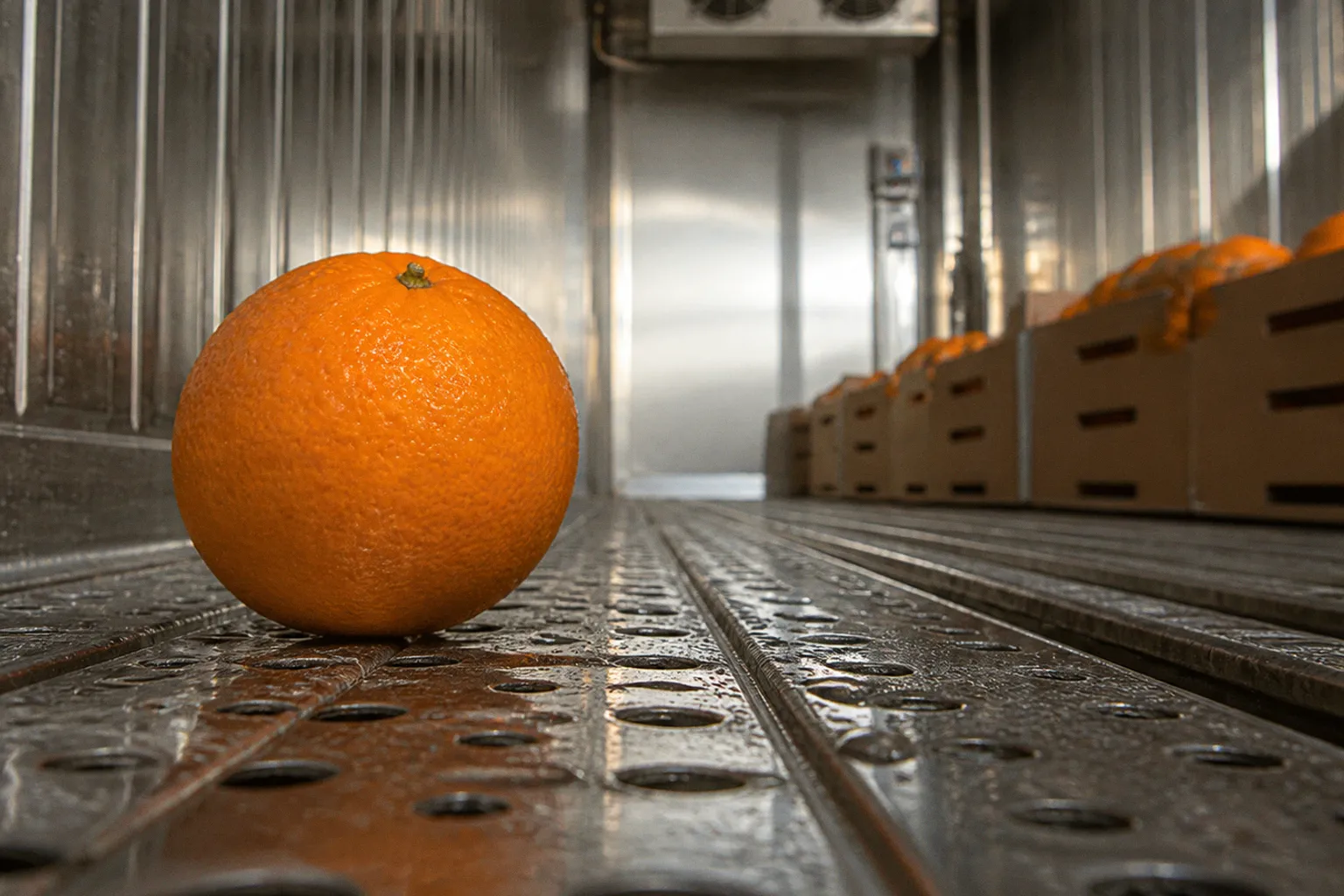
It is the quiet stretch between pre-cooling, cold storage, port handling, and maritime transit, when nobody can say with confidence what happened to the cargo.
For Lebanese exporters, cold chain telemetry turns that uncertainty into a shared record. It shows whether produce reached the required temperature, whether humidity stayed within a workable range, where the shipment was, and whether the data remained intact when a buyer or inspector asked to see it. For our growers and cooperatives, this is more than a technical upgrade. It is a way to protect collective effort across a route that may begin in the Bekaa or Mount Lebanon and continue through the Port of Beirut to an international market.
The practical question is not simply whether a shipment had a sensor inside the box. It is how to check cold chain telemetry for Lebanese exporters in a way that connects farm handling, facility compliance, transport, and export documentation. That requires a complete chain of responsibility, not a device added at the last minute.
Start with the rule that shapes the cold room
The foundation is Decision No 1/87 of the Lebanese Ministry of Agriculture, issued on January 24, 2014. It establishes technical specifications and mandatory registration requirements for cold-storage facilities handling fresh agricultural products for export and local markets.
That point matters for cooperatives because a registered facility is not merely a place where produce becomes colder. It is part of the documented handling system. If several growers pool their harvest and send it through a shared cold store, the facility becomes a common point of accountability. A missing registration, incomplete temperature record, or poorly controlled loading process can affect every grower whose crates are inside that room.
Telemetry does not replace the obligations of the facility. It helps demonstrate that the facility is operating within them.
A strong cold-chain process should connect these stages:
1. Harvest and reception: Record when produce arrives, its condition, and whether it has already been exposed to heat or direct sun.
2. Pre-cooling: Bring the crop down to its required temperature before extended storage or port movement.
3. Cold storage: Maintain stable conditions, not simply a low reading at one moment in the day.
4. Packing and loading: Watch for the warm interval when doors open, pallets wait, or cartons sit on a loading dock.
5. Inland transport: Preserve the record from the cooperative or facility to the Port of Beirut.
6. Port and maritime handling: Continue monitoring through handover and shipment, with clear responsibility for the data.
7. Arrival review: Compare the telemetry record with the buyer’s quality assessment and any signs of wilting, mold, softening, or decay.
The most useful system is therefore end-to-end. It follows the product rather than stopping at the cold-room door.
For a cooperative, responsibilities should be agreed before the season begins. The grower may be responsible for harvest timing and field shade. The packing team may own pre-cooling and pallet preparation. The cold-store manager may maintain the room and gateway. The logistics coordinator may check the inland route and port handover. A named person should review alerts, preserve the records, and communicate with the buyer.
That division is not corporate formality. It prevents the familiar problem in which everyone assumes that someone else is watching the temperature.
A sensor can record the journey, but only a cooperative can decide who is responsible for acting on the record.
What to document at the facility
A cold room that serves multiple growers needs a simple operating record alongside its digital telemetry. The record should connect each batch to:
- grower or cooperative member;
- crop and variety;
- harvest date and approximate harvest window;
- receiving time at the facility;
- pre-cooling start and completion;
- pallet or lot identification;
- storage room and loading time;
- transport and shipment reference;
- sensor identification and placement.
This gives the temperature and humidity data a practical identity. A graph without a lot number is only a graph. A graph linked to a pallet, crop, date, and destination can help explain a quality outcome.
Temperature is only half of the produce story
Fresh produce loses quality through several pathways, and temperature is not the only one we need to see. Relative humidity, or %RH, must be monitored alongside temperature because the two conditions shape how produce breathes, loses water, and develops decay.
Low humidity increases transpiration. Leaves wilt, herbs lose their crisp appearance, and fruit can arrive with a duller skin or reduced firmness even when the temperature record looks acceptable. At the other extreme, humidity spikes above 95% can encourage mold growth, particularly when condensation forms on packaging or product surfaces.
This is why a temperature-only logger can create false reassurance. The record may show a cold shipment while the herbs have gradually lost water, or it may show a stable temperature while a high-humidity environment creates a favorable condition for mold.
The target is not to keep every product at the coldest possible setting. Different crops have different tolerances. Fresh herbs, apples, leafy greens, and cold-sensitive crops cannot all be managed as though they share one storage profile. Basil, for example, is specifically a crop that requires an exception to the rapid-cooling baseline used for many fresh herb exports.
A cooperative should create a crop-specific handling sheet before packing begins. It does not need to be elaborate, but it should answer four questions:
- What temperature range is appropriate for this crop?
- What humidity range protects appearance without creating condensation?
- How quickly must the product be cooled after harvest?
- What signs require the batch to be held, inspected, or redirected?
A useful telemetry dashboard should display temperature and %RH together, with alerts that reflect the product rather than a generic warehouse setting. A threshold that is suitable for one crop may damage another. The settings must follow the commodity profile and the buyer’s requirements.
| Handling point | Temperature question | Humidity question | Cooperative action |
|---|---|---|---|
| Harvest reception | Has field heat already affected the batch? | Are leaves or fruit showing early moisture loss? | Shade, inspect, identify the lot, and prioritize vulnerable produce |
| Pre-cooling | Has the crop reached its required stabilization point? | Is cooling creating condensation or excessive drying? | Confirm the product, not only the room, has cooled appropriately |
| Cold storage | Is the room stable between door openings and loading cycles? | Is %RH low enough to wilt produce or high enough to support mold? | Adjust airflow, packaging, loading density, and room settings |
| Inland transport | Are temperature excursions occurring on the route? | Is the load exposed to drying airflow or condensation? | Review live alerts and define who can intervene |
| Port and maritime transit | Does the record continue through handover? | Are conditions changing during transfer or container waiting time? | Preserve the chain of custody and export the complete data file |
| Arrival | Does the record match the physical quality? | Do the product condition and humidity history tell the same story? | Compare buyer feedback with the batch history and improve the next cycle |
The table is most useful when it becomes part of the cooperative’s weekly routine. If the same crop repeatedly arrives wilted despite acceptable temperature, the answer may lie in humidity, packaging ventilation, pre-cooling speed, or excessive waiting time before loading.
Build the telemetry system around the route
The technology can sound more complicated than it needs to be. At its core, a modern cold-chain telemetry system has three layers: sensors, a communication gateway, and a platform that stores and presents the information.
Bluetooth Low Energy, or BLE, sensors are often used inside cold rooms, pallets, crates, or vehicles. They measure conditions close to the produce. Asset tags can associate a sensor with a pallet, container, or shipment. A gateway collects the readings and transmits them through LTE-M or 4G, depending on the available network and the system design.
That architecture allows the data to continue beyond the farm or packing shed. A cooperative can see whether a pallet was cooling in the facility, waiting for dispatch, moving toward Beirut, or already connected to a maritime shipment. The precise communication arrangement will depend on route coverage, device capability, and the operating environment, and inland coverage should be confirmed rather than assumed.
The important design decision is sensor placement. One sensor placed near the door may record a different experience from produce in the center of a tightly loaded pallet. A single device may be enough for a small, consistent shipment, but mixed loads, large cold rooms, and products with different sensitivities require a more deliberate placement plan.
Our growers do not need an ocean of data. They need representative data that can answer practical questions:
- Did the warmest part of the load remain within the acceptable range?
- Did the center of the pallet cool as quickly as the surrounding air?
- Was there a repeated temperature rise during loading?
- Did humidity climb after the doors closed?
- Was the excursion brief and recoverable, or long enough to affect quality?
- Can we prove when the issue occurred and who had custody of the cargo?
A workable cooperative setup
A shared system can be organized in stages rather than purchased all at once.
At the cold-storage facility, place fixed sensors in the rooms and use portable BLE sensors for representative lots. Fixed sensors show the room’s behavior; portable sensors show what the product experienced.
During transport, use asset-level sensors attached to selected pallets or containers. If every shipment cannot carry the same number of devices, the cooperative should define a consistent sampling method and record which lots were monitored.
At the gateway level, confirm how readings are transmitted when a truck leaves the facility, moves through areas with uneven coverage, or reaches the port. A system that only uploads data after arrival may be useful for retrospective review, but it cannot support timely intervention during a live excursion.
On the platform, create access for the people who actually work the shipment: facility staff, the cooperative coordinator, the logistics contact, and, where appropriate, the buyer. Alerts should go to a person who can make a decision, not to an inbox nobody checks during loading.
The platform should also preserve the original record. Data that can be edited without a trace will be difficult to defend during a quality dispute. A cooperative does not need to overengineer its first deployment, but it does need to know whether the system keeps an audit history.
Pre-cooling is where quality is won or lost
For fresh herb exports from Lebanon, the required rapid-cooling pre-treatment brings the product down to 1–3°C, with exceptions for cold-sensitive crops such as basil. This is not a suggestion to chill every crop to the same point. It is a biological stabilization step for the crops to which that protocol applies.
The phrase “rapid cooling” deserves practical attention. A room set to the correct temperature does not mean the product has already reached that temperature. Dense pallets, warm cartons, blocked airflow, and delayed loading can leave the center of a shipment warmer than the surrounding air. Telemetry should help us see the difference.
A good pre-cooling record captures:
- the time the lot entered the cooling process;
- the starting condition of the produce;
- the temperature and %RH around the load;
- the product temperature where the sensor placement allows it;
- the time the target condition was reached;
- the moment the lot moved into storage or packing;
- any interruption caused by door opening, equipment failure, or reconfiguration.
For herbs, the sequence after harvest is especially important. Leaves have a large surface area and can lose water quickly. If the produce waits in the sun, in an unventilated receiving area, or beside a busy loading zone, later refrigeration may not restore its original crispness. The cooperative can protect quality by organizing harvest windows, shaded reception, rapid movement to cooling, and clear priority for the most perishable lots.
A practical layout may be as simple as color-coded pallet cards linked to the digital lot record:
- Red: received and awaiting pre-cooling;
- Amber: cooling in progress;
- Green: target condition reached and cleared for packing;
- Blue: packed and ready for dispatch.
The colors are not a substitute for telemetry. They make the process visible to the people moving crates, checking doors, and preparing documents. The best system combines a clear physical workflow with a reliable digital record.
If the system raises an alert during pre-cooling, the response should be defined in advance. The team may need to check airflow, reduce pallet density, reposition the load, inspect the refrigeration unit, or hold the lot for a quality decision. An alert without an agreed response simply turns information into anxiety.
Make the data ready for inspection, not just for the dashboard
Export buyers and regulators may need more than a current temperature screen. They may ask for a complete record covering the shipment’s handling history. That is why calibration, continuity, and data integrity matter.
Cold-chain telemetry used in global produce trade often relies on sensors calibrated to ISO 17025 standards. Calibration gives the measurement a defensible basis. It does not make a poor placement decision disappear, and it does not correct a sensor that has been damaged, but it strengthens confidence in the readings.
The system should also support continuous data logging around the clock, with tamper-evident audit logs. The purpose is straightforward: if a value is changed, deleted, or corrected, the record should show that something happened. A buyer should be able to distinguish an original reading from a later annotation or manual adjustment.
Before the season, our cooperative teams should ask the telemetry provider to demonstrate—not merely promise—the following:
- how often the sensors record readings;
- how the system handles temporary communication loss;
- whether the device stores data locally until transmission is restored;
- how calibration status is displayed;
- whether alerts show the start, duration, and recovery of an excursion;
- how sensor identity is linked to a lot or asset;
- whether data can be exported in a readable format;
- how the platform preserves audit history;
- who can edit settings and who can only view records;
- what happens when a sensor battery weakens or a gateway goes offline.
These questions reveal whether the system is designed for real logistics or only for a polished screen. A cold chain has interruptions: loading doors open, trucks wait, cellular coverage changes, and equipment needs maintenance. The platform should record those realities clearly rather than hiding them behind a single average reading.
The export record should tell the truth about the shipment, including the uncomfortable minutes when the doors were open or the route did not go as planned.
Handling an excursion without blaming the wrong person
A temperature or humidity excursion is not automatically proof that the entire shipment is ruined. Its meaning depends on the crop, the duration, the severity, the point in the route, and the product’s physical condition.
The first response should be factual:
1. Confirm that the alert comes from the correct sensor and lot.
2. Check whether the sensor is positioned properly and still functioning.
3. Identify when the excursion began and whether the condition has recovered.
4. Locate the shipment and determine who currently has custody.
5. Inspect the product where practical for wilting, condensation, softening, bruising, or mold risk.
6. Record the action taken and the person responsible.
7. Preserve the full data record for later review.
This process protects the cooperative from two opposite mistakes. The first is dismissing a real problem because the cargo is already on the road. The second is rejecting a sound shipment because one faulty sensor produced an implausible reading. A shared review process lets us distinguish equipment failure, handling error, route delay, and genuine product risk.
Turn telemetry into a cooperative advantage
The most valuable result of cold-chain monitoring is not a report sent after a complaint. It is the gradual improvement of the whole export operation.
At the end of each shipment, the cooperative can review a small set of questions:
- Which lots reached pre-cooling quickly?
- Which pallets cooled slowly in the center?
- Where did humidity rise above the acceptable working range?
- How long did loading and port handover take?
- Which routes or time windows created repeated stress?
- Did the buyer’s quality notes match the telemetry?
- What single process change would protect the next harvest?
This is where collective effort becomes practical. One grower may notice that smaller harvest loads arrive cleaner. Another may find that a certain carton venting pattern preserves leaf quality. The packing team may identify that doors are opened too often during document checks. The logistics coordinator may discover that dispatching earlier reduces waiting at the port. Telemetry gives these observations a common language.
It can also support fairer conversations inside the cooperative. When quality falls, the answer should not begin with blame. The record may show that the product left the farm in good condition but waited too long before cooling, or that the cold room performed well while the loading dock became the weak point. Clear data helps us invest in the right improvement rather than asking growers to absorb every loss individually.
For a cooperative beginning with limited resources, the first investment should be a disciplined pilot rather than a scattered collection of devices. Choose one crop, one facility, and one export route. Define the handling profile, place sensors deliberately, train the people receiving alerts, and review every excursion. After the process is stable, extend it to additional growers and products.
The system should grow with the cooperative’s shipment calendar. A shared sensor pool, clear sign-out records, common naming conventions, and one person responsible for data quality can be more useful than an expensive platform nobody has integrated into daily work.
A clear way to check the system before shipment
When a buyer asks how the cooperative checks its cold chain, the answer should be a process that can be shown from beginning to end:
- The facility is registered and operated according to the applicable Ministry of Agriculture requirements.
- The crop has a defined temperature and humidity profile, including any cold-sensitive exceptions.
- Sensors are calibrated appropriately, with calibration status available for review.
- Temperature and %RH are logged continuously through the relevant handling stages.
- Sensor placement represents the load rather than only the room air.
- The gateway and communication route are tested before dispatch.
- Alerts are assigned to named people with authority to act.
- Lot, pallet, sensor, transport, and shipment identifiers remain connected.
- The record includes pre-cooling, storage, inland movement, port handover, and maritime transit where the system supports it.
- Data is preserved with tamper-evident history and can be exported for inspection.
- Excursions are reviewed with the physical condition of the produce, not interpreted in isolation.
That is the practical meaning of learning how to check cold chain telemetry for Lebanese agricultural cooperatives. It is not a single button, threshold, or dashboard. It is the agreement that every handover matters and that every part of the route should leave a trustworthy trace.
Lebanese agricultural exports already carry the work of many hands: growers, harvest crews, packers, cold-store teams, drivers, port workers, and buyers. Cold chain telemetry does not remove the human element from that journey. It gives those people better visibility, helping us protect the crispness, color, firmness, and yield that began in the field.
When the record is complete, a cooperative can move from defending quality after the fact to managing it while the shipment is still in its care. That is the larger promise: not technology for its own sake, but a stronger collective harvest, carried carefully from Lebanese soil to the markets waiting for it.