Port of Beirut agricultural cargo: export clearance steps
In Lebanese orchards, the first signs of climate stress often appear before harvest: peaches soften unevenly after a heat spike, table grapes lose firmness when irrigation and ripening fall out of…
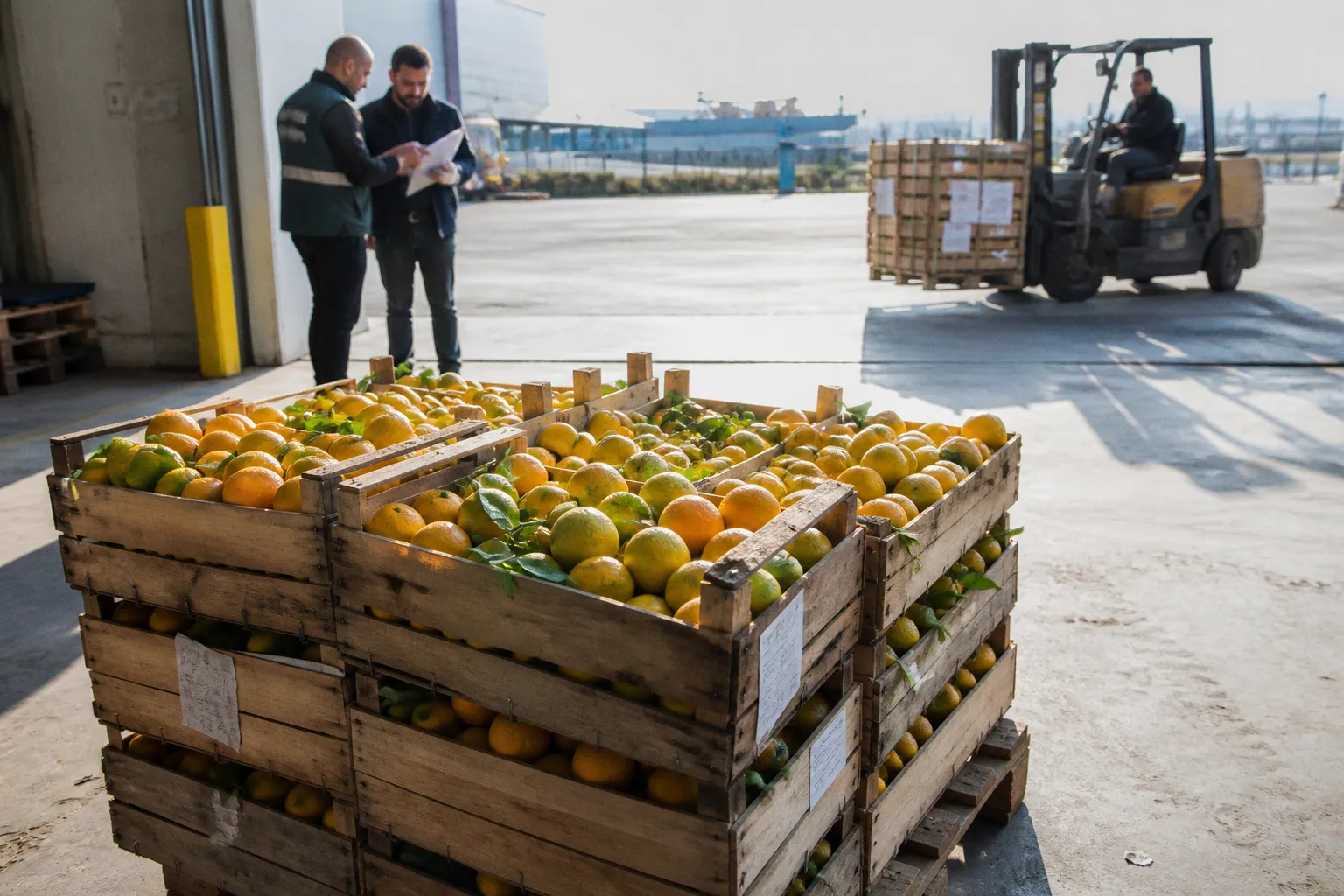
In Lebanese orchards, the first signs of climate stress often appear before harvest: peaches soften unevenly after a heat spike, table grapes lose firmness when irrigation and ripening fall out of balance, and leafy vegetables arrive with less tolerance for handling than they had a decade ago. These are field problems, but they become logistics problems as soon as the crop is packed for export.
A container of fresh produce does not move through the Port of Beirut on the strength of a good harvest alone. The shipment must be presented to the Ministry of Agriculture before packing, inspected at more than one stage, supported by laboratory results from the Lebanese Agricultural Research Institute, and declared through an authorized customs clearance agent. If one part of that chain is late or inconsistent, the cold chain may be technically ready while the cargo remains legally unable to move.
The practical sequence for Port of Beirut agricultural cargo clearance is therefore best understood as one connected system:
1. Apply to the Ministry of Agriculture before packing begins.
2. Complete the initial inspection and obtain its certificate.
3. Prepare the cargo for the final inspection at the border control center.
4. Secure laboratory-backed phytosanitary documentation from LARI and the Ministry of Agriculture.
5. Obtain the appropriate certificate of origin.
6. Submit the Single Customs Declaration through an authorized customs clearance agent.
7. Complete customs clearance and coordinate shipment from the Beirut Container Terminal Consortium.
The paperwork follows the crop. It cannot be sensibly separated from how the produce is grown, harvested, sorted, packed, and cooled.
The export process starts before the produce enters a box
The most common operational mistake is to treat export clearance as a port-side activity. By the time a truck reaches Beirut, many of the decisions that determine whether the cargo can move should already have been made: which products are included, who is importing them, where they were packed, how much is being shipped, and what transport arrangement will carry them to the border and onward.
For fresh fruits and vegetables, the exporter must submit an application to the Ministry of Agriculture’s border control centers before packing. The application identifies:
- the exporter and importer;
- the type and quantity of produce;
- the packing center;
- transport details;
- the intended export movement.
This pre-packing step gives the Ministry a defined shipment to inspect rather than a vague promise that produce will be exported later. That distinction matters for cooperatives, where several farms may contribute to one consignment. A cooperative needs a reliable intake record before aggregation begins: grower identity, crop, harvest date, lot quantity, and packing location should correspond to the shipment described in the application.
A mismatch does not always mean that the crop is unsafe. It does mean that the authorities may be looking at a different consignment from the one described on paper. In export logistics, traceability is not an abstract quality exercise. It is the bridge between the field lot and the official document.
Build the application around the physical shipment
The application should be prepared from the packing plan, not copied from a previous export. Quantities change. A heat event can accelerate maturity in stone fruit; a cold week can delay grape harvest; a field may produce less marketable volume after sorting than the cooperative expected. The final shipment still needs to be described accurately enough for inspection and customs documentation.
A practical internal file for each consignment should include:
- the cooperative’s grower and lot records;
- the planned product list and quantities;
- the packing center details;
- the importer’s commercial information;
- the transport and container plan;
- the intended inspection location;
- records of sorting, rejection, and repacking.
This is not a substitute for the official Ministry application. It is the operational layer that helps the exporter keep the official application, inspection findings, packing list, and customs declaration aligned.
The port does not repair weak traceability. It exposes it.
That is especially true when crops from multiple farms are combined. A cooperative can gain efficiency through consolidation, but only if the lot structure remains visible. If the produce is mixed too early, the exporter may struggle to explain which farm, harvest block, or treatment record belongs to which pallet.
Initial inspection: the point where packing meets compliance
After the application is submitted, inspectors from the Ministry of Agriculture’s relevant departments conduct an initial check. This process involves the packing, export, and agricultural quarantine functions, and it leads to a certificate of initial inspection.
The initial inspection is not a ceremonial first stamp. It is the stage at which the planned export is examined before the shipment has become difficult to alter. Produce can still be sorted, rejected, repacked, or separated into clearer lots. Packaging materials can still be corrected. Labels and quantities can still be reconciled without a container already waiting on a vessel schedule.
For a packing center, preparation should focus on the physical condition and identity of the cargo:
- Are the cartons or crates consistent with the product and export plan?
- Can the packed lots be traced back to the cooperative’s intake records?
- Are damaged, decayed, or visibly contaminated units removed?
- Do the quantities on the packing records match the pallets being prepared?
- Is the cargo arranged so inspectors can examine representative lots?
- Are the packaging materials compliant with the applicable export requirements?
The rule on packaging is direct: under Decision No. 1/358 and its amendments, polystyrene containers are prohibited for packing fresh fruits and vegetables. A packing center that uses familiar materials for domestic distribution cannot assume they are acceptable for export. Packaging is part of the regulated cargo, not a neutral container around it.
The date attached to Decision No. 1/358 is October 24, 1997. Its age does not make the requirement less operationally relevant. A cooperative can lose time and product value by discovering a packaging problem after harvest, when replacing containers means reopening pallets, regrading produce, and disturbing temperature control.
Why the initial inspection should shape the packing schedule
Fresh produce has a narrow window between harvest quality and export risk. Every additional handling step can create bruising, condensation, or temperature fluctuation. The packing schedule should therefore leave room for the inspection itself rather than filling every available hour with harvesting and loading.
A workable sequence is:
1. Harvest only the volume the packing center can receive and document.
2. Separate lots at intake before washing, grading, or consolidation.
3. Complete the Ministry application before packing.
4. Keep the cargo accessible for the initial check.
5. Correct any packing or documentation discrepancy while the product remains at the facility.
6. Close the shipment only after the inspected quantities and packing records agree.
This is where agronomy and logistics meet. A crop harvested at the right maturity but held in an unplanned queue may arrive at the port with less firmness than expected. A crop packed quickly but with mixed lots may move efficiently and still be difficult to certify. Export performance depends on both biological quality and administrative order.
Final inspection and the border control stage
The initial inspection is followed by a final inspection at the border control centers. The two stages serve different operational moments.
The initial check examines the shipment while it is being prepared. The final inspection confirms the cargo at the border stage, after the shipment has been assembled for export. The exporter should treat this as a verification of the actual load, not as a repeat appointment that can be handled casually.
Between the two inspections, changes should be controlled and documented. If a pallet is removed because of decay, if the quantity changes, or if a product is replaced, the shipment records need to reflect that movement. Otherwise, the final cargo and the original paperwork can diverge.
For cooperatives, this is often the point where internal discipline makes the largest difference. A cooperative may collect produce from farms with different harvest dates, irrigation practices, varieties, and post-harvest handling. Export documentation does not erase those differences. It makes the cooperative responsible for organizing them into an identifiable consignment.
The field conditions that become export conditions
Several quality problems begin well before the truck is loaded:
- Excessive nitrogen input can produce lush tissue that is more vulnerable to handling damage or disease.
- Irregular irrigation can contribute to variable fruit size and firmness within the same lot.
- Harvesting during high field temperatures increases the cooling burden.
- Poor sanitation at the packing center can undermine an otherwise clean field.
- Mixed maturity levels can make a shipment difficult to grade consistently.
None of these is solved by a customs form. The form only records the shipment’s official identity. The cooperative’s real resilience comes from the production and packing controls that make that identity credible.
For this reason, export planning should begin with crop-specific harvest criteria. Grapes, peaches, cherries, potatoes, leafy greens, and citrus do not share the same tolerance for delay or mechanical handling. Their common logistics problem is not identical biology; it is the need to preserve quality through a regulated chain.
LARI testing and the phytosanitary certificate
The phytosanitary certificate is issued by the Ministry of Agriculture based on laboratory test results from the Lebanese Agricultural Research Institute, or LARI. This makes LARI testing a central part of the export process rather than an optional quality enhancement.
The certificate establishes the plant-health status required for the shipment’s movement. The laboratory results provide the technical basis; the Ministry issues the certificate. These functions should not be collapsed into one step when planning the export file.
The exact processing time for LARI laboratory tests can vary by product and test type, and a fixed timeline should not be assumed. That uncertainty needs to be built into the export schedule, particularly for highly perishable produce. A container may be physically ready while its phytosanitary documentation is still pending.
The practical response is not to bypass testing or inspection. It is to coordinate the harvest calendar, sampling plan, packing date, and intended departure with enough margin to accommodate the laboratory stage.
A document map for fresh produce shipping in Lebanon
| Document or control | Responsible body or party | Operational role |
|---|---|---|
| Pre-packing application | Ministry of Agriculture border control center | Describes the exporter, importer, quantities, packing center, and transport before packing |
| Certificate of initial inspection | Ministry of Agriculture inspection departments | Records the first inspection of the shipment during preparation |
| Final inspection | Ministry of Agriculture border control center | Verifies the consignment at the border stage |
| Laboratory test results | Lebanese Agricultural Research Institute (LARI) | Provide the laboratory basis for phytosanitary certification |
| Phytosanitary Certificate | Ministry of Agriculture | Confirms the plant-health documentation for export |
| Certificate of origin | Relevant Regional Agricultural Service | Establishes origin for plant-based food products |
| Single Customs Declaration | Authorized Customs Clearance Agent | Formal customs declaration based on the SAD system |
The certificate of origin follows a separate administrative route. Under Decision No. 1/255 of June 28, 2021, the certificate of origin for plant-based food products is signed by the president of the relevant Regional Agricultural Service. For Beirut, this function is handled by the Agricultural Service of Mount Lebanon.
That detail matters because “origin certificate” and “phytosanitary certificate” answer different questions. One identifies where the plant-based product originates. The other concerns plant-health requirements. A complete file needs both where the export process and destination requirements call for them.
The date and issuing authority should be treated as part of the shipment’s live planning record. A document prepared for one product mix or one export movement should not be assumed to fit a later consignment simply because the cooperative is using the same importer or packing center.
Aligning laboratory and field records
LARI results are more useful when the samples can be tied clearly to the cargo they represent. A cooperative should retain enough internal detail to connect:
- the sampled lot;
- the grower or production block;
- the harvest date;
- the packing date;
- the pallet or carton range;
- the final container.
This is basic traceability, but it also supports root-cause analysis. If a result raises a concern, the cooperative needs to know whether the issue is limited to one field, one input, one irrigation source, one packing shift, or the entire consignment.
Soil health enters the process here in a less visible way. Crop rotation, balanced inputs, irrigation management, and soil microbiology influence plant vigor and disease pressure. They do not replace laboratory testing, but they shape the probability that a crop will pass through testing and handling without surprises.
Customs clearance: the Single Customs Declaration
Once the agricultural documents are in order, the shipment still requires customs declaration. Export declarations must be submitted through an Authorized Customs Clearance Agent using the Single Customs Declaration, based on the Single Administrative Document system.
The Single Administrative Document system was introduced in 1997. For the exporter, its practical value is consolidation: the shipment’s customs information is organized through a recognized declaration rather than a collection of disconnected informal submissions.
The customs agent becomes a key operational link between the cooperative, the shipping arrangement, and the customs authorities. The agent needs a consistent set of commercial and regulatory information, including the cargo description, quantities, origin details, transport information, and supporting agricultural certificates.
The customs declaration should not be prepared as a final administrative afterthought. If the declared quantities differ from the inspected and packed quantities, the discrepancy may create a delay precisely when the produce is most vulnerable to time and temperature.
What the cooperative should reconcile before submission
Before the Single Customs Declaration is submitted, the internal shipment file should reconcile at least these elements:
- product names and varieties where relevant;
- total weight and package count;
- exporter and importer identity;
- packing center;
- country of origin;
- container and transport details;
- inspection documents;
- phytosanitary documentation;
- certificate of origin;
- commercial invoice and packing information as required for the customs filing.
The precise commercial requirements can depend on the shipment and destination. The principle is stable: every document should describe the same physical cargo.
If the shipment contains several products, the descriptions should remain specific enough to distinguish them. “Fresh vegetables” may be too broad for an internal control system even when it appears in a general commercial conversation. Product-level records make it easier to match inspection findings, certificates, pallet counts, and destination requirements.
A customs declaration is not a summary of the harvest. It is the identity card of the container.
That identity has to remain stable through the final hours before loading. Last-minute substitutions are particularly risky with fresh produce because the replacement may be biologically sound but administratively outside the inspected lot.
Packing standards, food safety, and the cold chain
Export compliance does not end with the declaration. The cargo must also remain physically suitable for the journey. Fresh produce continues to respire after harvest. Temperature, humidity, airflow, package strength, and loading density all influence how much quality survives the route.
The Lebanese standards referenced in the export landscape include:
- LIBNOR 656, concerning general rules for food safety;
- LIBNOR 605, providing HACCP guidelines;
- LIBNOR 654, concerning frozen food guidelines.
These standards sit within a broader food-safety framework. Their practical value is that they turn a general expectation—safe food—into procedures around hazards, sanitation, process control, and documentation. A cooperative exporting fresh produce should distinguish between standards relevant to its product and process rather than treating every reference as a universal checklist.
HACCP thinking is especially useful in a packing center because it follows the cause-and-effect chain. Where can contamination enter? Where can temperature rise? Where can dirty equipment contact produce? Where can a damaged carton collapse and expose the contents? The goal is not to produce impressive paperwork. It is to control the points where a small failure can affect an entire shipment.
Packaging is a technical decision
The prohibition on polystyrene containers under Decision No. 1/358 and its amendments should be built into procurement, not discovered during export preparation. For a cooperative, that means agreeing on approved packaging before the harvest season and making sure every contributing grower and packing worker understands the rule.
Packaging must also suit the crop. A container that protects firm citrus may be unsuitable for soft stone fruit. Ventilation that works for one commodity may create excessive moisture loss for another. The export package has to support:
- mechanical protection;
- airflow and cooling;
- stacking stability;
- lot identification;
- resistance to condensation;
- clean handling through inspection and loading.
A box is part of the cold chain. If it blocks airflow, collapses under stacking pressure, or traps moisture against the produce, the refrigeration unit cannot compensate fully.
The 24-hour shipping window after clearance
Once customs clearance is finalized, containers can be shipped within 24 hours from the Beirut Container Terminal Consortium. This is a valuable operational window, but it is not a promise that every shipment will complete the entire process within one day.
The 24-hour figure begins after customs clearance is finalized. It does not replace the time required for:
- the pre-packing application;
- initial inspection;
- final inspection;
- LARI laboratory testing;
- issuance of the phytosanitary certificate;
- certificate of origin procedures;
- customs declaration and review;
- physical loading and terminal coordination.
The distinction is crucial for harvest planning. A cooperative that schedules picking according to the vessel departure alone may harvest too early, hold produce too long, or discover that the laboratory and inspection stages have not yet been completed.
A better schedule works backward from the planned port movement while protecting the crop’s biological limits.
Designing a seasonal export timeline
The most reliable export operation is built before the first commercial harvest. The timeline below is a practical planning model; it does not replace instructions from the Ministry of Agriculture, LARI, customs authorities, the clearance agent, or the shipping operator.
Several weeks before the export season
Review the cooperative’s crop calendar and identify which products are intended for export through Beirut. Separate products by harvest window, expected volume, destination, and handling sensitivity.
At this stage, the cooperative should also:
- confirm the packing center and its capacity;
- secure compliant packaging materials;
- map grower lots and expected quantities;
- review sanitation and HACCP-related controls;
- establish a single person responsible for document reconciliation;
- speak with the authorized customs clearance agent about the intended movement;
- identify where sampling and inspections will fit into the harvest schedule.
This is also the point to examine production inputs. If a crop has received inconsistent treatments across farms, the cooperative needs to know before lots are merged. Uniform documentation cannot compensate for unknown field histories.
Seven to ten days before a planned packing run
Update the expected volume from field observations. Maturity, weather, disease pressure, and market specifications may have changed the original forecast.
Prepare the Ministry of Agriculture application with the actual planned exporter, importer, quantities, packing center, and transport details. The application must be filed before packing. Do not wait for the crop to be inside export cartons.
Confirm that the lot records are complete enough to support sampling and inspection. If the shipment will combine several growers, decide in advance whether the lots will remain separate in the documentation and pallet layout or be combined under a defined cooperative lot system.
During harvest and packing
Harvest according to the crop’s maturity and temperature conditions rather than simply filling a truck. Bring produce to the packing center in a way that preserves lot identity.
At intake:
1. Record the grower, field or lot, harvest date, and received quantity.
2. Remove visibly damaged or unsuitable produce before final packing.
3. Keep lots identifiable through grading and packing.
4. Use approved containers; do not use polystyrene containers for fresh fruits and vegetables.
5. Make the packed quantities agree with the Ministry application and internal records.
6. Keep the shipment accessible for the initial inspection.
The packing center should protect the cargo from unnecessary heat exposure. If cooling is available, it should be integrated with the product’s actual needs: removing field heat, controlling condensation, and preserving firmness without creating chilling injury in sensitive commodities.
After the initial inspection
Record the certificate of initial inspection with the shipment file. If the cargo is adjusted after inspection, document what changed and why. Repacking should not create a new undocumented shipment inside the old one.
Coordinate the laboratory stage with LARI and the Ministry of Agriculture. The phytosanitary certificate depends on LARI laboratory results, so the shipment should not be treated as fully cleared while that evidence is still pending.
Prepare the origin documentation through the relevant Regional Agricultural Service. For Beirut, the Agricultural Service of Mount Lebanon handles the certificate-of-origin process described under Decision No. 1/255.
Before the final border inspection
Freeze the shipment composition as far as possible. The final inspection should examine the cargo that will actually travel, not a preliminary version that changes repeatedly afterward.
Reconcile the pallet count, package count, product quantities, container details, and certificates. Keep the final inspection record with the customs documentation. Any changes made after this stage should be visible to the customs clearance agent and the responsible authorities.
Customs and terminal movement
Provide the authorized customs clearance agent with the completed commercial and agricultural file for the Single Customs Declaration. The declaration is based on the Single Administrative Document system and should match the inspected cargo.
Once customs clearance is finalized, coordinate the container’s movement with the Beirut Container Terminal Consortium. The available shipping window is 24 hours after clearance, so the container, transport, terminal booking, and vessel schedule need to be synchronized before the final release—not after it.
For route planning, Beirut should not be treated as the only possible Lebanese maritime outlet. Tripoli is also used for agricultural exports, and the appropriate route depends on the shipment, shipping service, and commercial arrangement. The clearance logic described here is specifically focused on agricultural cargo moving through Beirut.
Where export systems usually lose time
Delays rarely come from one dramatic failure. More often, they grow from small inconsistencies that appear harmless at the packing center and become expensive at the port.
The recurring weak points are predictable:
1. The application is filed too late.
The exporter treats the Ministry step as a port form, even though it must precede packing.
2. The packed quantity changes without a document update.
Sorting losses, substitutions, and additional pallets create a gap between the application, inspection record, and customs declaration.
3. Lots are mixed before traceability is secured.
The cooperative gains speed at intake but loses the ability to connect the final cargo to its production records.
4. Packaging is procured for domestic use only.
A material familiar in the local market may not meet export requirements, and polystyrene containers are prohibited for fresh fruits and vegetables under the cited decision.
5. Laboratory testing is treated as a last-minute formality.
The exact LARI processing time is not fixed across all products and tests, so the schedule needs margin.
6. Origin and phytosanitary documents are confused.
They serve different administrative purposes and may involve different issuing procedures.
7. The shipping schedule is fixed before customs timing is known.
The 24-hour BCTC shipping window applies after customs clearance, not from the moment the crop is harvested.
These are coordination failures, but they have biological consequences. Produce does not wait in the same condition as paperwork. Firmness declines, respiration continues, water is lost, and decay can spread through a poorly ventilated package. Good export management protects both the legal identity and the physical condition of the crop.
The larger lesson for Lebanese cooperatives
Lebanese agricultural exports are often discussed through the language of market access: which destination will buy, which route is cheapest, and which standard applies. Those questions matter, but the first practical question is more local: can the cooperative produce a shipment whose field history, laboratory evidence, packing method, inspection record, origin, and customs declaration all describe the same cargo?
That capability is built gradually. It depends on crop rotation and input records in the field, sanitation and lot separation at the packing center, realistic harvest forecasts, and a document system that is updated when the crop changes. It also depends on accepting that export quality is not simply a visual grade. It includes the ability to prove what the product is, where it came from, how it was handled, and why it is eligible to move.
A cooperative does not need to make the process abstract or bureaucratic. It needs a repeatable seasonal rhythm:
- plan the export lot before harvest;
- apply before packing;
- inspect while corrections are still easy;
- connect LARI testing to identifiable lots;
- obtain the phytosanitary and origin documents through their proper channels;
- declare the same cargo through an authorized customs agent;
- protect the shipment through compliant packaging and cold-chain handling;
- use the post-clearance shipping window deliberately.
The port is the visible end of the system. The real work begins in the field and at the packing table, where soil condition, crop maturity, handling practice, and recordkeeping determine whether the container is ready to become export cargo.