Libnor export standards: certification path for cooperatives
For Lebanese agricultural cooperatives, export compliance is not one certificate waiting at the end of the process.
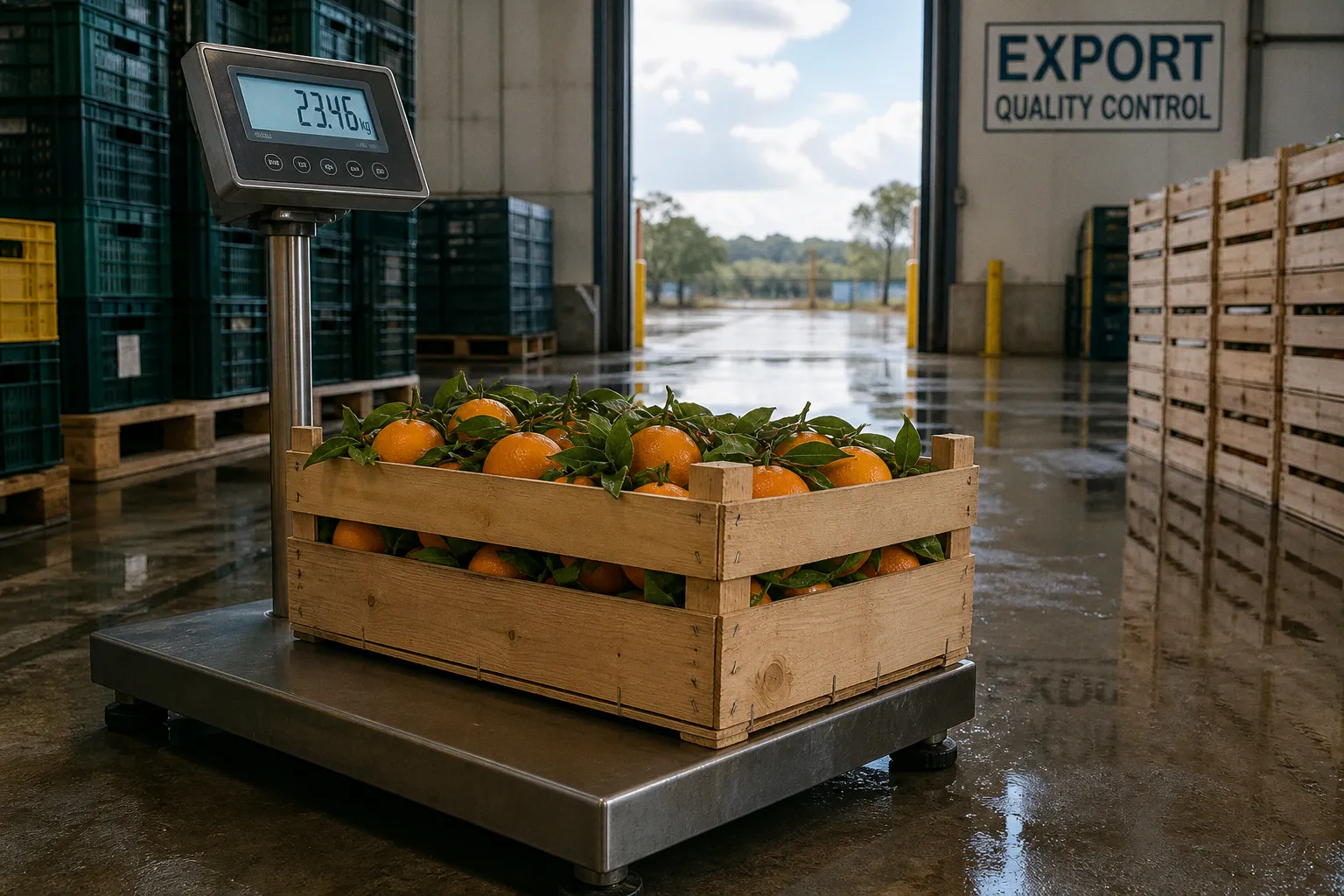
It is a chain of separate proofs: who produced the crop, where it was produced, whether the facility is legally registered for the activity it performs, and whether the product meets the applicable safety and quality requirements.
That distinction matters at the port. A certificate of origin does not replace a health certificate. A laboratory report does not establish Lebanese origin. LIBNOR standards do not automatically register a processing facility. Each document answers a different question, and a gap in one part of the file can hold up the rest of the shipment.
The practical route runs through three institutions and several layers of evidence: LIBNOR and the NL Conformity Mark, the Ministry of Agriculture's registration and export decisions, and approved laboratory testing for products covered by the health-certificate procedure. For cooperatives selling into demanding wholesale markets, the objective is not simply to collect paperwork. It is to make the same product, under the same controls, with the same records, batch after batch.
What LIBNOR actually does — and what it does not
LIBNOR is the Lebanese Standards Institution, founded by law on July 23, 1962. It is the national body authorized to issue, publish, and amend Lebanese standards and to grant the Lebanese Conformity Mark, known as the NL Mark.
That makes LIBNOR important to any cooperative trying to move from informal quality assurances to a documented export system. When a buyer asks for evidence that the product conforms to Lebanese technical requirements, LIBNOR is the institution behind the standards and the conformity-mark framework. But LIBNOR is not the same thing as the Ministry of Agriculture, the Ministry of Public Health, a phytosanitary authority, or an approved testing laboratory. One institution's certificate cannot quietly do the work of all the others.
The first point to understand is that Lebanese standards are voluntary in principle. They become mandatory when the Council of Ministers decrees that they are compulsory, generally because of public health, safety, or national-interest considerations. The question “Do I need an NL certificate to export?” therefore has no universal yes-or-no answer.
The answer depends on several moving parts:
- whether the relevant standard has been made compulsory;
- whether the product falls within a regulated category;
- whether the importing market or buyer requires conformity evidence;
- whether the cooperative is selling fresh produce or a processed or transformed product;
- and whether another Lebanese authority requires separate documentation for the shipment.
A buyer may ask for proof that is not automatically required by Lebanese law. That does not make the request irrelevant. In export logistics, a document can be commercially necessary even when it is not a universal statutory condition for every shipment.
Voluntary does not mean optional. It means the cooperative must be ready to demonstrate equivalence when the buyer, market, or product category demands it.
The NL Conformity Mark and the food sector
The NL Conformity Mark for the food sector was launched on May 29, 2014. The scheme combines a quality management system with product-specific standards. For a cooperative, that combination is more significant than the mark itself.
A mark printed on a document or package is the visible end of a system. Behind it should be a controlled process: defined specifications, responsible personnel, records for incoming materials, handling and storage procedures, corrective actions, and evidence that the finished product conforms to the applicable requirements. The exact controls will differ between a cooperative shipping fresh vegetables and one producing dried fruit, preserves, or another transformed product. The principle is the same: certification becomes credible when the cooperative can show how it controls variation.
This is where small and medium-sized cooperatives often have a practical disadvantage. The crop may be excellent, but quality can still vary between members, plots, harvest dates, sorting teams, and packing days. A buyer who sees inconsistent grading or incomplete records does not necessarily conclude that one shipment was unfortunate. The buyer may conclude that the cooperative has no repeatable system.
LIBNOR standards give the cooperative a technical language for reducing that uncertainty. They can help define what is being measured, how it is recorded, and which requirements apply to a particular product. They do not remove the need to understand the export destination's rules, and they do not replace the documents required by Lebanese authorities.
Facility registration: why Decision 1/950 comes first for processors
Decision No. 1/950, issued on October 26, 2011, is the foundation for registration of facilities involved in processing, packing, or transforming plant-based food products for export, as described in the applicable administrative path.
The distinction between the cooperative and the facility is important. A cooperative can have a valid legal identity and still need to register the physical operation where products are processed or transformed. Membership, agricultural production, and facility authorization are related, but they are not interchangeable. The file must describe the operation that actually handles the product and the activity it performs.
For cooperatives shipping raw, unprocessed produce, a different documentation route may apply. That does not mean the cooperative can ignore registration and quality controls altogether. It means the legal trigger and the relevant authority must be identified according to the product and the operation. A cooperative that moves from harvesting into washing, sorting, packing, drying, cutting, preserving, or another form of transformation should not assume that its original agricultural status covers the new activity.
The application is submitted to the regional Agriculture office. The required package includes:
- a completed application to the regional Agriculture office;
- a copy of the Ministry of Industry license;
- the industrial certificate, or record of registration;
- proof of membership in the Chamber of Commerce, Industry and Agriculture;
- and the official decision establishing the cooperative.
The documents are basic, but the administrative logic is not. The cooperative needs to make sure that its legal name, facility name, address, licensed activity, and product description are consistent across the file. A mismatch may not invalidate the operation, but it creates questions at exactly the point where the cooperative needs the file to move cleanly.
Registration is not a substitute for product compliance
Facility registration establishes that the relevant operation is present in the export system. It does not prove that a particular batch is safe, that a product meets an applicable LIBNOR specification, or that a shipment has Lebanese origin. Those claims require their own evidence.
A useful internal separation is:
| Question | Evidence or process concerned |
|---|---|
| Who is the cooperative and what is the legal status of the operation? | Cooperative establishment documents, licenses, industrial registration, and Chamber membership |
| Is the processing facility registered for its activity? | Registration under the applicable Ministry of Agriculture procedure, including Decision 1/950 where relevant |
| Where was the agricultural product produced? | Origin documentation under the applicable export procedure |
| Is a processed or transformed product fit for export? | Laboratory analysis and the related health-certificate procedure |
| Does the product conform to a technical standard? | Applicable LIBNOR standard and, where required or requested, conformity assessment |
| Can the shipment be released for the destination market? | The full export file, including any phytosanitary and destination-specific documents |
This separation prevents one of the most common errors in cooperative export files: presenting a legitimate document as if it answered a different question. A chamber certificate does not replace a laboratory report. A laboratory report does not replace a certificate of origin. A conformity mark does not eliminate the need to comply with the destination market's import conditions.
Navigating Decisions 1/255 and 1/272
Decisions 1/255 and 1/272 sit on parallel tracks. They should be read together only when the product and the operation require both, not treated as two names for the same certificate.
Decision No. 1/255, issued on June 28, 2021, concerns the certificate of origin for locally produced plant products for export. Decision No. 1/272, issued on June 8, 2019, concerns the health-certificate route for processed or transformed plant products.
| Parameter | Decision 1/255: origin | Decision 1/272: health |
|---|---|---|
| Relevant question | Where was the plant product produced? | Has the processed or transformed product passed the required safety testing? |
| Product focus | Locally produced plant products for export | Processed or transformed plant products |
| Authority identified in the procedure | President of the Regional Agricultural Service | Ministry of Public Health |
| Main supporting step | Agricultural inspection for origin documentation | Laboratory analysis by an approved facility |
| Document logic | Establishes provenance and Lebanese origin | Establishes the basis for a health certificate |
| Validity point identified in the procedure | Tied to the shipment or batch | Laboratory report valid for three months for the same batch |
Decision 1/255: proving origin
The certificate of origin is not a quality certificate. It does not say that the product has passed every possible safety test, and it does not certify that the product conforms to an export buyer's private specification. Its purpose is to establish that the plant product is locally produced and to support the shipment's origin claim.
For raw agricultural products such as garlic, grains, and vegetables, the regional agricultural inspection is central to this route. The inspector verifies the crop and the relevant production details before the certificate is signed. The cooperative should therefore treat its production records as part of the export file rather than as an internal farming archive.
That means keeping the information needed to connect:
- the member or producing farm to the cooperative;
- the plot or production area to the crop;
- the crop to the harvest or batch;
- and the batch to the shipment described in the export documents.
The practical problem is not usually the absence of a single dramatic document. It is the break in the chain. If the cooperative cannot show which members supplied a batch, or if the batch number on the warehouse record does not correspond to the shipment file, the origin claim becomes harder to verify even when the crop is genuinely Lebanese.
The inspection should be coordinated with the crop cycle and the condition of the product. The procedure does not establish a universal seven-to-ten-day inspection period, so the cooperative should not build its export calendar around an unsupported fixed interval. Instead, it should contact the regional Agriculture office early enough to understand the local scheduling requirements and to ensure that the inspector can assess the crop at the appropriate stage.
Decision 1/272: the health-certificate route
Decision 1/272 applies to processed or transformed plant products. That is the scope to keep in view. Processing or transformation changes the product and creates a different compliance question from the one addressed by an origin certificate.
The health certificate is issued by the Ministry of Public Health at the exporter's request after the required laboratory testing has been completed. The laboratory report is therefore not a decorative attachment. It is the technical evidence supporting the health-certificate process.
This does not mean that every activity mentioned informally as “handling” automatically triggers Decision 1/272. Nor should a cooperative assume that ordinary packing, by itself, has the same legal status as processing or transformation under the decision. The cooperative must classify the actual operation accurately and confirm which procedure applies to the product it intends to export.
The distinction can be stated simply:
- Decision 1/255 asks: is this plant product locally produced, and can its Lebanese origin be certified?
- Decision 1/272 asks: for a processed or transformed plant product, does the required testing support a health certificate?
A cooperative shipping fresh produce in its raw agricultural form may need origin documentation and other export requirements without automatically entering the processed-product health-certificate route. A cooperative producing dried, preserved, cut, or otherwise transformed goods should assess the 1/272 requirements before it accepts an export order. The wording of the product description, the actual production method, and the documents requested by the authorities all need to match.
Laboratory testing: build the file around the batch
For products covered by Decision 1/272, the testing process is tied to the batch. The cooperative should not think of laboratory analysis as a general statement that “the facility is clean” or “the farm follows good practice.” The sample and report must support the product and batch being exported.
LARI, the Lebanese Agricultural Research Institute, is the primary reference identified for the testing route. The analysis streams described in the procedure include:
- Microbial analysis, including pathogen counts, total plate count, and yeast and mold where relevant to the product;
- Radiological analysis, screening for contamination against the applicable Lebanese requirements for the product category;
- Chemical deposit analysis, including pesticide-residue testing against relevant LIBNOR maximum residue limits and the residue limits of the destination country.
The exact testing profile depends on the product and the applicable requirements. A cooperative should not send an undefined “produce sample” to a laboratory and expect the report to solve the compliance question. Before sampling, it should establish what product is being tested, which batch it represents, which destination is involved, and which limits the buyer or importing market will apply.
Lebanese limits and destination-market limits
A Lebanese standard is not automatically the final word for an export destination. The chemical-deposit analysis must take account of the relevant LIBNOR maximum residue limits as well as the limits applied by the destination country. If the buyer is selling into a market with stricter requirements, meeting a Lebanese baseline may not be enough for the commercial transaction.
This is where production decisions become export decisions. The cooperative's spray records, application dates, products used, rates, and harvest intervals need to be available and intelligible. The laboratory can test the sample, but it cannot reconstruct an undocumented cultivation history. A clean report is stronger when the cooperative can show how the result fits the way the crop was grown and handled.
For a cooperative with multiple members, the sampling plan also matters. Mixing products from different sources without a clear batch definition can make a passing or failing result difficult to interpret. The cooperative needs a defensible reason for deciding which lots belong together and which must remain separate.
The three-month validity window
The laboratory report is valid for three months for the same batch. That is a documented validity period, not a promise that the entire export process will fit comfortably inside it.
The cooperative should track the relationship between the report, the batch, the health certificate, and the intended shipment. If the shipment is delayed and the three-month period expires, the cooperative may need to repeat the testing for that batch. Whether a new sample or additional administrative step is required should be confirmed with the relevant authority and laboratory; it should not be guessed from the original report.
The key control is simple: record the report date, the batch identity, and the final date on which the report remains valid. Do not treat “three months” as a vague planning phrase. Put it into the batch file and review it before the product is committed to a shipment.
The laboratory report belongs to a batch, not to the cooperative in the abstract. If the batch identity is weak, the report is weaker than it looks.
The standards behind the testing file
The LIBNOR standards referenced in the testing protocol include NL ISO 6322/2013 for storage of cereals and pulses, NL ISO 5498:2008 for determination of crude fibre in agricultural food products, and NL ISO 18642:2018. The cooperative should map its product range against the standards relevant to its category rather than listing every standard it has encountered.
That mapping should answer four practical questions:
1. Which standard applies to this product or process?
2. Which requirements can be checked internally before sampling?
3. Which requirements require laboratory analysis or external assessment?
4. Which records demonstrate that the cooperative has followed the relevant procedure?
The answer may lead to changes in warehouse records, cleaning logs, sampling forms, product specifications, or supplier records. That is not administrative excess. It is what allows the cooperative to explain a result and respond to a buyer's question without starting the investigation from zero.
The BOUZOUR programme: a route toward EU alignment, not a guaranteed market rule
In April 2025, the International Labour Organization, in partnership with the Chamber of Commerce, Industry and Agriculture of Zahle and the Bekaa and the Ministry of Agriculture, launched the BOUZOUR project. The Sweden-funded certification programme is designed to support Lebanese agricultural exporters and cooperatives in moving closer to EU standards.
The pilot crop is cherries. That focus is commercially logical: Bekaa cherries already connect Lebanese producers with Gulf and European wholesale markets, where traceability, residue compliance, and consistent documentation can determine whether a cooperative is considered a dependable supplier.
But the project needs to be described accurately. BOUZOUR is a programme and a pilot, not evidence that every EU buyer has already adopted one compulsory Lebanese certification template. The available facts confirm the programme, its partners, its funding, and its cherry focus. They do not establish that the template will automatically become the market-wide standard, or that every cooperative outside the pilot will be measured against it.
The value for other cooperatives is still real. A pilot can show how donor-supported technical assistance approaches certification, what records are expected, how traceability is presented, and where Lebanese producers encounter friction with EU-oriented requirements. Those lessons may be useful even for a cooperative that is outside the Bekaa or does not grow cherries.
The right approach is to watch the programme without treating its future influence as settled. A cooperative can ask:
- What certification elements does the pilot actually document?
- Which requirements concern farm production and which concern packing or transformation?
- How are pesticide records and residue results connected to individual lots?
- What form of traceability is practical for a cooperative with multiple members?
- Which parts are required by law, which are buyer requirements, and which are programme-specific improvements?
- Can the cooperative adopt the useful controls without claiming participation in BOUZOUR?
EU alignment is not a single badge. It is a set of expectations around safety, residue compliance, traceability, documentation, and consistency. BOUZOUR may help Lebanese cooperatives work through those expectations, but each buyer and destination authority still has to be assessed on its own terms.
Building the certification pipeline without inventing deadlines
A cooperative should build its export file in the order that the operation actually works, while leaving room for the authorities and laboratories to confirm requirements for the specific product.
Start with the legal identity of the cooperative and the facility. Confirm that the cooperative's establishing decision, licenses, industrial registration where applicable, Chamber membership, and facility details refer to the same entity and activity. If the cooperative has several sites, do not assume that registration at one address covers another site.
Then classify the product honestly. Is it raw and unprocessed, or has the cooperative processed or transformed it? Is the operation only agricultural production, or does it include a separate activity that changes the product? This classification determines whether the cooperative is looking primarily at the origin route, the health-certificate route, facility registration, or a combination of them.
The sequence should include the following controls:
- Confirm the cooperative file. Keep the establishment decision, Chamber membership proof, licenses, and industrial registration documents together, with consistent names and addresses.
- Register the relevant facility where required. For processing, packing, or transforming plant-based food products for export, assess the Decision 1/950 registration route through the regional Agriculture office. Do not rely on a generic cooperative certificate.
- Map the product to LIBNOR standards. Identify the standards relevant to the product, process, storage conditions, and testing requirements. Standards such as NL 605, NL 654, NL 819:2024, and the relevant ISO series should be used only where they correspond to the product category and applicable procedure.
- Define the batch. Assign a batch identity that connects the producer or members, production area, harvest or processing date, storage location, test sample, and shipment.
- Prepare production records before sampling. Keep pesticide and treatment records, harvest information, handling records, storage information, and any processing records needed to explain the laboratory result.
- Plan laboratory work for covered products. For processed or transformed plant products falling under Decision 1/272, coordinate testing with the approved laboratory and confirm the required analysis streams for the product and destination.
- Track the report validity. Record the three-month validity period for the same batch and review it against the expected export date. If the shipment changes materially, ask the laboratory or authority what must be updated.
- Apply for the origin certificate where relevant. Under Decision 1/255, provide the information needed to verify local production and coordinate the agricultural inspection through the regional Agriculture service. Do not assign a fixed inspection lead time unless the authority has provided one.
- Apply for the health certificate where relevant. For processed or transformed products under Decision 1/272, use the valid laboratory report as the basis for the Ministry of Public Health process.
- Keep destination requirements separate. Check the importing market's residue limits, labeling rules, phytosanitary requirements, and buyer documentation instead of assuming that Lebanese compliance closes the destination file.
- Evaluate programmes such as BOUZOUR carefully. If EU market access is part of the cooperative's commercial plan, examine whether the programme or another certification route fits the crop, facility, and target buyer.
- Archive the shipment as one complete record. Keep the origin certificate, laboratory report, health certificate where applicable, phytosanitary clearance, product specification, batch records, and buyer communications together.
The value of this sequence is not that it creates a magical administrative shortcut. It makes responsibility visible. If a result is questioned, the cooperative can identify the batch. If a buyer asks where the product came from, the origin file answers. If a processed product requires health documentation, the laboratory report and certificate are connected. If the buyer asks about standards, the cooperative can show which requirements it used and how they were checked.
The cooperative should also distinguish between “not required under this procedure” and “not relevant.” A raw product may follow an origin route without entering the health-certificate route for processed goods, but it can still face phytosanitary requirements, destination-market controls, buyer specifications, and residue expectations. Similarly, a facility may be properly registered while still needing to improve its internal records or product controls.
The operational meaning of LIBNOR compliance
LIBNOR export standards in Lebanese agriculture are most useful when they are treated as part of an operating system rather than as a final stamp. The NL Mark can support confidence in conformity, but the cooperative must first understand which standard applies, which authority controls the relevant document, and whether the product is raw, processed, or transformed.
The same discipline applies to Decisions 1/255 and 1/272. The first is about origin for locally produced plant products. The second concerns the health-certificate process for processed or transformed plant products, supported by laboratory analysis. Neither should be stretched to cover activities or claims that the documented procedure does not establish.
For fresh produce cooperatives, the strongest export file is usually the one that can be read in one pass. The cooperative's legal identity is clear. The facility activity is accurately described. The batch can be traced back to its producers. The laboratory report, where required, belongs to that batch. The certificates answer distinct questions. The destination requirements have not been confused with Lebanese requirements.
That is less dramatic than promising a fixed transit window or predicting what every European buyer will accept. It is also more useful. Export compliance is not improved by unsupported deadlines or confident claims about future market behavior. It is improved by documents that match the product, records that match the documents, and a cooperative that knows which authority is responsible for each step.
The shipment then has a defensible story from field to certificate to buyer. In agricultural exports, that is the part of the process that survives scrutiny.