Libnor export standards: before and after compliance
In Lebanese orchards, soil degradation rarely announces itself with a single dramatic failure. It appears first as uneven fruit size, weaker root growth, faster moisture loss, and harvest windows that become harder to predict.
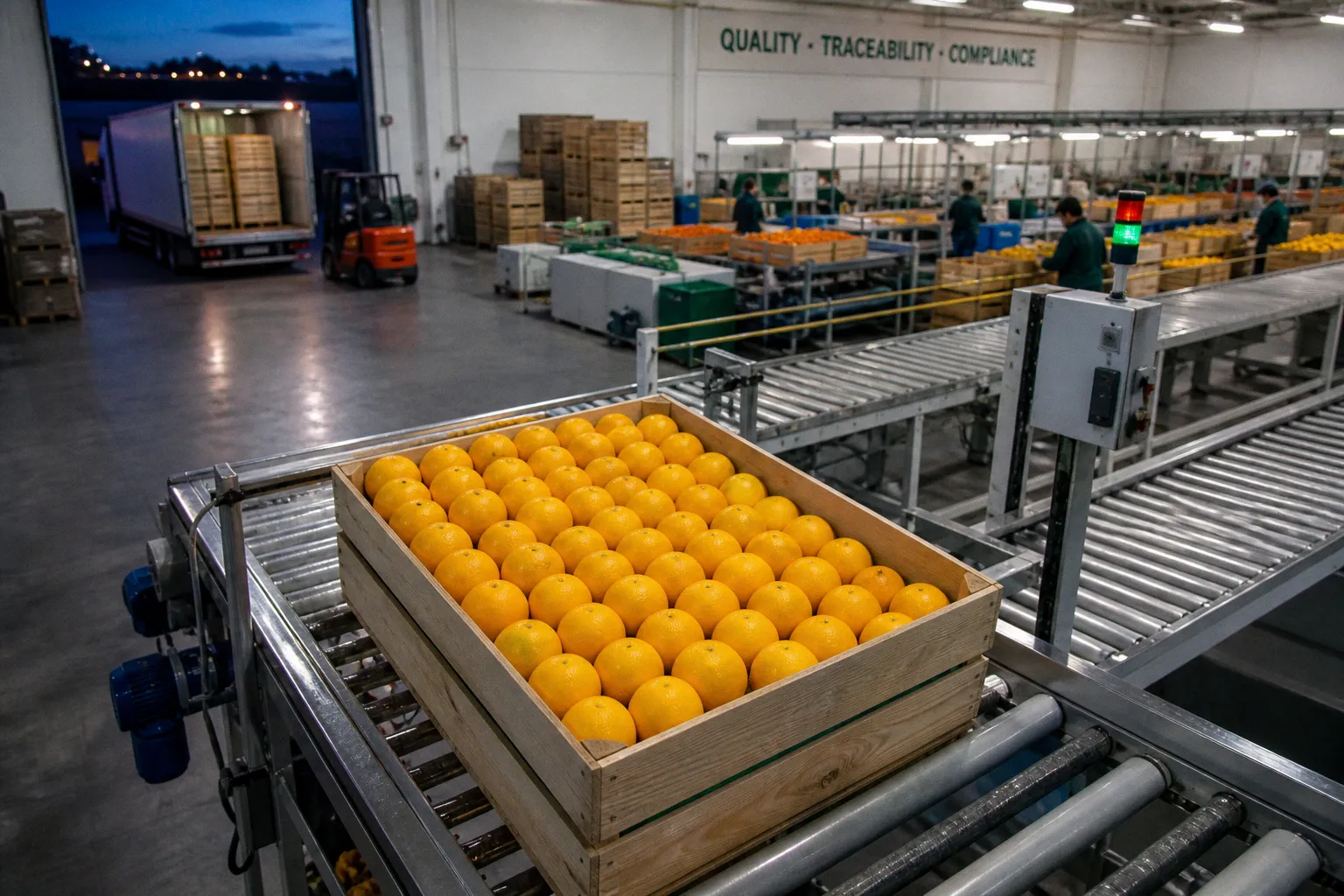
LIBNOR Standards for Lebanese Produce: Compliance Roadmap
Heat and irregular rainfall amplify the problem. A peach, cherry, potato, or citrus crop may still look commercially healthy at harvest, yet fail later because the farm cannot prove how it was grown, treated, packed, tested, and moved.
That is the central shift behind LIBNOR agricultural export standards compliance. Export readiness is not simply a matter of producing clean-looking fruit or obtaining one quality mark. It is the conversion of everyday farm decisions into a documented, inspectable system that can withstand scrutiny from Lebanese authorities, laboratories, importers, and border-control agencies.
For a cooperative, the difference between operating before and after compliance is substantial. Before compliance, the farm is mainly judged by its output. After compliance, the entire production chain becomes part of the product: soil management, irrigation records, pesticide use, worker hygiene, packing materials, batch identification, laboratory results, origin documents, and phytosanitary certification.
Export compliance begins in the soil, but it is completed in the records, the packing house, and the border-control file.
The evolution of LIBNOR: from national standards to export credibility
The Lebanese Standards Institution, known as LIBNOR, was established by law on July 23, 1962. It is Lebanon’s national standardization body, authorized to establish national standards and grant the Lebanese Conformity Mark, commonly referred to as the NL mark.
For agricultural exporters, the important point is not the mark by itself. The mark represents conformity with a defined technical standard, but international trade requires a wider package of evidence. A cooperative may meet a LIBNOR technical requirement and still need a Ministry of Agriculture health registration, a phytosanitary certificate, a batch-specific laboratory report, and a certificate of origin before a shipment can move through export procedures.
This distinction is easy to lose when certification is discussed as if it were a single finish line. In practice, LIBNOR standards provide one layer of the system. They help establish what acceptable production, handling, safety, or product quality should look like. The Ministry of Agriculture then applies its own inspection and export-control requirements. Destination markets add another layer, sometimes with their own maximum residue limits, packaging rules, labeling expectations, and importer protocols.
The result is less like a badge and more like a chain. If one link is missing, the other links cannot carry the shipment through the full route.
What changes on the farm?
The transition usually begins with practices that already exist but are informal. A grower may know which field received a particular treatment, which irrigation line had a blockage, or which harvest crew handled a block. Compliance requires converting that knowledge into records that another person can inspect and understand.
The practical changes often include:
- assigning a clear identity to each production plot or orchard block;
- recording crop rotation, planting dates, irrigation events, and fertilizer applications;
- documenting plant-protection products, rates, dates, and the person responsible for application;
- separating harvest lots according to field, date, variety, and handling conditions;
- maintaining cleaning and hygiene procedures in the packing center;
- identifying which supplier provided packaging, inputs, or laboratory services;
- retaining evidence that corrective actions were completed after an inspection.
This is where soil health and export certification meet. Crop rotation is not only an ecological tool for reducing disease pressure and protecting soil structure. It can also help a cooperative explain why a field has a particular production history. Better soil organic matter and water infiltration may reduce crop stress, but the export value appears only when the cooperative can connect those practices to a traceable lot and a documented harvest.
The cost of staying informal
Informal production can be flexible, but it becomes fragile when several farms supply one shipment. A cooperative may combine fruit from different growers to meet an order, yet have no reliable way to distinguish the lots if a laboratory result is questioned or a buyer asks for production records.
That creates operational risk even when the produce itself is sound. Without a batch structure, the cooperative may need to treat an entire consignment as one undifferentiated unit. A delay, investigation, or rejection then affects more produce than the original problem may justify.
A compliance system narrows that exposure. It does not eliminate risk, and it does not guarantee acceptance in a foreign market. It gives the cooperative a way to identify the affected lot, investigate the cause, and demonstrate control over the rest of the shipment.
The multi-agency framework for Lebanese produce exports
Lebanese produce export regulations do not sit inside one institution. The exporter has to coordinate the standard-setting role of LIBNOR with the inspection and certification responsibilities of the Ministry of Agriculture, accredited laboratories, border-control centers, and the requirements of the destination country.
For an agricultural cooperative, the framework can be understood through five connected questions:
1. Is the farm or facility operating under recognized agricultural and hygiene practices?
2. Has the agro-food facility obtained the required Ministry of Agriculture health registration number?
3. Does the specific batch meet laboratory requirements?
4. Does the shipment have the necessary origin and phytosanitary documents?
5. Does the packaging and labeling satisfy both Lebanese and destination-market rules?
The health registration process is linked to inspection of Prerequisite Programs, Good Agricultural Practices, and relevant LIBNOR technical standards. These are not abstract categories. They translate into the condition of the packing house, water management, worker hygiene, pest control, cleaning schedules, storage arrangements, and control of contamination risks.
A cooperative that treats this as paperwork added at the end will struggle. The inspection file is a reflection of how the operation is organized every day.
A working division of responsibilities
| Compliance layer | What it addresses | Typical evidence or action |
|---|---|---|
| LIBNOR standards | Technical requirements and national conformity | Applicable standards and, where relevant, the NL conformity mark |
| Ministry of Agriculture health registration | Inspection of facilities, PRPs, GAPs, and technical compliance | Registered facility and documented operating procedures |
| Laboratory testing | Safety and quality evidence for the specific shipment | Batch-specific report from an accredited laboratory |
| Phytosanitary control | Plant-health status and export authorization | Phytosanitary certificate issued by the Ministry of Agriculture |
| Origin documentation | Where the goods were produced and packed | Certificate of origin |
| Border-control filing | Advance information about the shipment | Export application with exporter, importer, destination, quantities, and packing-center details |
| Destination-country rules | Import conditions beyond Lebanese requirements | Buyer, authority, and market-specific specifications |
This division matters because a cooperative can satisfy one layer while failing another. A laboratory report cannot replace a phytosanitary certificate. An NL mark cannot replace the Ministry of Agriculture health registration number. A certificate of origin cannot prove that a shipment meets residue requirements.
The export file must be assembled as a coherent record, not as a collection of unrelated documents.
Beyond the NL mark: laboratory and phytosanitary control
The phrase LIBNOR fresh fruit standards can suggest that product conformity is mainly a matter of appearance, grade, size, or packaging. Those qualities are commercially important, but food safety and plant health require different forms of evidence.
Fresh produce export shipments require batch-specific laboratory test reports issued by accredited facilities. Lebanon has more than 60 accredited laboratories across the public and private sectors, giving exporters a substantial testing network. The practical challenge is not simply finding a laboratory. It is designing a sampling and release procedure that connects the laboratory result to the correct production and packing batch.
A report is only useful if the cooperative can answer basic questions:
- Which field or grower supplied the sample?
- Which harvest date and lot does it represent?
- Was the sample taken before or after sorting and packing?
- Who collected it, and under what procedure?
- Was the batch held while results were pending?
- What happens if the result does not meet the buyer’s specification?
The answer should be built into the cooperative’s operating routine. If samples are collected inconsistently, the resulting report may be technically valid but operationally weak. If produce is shipped before results are reviewed, testing becomes historical evidence rather than a control point.
Residue management starts before harvest
For crops destined for export, pesticide management cannot be reduced to avoiding applications shortly before picking. The cooperative needs a planned system for selecting inputs, respecting label instructions and pre-harvest intervals, recording applications, and understanding the requirements of the destination market.
This is particularly important because foreign markets may apply their own maximum residue limits. Compliance with a Lebanese requirement does not automatically guarantee entry into the European Union, Gulf markets, or another destination. The buyer’s specification and the importing authority’s rules must be checked separately.
A sound system includes:
- an approved list of crop-protection inputs;
- records of product name, active ingredient, application date, rate, plot, and operator;
- training for spray operators;
- equipment calibration and maintenance;
- a harvest-release decision that considers the latest application;
- periodic testing based on crop, market, risk, and buyer requirements.
The goal is not to apply more inputs or to promise chemical-free production without evidence. The goal is control: using the necessary input at the correct time and retaining enough information to demonstrate what happened.
Phytosanitary certification is a separate gate
A phytosanitary certificate addresses plant-health requirements. It confirms the status of the exported consignment under the inspection process of the Ministry of Agriculture. It should not be confused with a laboratory report, which addresses the parameters tested by the accredited facility.
This distinction becomes especially important for crops moving through complex routes. A shipment may leave Lebanon, pass through transit points, and arrive at a Gulf or other international market where officials examine both its plant-health documentation and its food-safety record. Missing or inconsistent paperwork can create delays even when the physical condition of the produce remains acceptable.
That is why document preparation should begin before packing. Exporters must file an application with Ministry of Agriculture border-control centers before packing, including exporter and importer details, destination, quantities, and packing-center information. A last-minute approach makes it harder to correct inconsistencies between the application, packing list, laboratory report, certificate of origin, and phytosanitary certificate.
The shipment should be traceable from its carton back to a field block without relying on one person’s memory.
Packaging compliance: leaving polystyrene behind
Packaging is often treated as a visual and marketing decision. For fresh produce, it is also a regulatory and logistics decision. The material affects hygiene, ventilation, stacking strength, cooling performance, waste handling, and the credibility of the export operation.
Lebanon prohibited the use of polystyrene containers for fresh fruits and vegetables leaving the country under Ministry of Agriculture Decision No. 1/358 in 1997, with an amendment in 2000 under Decision No. 1/2. A cooperative preparing produce for export therefore needs packaging controls that begin at procurement, not at the loading dock.
The packing center should be able to identify:
- which packaging formats are approved for each crop and market;
- whether containers are new, reusable, washable, or single-use;
- how reusable crates are cleaned and stored;
- whether the material protects the product during cooling and transport;
- how ventilation openings align with the cold-chain design;
- whether the packaging carries the required product, origin, lot, or handling information.
A container can be compliant in material but unsuitable in performance. A weak carton may collapse under pallet pressure. A closed package may slow cooling. A poorly designed crate may bruise soft fruit during road transit. These are not separate sustainability and quality problems; they are the same supply-chain problem viewed from different points.
Preparing for the European Union’s 2030 packaging direction
The European Union’s Packaging and Packaging Waste Regulation includes a ban on certain single-use plastic packaging for fresh fruit and vegetables weighing under 1.5 kilograms from January 1, 2030. Lebanese exporters supplying European buyers should treat that date as a design horizon rather than a distant legal detail.
The most useful response is not to replace one material suddenly. It is to map the packaging formats used by each crop and customer, then test alternatives against the actual route:
1. Record the current package size, material, weight, and product quantity.
2. Identify which formats fall within the future restriction.
3. Discuss acceptable alternatives with the importer before changing specifications.
4. Test ventilation, compression strength, moisture response, and pallet stability.
5. Calculate whether the new format changes cooling time, transport density, or damage rates.
6. Update procurement and packing instructions once the format is approved.
This is where practical sustainability differs from greenwashing. A package made from a fashionable material is not automatically a better package if it causes bruising, slows cooling, or increases food loss. For exporters, the right comparison includes the full route from packing center to destination market.
Traceability from farm inspection to border clearance
Traceability is sometimes presented as a digital technology project. A cooperative does not need to begin with an elaborate platform. It needs a reliable chain of identifiers and records that survives handoffs between growers, collection points, packers, laboratories, transporters, and exporters.
A workable batch code can connect:
- grower or member farm;
- field or orchard block;
- crop and variety;
- harvest date;
- receiving point;
- packing date;
- treatment or grading status;
- laboratory sample;
- final carton or pallet;
- export application;
- destination and importer.
The format can be simple, provided it is used consistently. A code that changes meaning from one packing shift to another is worse than a basic code written clearly on every relevant record.
The packing center is the control room
The packing center is where separate risks converge. Produce arrives with different field histories, temperatures, levels of cleanliness, and degrees of maturity. Sorting and consolidation can improve marketability, but they can also erase identity if lots are mixed without control.
A disciplined receiving procedure should record the grower, field or lot reference, arrival time, approximate quantity, and condition of the produce. The center should then define how lots are held, washed if applicable, graded, packed, labeled, sampled, and released.
Cold-chain decisions belong in the same system. Fresh produce quality declines when field heat remains in the product or when temperature changes are poorly managed. The correct temperature is crop-specific, and a cooperative should follow the requirements of the crop and buyer rather than applying one setting to everything. What matters operationally is that the chosen conditions are known, monitored, and connected to the shipment record.
When a consignment reaches a border or destination market, documentation should tell the same story as the physical cargo. Quantity, lot identity, packing center, origin, test report, and certificates must align. Discrepancies create questions that refrigeration cannot solve.
Handling a failed result or rejected lot
No compliance system is credible if it describes only successful shipments. Cooperatives need a written response for nonconforming produce.
The response should establish:
1. how the affected lot is placed on hold;
2. who is authorized to release, redirect, rework, or destroy it;
3. how the source field and production records are investigated;
4. whether neighboring lots require additional testing;
5. how the importer and relevant authority are informed;
6. what corrective action prevents recurrence.
For example, a laboratory result outside a buyer’s limit may point to an application-record problem, a sampling error, contamination during handling, or a genuine field-level issue. The cooperative should not guess. It should preserve the evidence, examine the chain, and separate the affected batch from unrelated production wherever traceability allows.
This is also the point at which soil and crop-management records become useful. If the cooperative has documented irrigation, fertilization, pest-control applications, harvest timing, and plot identity, the investigation can move toward a cause. Without those records, the organization is left with an expensive shipment and a vague suspicion.
Building the transition across one growing season
Compliance becomes manageable when it is phased around the crop calendar. The exact timing will vary by crop and destination, but the sequence below gives a cooperative a practical starting point.
Before planting or at the start of the season
Begin with a gap analysis of the farm and packing center. Do not try to write a hundred procedures before understanding where the operation is actually weak.
Map:
- production plots and grower members;
- water sources and irrigation systems;
- crop rotation and previous land use;
- input storage and application practices;
- harvest equipment and collection points;
- packing, cooling, and storage capacity;
- available laboratory and inspection services;
- destination-market packaging and documentation requirements.
At this stage, select the crops and markets that the cooperative can realistically serve. A small, controlled export program is more useful than a broad promise unsupported by traceability.
During crop establishment and field management
Train growers on the records that matter. The objective is not to create paperwork for its own sake. Each record should answer a later question about safety, quality, timing, or responsibility.
Use field visits to check whether the written procedure matches actual practice. If the approved input list is stored in the office but spray operators use old product notes in the field, the system is not functioning. If irrigation records are completed from memory at the end of the month, they are less reliable than entries made during the operation.
Soil management deserves particular attention. Reduced organic matter, compaction, salinity, and poor water distribution can all increase crop stress. The export connection is straightforward: stressed crops are harder to grade consistently, more vulnerable to damage, and more dependent on reactive inputs. Building soil resilience is therefore a production-control measure, not a decorative environmental claim.
Several weeks before harvest
Confirm the intended buyer specifications, destination-country requirements, packaging format, and testing plan. Review pre-harvest intervals and identify which fields are eligible for the planned harvest window.
This is also the time to check the packing center. Clean and repair equipment, verify storage areas, organize lot labels, and ensure that staff understand how product will be segregated. If the cooperative waits until the fruit is already arriving, every correction becomes more expensive.
Arrange the export application process with the Ministry of Agriculture border-control centers before packing. The application must contain the relevant exporter and importer information, destination, quantities, and packing-center details. Those details should be reconciled with the commercial order so that the administrative file matches the physical shipment.
At harvest and packing
Harvest by identified lot, not by convenience. Keep different growers, blocks, dates, or varieties separate until the cooperative has decided that combining them is acceptable and traceable.
At the packing center:
- record incoming lots;
- remove damaged or unsuitable produce;
- maintain hygienic handling conditions;
- use approved packaging rather than improvised containers;
- assign batch codes that follow the product through packing;
- collect samples according to the testing procedure;
- hold or release the batch according to the cooperative’s control plan.
The simple discipline of keeping lots identifiable can protect the value of compliant produce when another lot has a problem.
Before dispatch and during transit
Compile the shipment file and compare every document against the final cargo. The file should include the relevant laboratory report, certificate of origin, phytosanitary certificate, export application details, packing information, and commercial documents required by the buyer or carrier.
Check that the cold-chain plan reflects the actual route. Lebanon agricultural exports may rely on combinations of road transport, ports, transit trade, and destination-market handling. Every transfer adds a chance for delay or temperature abuse. The cooperative should know who is responsible for monitoring the cargo at each handoff and what happens if the route changes.
A strong cold chain cannot compensate for an incomplete certificate. A complete certificate cannot repair produce that has lost its commercial quality. Export reliability depends on both.
After delivery
Record the outcome while the shipment is still fresh in everyone’s memory. Note delays, temperature events, rejected cartons, buyer complaints, document corrections, and packaging damage. Review whether the problem began in the field, at receiving, during packing, in transport, or at the destination.
This closes the loop between export logistics and agronomy. If fruit arrives with excessive bruising, the solution may involve harvest maturity, crate design, stacking height, road handling, or cooling—not simply stricter sorting. If a residue result is repeatedly close to a buyer’s limit, the response may involve input selection, application timing, irrigation stress, or a change in the crop plan.
What certification can—and cannot—do
LIBNOR standards can create a disciplined national reference point and strengthen the credibility of Lebanese agricultural exporters. They can help a cooperative move from informal practices toward inspected procedures, defined technical requirements, and more consistent product handling.
They do not automatically provide customs clearance. They do not replace Ministry of Agriculture health registration. They do not substitute for phytosanitary certification or batch-specific laboratory reports. They do not guarantee entry into a foreign market whose authorities apply additional import requirements.
That limitation is not a weakness. It is a reason to design compliance honestly. A cooperative that promises one mark will solve every market-access problem is likely to disappoint growers. A cooperative that explains the full chain can invest in the right sequence: field controls first, facility registration next, testing and documentation alongside production, then market-specific packaging and logistics.
The broader export opportunity is significant. Lebanese fresh fruit and vegetable exports are reported at approximately 500,000 tonnes per year, with an estimated value of about €225 million. But scale alone does not create dependable market access. Buyers need repeatable specifications, predictable paperwork, and confidence that a shipment can be investigated if something goes wrong.
The transition from basic farming to export-ready operation is therefore not a branding exercise. It is a change in how the cooperative sees its harvest. The product is no longer only the fruit in the crate. It is the documented route from soil to border, with each decision visible enough to be checked and improved.
For a cooperative planning the next season, the most sensible sequence is clear: map the production system, assign lot identities, strengthen soil and input records, prepare the packing center, register the facility where required, arrange accredited testing, file export information before packing, and reconcile every certificate with the cargo before dispatch. Start with one crop and one route if necessary. Build a system that works under field conditions, then extend it.
That is the practical meaning of LIBNOR agricultural export standards compliance: not a single mark at the end of the process, but a more resilient production and logistics system from the beginning.