Port of Beirut customs: before and after digital clearance
For a Lebanese cooperative shipping crisp apples, table grapes, potatoes, or blemish-free stone fruit abroad, customs clearance is not a single administrative stop.
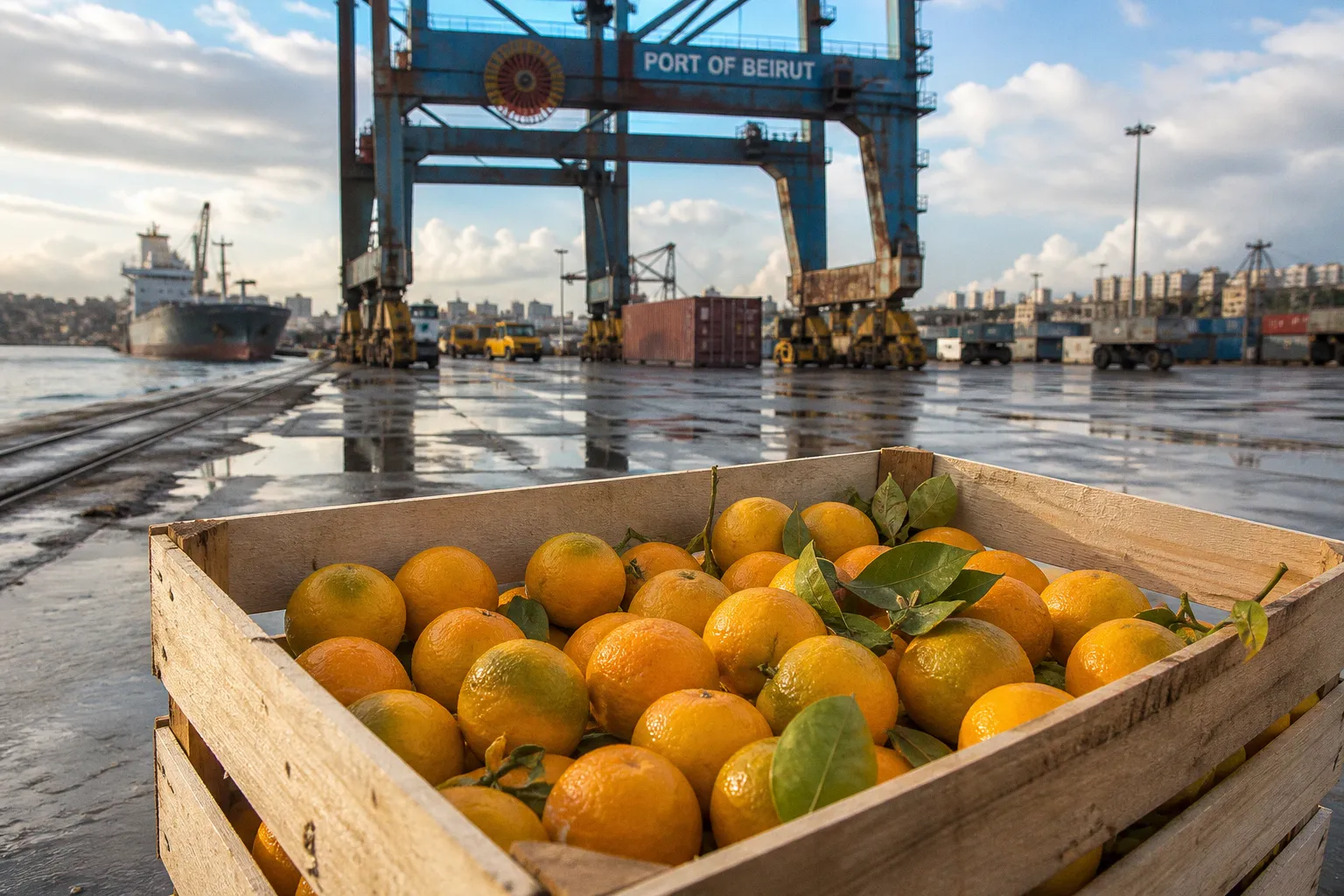
It is a chain of timed decisions, and every delay in that chain travels quickly into the produce itself. A container can leave the farm in excellent condition and still arrive at the port with less commercial value if documents are incomplete, an inspection is missed, or the vessel’s departure window closes.
That is why the shift toward digital clearance at the Port of Beirut matters to our growers. The new scanning systems promise a faster, more visible customs process, but they do not remove the physical work required for agricultural exports. The Lebanese produce export customs process is becoming more digital at the terminal while remaining deeply hands-on in the orchard, packing house, laboratory, and port inspection area.
The practical question for cooperatives is not whether technology has arrived. It has. The practical question is how we organize our collective work so that digital speed is not wasted by a missing phytosanitary certificate, unsuitable packaging, or a shipment that reaches the port without enough time before sailing.
From NAJM and CAMA to a more digital customs flow
Lebanon’s customs infrastructure has long depended on systems that were built for an earlier generation of trade. The NAJM customs information system was installed in 1990 and updated in 1997. CAMA, the Cargo Management System, was introduced in 2005 alongside the container terminal.
These systems serve different but connected purposes. NAJM supports customs information and processing, while CAMA functions as a port community system linking customs, port authorities, terminal operators, and shipping lines. In practice, that means the movement of a container depends not only on the grower or exporter but on several institutions sharing information through systems that have not always been equally reliable.
Frequent breakdowns in legacy customs infrastructure can paralyze both imports and exports. For fresh produce, the consequences are sharper than they are for many manufactured goods. A delayed shipment does not simply remain in storage while its value holds steady. Temperature, humidity, ventilation, and time begin working against the crop.
The transition now underway includes digital pre-arrival declarations and more automated inspection processes. Instead of waiting for every document and every physical step to be assembled at the last possible moment, exporters can move more information into the process before the cargo reaches the inspection stage. This creates the possibility of earlier error detection and better coordination among the parties handling the shipment.
But digital submission is not the same as automatic approval. Agricultural cargo still has to satisfy requirements that belong to the physical world: the condition of the produce, the integrity of the packaging, laboratory testing, and the issuance of official certificates. A cooperative that treats the new system as a shortcut around those obligations will only move the problem further down the line.
A more useful way to understand the change is this:
| Earlier operating reality | Emerging digital process | What remains essential |
|---|---|---|
| Heavy reliance on legacy customs systems and manual coordination | Pre-arrival declarations and electronic document submission | Accurate commercial and agricultural documents |
| Manual inspection capacity constrained terminal flow | AI-supported X-ray scanning can review containers more quickly | Human oversight and any required physical inspection |
| Information often assembled close to cargo arrival | Earlier data exchange among customs, port, terminal, and shipping actors | A cooperative responsible for checking the full file |
| Delays could remain opaque until the container was already at the port | More traceable digital steps and archived scanner images | A clear person or team monitoring status and exceptions |
The change is meaningful, but it is not magic. Digital tools improve the path when the information entering the path is complete, consistent, and submitted in time.
Digital customs can accelerate a clean shipment; it cannot make an incomplete shipment ready.
What AI scanning changes at the terminal
The most visible upgrade at Beirut Port is the introduction of new radiation-based X-ray scanning systems with artificial intelligence capabilities. They replace older equipment dating from 2008 and are designed to increase the speed of container inspection.
Under the older manual inspection setup, throughput was roughly 40 containers per day. The newer scanners are reported to have a capacity of between 60 and 100 containers per hour. That is a substantial operational difference. It can reduce pressure at the scanning stage and give terminal teams more room to process cargo without treating every container as an individually prolonged exercise.
For agricultural exporters, the benefit is less about celebrating a headline number and more about understanding where the time may be recovered. Faster scanning can help reduce queues, improve the predictability of terminal movement, and make it easier to coordinate cargo with a vessel departure. It may also help customs authorities identify containers requiring closer attention without subjecting every shipment to the same slow manual sequence.
The systems also create a digital record. Scanner images are retained for six months, which supports later review and gives authorities a more durable inspection trail than a purely manual process can provide. For a cooperative, that does not mean we should assume every disagreement will resolve automatically. It does mean that documentation and inspection events are becoming easier to connect across the life of a shipment.
There are still practical limits.
An AI-supported scan identifies patterns in the container that may require examination. It does not judge whether a shipment of apples has the right maturity, whether grapes have retained their crisp texture, or whether a consignment meets the agricultural conditions attached to its destination. It is a customs security and cargo inspection tool, not a replacement for produce-quality assessment or phytosanitary control.
The same distinction matters when we discuss clearance speed. The scanner may process containers at a much higher rate, but the total clearance time for agricultural cargo depends on the entire chain:
- whether the declaration is accurate before arrival;
- whether the container is selected for additional inspection;
- whether agricultural documentation is complete;
- whether LARI testing has been completed or is still pending;
- whether the Ministry of Agriculture can issue the phytosanitary certificate;
- whether the terminal and shipping line have aligned the container with the vessel schedule;
- whether the cargo can pass final border control without a discrepancy.
A faster scanner removes one bottleneck. It does not make every bottleneck disappear.
The part that technology cannot digitize away
The port stage is only one part of the port of Beirut agricultural customs clearance process. Agricultural exports require a sequence of controls that begins before packing and ends with a final border inspection.
The required path includes:
1. Initial inspection before packing. The produce and the shipment preparation process must enter the export chain in acceptable condition before the final cartons or crates are closed.
2. Testing by the Lebanese Agricultural Research Institute, or LARI. Laboratory testing remains part of the agricultural export process and should be planned as a real lead time, not treated as an administrative afterthought.
3. Issuance of a phytosanitary certificate by the Ministry of Agriculture. This certificate confirms the plant-health status required for the shipment and remains essential even as customs documents move into digital channels.
4. Final border control inspection at the port. The cargo is still subject to a physical control step at the point of export.
For a cooperative, the crucial improvement is to treat these stages as a shared production schedule. The packing team, quality lead, laboratory liaison, documentation coordinator, and freight representative should not work as separate islands. Each one holds a piece of the shipment’s readiness.
A common organizational weakness is to begin with the sailing date and work backward only from the port. That is too late for fresh produce. The better approach is to work backward from the moment the crop is accepted for export:
- When will the first inspection take place?
- Which lots will be sampled for LARI testing?
- When will results be available?
- Who will assemble and check the phytosanitary file?
- Who will confirm the digital pre-arrival declaration?
- Who will verify that the container, seal, packing list, and shipping details match?
- Who is watching for a customs or terminal exception after submission?
The answers should be assigned to people, not just departments. In a cooperative, collective responsibility works best when it is visible. One person may coordinate the file, another may manage the produce, and another may communicate with the freight forwarder, but everyone should know the handoff point.
Building one shipment file for the whole cooperative
Our growers do not need a complicated software project to improve coordination. They need one reliable shipment file, maintained consistently from the first inspection through port release.
At minimum, that file should bring together:
- the cooperative’s lot and grower identification;
- product description and quantity;
- packing date and packaging type;
- inspection records;
- LARI testing status and associated documentation;
- phytosanitary certificate status;
- customs declaration information;
- container and seal details;
- shipping line and vessel timing;
- the person responsible for each unresolved item.
The value is not in creating more paperwork. The value is in preventing the same information from being rewritten several times by different people. A mismatch between the packing list and the customs declaration may be small on a screen but expensive at the port. A missing certificate may hold a container that is otherwise perfectly packed.
This is where cooperatives have an advantage over isolated small exporters. We can standardize the file once, train several people to use it, and create a common rhythm for every shipment. When the process is shared, the knowledge stays in the community instead of disappearing whenever one exporter or administrator is unavailable.
The 24-hour window is a logistics discipline
Fresh produce is especially exposed after customs clearance because the commercial timetable does not end at release. A critical shipping window of 24 hours follows customs clearance for fresh produce exports. That narrow period makes coordination between clearance, terminal handling, and the shipping line essential.
The phrase “cleared by customs” can create a false sense of completion. For a box of household goods, release may feel like the end of the main challenge. For a container of produce, release is the moment when the shipment must move decisively toward loading.
If the container is cleared but misses the vessel, our growers may face additional handling, storage, rescheduling, or a longer period before the produce reaches the buyer. Even when the crop remains technically saleable, the market may judge it differently after an avoidable delay. Buyers notice firmness, appearance, uniformity, and freshness; they do not separate those qualities from the logistics that protected them.
To manage the 24-hour window, a cooperative can divide the responsibility into three linked controls.
Before the container reaches the port
The documentation coordinator should confirm that the digital pre-arrival declaration, agricultural certificates, packing information, and container details are aligned. The shipping representative should confirm the expected vessel schedule and any cut-off times. The packing team should verify that the final cargo corresponds to the submitted information.
This is also the stage to identify uncertainty. If LARI testing is not complete, that should be visible. If the phytosanitary certificate is pending, the shipment should not be treated internally as fully ready. Clear status language prevents optimism from becoming a port delay.
While the container is in the clearance process
One person should monitor the shipment rather than assuming that the freight forwarder, terminal, customs broker, and cooperative are each seeing the same status. Digital systems can improve visibility, but visibility only helps when someone is responsible for reading it and responding.
The cooperative should keep a short escalation path:
- who contacts the customs broker;
- who contacts the terminal or shipping line;
- who provides missing documents;
- who informs the packing or quality team;
- who makes the decision if the sailing window becomes doubtful.
This is not cold corporate bureaucracy. It is a way of protecting the harvest we have already worked together to produce.
After customs release
The moment of release should trigger a loading and movement confirmation. The team should know whether the container has been handed to the terminal, whether it remains on the expected vessel, and whether any further border control step is outstanding.
A digital scan can be completed quickly while the container still waits for the next operational handoff. The cooperative’s internal process must bridge that gap. The goal is not merely to clear cargo; it is to keep the cargo moving under conditions that preserve quality.
Packaging rules are part of customs readiness
Packaging is often discussed as a quality or branding decision. For Lebanese agricultural exports, it is also a regulatory matter.
Under Ministry of Agriculture Decision No. 1/358 from 1997 and Decision No. 1/2 from 2000, polystyrene containers are prohibited for fresh fruits and vegetables exported from Lebanon. That requirement needs to be built into procurement and packing plans well before the truck leaves the farm.
A last-minute packaging substitution can create several problems at once. The cooperative may need to repack a load, alter the declared packaging information, delay inspection, or explain why the physical cargo does not match the export file. Even when the produce itself is healthy and attractive, the shipment can be slowed by a packing decision made too late.
The most reliable approach is to make approved packaging part of the cooperative’s seasonal plan. Before the harvest period begins, our growers can agree on:
- which packaging formats will be used for each product;
- which materials are available in sufficient quantity;
- how cartons or crates will protect produce during handling;
- how package dimensions affect palletization and container utilization;
- who checks compliance before packing starts;
- how rejected or damaged packaging is removed from the packing line.
This is particularly important when several farms contribute to a single export container. Uniform packaging makes the shipment easier to inspect and easier to explain. It also gives buyers a consistent presentation, which matters when our produce competes on freshness and appearance.
Packaging should never be treated as a decorative layer added after the commercial decision. It shapes airflow, handling, stacking, damage risk, and the clarity of the customs description. A crisp product needs a package that helps it remain crisp, and a compliant shipment needs a package that will not create a preventable regulatory question.
What digital clearance means for Lebanon’s transit trade
Lebanon’s agricultural export routes do not operate in isolation from wider regional logistics. Customs delays affect the confidence of buyers, freight partners, and distributors who plan around seasonal supply. When a shipment is intended for Gulf markets or other destinations reached through regional transport networks, a delay at Beirut can disrupt a much larger sequence of onward movements.
This is where the conversation about Lebanon transit trade customs delays needs to become more practical. The issue is not simply whether a port is modern or old. It is whether the systems, documents, inspections, and transport connections work together closely enough for a perishable shipment to keep its value.
The modernization of scanning and pre-arrival processing can help make the port more predictable. Predictability is often more useful to a cooperative than a promise of exceptional speed. If we know what information is needed, when inspections are likely to occur, and who handles an exception, we can plan harvest, packing, trucking, and vessel coordination with less waste.
But predictability depends on discipline across the chain. A digital platform cannot compensate for:
- inconsistent product descriptions across documents;
- unclear lot identification;
- certificates requested after packing is complete;
- packaging materials purchased without regulatory review;
- shipment details changed without updating the relevant parties;
- no one monitoring the container after the declaration is submitted.
The strongest cooperatives will use digital customs not only to submit information faster but to improve how they organize information internally. That is a deeper change. It turns customs readiness from the personal knowledge of one experienced exporter into a repeatable community practice.
The real upgrade is not only a faster scanner at the port; it is a cooperative that sends one accurate story about its cargo.
A shared operating model for export groups
The technology at Beirut Port will continue to evolve, and the full timeline for replacing or unifying legacy systems remains unclear. NAJM and CAMA should not be treated as if they have already disappeared. Reports of periodic reliance on older infrastructure and system outages mean that cooperatives still need practical resilience.
That resilience does not require every grower to become a customs specialist. It requires the cooperative to assign a small number of clear roles and document the handoffs.
A workable model can be built around five responsibilities:
1. The crop and quality lead confirms that the selected lots meet the cooperative’s commercial standard, remain properly identified, and are protected through packing.
2. The compliance lead coordinates pre-packing inspection, LARI testing, phytosanitary documentation, and any agricultural requirements attached to the shipment.
3. The documentation lead prepares and cross-checks the customs declaration, packing list, invoice, container details, and other required information before submission.
4. The logistics lead coordinates trucking, terminal arrival, shipping-line cut-offs, and the 24-hour post-clearance movement window.
5. The escalation lead takes responsibility when the system fails, a document conflicts with the cargo, or a vessel deadline becomes uncertain.
In a small organization, one person may hold more than one role. That is perfectly workable as long as the roles are still named. The danger comes when everyone assumes someone else is watching the shipment.
Cooperatives can also improve performance by reviewing each export after the container moves. The review should be brief and specific: where did time accumulate, which document caused confusion, did the physical cargo match the declaration, and which task should begin earlier next time? These observations become valuable operational memory for the next harvest.
The purpose is not to build a flawless process on paper. Fresh produce is influenced by weather, harvest timing, vessel schedules, laboratory capacity, and changing conditions at the port. The purpose is to make the avoidable problems less common, so that the cooperative’s energy can go toward managing the problems no one could have predicted.
The difference between faster clearance and better export readiness
There is a temptation to describe AI scanning as the beginning and end of customs modernization. It is more accurate to see it as one part of a broader transition.
The Port of Beirut is moving toward digital pre-arrival declarations, electronic document handling, and automated scanning with much higher inspection capacity than the older manual arrangement. Those changes can make the terminal more responsive and help customs authorities manage cargo flow.
Agricultural exports remain different from ordinary container traffic. LARI testing, phytosanitary certification, pre-packing inspection, and final border control continue to matter. Packaging rules continue to matter. The vessel timetable continues to matter. And the condition of the produce continues to matter most of all.
For our growers, the lesson is encouraging rather than discouraging. We do not need to wait for every legacy system to be replaced before improving the export pipeline. We can prepare accurate declarations earlier, connect our quality and compliance teams, standardize packaging, assign shipment ownership, and protect the hours immediately after clearance.
When those habits are in place, new port technology has something solid to work with. The scanner can do its job. The digital file can move cleanly. The freight partners can act on reliable information. And the produce that leaves our farms with a good yield, bright appearance, and crisp quality has a better chance of reaching its market as the same product our community worked to grow.
The future of Lebanese agricultural exports will not be built by technology alone. It will be built by growers, cooperatives, laboratories, ministries, terminals, shipping lines, and logistics teams learning to move as one connected chain. Digital clearance gives that chain a faster passage through the port. Our collective preparation determines whether the harvest is ready to use it.