Bekaa Valley potato harvest: 5 ways to reduce bruising
The Bekaa Valley produces an estimated 65–70% of Lebanon’s national potato volume across two distinct cycles: February–March planting for a June–July spring lift, and July–August planting for an October–November autumn lift.
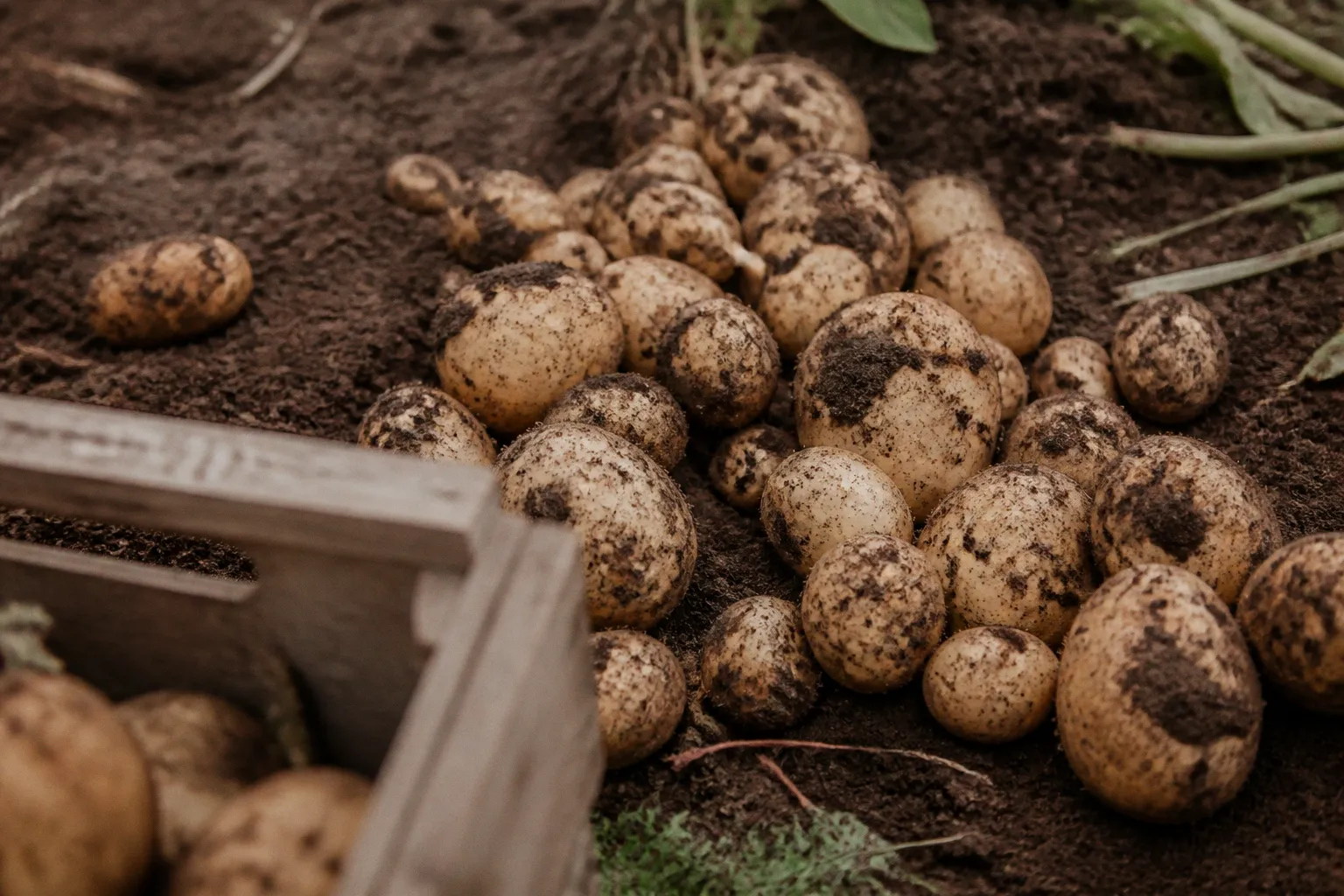
Both cycles compress the handling window. Both expose the same vulnerability: mechanical harvest damage at the digger that may not show up until the tuber reaches the buyer’s table, a reefer at the port of Beirut, or a wholesale bin in Sidon or Tripoli.
Blackspot and shatter bruising are silent margin killers. They can remain invisible at the moment of impact and appear only after handling, transport, or storage. Once the damage is inside the tuber, no cold chain can reverse it. A cooperative that sends bruised potatoes into a buyer’s grading line has already given away negotiating power, whether the damage is visible in the field or not.
The useful part is that much of this loss is preventable. It is usually decided at a small number of transfer points, in the soil condition, in the crop’s nutrition, and in the way the machine is operated. None of these controls requires a different harvest system. They require the existing system to be measured and adjusted before damage becomes a claim.
Bruising is built in the field, not cured in the store.
The main point: harvest damage is a chain problem
A potato rarely receives one decisive blow. More often, it moves through a series of smaller impacts: soil to share, share to chain, chain to conveyor, conveyor to boom, and boom to truck, bin, or bulk container. Each transfer adds another opportunity for the skin to scuff or the internal tissue to split.
The same harvester can produce different results from one field to another. Soil moisture, tuber temperature, chain speed, machine speed, drop height, variety, maturity, and operator adjustment all change the force reaching the tuber. That is why a machine setting that works in a moist spring field may be too aggressive during a dry autumn lift.
The aim is not to eliminate every impact. That is not realistic in a commercial harvest. The aim is to prevent unnecessary impacts, keep the tuber within a more forgiving temperature range, and identify damaging transfer points while the machine is still in the field.
Way 1 — Hold tuber pulp temperature in the 10–15.5°C window
Tuber temperature is one of the most important variables a harvesting crew can control. In the 10°C to 15.5°C range, potato tissue is generally more able to absorb handling impacts without rupturing. Outside that range, the same machine may produce a different bruise profile.
Cold tubers can be more vulnerable to shatter bruising because the tissue becomes less flexible. At higher temperatures, blackspot risk can increase, particularly when the machine is already creating hard impacts. Warm conditions can also complicate storage quality if damaged or wet tubers enter the load.
Bekaa conditions make measurement more useful than guesswork. Fields at roughly 900–1000 metres above sea level can warm and cool quickly, and the temperature at the top of a ridge is not necessarily the temperature of the tuber being lifted.
Measure the tuber, not the surface
A probe thermometer gives the crew a more useful reading than a surface measurement. Take the reading from a representative tuber in the windrow or at the digger, inserting the probe approximately 10–15 cm where the instrument allows it and where the measurement reflects the tuber rather than the sun-heated soil.
The routine should be consistent:
- Take the first reading before the first digger pass.
- Repeat the measurement during the shift, especially when weather or field conditions change.
- Sample away from the sun-exposed top of the ridge.
- Record the time, field, pulp temperature, and any visible damage in the same log as the machine settings.
- Treat a single reading as a warning, not as the whole picture. A rising or falling trend can be more useful than one isolated number.
For an autumn lift, pre-dawn work may leave the crop below the preferred range. Delaying the start until the soil and tubers have warmed can reduce shatter risk, provided the delay does not push the operation into excessive heat later in the day. During a spring lift, the hottest part of the afternoon may be the less forgiving period. If temperatures move above the preferred range, the crew may need to change fields, reduce machine speed, or pause rather than continue at the same settings.
The exact response depends on variety, soil, equipment, and the buyer’s tolerance for damage. The principle is simple: the crew should know what the tuber temperature is before deciding how aggressively to run the machine.
If pulp temperature is not measured at the digger, bruising is being managed by assumption.
Way 2 — Keep transfer drops as low and soft as practical
Every transfer point on a harvester deserves attention. The digger share to the chain, the chain to the windrow conveyor, the windrow to the boom, and the boom to the truck or bin are all potential bruise events.
A practical target is to keep drops within roughly 15–30 cm wherever the machine design allows it. The lower end is preferable at the most sensitive transfer points. A recommended maximum is not the same thing as an automatic legal liability or a guaranteed buyer claim; the commercial consequence depends on the resulting grade, the buyer’s specification, and the terms of the sale. But a high, hard drop is still an avoidable risk.
| Transfer point | Practical target | Useful mitigation |
|---|---|---|
| Digger share to chain | About 15 cm | Correct share angle and preserve a soil cushion |
| Chain to windrow conveyor | About 20 cm | Use a soft barrier and check alignment |
| Windrow to conveyor boom | About 25 cm | Fit a rubber flap and control conveyor speed |
| Boom to truck or bin | About 30 cm or less | Lower the boom and use a drop curtain where suitable |
Walk the harvester before the shift with a tape or another simple measuring tool. Do not inspect only the final boom. A small drop at several points can be more damaging than one visible transfer that receives all the attention.
Closed-cell foam barriers, rubber flaps, curtains, and padded contact surfaces can help, but only if they are still doing their job. Foam that is cracked, compacted, wet, or hardened may look like protection while transmitting much of the impact. Replace damaged material rather than treating its presence as proof that the transfer is safe.
Boom height needs active supervision
Manual boom adjustment is especially dependent on the operator and the changing load level in the receiving truck or bin. As the load rises, the boom position may need to change. Field vibration, fatigue, and the pressure to keep the harvester moving can all make it easier for the drop to increase gradually.
That does not mean a manual boom inevitably becomes unsafe during a shift. It means the crew should recheck its height regularly instead of setting it once and assuming it will remain correct. Hydraulic height control can make this easier on older harvesters, but even an automated system needs to be observed and adjusted for the receiving container.
The chain-to-ground speed ratio also matters. A working range around 0.8 to 1.2 may be a useful starting point for some equipment, but it is not a universal setting for every harvester or soil condition. If the chain outruns the machine, tubers can be thrown against rod links or other surfaces. If it lags, tubers and soil can bunch together. Use the ratio as a reference, then confirm the result through visual inspection and, where available, impact monitoring.
Way 3 — Give the tuber a soil cushion and control chain speed
Soil is not just material the harvester has to remove. In the right condition, it acts as a cushion between the tuber and the machine. A thin layer of moist soil can reduce direct contact with metal surfaces and limit skin abrasion on the rod links.
The correct condition is neither dust nor mud.
When the soil is too dry
Over-dry soil provides little protection. Dust can move away from the tuber before the transfer, leaving the skin exposed to abrasion. Scuffed skin creates an entry point for storage problems, particularly when the crop is handled repeatedly or enters storage with excess moisture and poor ventilation.
If the field is too dry, a light irrigation before digging may help in some situations. The timing cannot be treated as a fixed recipe: soil type, weather, drainage, irrigation capacity, and the crop’s maturity all matter. Water applied too close to lifting can create clods or leave the load unnecessarily wet. The goal is to restore a workable surface cushion, not to turn the digging window into a muddy operation.
When the soil is too wet
Wet soil creates a different set of problems. Clods form, the share depth becomes less predictable, and the operator may dig more aggressively to recover tubers. The result can be additional mechanical handling, more soil entering the load, and greater pressure at the transfer points.
Watch the material moving over the chain. The tubers should travel with enough soil to soften contact, but not in a heavy, sticky mass. When soil begins to build up or clods strike the tubers, slowing down and correcting the digging depth may prevent more damage than simply increasing conveyor speed.
Match chain speed to field speed
Chain speed should be adjusted together with forward speed, soil condition, and crop flow. If the chain races ahead of the machine, it can scrub the tuber and expose it to repeated impacts. If the chain lags, potatoes can pile up and collide with one another or with the rod links.
The operator should watch for:
- tubers bouncing rather than rolling through the transfer;
- skin scuffing on the shoulders and sides of the potato;
- sudden bunching after a change in soil texture;
- excessive soil clods entering the conveyor;
- tubers striking the end of a belt or the sidewall of a receiving surface.
These signs are more actionable than a theoretical setting copied from another field. A sound adjustment is the one that reduces violent movement while maintaining a clean, steady flow.
Way 4 — Manage nutrition for stronger tissue
Harvest damage is partly decided before the harvester enters the field. A tuber with weak tissue or poor skin set has less tolerance for the same impact than a well-matured crop. Nutrition does not replace mechanical control, but it can change how the crop responds when handling is not perfect.
- Potassium (K) supports plant water regulation and tissue function. Potatoes remove substantial potassium from the soil, so the crop’s programme should be based on soil and tissue information rather than a routine application copied from another field.
- Calcium (Ca) is associated with cell-wall and membrane stability. If tissue testing shows that calcium status is marginal, the agronomist should decide whether an application is appropriate, in what form, and at what stage. Calcium movement into tubers can be limited, and late applications may not correct a problem that developed earlier. That makes timing important, but it does not mean that early application is the only possible intervention in every crop or that a late treatment will always be ineffective.
- Nitrogen (N) needs restraint late in the cycle. Excess late-season nitrogen can delay skin set and leave the crop more vulnerable to scuffing. Reducing unnecessary late nitrogen during bulking can support better harvest handling, but the correct programme depends on variety, crop condition, soil supply, and the planned harvest date.
The cooperative agronomist should read the nutrition plan alongside the harvest risk. A field with marginal calcium, excessive late nitrogen, immature skin, or a history of poor crop balance may need gentler machine settings even when the soil and pulp temperature look acceptable.
A tissue test is useful because visual canopy strength does not tell the whole story. Neither does a single fertilizer application. The objective is to build a crop that can tolerate the normal movement of a commercial harvester, not to promise that nutrition alone will prevent bruising.
Way 5 — Use impact monitoring to train the machine and the crew
Electronic impact detection devices, including TuberLog and similar sensor systems, can show where the harvester is creating unusually hard impacts. Mounted or carried through the machine, the sensor records acceleration at transfer points and gives the operator a basis for adjustment.
The value is not the number on the screen by itself. The value is the connection between a spike and a physical event: a high boom, an exposed metal edge, a conveyor running too fast, a missing rubber flap, or tubers bunching after a change in soil.
Impact monitoring can provide:
- a baseline for one harvester in one field condition;
- a way to compare adjustments before and after a repair;
- a training tool for showing the effect of speed and height changes;
- a record for the cooperative’s quality system;
- evidence that the crew investigated a problem before the load moved downstream.
No two machines need to produce identical readings, and a threshold from one model should not automatically be transferred to another. Establish a baseline on the cooperative’s own equipment, then agree on what level of change triggers an inspection. The buyer’s specification and the crop’s actual grade still matter more than a device reading in isolation.
Start with a physical check
Before committing to a full load, inspect the first harvested potatoes. A sample of the first part of the run can reveal blackspot, shatter, skinning, or harsh contact before the truck is full. If damage appears, stop and trace the flow backwards:
1. Check the receiving point and final boom.
2. Follow the tubers to the preceding conveyor.
3. Inspect every drop, edge, curtain, belt, and rod-link junction.
4. Compare machine speed with forward speed.
5. Recheck soil moisture and pulp temperature.
6. Run another small sample after the adjustment.
The first sample is not a guarantee that the entire load will remain clean. Conditions change as the harvester moves through the field. It is an early warning that keeps a correctable problem from becoming a full-load problem.
Practical details for a shift in the Bekaa
The five controls work best as one operating routine rather than five separate projects. Before each shift, the crew should record the conditions that can change the bruise risk:
- pulp temperature at the first digger pass;
- soil condition in the windrow;
- measured height at each major transfer;
- condition of foam, rubber, curtains, and other protective surfaces;
- conveyor and chain speeds;
- first-sample inspection results;
- impact-monitor readings, if the cooperative uses them;
- any change in field, variety, maturity, or weather.
The record does not need to become paperwork for its own sake. Its purpose is to connect a defect with a probable cause. If bruising appears in one field but not another, the log may point to soil moisture or temperature. If it appears after the receiving truck becomes fuller, boom height may be the first place to look. If the damage begins after a repair, the repaired junction deserves inspection before the next load.
For cooperatives serving Gulf or North African wholesale channels, this discipline matters because damage created in Bekaa may be assessed much later in the chain. Transport, repeated unloading, storage temperature, and buyer handling can make an earlier injury more visible. A tuber that looks clean after one controlled transfer may still develop visible blackspot or other quality defects later if the impact has already damaged the cells. The timing and severity depend on the injury, variety, temperature, storage conditions, and grading method; there is no reliable universal schedule that turns every hidden bruise into a defect after a fixed number of days.
That uncertainty is precisely why prevention at harvest is more valuable than arguing about where the defect became visible.
What to watch when the load leaves the field
Harvest quality should be judged at more than one point. Inspect the crop:
- immediately after lifting;
- after the first transfer into the truck or bin;
- during packing or loading;
- after the normal holding period used by the cooperative;
- against the buyer’s agreed grade and defect tolerances.
A load can appear acceptable at the digger and still show problems later. Conversely, a rough-looking sample may reflect soil or surface marking rather than internal bruising. The cooperative needs a consistent inspection method so that decisions are not based on whichever tubers happen to be on top of the load.
Do not treat every mark as the same defect. Blackspot, shatter, skinning, cuts, pressure damage, and soft rot have different causes and different implications for storage. The response should match the observed problem. Lowering a boom will not correct a crop with weak skin set, just as changing fertilizer will not fix a hard metal edge at the conveyor transition.
Buyer specifications should be part of the conversation before harvest. A regional wholesale buyer may place different emphasis on appearance, internal defects, size, soil, or storage performance than another buyer. The machine should be adjusted to deliver the agreed product, not to an abstract idea of perfection.
A lower bruise rate starts with a lower number of uncontrolled impacts.
The operating standard is adjustment, not a fixed setting
The strongest harvest programme is not the one with the most precise-looking number. It is the one that responds to field conditions without losing control of the basics.
Keep pulp temperature in a workable range where possible. Maintain a soil cushion. Keep transfer drops low and protected. Match chain speed to crop flow. Support tissue quality through balanced nutrition. Use impact data and first-sample inspections to identify problems while the machine is still in the row.
Some days will require a slower harvest. Some fields will need a different time window. A dry autumn field may need irrigation planning; a cold morning may need a later start; a mature crop with fragile skin may need gentler settings than a tougher crop harvested under similar weather. These are not failures of the system. They are the normal adjustments required to protect Bekaa Valley potato crop quality.
The cooperative’s job is not merely to lift potatoes and move them into a truck. It is to deliver tubers that have not been unnecessarily pre-injured before they enter the cold chain. That is where reducing potato harvest losses begins: at the first impact, not at the buyer’s grading table.