Phytosanitary certificates: a 5-step path to export compliance
Lebanon produces roughly 180,000–200,000 metric tons of apples each year, and historically about 70% of that volume has been directed toward export markets.
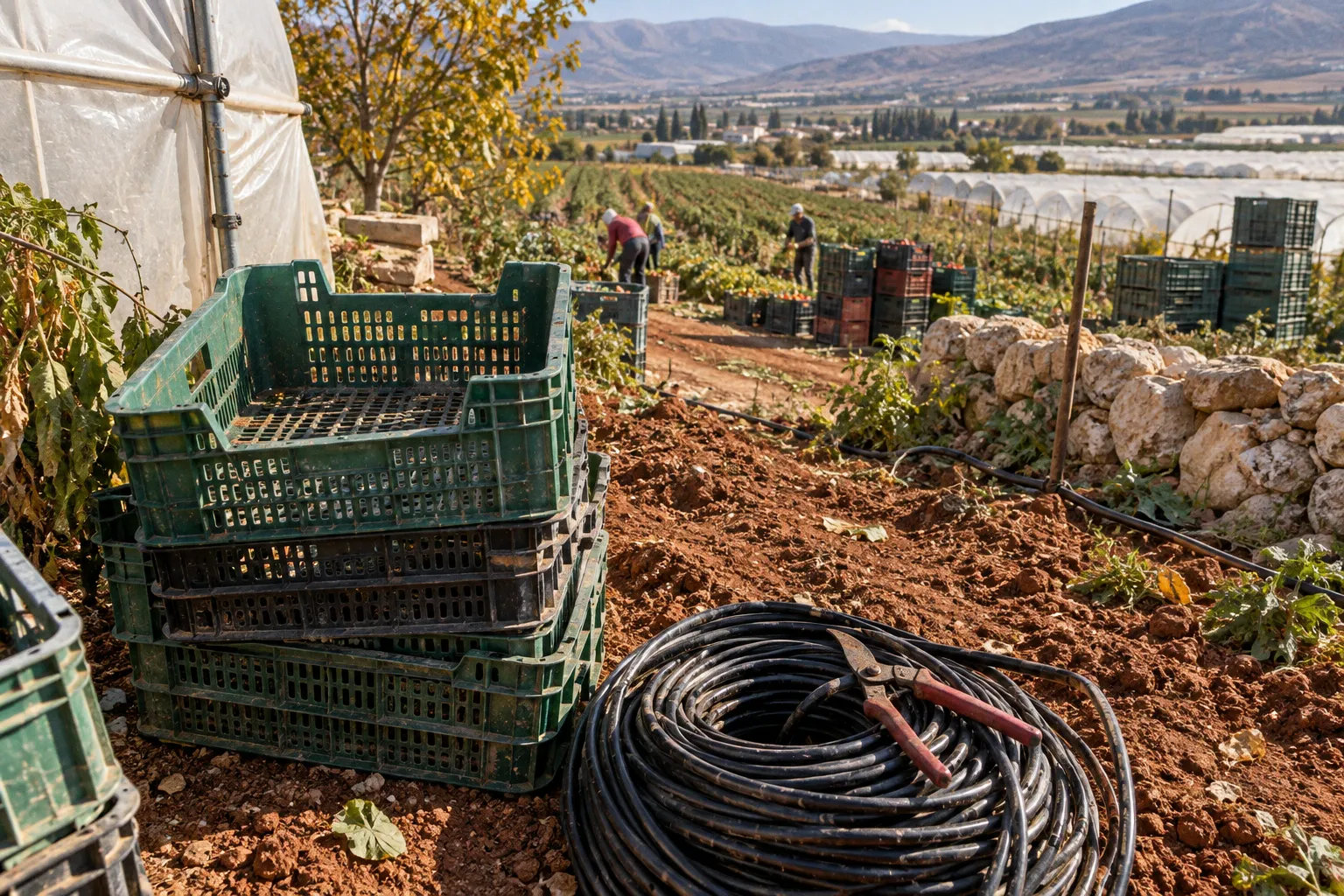
That scale makes one point unavoidable: phytosanitary certification is not a final port-office formality. It is the output of an entire control chain, starting in the orchard and ending at quarantine inspection.
For Lebanese exporters, the certificate sits inside a wider compliance system. The Ministry of Agriculture issues the official phytosanitary certificate through its Import, Export and Plant Quarantine Service, but the shipment must also align with LIBNOR standards, Ministry health requirements, approved laboratory testing, packhouse hygiene, and the import protocol of the destination market.
Miss one link and the container can lose its transit window, miss a vessel connection, or arrive with documentation that does not satisfy the buyer or border authority. The fix is operational: build the export file before harvest, not after packing.
Step 1: Lock orchard controls before harvest
The phytosanitary certificate requirements for Lebanese agricultural exports begin before the product reaches a packhouse. Authorities and destination markets need evidence that the crop was monitored, treated, and handled under a controlled production system.
For an exporter, this means converting orchard activity into a traceable file. The file should connect:
- The grower or cooperative to a defined production area.
- The crop and variety to a harvest lot.
- Pest monitoring records to the relevant orchard block.
- Crop protection activity to the batch eventually packed for export.
- Pre-harvest controls to the destination market’s import protocol.
This is where many export programs fail. A cooperative may have excellent fruit, but if orchard records do not connect cleanly to the packed lot, the shipment becomes difficult to defend during inspection.
Build the lot record
Start with a production map. It does not need to be elaborate, but it must be specific enough to answer basic questions quickly:
- Which orchard produced the fruit?
- Which grower or cooperative member controlled that orchard?
- When was the crop monitored?
- Which pests were identified or ruled out?
- What control actions were taken?
- Which harvest date and lot number correspond to the packed product?
Keep the record at batch level. Laboratory validity, traceability, and inspection all depend on knowing what belongs to the same production group.
If several orchards are mixed into one shipment, then the documentation must show how those lots were combined and controlled. If they cannot be separated, you may have created a compliance problem before the truck reaches the port.
Apply destination-specific pest protocols
A certificate issued by Lebanon does not automatically guarantee entry into every destination market. Importing countries can impose their own pest controls, inspection requirements, and Maximum Residue Limits, or MRLs.
The practical rule is simple:
- If the destination has a named pest protocol, start monitoring on the timetable required by that protocol.
- If the buyer requests a crop-specific declaration, capture the evidence before harvest.
- If the market has stricter residue controls, align spray records and laboratory testing with those limits.
- If the import protocol is unclear, stop the shipment plan until the buyer, importer, or competent authority confirms the requirement.
Cherries provide a clear example. Exporting certain crops to strict markets such as the European Union can require a defined pest monitoring and control period before export. For cherry fly compliance, the relevant monitoring period can extend to three months before shipment.
That timeline cannot be recovered at the port. If monitoring starts too late, the exporter may have healthy fruit but no compliant evidence for the market.
A phytosanitary certificate is the final document in the chain, not a substitute for the chain.
Treat spray records as export records
Crop protection records should not sit separately from logistics planning. They affect harvest release, residue testing, buyer approval, and the export calendar.
Your orchard file should capture:
- Product used and application date.
- Target pest or disease.
- Orchard block and crop.
- Pre-harvest interval.
- Operator or responsible farm unit.
- Any follow-up monitoring required.
Do not treat this as paperwork for its own sake. A missing application record can delay laboratory release. A harvest taken inside a pre-harvest interval can create a residue issue. A pest-control gap can block certification for a destination market even when the fruit looks acceptable.
If the farm cannot produce a reliable production file, the export team should not promise a fixed loading date.
Step 2: Align LIBNOR standards and Ministry registration
The second stage is standards alignment. Lebanese agricultural export compliance depends on coordination across LIBNOR standard setting, Ministry of Agriculture requirements, approved laboratory controls, and border inspection.
LIBNOR standards for fresh produce help define the quality and presentation framework. They do not replace the destination country’s import rules, and they do not turn one Lebanese certificate into a universal admission document. Use them as part of the technical baseline, then add the destination protocol on top.
Separate three compliance questions
Before packing, answer three different questions:
1. Is the product acceptable under the Lebanese regulatory framework?
This includes the applicable Ministry of Agriculture controls and health registration requirements.
2. Does the product meet the relevant quality and presentation standards?
This is where LIBNOR requirements and buyer specifications matter.
3. Will the destination authority accept the shipment under its import protocol?
This may involve pest declarations, MRLs, packaging rules, treatment records, or additional inspection.
These questions overlap, but they are not interchangeable. Passing one does not automatically pass the others.
If the buyer says the shipment is “approved,” confirm what that means. It may refer only to commercial quality. It may not cover plant-health documentation, residue limits, or destination customs clearance for Lebanese fruit.
Build one export control file
Do not split information across the cooperative office, grower, laboratory, packhouse, freight forwarder, and customs broker without a central control file. Assign one person to own the master version.
The file should contain, as applicable:
- Exporter and cooperative identification.
- Product, variety, and crop details.
- Orchard or production-site records.
- Lot and pallet references.
- Harvest dates.
- Pest monitoring and treatment records.
- Laboratory requests and results.
- Packhouse and cold-storage records.
- Buyer and destination-market requirements.
- Packing list and commercial documentation.
- Ministry submission and inspection status.
- Transport booking and transit window.
Use the same lot code across the orchard record, laboratory sample, cartons, pallets, and export documents. If the lot number changes at the packhouse, document the change. If it changes again at loading, reconcile it before the truck departs.
A clean lot code is one of the cheapest compliance tools available. It saves time at inspection and gives you a defensible answer when a buyer asks where a pallet came from.
Confirm the competent authority early
Official phytosanitary certificates in Lebanon are issued under the regulatory authority of the Ministry of Agriculture’s Import, Export and Plant Quarantine Service. Plan the interaction with that authority as part of the shipment schedule.
Do not wait until the container is sealed to discover that an inspection, supporting document, or correction is required. The Ministry process should be linked to:
- The expected harvest date.
- The laboratory testing schedule.
- Packhouse release.
- Cold-room loading.
- Truck dispatch.
- Port cut-off.
- Vessel departure or land-transit departure.
If any one of these dates moves, update the rest of the chain. Perishable cargo does not tolerate administrative drift.
Step 3: Manage approved laboratory testing and batch validity
Laboratory testing is a control point, not a decorative attachment to the export file. Testing for plant-origin export shipments must be conducted by officially approved laboratories. The result must also remain connected to the correct production batch.
Under the cited Lebanese framework, laboratory test results for products produced in one batch can remain valid for up to three months. That validity rule helps planning, but it does not eliminate the need to control the batch carefully.
Sample the right batch
A laboratory result is useful only if the sample represents the product shipped. Define the batch before sampling, then keep the identity stable through packing and loading.
The laboratory file should link:
- Sample identification.
- Product and variety.
- Production batch.
- Sampling date.
- Sampling location.
- Requested analysis.
- Laboratory approval status.
- Result date.
- Applicable destination limits.
- Corrective action, if the result is not acceptable.
If the shipment combines fruit from multiple production systems, do not assume one result covers all material. The sampling plan must reflect the way the product was produced and consolidated.
The three-month validity period also requires discipline. If a test was taken early in the season, verify that the result remains valid for the planned shipment and that the underlying batch has not changed. A valid result attached to the wrong lot is still a documentation failure.
Compare results against the destination market
The Lebanese compliance file and the destination import file should be compared before the product is packed. This is particularly important for residue controls.
A product can satisfy one set of requirements and fail another. The Ministry process, LIBNOR standards, buyer specifications, and destination MRLs may use different thresholds or require different evidence.
Use an if-then decision:
- If the destination MRL is stricter than the local or buyer baseline, then use the stricter requirement for production release.
- If the laboratory report does not identify the batch clearly, then correct the documentation before loading.
- If the result is outside the destination limit, then hold the lot and do not attempt to solve the issue through port paperwork.
- If the result is acceptable but the certificate file is incomplete, then keep the cargo under controlled storage until the export file is complete.
Do not let a vessel booking drive a premature release. The commercial cost of missing a sailing is visible. The cost of sending non-compliant produce can be larger: rejection, destruction, return freight, buyer claims, and loss of the route.
Keep the laboratory clock visible
Add the test date and expiry date to the shipment control sheet. Put them beside the planned loading date, inspection date, and transport booking.
The export manager should be able to answer immediately:
- When was the batch tested?
- How long is the result valid?
- Does the result cover the exact product loaded?
- Does it meet the destination market’s limits?
- Has any production or packing activity changed since sampling?
This is basic control-tower work. If the answer requires searching through messages, the process is already too loose.
Step 4: Release only through a hygienic cold chain and compliant packhouse
A compliant orchard and acceptable laboratory result can still be undermined by poor post-harvest handling. Cold storage hygiene and packhouse controls protect both plant health and commercial quality.
The packhouse is where orchard lots become export lots. It is also where traceability can collapse if receiving, grading, packing, storage, and dispatch are not managed as one flow.
Control the receiving gate
At receiving, record the lot before fruit enters the production line. Separate accepted, held, rejected, and reworked material.
The receiving process should establish:
- Arrival time and vehicle identity.
- Grower or cooperative source.
- Orchard lot.
- Product and variety.
- Quantity received.
- Initial condition.
- Assigned storage or processing area.
- Hold status if documents are incomplete.
If one delivery arrives without adequate traceability, do not mix it with a compliant lot to save space. The short-term warehouse convenience can create a full-container documentation problem later.
Protect hygiene through the packhouse
Packhouse hygiene should be operational, not ceremonial. The facility needs controls for surfaces, equipment, workers, packaging materials, water where relevant, waste flow, and pest access.
The exact technical program will depend on the commodity and facility, but the working principle is consistent:
- Keep clean and dirty flows separated.
- Remove damaged or contaminated product quickly.
- Prevent recontamination after washing, grading, or treatment.
- Maintain clean packaging and pallet areas.
- Record sanitation activity.
- Restrict access to controlled storage.
- Keep rejected material physically and administratively separate.
If a destination market requires specific treatment or handling evidence, record it at the point of action. Reconstructing the record after loading is slower and less reliable.
Protect the cold chain as a sequence
Cold chain logistics in Lebanon is not just a refrigerated truck booked at the last minute. Temperature control begins with product release and continues through storage, loading, transit, and destination handover.
Plan the sequence:
1. Harvest and field handling.
2. Delivery to the packhouse.
3. Sorting and packing.
4. Pre-cooling or controlled cooling where required for the commodity.
5. Cold storage.
6. Container or truck loading.
7. Port or border transit.
8. Destination receipt.
The objective is not to claim a generic temperature number for every crop. Different products have different tolerances, and the correct operating range must come from the commodity protocol, buyer specification, and destination requirement.
The operational rule is sharper: if the fruit leaves controlled conditions, document why, for how long, and under whose authorization. If a reefer unit fails, record the event, product condition, corrective action, and release decision. Do not erase the incident by restarting the temperature log.
Match cargo timing to transit windows
Fresh produce shipping from Lebanon depends on timing discipline. The cold chain can be technically sound and still fail if the container misses the planned vessel, waits at a border, or arrives after the buyer’s receiving window.
Before loading, confirm:
- Port cut-off or border handover time.
- Reefer availability.
- Power connection or genset plan where relevant.
- Expected transit route.
- Customs and inspection sequence.
- Destination receiving hours.
- Contingency if the planned departure is missed.
If the shipment cannot arrive within the buyer’s acceptance window, do not load simply because the product is ready. Rebook the transport plan or renegotiate the receiving time before the cargo leaves controlled storage.
The best export file is useless if the fruit arrives outside the buyer’s transit window.
Step 5: Complete quarantine inspection and issue the official certificate
The final step is official inspection and certificate issuance. The certificate is issued by the Ministry of Agriculture’s Import, Export and Plant Quarantine Service, subject to the required controls and inspection process.
This is the point where the authorities verify that the shipment presented for export matches the supporting file and satisfies the applicable plant-health requirements. The inspection should not be treated as a surprise test at the end of the process. It is the final verification of work already completed.
Prepare the inspection package
Before requesting final inspection, reconcile the physical cargo against the documents:
- Product and variety match the declaration.
- Carton and pallet counts match the packing list.
- Lot codes match the orchard and laboratory records.
- Labels are consistent across cartons and pallets.
- The laboratory report covers the shipment.
- Required monitoring evidence is available.
- The packhouse and storage records are complete.
- The destination protocol has been checked.
- The transport booking matches the cargo plan.
If there is a mismatch, correct it before inspection. Do not rely on handwritten explanations at the inspection point unless the authority specifically accepts that method.
Keep the shipment available and identifiable
Inspection requires access to the cargo. Make sure the shipment can be located quickly and presented in a condition that allows verification.
For a containerized load, confirm the container number, seal status, loading record, and physical location. For land transit, make sure the truck, cargo, and documents remain aligned through the handover.
If the container is sealed before an inspection requirement is completed, the process may become slower and more expensive. The seal protects cargo integrity, but it also limits access. Sequence sealing around the authority’s inspection requirements, not around convenience.
Understand what the certificate does—and does not do
The phytosanitary certificate confirms the official plant-health status of the shipment under the issuing authority’s process. It does not override the importing country’s rules.
You still need to verify:
- Destination-country import permits, where required.
- Pest declarations and commodity protocols.
- MRL compliance.
- Packaging and labeling rules.
- Customs documentation.
- Commercial invoice and packing list requirements.
- Buyer-specific quality conditions.
- Any transit-country requirements.
This distinction matters in Lebanon’s regional and international trade routes. A shipment can leave the country with a valid Lebanese phytosanitary certificate and still face a problem at destination if the importer’s permit, residue evidence, or protocol condition is missing.
Use a release decision, not a hopeful assumption
Before departure, classify the shipment:
- Released: the official certificate and supporting file are complete; cargo is aligned with the transport plan.
- Held: a document, test result, inspection, or destination requirement remains unresolved.
- Rejected or diverted: the lot does not meet a required plant-health, residue, quality, or timing condition.
If the cargo is held, protect the cold chain and document the reason. If the lot is rejected, isolate it from released cargo. If the route changes, reassess the destination requirements rather than carrying the original assumptions into a new market.
The five-step operating protocol
For exporters and cooperatives, the process can be reduced to five operational gates:
1. Orchard gate: production area, pest monitoring, treatment records, and harvest timing are documented.
2. Standards gate: Ministry requirements, LIBNOR standards, buyer specifications, and destination rules are reconciled.
3. Laboratory gate: approved testing covers the correct batch and remains valid for the planned shipment.
4. Packhouse gate: hygiene, cold storage, lot segregation, and traceability remain intact.
5. Quarantine gate: the Ministry inspection file matches the physical cargo and the destination protocol.
A shipment should not move to the next gate with a known unresolved failure. That is how small gaps become port delays, rejected lots, or broken cold-chain windows.
Mandatory compliance check before dispatch
Use this final review before the truck leaves the packhouse or the container moves toward the port of Beirut:
- Orchard and grower records identify the exact production lot.
- Required pest monitoring was completed for the destination market.
- Crop protection and pre-harvest records are available.
- Ministry of Agriculture requirements have been mapped to the shipment.
- Applicable LIBNOR and buyer specifications are covered.
- Laboratory testing was conducted by an officially approved laboratory.
- The laboratory result identifies the same batch being shipped.
- The result remains within its permitted validity period.
- Destination MRLs and import protocols have been checked.
- Packhouse receiving, sanitation, and lot-segregation records are complete.
- Cold storage and loading records are available.
- Carton, pallet, container, and seal numbers reconcile.
- Packing list and commercial documents match the physical cargo.
- Quarantine inspection has been scheduled or completed as required.
- The official phytosanitary certificate is issued through the Ministry’s competent service.
- Transit and destination receiving windows are still achievable.
The central discipline is straightforward: build the certificate backward from the destination market, then manage every upstream step against that requirement. Lebanese produce can compete beyond the local market, but only when orchard controls, laboratory evidence, packhouse handling, cold chain, and official inspection operate as one export system.