Libnor export standards: a compliance plan for growers
A Lebanese fresh-produce shipment does not clear export controls because it carries one good-looking certificate.
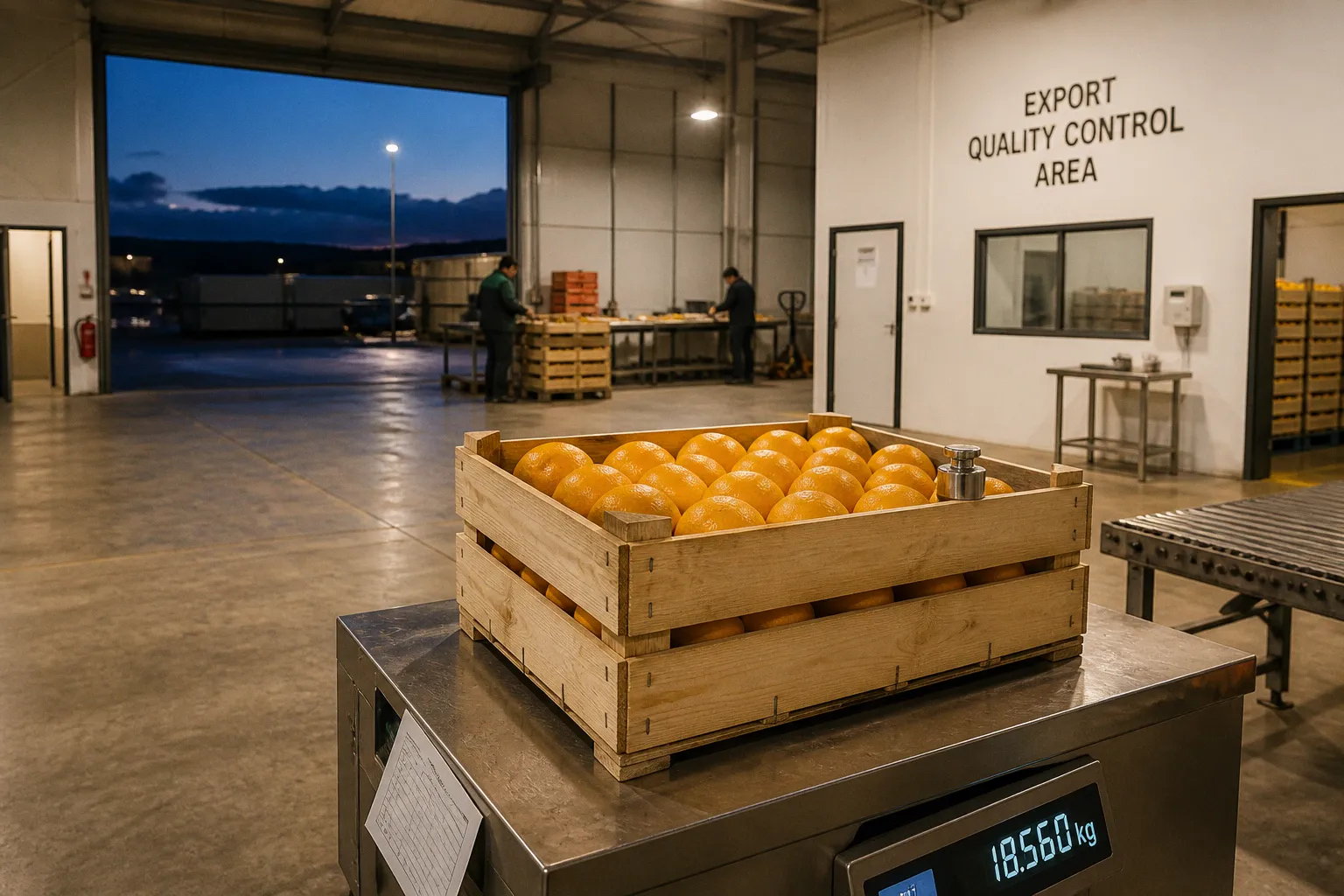
The LIBNOR agricultural export certification process is a multi-agency operation: standards, facility registration, laboratory testing, origin documentation, health certification, and phytosanitary clearance all sit in different files.
That distinction is operational, not bureaucratic. If your packing facility is not registered, the laboratory file can fail before the batch reaches the port. If the residue report is incomplete, an otherwise valid Certificate of Origin will not rescue the shipment. If the destination market requires pest monitoring over a defined pre-harvest window, testing only at harvest is already too late.
For Lebanese growers and cooperatives, the workable approach is to build one compliance file around the shipment and assign every document to the authority that controls it.
The LIBNOR mark is one control layer—not the whole export file
LIBNOR, the Lebanese Standards Institution, was established in 1962 under the Ministry of Industry. It is the national body authorized to issue Lebanese standards and grant the national “NL” Conformity Mark.
That makes LIBNOR central to Lebanon export standards. It does not make LIBNOR a substitute for the Ministry of Agriculture or accredited laboratory controls.
The core mistake is treating the NL mark as a universal export passport. It is not. A fresh-produce shipment can require several separate legal proofs, each answering a different question:
| Compliance item | What it establishes | Operational owner |
|---|---|---|
| NL Conformity Mark | Conformity with the applicable Lebanese standard | LIBNOR |
| Facility health registration | That the handling or processing site is registered under Ministry of Agriculture requirements | Ministry of Agriculture |
| Laboratory testing file | That the batch has been tested for relevant parameters, including MRLs and heavy metals | Accredited laboratory |
| Certificate of Origin | That the plant food product is locally produced and eligible for origin certification | Ministry of Agriculture |
| Health Certificate | Health status and compliance under the applicable agricultural procedure | Ministry of Agriculture |
| Phytosanitary Certificate | Plant-health clearance for the export consignment | Ministry of Agriculture |
These documents are not interchangeable.
If the buyer asks for proof that the product conforms to a Lebanese standard, move to the LIBNOR track. If the shipment needs plant-health clearance, move to the Ministry of Agriculture phytosanitary process. If the buyer or destination authority requires residue evidence, open the laboratory file. If origin is part of the customs or market-access requirement, secure the Certificate of Origin under the relevant Ministry of Agriculture procedure.
The NL mark strengthens the compliance file. It does not replace the phytosanitary certificate, health certificate, laboratory report, or proof of origin.
This is the practical foundation of the libnor certificate of conformity agricultural products question. Start by mapping the requirement to the competent authority. Do not ask one document to perform five jobs.
Build the compliance file before harvest
A cooperative should not begin export preparation when pallets are already moving toward Beirut. The correct starting point is the destination-market specification and the product’s handling route.
Create a shipment control sheet for each product and destination. At minimum, capture:
- Product and variety.
- Grower or cooperative source.
- Production location.
- Packing or handling facility.
- Target market and importer.
- Expected harvest window.
- Required laboratory parameters.
- Origin documentation.
- Health and phytosanitary documentation.
- Applicable LIBNOR standard and NL mark status.
- Cold-chain and transit-window requirements.
Then assign ownership. A small cooperative does not need a large compliance department, but it does need named responsibility. One person should control the product and grower records. One should control facility and packing documentation. One should coordinate laboratory testing. One should manage certificates and the freight file.
If one person performs all four roles, use a second-person document release check. The most common failure is not a missing regulation. It is a missing handoff.
Use an if-then decision protocol
The export file should operate on explicit conditions:
1. If the product is handled or processed at a facility, confirm the facility’s Ministry of Agriculture health registration before preparing the export testing file.
2. If the destination market imposes maximum residue limits, send the batch or representative samples to an accredited laboratory for the required residue analysis.
3. If heavy-metal testing is part of the buyer or destination requirement, include it in the laboratory scope rather than treating it as an informal add-on.
4. If the buyer requires Lebanese conformity evidence, confirm the applicable LIBNOR standard and NL Conformity Mark route.
5. If the shipment requires proof of local production, apply for the Certificate of Origin under Ministry of Agriculture Decision No. 1/255.
6. If the commodity is subject to plant-health controls, coordinate the phytosanitary process with the Ministry of Agriculture before cargo handover.
7. If the market applies pest-monitoring windows, start the field-monitoring record months before harvest, not at packing.
This protocol prevents a familiar export failure: discovering at the loading stage that the right test was never ordered or the right authority was never contacted.
Facility health registration is the first physical gate
Your packing house is part of the export system. It is not merely a place where crates are stacked before loading.
Under Ministry of Agriculture requirements, processing and handling facilities need health registration numbers. The research basis for this requirement includes procedures such as Decision No. 1/950. Without the registration, the facility may not be in a defensible position to process products or support the export testing file.
For growers shipping through a cooperative, this creates a hard rule:
If the facility is not registered, stop the export workflow before laboratory scheduling.
Do not send samples first and try to regularize the site later. That sequence creates a weak chain of evidence. The laboratory report may exist, but the authorities or buyer can still question whether the product was handled in an approved facility.
What the facility record should control
The facility file should connect the site to the shipment. Keep the following information aligned:
- Registered facility name and address.
- Ministry of Agriculture health registration number.
- Cooperative or exporter responsible for the site.
- Products handled.
- Dates of intake, sorting, packing, and dispatch.
- Lot or batch identifiers.
- Cleaning and handling records.
- Sample references used by the laboratory.
- Link between packed cartons and the originating growers.
This is not paperwork for its own sake. Traceability is what lets you isolate a problem without freezing every product in the cooperative’s inventory.
If one grower’s lot is associated with a failed result, you need to identify that lot. If multiple farms are mixed into one unmarked pool, the entire shipment becomes harder to defend.
Separate lots before they become a logistics problem
The packing line should not erase farm-level identity. Use a lot structure that follows the product from intake to container or truck.
A workable internal code can combine:
- Grower or farm identifier.
- Harvest date.
- Product and variety.
- Packing date.
- Facility line or shift, if relevant.
Keep the code visible in the internal records even when the commercial carton label uses a shorter format. The purpose is not elegant labeling. The purpose is retrieval speed when an importer asks for the laboratory report linked to a specific pallet.
For fresh produce shipping from Lebanon, this matters even more when the cargo moves through multiple logistics points. Produce may pass from farm to collection point, then to a packing site, then to a port or border handoff. Every transfer introduces a chance to lose the lot connection.
A registered facility gives you the legal base. A controlled lot system gives you operational control.
Laboratory testing: order the right evidence for the right market
Accredited laboratory testing is a separate pillar of the Lebanese produce export requirements. Relevant facilities include the Industrial Research Institute, the Lebanese Agricultural Research Institute, and chamber laboratories such as CCIAZ.
The testing scope should be built from the destination-market requirements and the buyer’s technical specification. At a minimum, the compliance process may involve maximum residue limits and heavy metals. The correct panel depends on the product, market, and shipment conditions.
Do not use a generic phrase such as “quality test” in the export file. That label is too vague. State what was tested, for which lot, under which method or laboratory scope, and how the result is connected to the packed shipment.
Control the sample chain
A laboratory result is only useful when the sample is defensible.
Your internal sample procedure should identify:
1. The lot from which the sample was taken.
2. The person or team responsible for sampling.
3. The date and location of sampling.
4. The quantity or sample description required by the laboratory.
5. The seal, reference, or submission identifier used.
6. The laboratory that received the sample.
7. The final report number.
8. The cartons, pallets, or shipment linked to the result.
If the laboratory report cannot be connected to the cargo, the result loses operational value. This is especially damaging when a cooperative consolidates produce from several growers.
Treat MRLs as a release condition
Maximum residue limits are not a post-loading formality. They are a product-release control.
Use a simple internal gate:
- If the result meets the applicable requirement: release the lot to the next documentation stage.
- If the result is pending: hold the lot unless the market and logistics plan explicitly allow movement without final release.
- If the result fails: quarantine the affected lot, investigate the source, and do not merge it with compliant product.
- If the destination requirement is unclear: stop shipment planning until the importer or competent authority confirms the applicable standard.
Do not average a failed lot into a larger compliant pool. That destroys traceability and can expand the problem from one grower’s consignment to the cooperative’s entire export program.
The same logic applies to heavy metals. If the market or buyer requires the analysis, define it before sampling. An incomplete laboratory file cannot be repaired by attaching an unrelated report after the cargo has departed.
A test report is not a decoration in the export folder. It is a release decision tied to a specific lot.
Laboratory planning needs lead time
The exact testing cost schedule is not standardized across the relevant facilities, so do not build your export budget around an assumed universal rate. Request the laboratory scope and fee quotation for the actual product and panel.
The planning sequence is more important than guessing a price:
- Confirm destination requirements.
- Confirm the laboratory’s accredited scope.
- Define the sample and lot structure.
- Schedule sampling against harvest and packing.
- Reserve time for reporting and any corrective action.
- Release cargo only when the file meets the agreed requirement.
This is where the practical overview of Lebanon’s agricultural trade requirements can help frame the broader regulatory environment, but the shipment file still needs product-specific confirmation from the responsible authorities and buyer.
Certificates of Origin and health documents solve different problems
Ministry of Agriculture Decision No. 1/255 governs Certificates of Origin for locally produced plant food products intended for export. The certificate is signed by regional agricultural service leads.
For a cooperative, the origin file should be built from production records, not from an exporter’s declaration assembled at the last minute. Link the product to the farms, locations, and lots that generated it. When the shipment contains output from several growers, maintain the internal allocation even if the commercial sale is made under one cooperative name.
The Certificate of Origin establishes origin. It does not replace the health or phytosanitary documents.
A Health Certificate falls under a separate procedure, referenced in the research basis as Decision No. 1/272. The Phytosanitary Certificate addresses plant-health clearance. Both remain separate from the NL Conformity Mark and laboratory evidence.
Use a document matrix, not a single folder
A physical or digital export file should answer five questions quickly:
| Question | Evidence to retrieve |
|---|---|
| Where was the product produced? | Grower records and Certificate of Origin |
| Where was it handled? | Facility registration and packing records |
| Does it meet chemical or contaminant requirements? | Accredited laboratory report |
| Does it meet Lebanese conformity requirements? | Applicable LIBNOR standard and NL documentation |
| Is it cleared for plant-health export? | Phytosanitary Certificate and related Ministry of Agriculture file |
If any answer depends on a verbal explanation, the file is not ready.
The document matrix also protects against duplicate work. A cooperative may already hold a laboratory result and still need a health decision. It may have a Certificate of Origin and still require phytosanitary clearance. It may have the NL mark and still lack the facility registration number needed for the broader export file.
Release the shipment only after reconciliation
Before cargo handover, reconcile:
- Product description across all documents.
- Lot numbers and quantities.
- Grower and facility identity.
- Harvest and packing dates.
- Laboratory report references.
- Destination and consignee details.
- Certificate validity and signatures.
- Required stamps, marks, or registration numbers.
A mismatch can be small on paper and expensive in transit. If the commercial invoice describes one product format while the laboratory file describes another, the shipment may require clarification at the worst possible point: during a port, border, or destination inspection.
Phytosanitary compliance starts in the field
Phytosanitary clearance is not a document you improvise after the truck arrives at the port. It depends on the product’s plant-health status and, in some markets, on field controls that begin well before harvest.
The BOUZOUR project, supported by Sida and implemented with the International Labour Organization, the Ministry of Agriculture, and CCIAZ, introduced certification guidelines for crops including cherries to meet strict EU phytosanitary requirements. For specific pest controls such as cherry fly, the guidelines include a three-month pre-harvest monitoring window.
That changes the operating calendar.
If a target market requires a defined monitoring period, the cooperative must record the monitoring before the harvest window opens. Waiting until fruit is packed does not recreate the required field history.
Convert the market rule into a calendar
For each product-market route, mark:
- Start of pre-harvest monitoring.
- Field inspection dates.
- Pest-control actions.
- Harvest authorization or release point.
- Sampling date.
- Packing date.
- Phytosanitary application and inspection stage.
- Planned transit window.
- Importer receiving window.
The three-month period is a clear example of why export compliance cannot be separated from farm operations. The field team, packing facility, laboratory, freight forwarder, and exporter are working on one timeline, even though they hold different responsibilities.
If monitoring begins late, then one of three things happens: the shipment misses the market window, the product moves without sufficient evidence, or the cooperative attempts to substitute paperwork for field control. None is a robust export strategy.
Protect the transit window
Fresh produce is also a cold-chain problem. A compliant shipment can still lose commercial value if the transit window is unrealistic or the product waits without temperature control.
The operational plan should match:
- Harvest maturity.
- Packing speed.
- Pre-cooling and cold storage capacity.
- Truck departure.
- Port or border handoff.
- Vessel or overland routing.
- Destination clearance.
- Importer receiving capacity.
Do not promise a transit window based only on the fastest theoretical route. Build the plan around the points where cargo can stop: document review, laboratory release, port staging, inspection, and destination clearance.
For cooperative exports, consolidation creates another risk. One late grower or incomplete lot can hold a mixed shipment. If the product cannot be released as a single compliant block, keep lots segregated and define the cut-off time for inclusion in the load.
Use a shipment-level operating protocol
The best compliance system is not the thickest one. It is the one that makes the next decision obvious.
Before production is committed
- Select the destination market and importer.
- Confirm product-specific Lebanese and destination requirements.
- Identify the applicable LIBNOR standard.
- Confirm whether the NL Conformity Mark is required.
- Verify the packing or handling facility’s Ministry of Agriculture registration.
- Define lot codes and grower records.
- Identify accredited laboratories able to perform the required tests.
- Establish the phytosanitary monitoring calendar.
Before harvest
- Confirm that field records support the target market.
- Start any required pest-monitoring window.
- Confirm sampling design and laboratory capacity.
- Separate growers or fields with different treatment histories.
- Lock the harvest and packing sequence.
- Review the cold-chain route and transit window.
At intake and packing
- Receive product against a grower and lot record.
- Reject or isolate unidentifiable material.
- Maintain lot identity through sorting and packing.
- Record harvest and packing dates.
- Take samples according to the agreed laboratory procedure.
- Protect finished product in the required temperature-controlled conditions.
- Do not mix released and unreleased lots.
Before cargo handover
- Confirm the laboratory report is linked to the final lot.
- Confirm MRL and heavy-metal requirements, where applicable.
- Secure the Certificate of Origin under Decision No. 1/255.
- Secure the required Health Certificate under the applicable procedure.
- Obtain the Phytosanitary Certificate.
- Confirm the LIBNOR and NL documentation route.
- Reconcile quantities, descriptions, signatures, dates, and identifiers.
- Release only the lots that pass the internal document gate.
This protocol gives the cooperative a controlled stop-and-go system. If a requirement is open, the shipment waits. If a lot fails, it is isolated. If documents conflict, the file returns for correction before dispatch.
The final compliance gate
Before the truck leaves the facility, the responsible exporter should sign off against a mandatory release checklist:
- The destination market and importer requirements are documented.
- The handling or processing facility has the required Ministry of Agriculture health registration.
- Every carton, pallet, or shipment unit can be traced to a defined lot.
- The applicable LIBNOR standard has been identified.
- The NL Conformity Mark documentation is complete where required.
- Samples were submitted to an accredited laboratory.
- The laboratory file covers the required MRL and heavy-metal parameters.
- Results are linked to the actual shipment lot.
- The Certificate of Origin has been obtained under the applicable Ministry of Agriculture procedure.
- The Health Certificate is complete where required.
- The Phytosanitary Certificate is complete where required.
- Any required pre-harvest pest monitoring was completed within the correct window.
- Product identity and quantities match across commercial and regulatory documents.
- Cold-chain handling and the planned transit window are operationally achievable.
- No unreleased, failed, or unidentified product is mixed into the cargo.
The central rule is simple: separate the authorities, connect the records, and release nothing on assumption. LIBNOR standards are a critical part of the Lebanese agricultural export pipeline, but the export file succeeds only when LIBNOR, the Ministry of Agriculture, accredited laboratories, the cooperative, and the logistics operator are working from the same lot identity and the same shipment calendar.
That is how you turn compliance from a last-minute clearance exercise into an export system that can move fresh Lebanese produce with fewer holds, fewer document conflicts, and a credible path into demanding markets.