Organic mulch: instant water savings for Bekaa farms
In the Bekaa Valley, irrigation pumps start before sunrise and often run until the last furrow is dark with water.
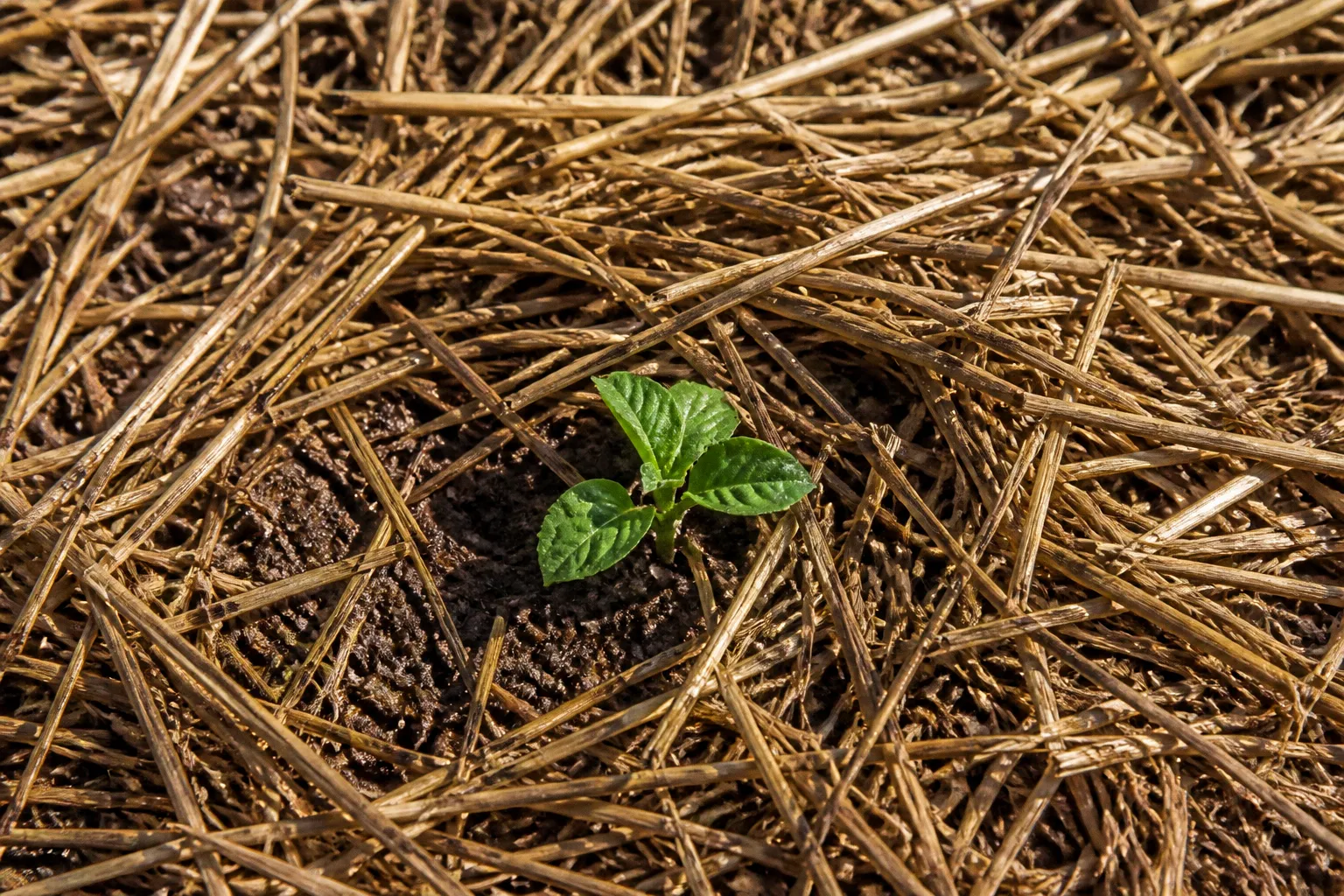
Our growers know the rhythm too well: a four- to six-month dry season in which the sky offers little, while every drop that leaves the soil is water we had to pump, store, or borrow. Roughly 60 to 70 percent of Lebanon’s annual freshwater diversions flow through agriculture, and almost half of the country’s cultivated land sits here in the valley, much of it under potatoes, stone fruit, and vegetables destined for local tables and export markets. When water gets scarce, the Bekaa feels it early and carries the pressure for longer.
That is why organic mulching has become one of the most practical tools our cooperatives can use. It is not a silver bullet, and it will not replace a well-designed drip system, a properly maintained well, or a rainwater catchment pond. But it is available to most farms, can often be made from materials already present in the agricultural system, and starts working in the same season it is applied. For farms looking for organic mulch for water conservation in Lebanon, that combination matters: low technical complexity, a direct effect on the root zone, and room to organize the work collectively.
The water arithmetic that drives every decision we make
Before we talk about mulch, it is worth sitting with the arithmetic. Agriculture in Lebanon consumes somewhere between 60 and 70 percent of the country’s freshwater diversions each year. The Bekaa Valley holds about 42 percent of Lebanon’s cultivated land and more than 70 percent of its potato acreage. When the rains stop in late spring, those fields continue asking for water for four, five, sometimes six straight months under a Mediterranean sun that pulls moisture from bare soil almost as quickly as we can put it back.
For a cooperative manager, this is not an abstract policy question. It appears as a fuel bill at the end of the month. It appears in potatoes that come out smaller than a buyer’s specification, or in fruit that sizes unevenly after a period of water stress. It appears when a young farmer has to decide whether to keep a back parcel in production or leave it fallow for a season.
That is why soil moisture conservation in Lebanon cannot be separated from farm economics. Every irrigation cycle has a cost, even when the water itself comes from a shared source. There is the electricity or diesel used to lift it, the maintenance of pumps and pipes, the labor required to manage the system, and the risk that an overdrawn source will not be reliable when the crop reaches its most demanding stage.
A practice that keeps moisture in the root zone for longer can therefore protect more than the crop. It can reduce pressure on the farm budget and on the shared water source. The gain may not always appear as a dramatic reduction in the number of irrigation events. Sometimes it appears as a longer interval between cycles, fewer emergency irrigations, or less water needed to bring a stressed field back into balance.
The useful question is not whether mulch replaces irrigation. It is whether the water we already apply stays where the roots can use it.
Organic mulch is especially valuable because it addresses the exposed surface of the soil. Drip irrigation delivers water efficiently, but the soil above and between the lines can still lose moisture to heat and wind. Mulch creates a barrier at that surface. It does not remove the need for irrigation; it reduces the amount of water lost before the crop can benefit from it.
Thermal regulation: why a cooler root zone matters
A bare field in July tells the story clearly. The top few centimeters of soil can bake into a crust that looks more like dust than growing medium. Water released through a drip line moves down and sideways, but some of it can still return to the surface and evaporate before the roots absorb it. At the same time, the soil temperature swings sharply between the heat of midday and the cool of night.
A coarse organic layer changes that surface environment. Straw, shredded wood, or composted plant residue forms a porous cover over the soil. Direct sunlight no longer strikes the surface with the same force. Wind has less access to the soil pores. The daily temperature swings become less severe, and the soil is less likely to form a hard, dry crust between irrigation events.
Research on coarse organic mulches shows that summer soil temperatures can fall by 8 to 13 degrees Fahrenheit compared with bare ground. That range is large enough to affect how a root zone behaves during the hottest part of the season. A cooler soil surface loses less water through evaporation, while roots and soil organisms are exposed to less thermal stress.
The effect is not limited to water. More stable temperatures support the biological activity that helps build soil structure. As organic material breaks down, it contributes carbon and nutrients to the soil, although the speed and scale of that contribution depend on the material. Better structure can improve infiltration when irrigation is applied and reduce the tendency of the surface to seal after heavy watering or rainfall.
For crops that are already under pressure from heat, this moderation can make irrigation more effective. Roots do not need to work against a surface that is repeatedly drying and overheating. Nutrient uptake can become more consistent, and the crop is less likely to move abruptly between conditions of excess and shortage.
Across studies on fruit crops under limiting soil conditions, organic mulching has been associated with increases in agricultural water-use efficiency of up to 50 percent compared with unmulched control plots. That is a research finding, not a promise that every Bekaa field will achieve the same result. Soil type, mulch material, irrigation scheduling, crop stage, wind exposure, and application depth all influence the outcome. Still, an increase of up to 50 percent in some studies is significant enough to deserve a place in cooperative planning.
The practical lesson is simple: mulch should be evaluated as part of a water-management system. If it is spread over a field without checking the drip lines, irrigation intervals, soil texture, or crop demand, much of its potential will be left unused.
Selecting local organic materials for maximum moisture retention
Not all mulch behaves in the same way. The right material depends on the crop, the irrigation layout, the season, and what can be sourced in sufficient volume without bringing new problems onto the farm.
Across our network, growers generally work with three broad categories of organic material.
| Material | Best fit in Bekaa systems | Main advantage | What to watch for |
|---|---|---|---|
| Dry straw and cereal residues | Vegetable beds, potato rows, garlic and onion plots | Light, easy to spread, and effective for fast weed suppression | It can blow away in strong wind and usually needs replenishing more often |
| Shredded wood and prunings | Tree rows, vineyards, olive groves, and perennial fruit | Durable cover with strong weed suppression and good surface cooling | Fresh, woody material may temporarily tie up nitrogen; transport and spreading require more effort |
| Composted organic mulch | Mixed vegetable plots, greenhouse beds, and high-value crops | Adds organic matter and supports soil structure as it breaks down | Quality varies between suppliers, and the initial cost is usually higher |
Straw and cereal residues
Dry straw is often the most accessible cheap agricultural mulch for vegetable growers. It is light enough to move by hand, can be spread around established plants, and breaks down within a season. That shorter life is not always a weakness. In annual beds, the material can be incorporated into the next rotation or replaced when the new crop is established.
The main challenge is wind. A thin layer of loose straw can shift away from the bed just when the summer heat becomes most intense. It may need to be anchored by moisture, lightly incorporated in selected areas, or applied at a depth that gives it enough weight to stay in place. Straw should also be clean and reasonably dry. Material contaminated with weed seed or mixed with unwanted residues can create a second problem in the field.
Cereal residues are useful where growers can coordinate with neighboring farms after harvest. A cooperative can help members identify clean material, organize transport, and decide whether it is better to use the residue as surface cover or reserve part of it for composting.
Shredded wood and prunings
Shredded wood and chipped prunings have a longer working life than straw. They are particularly suitable for orchards, vineyards, and olive groves, where the soil does not need to be cleared and replanted several times in the same season. A durable layer under the canopy can suppress weeds, protect the soil from direct heat, and reduce evaporation across a broad section of the active root zone.
Fresh woody material needs more care than aged or composted material. As it decomposes, microorganisms can draw on available nitrogen, especially where the material is mixed into the soil rather than left on the surface. For that reason, freshly shredded wood is generally better used as a surface mulch, with attention to the crop’s nutrient program. Aged or partially composted material is easier to integrate into a soil-health plan.
Prunings can also carry disease or pest concerns if they come from affected trees. Chipping is not a substitute for sanitation. Cooperatives sharing a chipper should establish a basic rule for handling visibly diseased material rather than moving it from one orchard to another.
Composted organic mulch
Composted material offers the strongest connection between water saving and longer-term soil improvement. A stable composted mulch can help protect the surface while adding organic matter as it gradually breaks down. On high-value plots, greenhouse beds, or areas with degraded structure, that combined effect may justify the higher cost.
The word “composted” should not be treated as a guarantee of quality. The material should be mature, free of obvious contaminants, and consistent enough to spread evenly. Very wet, unfinished, or strongly odorous material may be difficult to handle and may behave unpredictably around young plants. When the source is external, a cooperative purchase should include a clear understanding of what the supplier is delivering.
The most affordable material is not always the one with the lowest price per load. Transport, labor, replacement frequency, weed control, and the effect on soil structure all belong in the calculation. A locally available residue that must be replaced frequently may still be the right option for annual crops. A more durable material may make better economic sense under trees, where repeated cultivation is disruptive.
Mulching the Bekaa Valley without creating new problems
Good mulching is not simply a matter of covering the ground as thickly as possible. Placement and timing determine whether the material protects the crop or creates a damp, inaccessible layer around stems and emitters.
For vegetable and potato plots, a layer of approximately 5 to 10 centimeters is a practical working range. Under fruit trees and vines, growers may use a deeper layer, often around 7 to 12 centimeters, depending on the material and the condition of the soil. The aim is to cover the soil consistently without creating a compacted mat that blocks water movement.
Mulch should be kept a few centimeters away from the base of each plant or tree trunk. Material pressed against the stem can trap moisture, encourage rot, and make it harder to inspect the plant. The same principle applies to graft unions and young trunks, which need clear space around them.
Timing matters as well. Applying mulch when the soil is still cold in spring can slow warming in a crop that needs active root growth. Waiting until the surface has dried excessively defeats part of the purpose because the cover is then being used to protect soil that has already lost a great deal of moisture. In the Bekaa, the most useful timing is usually after the soil has warmed and the crop is established, but before the most intense summer heat arrives.
Mulch also needs room for inspection. A buried drip line may be protected from sun and mechanical damage, but it becomes harder to check when an emitter clogs or a connection leaks. Before the mulch goes down, the system should be run long enough to identify weak pressure, damaged lines, or uneven discharge. Once the cover is in place, cooperative field walks can help locate wet patches and unusually dry areas before the crop shows visible stress.
Integrating mulch with existing irrigation for higher efficiency
The strongest water-saving effect comes from combining mulch with irrigation practices that are already working well. Drip lines are particularly compatible with mulch because they deliver water directly beneath the protective layer. The cover then reduces the amount of moisture that returns to the surface and evaporates.
For surface-drip systems, the sequence is straightforward:
1. Complete the final cultivation or bed preparation while the soil can still be worked without unnecessary compaction.
2. Check the drip lines for leaks, clogged emitters, damaged connectors, and poor alignment.
3. Run the system and confirm that water is reaching the intended part of the bed.
4. Spread the mulch evenly over the bed and between the lines, keeping it clear of plant stems.
5. Inspect the covered area again after the first irrigation to see whether the material has shifted or formed a dense layer.
6. Adjust irrigation intervals gradually rather than making an immediate, dramatic reduction.
The last point is where judgment matters. Mulch changes how quickly the soil dries, but it does not remove crop demand. A young vegetable crop, a mature fruit tree, and a newly planted orchard do not use water at the same rate. Sandy or shallow soils may still require frequent applications, even under cover. Heavier soils may hold moisture longer but can become waterlogged if the irrigation schedule is not adjusted carefully.
The best approach is to use the soil as the guide. Check moisture beneath the mulch rather than judging the surface by appearance. A dry-looking layer does not necessarily mean the root zone is dry, and a dark, damp surface in one spot does not prove that the whole bed is adequately irrigated. Digging a small inspection point between plants or using a simple soil-moisture method can tell growers more than the appearance of the mulch itself.
For tree crops, the mulch ring should extend toward the active root zone under the canopy rather than forming a narrow collar around the trunk. The protected area can be expanded as the tree grows. A wider covered surface reduces evaporation where feeder roots are most likely to be working and helps keep irrigation water from disappearing from the upper soil too quickly.
Mulch does not replace drip systems. It makes the system more effective by reducing evaporation and keeping applied water available in the root zone for longer. In some studies, organic mulching has increased water-use efficiency by up to 50 percent compared with unmulched plots. That claim should encourage measurement, not careless overwatering followed by an assumption that mulch will compensate.
Organic mulch can increase water-use efficiency by up to 50 percent in some studies, but the result depends on how well the cover and the irrigation schedule work together.
A cooperative can learn a great deal by comparing similar plots rather than relying on a single farm’s impression. Where possible, members can record irrigation duration, the interval between cycles, visible plant stress, yield, and the condition of the soil beneath the mulch. Even simple records can show whether the cover is helping the field hold moisture or merely adding labor without a meaningful change in performance.
The benefits that appear after the water question
Water is the first reason most growers reach for mulch. It is the most urgent problem, and it is usually the first issue raised by cooperative managers. But after a mulch program has been in place for more than one season, the other benefits begin to influence the economics of the farm.
Weed pressure often drops because a continuous organic layer blocks the light that many weed seeds need to germinate. That can mean fewer cultivation passes, less hand labor, and fewer tractor hours per hectare. The result is not always a weed-free field. Perennial weeds, windblown seeds, and gaps in the mulch will still produce growth. The difference is that weed management becomes less aggressive and less frequent when the cover is maintained properly.
Soil structure can improve as organic material breaks down and feeds the biological community beneath it. Better aggregation helps water enter the soil instead of running across a sealed surface. It can also make the ground easier to work in the following season, although the speed of improvement depends on the starting condition of the soil and the amount and quality of material applied.
The connection between organic matter and water retention is gradual. Mulch protects the surface immediately, while the soil-building benefits accumulate over time. That distinction is important. A grower should not expect a single application of straw to transform a depleted field. The value comes from repeating a sound practice, avoiding unnecessary disturbance, and allowing organic inputs to become part of the soil system.
There are crop-quality benefits as well. More even moisture can reduce the swings that contribute to uneven sizing and stress-related blemishes. In fruit production, a protected soil surface can make the orchard easier to manage during hot periods. For cooperatives selling into export markets, more uniform production may support a more consistent pack-out and fewer problems at the grading table.
Mulch can also reduce splash from the soil onto lower leaves and fruit during irrigation or rainfall. That does not replace disease management, but it can help keep soil particles from moving onto the crop. As always, the result depends on the crop, the material, the weather, and the way the beds or tree rows are managed.
The benefits extend beyond the individual farm. Organic residues that might otherwise be burned, dumped, or left in an unmanaged pile can become a useful input. Shared shredders, coordinated compost purchases, and common training sessions make the practice more accessible to smallholders. These are not minor administrative details. They are the infrastructure that allows a water-saving practice to spread.
A cooperative rhythm for putting the practice into place
A cooperative considering mulching for the first time does not need a complicated program. It needs a clear estimate of demand, reliable material, and a way to observe what happens after application.
A workable seasonal rhythm might look like this:
1. Map the demand. In late winter or early spring, estimate the area likely to be planted with vegetables, potatoes, vines, and tree crops. Separate annual beds from perennial rows because the preferred material and application depth may differ.
2. Identify local supplies. Record which members have straw, cereal residues, prunings, or compostable material available. Check quality before committing to a large volume.
3. Pool purchasing and transport. Coordinate orders for composted mulch or shredded material before planting begins. Shared transport can be as important as the bulk price, especially for farms located far from the source.
4. Prepare the irrigation system first. Repair leaks, flush lines, check emitters, and mark access points before covering the soil.
5. Set a practical depth. Use approximately 5 to 10 centimeters for many vegetable and potato plots, and around 7 to 12 centimeters under fruit trees and vines, adjusting for material density and field conditions.
6. Leave clear inspection areas. Keep stems, trunks, valves, connectors, and other service points accessible. A mulch layer that cannot be inspected will eventually become a maintenance problem.
7. Recheck after application. Walk the fields after the first irrigation and again during the hottest part of the season. Look for wind displacement, compacted areas, exposed soil, clogged emitters, and signs that the irrigation interval is too long.
8. Record what happened. Compare water use, pumping time, fuel or electricity consumption, labor, weed pressure, and yield with the previous season or with similar unmulched plots where possible.
The purpose of these records is not to create a perfect scientific trial on every farm. It is to replace assumptions with useful local knowledge. A material that works well on a sheltered vegetable plot may fail on an exposed field. A layer that lasts all season under trees may disappear quickly between potato rows. Cooperative-level observation helps members make those distinctions without each grower repeating the same expensive experiment.
None of this requires new technology to begin. It requires coordination, attention to the soil, and the willingness to adjust irrigation instead of treating mulch as a decorative layer.
Looking beyond one season of water savings
The Bekaa’s water pressure will not ease on its own. Longer dry periods, hotter summers, and less predictable rainfall make it harder for farms to rely on timing alone. Cooperatives are where adaptation becomes practical: not as a slogan, but as a decision about what to buy, what to share, and how to manage the next field visit.
Organic mulching belongs alongside better irrigation scheduling, drought-tolerant varieties, soil-health programs, and water infrastructure that is maintained rather than abandoned after installation. It cannot repair a failing pump or compensate for a badly designed irrigation system. It cannot make contaminated compost safe or turn unsuitable residues into a reliable input. But it can protect the soil surface immediately, support better water-use efficiency, and contribute to a healthier root zone over time.
For growers, the most convincing result may be modest at first: a field that does not dry as quickly, fewer weeds between irrigation cycles, or a crop that enters a heat wave with less visible stress. For a cooperative, the result becomes more substantial when the practice is organized across many farms. Shared sourcing lowers logistical barriers, common field protocols improve consistency, and collective records show which materials are worth using again.
The important shift is to stop treating every irrigation cycle as an isolated event. Water management begins before the pump starts, with the condition of the soil and the amount of moisture it can hold. Mulch is one of the simplest ways to influence that condition without waiting years for a major infrastructure project.
The Bekaa has always depended on collective effort. Organic mulch puts that effort to work at ground level: protecting moisture, moderating heat, reducing unnecessary cultivation, and returning organic material to the soil. Layer by layer and season by season, it makes the water already available to the farm work harder.