Modernizing Durban’s Fresh Produce Terminal: Lessons for Global Agricultural Exporters
Engineering News reports that redevelopment is underway at the Fresh Produce Terminal in South Africa’s Port of Durban, with the stated objective of increasing handling capacity and improving…
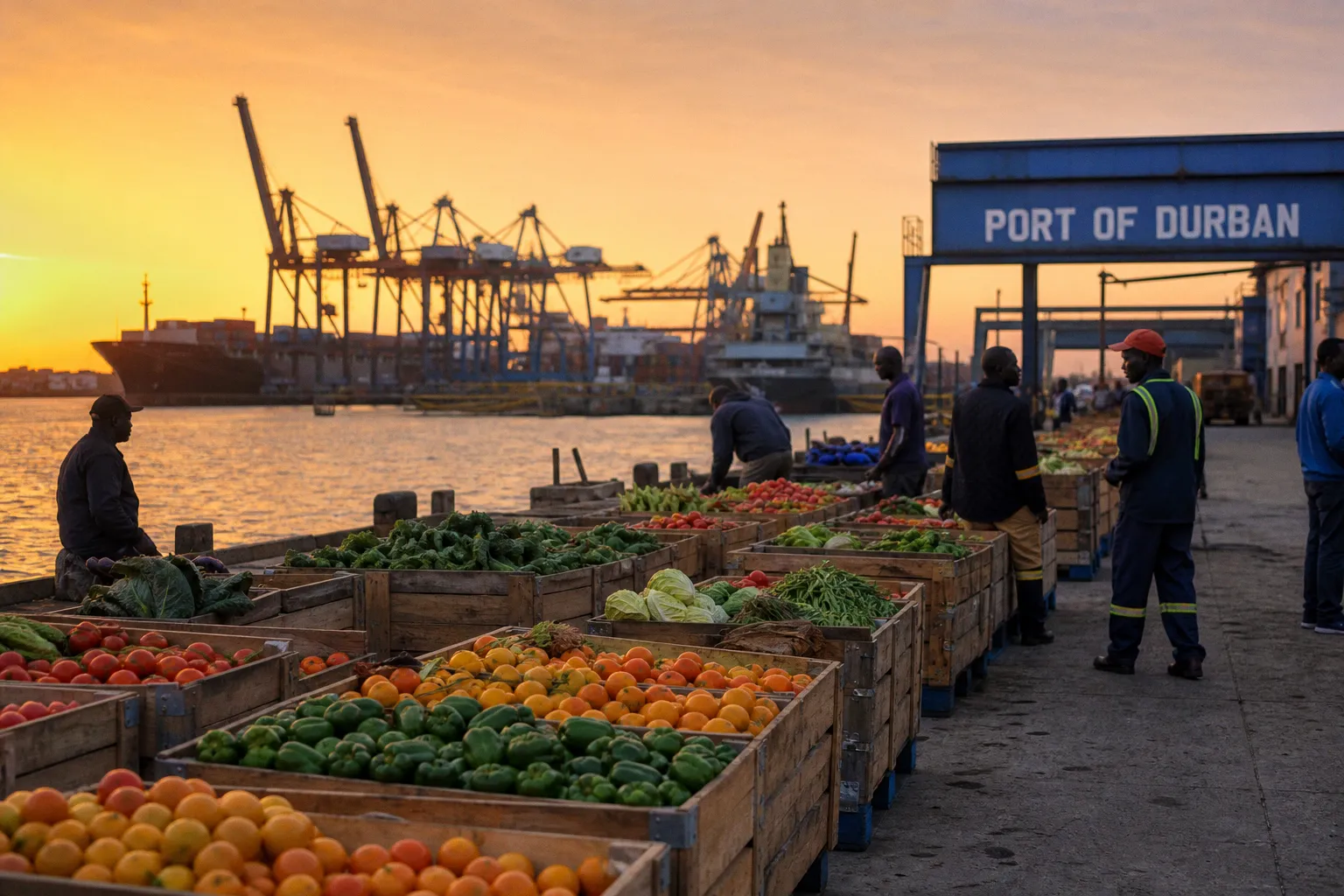
Engineering News reports that redevelopment is underway at the Fresh Produce Terminal in South Africa’s Port of Durban, with the stated objective of increasing handling capacity and improving logistics infrastructure for agricultural exports. The project matters beyond South Africa: exporters and cooperatives planning long-distance fresh-produce routes need to watch how terminal capacity, operator performance, and cold-chain coordination affect transit windows. For Lebanese suppliers, Durban is not a guaranteed routing option—but it is a useful benchmark for how ports are being redesigned around fresh-produce volumes.
Capacity is the headline metric
The project is located at the Point Precinct in the Port of Durban, KwaZulu-Natal. It is owned by Transnet National Ports Authority (TNPA), with FPT Group appointed as terminal operator under a 20-year agreement.
The redevelopment covers:
- Continued operation and maintenance of the specialised fresh produce terminal.
- Physical redevelopment and future development of the facility.
- Operational improvements intended to benefit growers, exporters, shipping lines, transporters, and clearing and forwarding agents.
- Higher capacity for handling fresh produce as export volumes grow.
Projected throughput is expected to reach about 1.691 million tonnes a year by 2028. Volumes are then expected to grow by about 2% annually, stabilising at approximately 1.906 million tonnes a year by 2034.
Those numbers are projections, not delivered capacity. The critical test will be execution: whether the terminal can move more produce without creating new bottlenecks at receiving, inspection, loading, documentation, or onward transport.
What exporters should monitor
If you are shipping fresh produce through a port undergoing redevelopment, treat the project as an operational variable—not a marketing claim.
Use this protocol:
- If the terminal’s handling capacity increases, then verify the actual service window. More tonnes on paper do not automatically mean faster truck turnaround, shorter dwell time, or more reliable vessel connections.
- If FPT introduces operational changes, then request updated procedures from your forwarder. Confirm receiving rules, booking requirements, documentation cut-offs, and any changes affecting phytosanitary or customs workflows.
- If your cargo depends on a narrow cold-chain window, then monitor handover points. The relevant question is not only terminal capacity, but where temperature-controlled responsibility transfers between grower, transporter, terminal, and shipping line.
- If routing decisions depend on future capacity, then wait for disclosed construction milestones. Engineering News reports that no specific construction start or completion date has been disclosed.
For Lebanese cooperatives, the practical lesson is straightforward: do not select a port because its redevelopment plan sounds ambitious. Compare the route against your product’s shelf life, packing schedule, inspection timing, reefer availability, and required transit window. A terminal upgrade becomes commercially useful only when those pieces work together.
Investment is planned; delivery remains the watchpoint
The project is expected to support job preservation and create new employment linked to redevelopment and terminal operations. About R397 million has been committed during the redevelopment phase for skills development, small-business support, and regional economic initiatives connected to terminal operations.
Over the 20-year concession, an estimated R3.3 billion is earmarked for supplier development, localisation, and broader economic participation initiatives aligned with TNPA’s transformation objectives.
For exporters, those commitments are secondary to measurable service performance. Track:
- Published construction or commissioning milestones.
- Changes in terminal operating procedures.
- Throughput against the 2028 projection.
- Reliability of cold-chain handovers.
- Effects on shipping-line and inland-transport coordination.
- Whether forwarders report shorter or longer transit variability.
The mandatory check before using any redeveloped fresh-produce terminal is simple: confirm the current operating protocol, validate the cold-chain handover, obtain the latest documentation cut-offs, and price the route against the full transit window—not the port charge alone.