Lebanon’s Grape Surplus: Ministry Tackles Market Pressures and Import Competition
According to the Lebanon Ministry of Agriculture, the sector's higher grape production has now landed on the official agenda, with ministry officials sitting down with the National Institute of Vine…
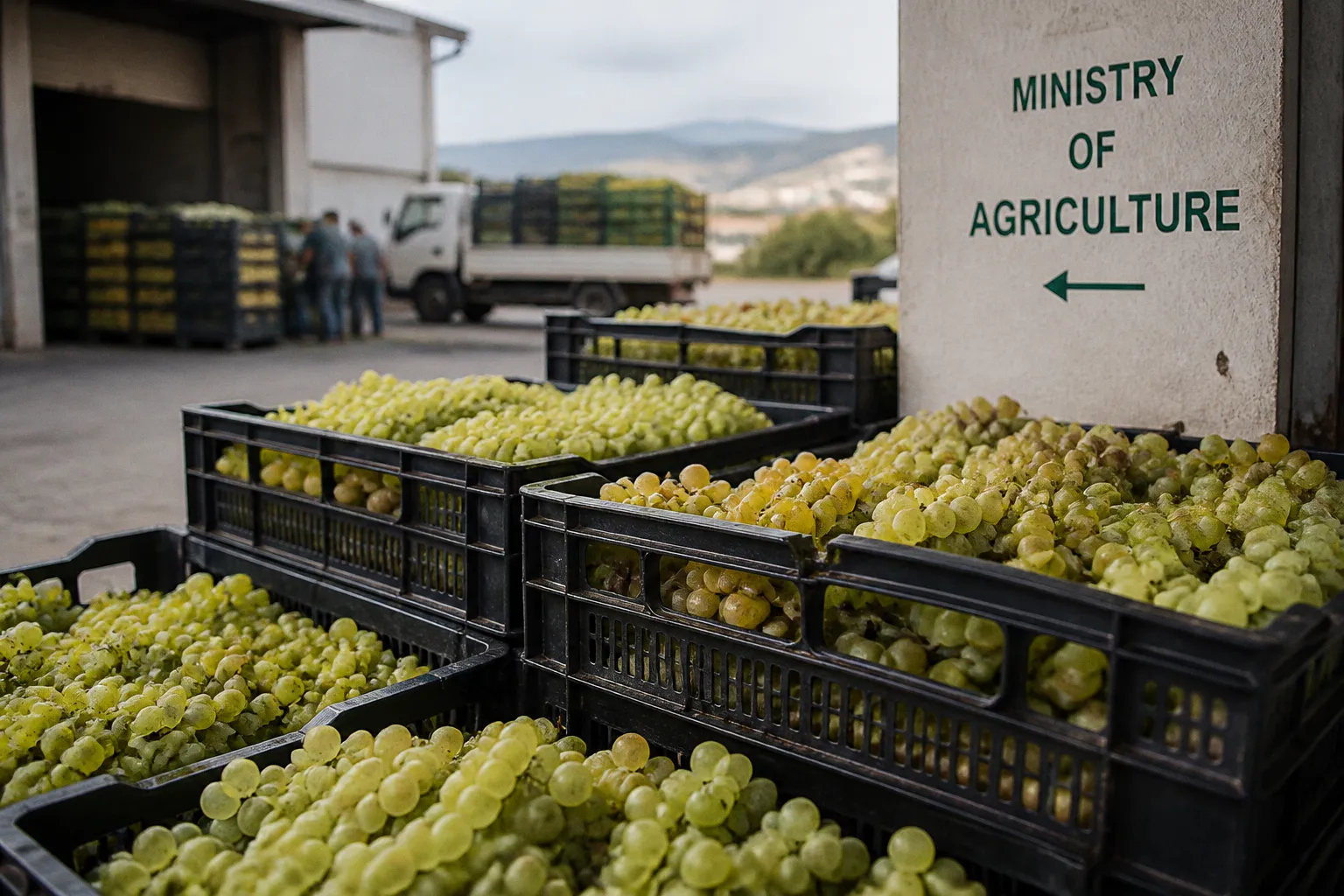
Walking the rows this season, you don't need a yield calculator to see what's changed — the vines are carrying noticeably heavier clusters, and the wineries are quietly bracing for a surplus they didn't ask for. According to the Lebanon Ministry of Agriculture, the sector's higher grape production has now landed on the official agenda, with ministry officials sitting down with the National Institute of Vine and Wine to map the pressure points.
What the meeting actually covered
The talks centered on three converging concerns: rising grape output, the broader economic strain squeezing producers, and the steady pressure of imported wine crowding the local market. Officials framed their support around four levers — production, market organization, competitiveness, and rebuilding local consumption. For a cooperative on the ground, that's the official shorthand for a familiar question: whoever controls the flow between vineyard and shelf will decide whether a bigger harvest becomes better margins or a discounted glut.
The timing matters. A heavier cluster load without a coordinated outlet tends to push farmers toward distress sales at peak ripeness, which in turn undercuts the very market organization the ministry says it wants to strengthen. It's a recurring pattern in fresh-produce chains: abundance without aggregation benefits the buyer, not the grower.
The import side of the equation
Separately, the ministry has been reviewing import controls, framed by local reporting as a move to protect domestic producers from competition they describe as uneven. For grape and wine specifically, imported wine has been a recurring pressure point in the discussions with the National Institute — so the two tracks sit close together even if they're not formally linked. A cooperative watching both will want to track whether any tightening on imports is paired with stronger standards for what local wineries and processors can claim about origin and quality. Without that pairing, protection at the border doesn't translate into resilience in the field.
What to track before the next harvest window
- Market organization framework. The phrase is broad. The operational detail worth watching is whether cooperatives get a real seat in defining grading, delivery timing, and collective pricing — or whether the structure stays advisory.
- Import-control review. The direction and pace of this review will shape the competitive floor for local wine; check for any published timeline before locking in next year's contracts.
- Aggregator alignment. Talk to your aggregator now about grading standards and delivery scheduling. If a coordinated approach is coming, early alignment saves renegotiation later in the season.
- Local consumption signals. Officials named stronger local consumption as a goal — worth watching whether that turns into anything practical, such as procurement programs, tourism pairings, or retail commitments, or stays rhetorical through harvest.
The bigger picture for cooperatives isn't the harvest itself. It's whether the institutional response treats them as infrastructure or as an afterthought. The meeting language suggests the former, but the proof will sit in the operational details that follow — and in whether smallholders are in the room when those details get drafted.