Lebanese olive oil grades: choosing for export markets
Exporting olive oil from Lebanon is not a branding exercise first. It is a classification and verification exercise.
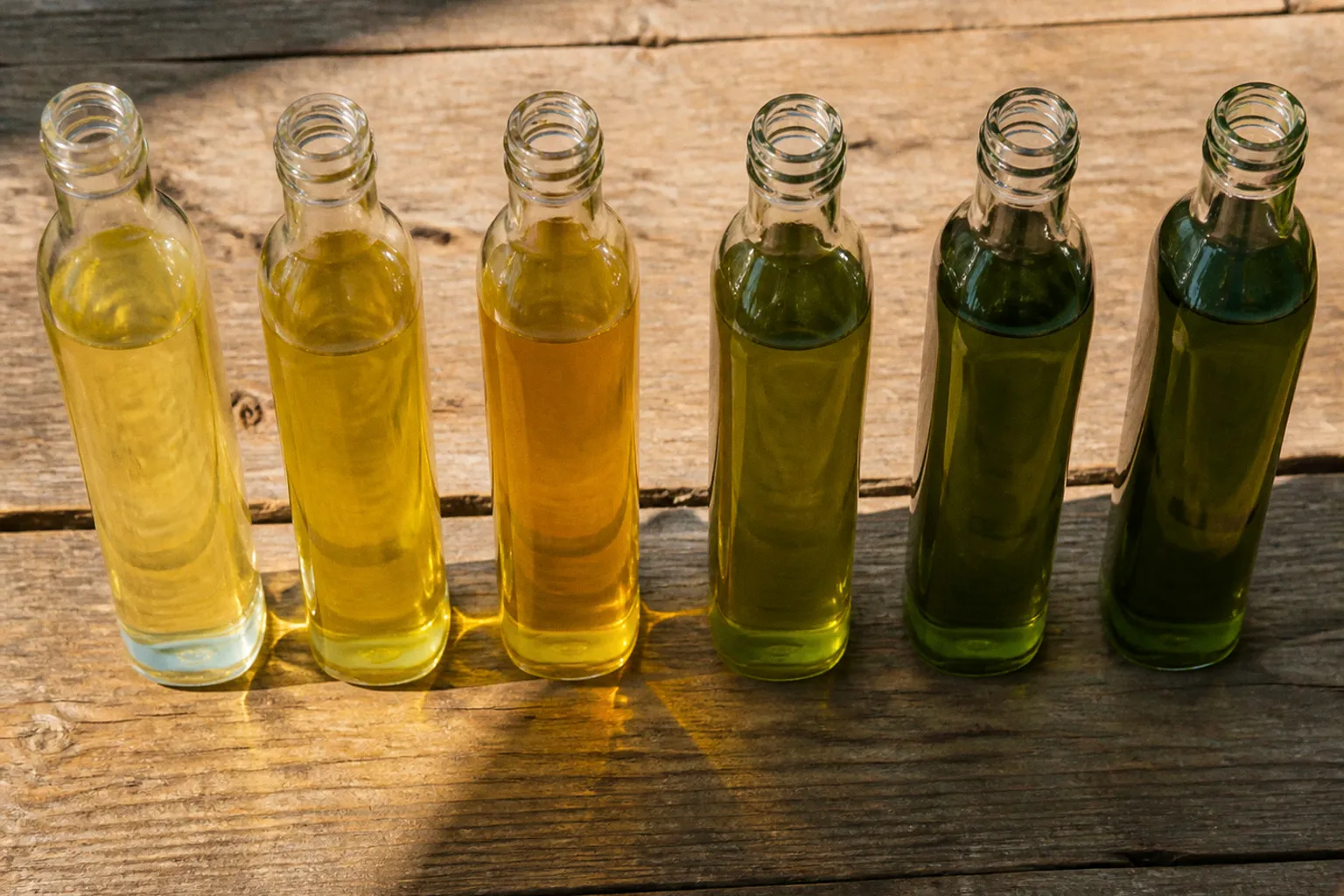
The commercial difference between Extra Virgin Olive Oil, Virgin Olive Oil, and Ordinary Virgin Olive Oil is controlled by measurable limits: free acidity, peroxide value, sensory defects, packaging information, and traceability. Miss the classification, and the problem does not stay inside the laboratory report. It reaches the label, the buyer specification, the customs file, and the destination market.
Lebanese producers already have export demand to work with. In 2024, Lebanon exported 6,219,820 kilograms of virgin olive oils and fractions under HS Code 150910, with a reported export value of approximately $40.2 million. The leading destination markets included the United States, Canada, Qatar, Kuwait, and Australia. Those markets do not buy the same grade under the same conditions. Your product must be matched to the specification before it is packed, priced, or loaded.
The export framework: LIBNOR, the Ministry of Agriculture, and IOC alignment
Lebanese olive oil classification is built around Lebanese Standard 756:2007, issued by LIBNOR, and aligned with the classification logic used by the International Olive Council. The Lebanese framework was made mandatory for olive oil sales through Ministry of Agriculture Decision No. 1/658, issued on July 20, 2011.
That gives exporters a clear operating principle:
- Use the Lebanese standard as the domestic compliance baseline.
- Use the destination market’s import rules as the final release condition.
- Do not treat a producer declaration as a substitute for laboratory and sensory verification.
- Do not assume that a product meeting one market’s documentation requirements will automatically clear another market.
The key issue is that olive oil grade is not determined by acidity alone. Acidity is a chemical indicator. Extra Virgin status also requires the absence of sensory defects and the presence of positive fruitiness. A batch can show free acidity below the Extra Virgin threshold and still fail the grade if a certified sensory panel detects a defect.
That distinction matters for Lebanese cooperative harvests, where multiple farms, pressing dates, storage conditions, and cultivars may feed one export lot. The final tank may look commercially consistent while carrying different quality histories. If you combine lots, you also combine risk.
The grade is not what the bottle claims. The grade is what the chemical report, sensory panel, label, and traceability file can defend.
For an export operation, the regulatory framework should be translated into a release protocol:
1. Define the target grade before collection. Do not harvest first and decide later whether the oil is premium.
2. Separate fruit by condition and harvest timing. Damaged, overripe, delayed, or contaminated olives should not enter a premium lot without a controlled evaluation.
3. Record the press location and production date. These details support traceability and are required in Lebanese direct-from-farmer packaging information.
4. Test representative samples. A single sample from the surface of a storage tank is not a serious verification plan.
5. Release the lot only after the documentation matches the physical product.
The practical bottleneck is rarely the existence of a standard. It is operational discipline between harvest, milling, storage, testing, and dispatch.
The real dividing line: Extra Virgin versus lower grades
For premium export markets, Extra Virgin Olive Oil is the target grade. Under the cited IOC and Lebanese requirements, EVOO must have free fatty acidity of 0.8% or less, expressed as oleic acid, and must show zero organoleptic sensory defects.
The standard quality reference also includes a peroxide value limit of 20 mEq O₂/kg or less for EVOO. Peroxide value is not a complete freshness score, but it is a critical indicator of oxidation at the point of testing. A compliant value today does not protect a poorly stored product through a long transit window.
The product must also pass sensory classification. A certified panel of 8–12 qualified assessors evaluates the oil. To qualify as Extra Virgin, the median of defects must be zero and the median fruitiness must be greater than zero.
This is where many export plans fail. Producers often discuss acidity as if it were the entire grade. It is not. Acidity can support the claim; it cannot rescue an oil with rancid, musty, fusty, winey, or other sensory defects.
Comparison of Lebanese olive oil grades for export
| Parameter | Extra Virgin Olive Oil | Virgin Olive Oil | Ordinary Virgin Olive Oil |
|---|---|---|---|
| Free fatty acidity | 0.8% or less | Below 2.0% | Up to 3.3% |
| Sensory defects | Median defects must be zero | May have limited sensory defects within classification rules | Lower sensory quality permitted under the grade |
| Positive fruitiness | Median fruitiness greater than zero | Not subject to the EVOO requirement | Not equivalent to EVOO quality |
| Typical export positioning | Premium retail, specialty foodservice, origin-led products | Standard retail, foodservice, blending or value segments depending on destination rules | Lower-value segments where legally accepted |
| Documentation burden | Chemical analysis, sensory panel, traceability, compliant label | Chemical and classification evidence still required | Must be labeled and marketed under its actual grade |
| Main commercial risk | Failing sensory analysis after premium pricing is set | Being marketed with unsupported premium claims | Attempting to sell or label it as Extra Virgin |
The table is a commercial decision tool, not permission to downgrade a lot after the fact. If your buyer contract specifies EVOO, a batch that tests as Virgin Olive Oil is not a minor variation. It is a nonconforming product.
If-then decisions for export grade selection
The fastest way to control grade selection is to make the decision logic explicit.
If free acidity is above 0.8%
Then the lot cannot be released as Extra Virgin Olive Oil under the cited standard. Test and classify it for the appropriate Virgin category, subject to sensory and destination-market requirements.
Do not relabel the batch as EVOO because the difference is commercially inconvenient. Do not blend it into a premium tank without a documented blending and retesting plan. Blending may change the final analytical profile, but it does not erase traceability obligations or guarantee sensory compliance.
If acidity is below 0.8% but sensory defects are detected
Then the oil is not Extra Virgin. The chemical result is not enough.
This is a common quality-control trap in early-season commercial planning. A low acidity result can create confidence before the sensory report arrives. Keep the lot on hold until both gates are cleared. If the sensory panel identifies a defect, move the product into the correct classification and reset the sales specification.
If the oil passes chemistry and sensory analysis but storage is weak
Then the export risk remains open.
EVOO is vulnerable to oxygen, light, heat, and repeated tank exposure. A compliant pre-dispatch report is a snapshot, not a guarantee that the product will remain within the buyer’s specification after weeks in storage or transit. Use clean, appropriate containers; minimize headspace exposure; control temperature; and protect retail packaging from light.
The cold chain is not always the central issue for olive oil in the same way it is for fresh vegetables, but temperature control still matters. Your objective is a stable storage environment and a controlled transit window, not simply a refrigerated container by default.
If the product is sold directly from the farmer or cooperative
Then the packaging information must meet the Lebanese requirements. The label must display the acidity scale, the date of laboratory analysis, the location of pressing, and an expiration date not exceeding two years.
The cooperative should treat these as data fields in the production system, not as text added manually during packaging. If the tank changes, the lot code changes. If the laboratory analysis is updated, the label and shipment file must point to the correct result.
If the buyer asks for Extra Virgin Olive Oil from Lebanon
Then request the full specification before quoting a price. Clarify:
- Maximum free acidity.
- Peroxide value requirement.
- Sensory panel requirement.
- Accepted laboratory accreditation or recognition.
- Packaging format and material.
- Minimum remaining shelf life at arrival.
- Lot-size and retention-sample requirements.
- Destination labeling rules.
- Phytosanitary or food-safety documentation, where applicable.
- Incoterms and responsibility for inspection at origin or destination.
A buyer using the phrase Extra Virgin may mean the legal minimum, a private specification, or a premium sensory profile. Those are not the same thing.
How production conditions push oil down the grade ladder
Grade problems often begin before the olives reach the press.
Harvest timing, fruit damage, delay before milling, equipment hygiene, water management, and storage conditions all affect the final profile. The export team may only see the final laboratory result, but the cooperative needs to control the chain upstream.
Harvest and receiving
Separate fruit by condition at intake. Do not treat a truckload as a uniform raw material if it combines clean fruit with bruised, fallen, fermented, or visibly damaged olives. The press cannot fully correct poor receiving discipline.
Use a lot code that follows the fruit from collection to milling. At minimum, the code should connect:
- Producer or cooperative member.
- Harvest date.
- Orchard or collection zone.
- Receiving date and time.
- Milling date and time.
- Press location.
- Storage tank.
- Final packaged units.
This is basic traceability, but it is also a quality tool. If one lot fails sensory analysis, you need to isolate the cause without blocking the entire season’s production.
Time between harvest and milling
Long delays create avoidable risk. Warm, damaged fruit can begin deteriorating before extraction. The result may show up as defects that cannot be removed through labeling or marketing.
Set an internal receiving rule. If the cooperative cannot process a load within its planned window, divert it from the premium program rather than allowing the premium tank to absorb uncertain raw material.
The exact acceptable delay depends on fruit condition, temperature, handling, and mill configuration. The operational point is simpler: premium oil requires a premium intake process.
Milling and equipment hygiene
The press location must be recorded, and hygiene controls must be consistent. Residual paste, standing water, dirty equipment, and poorly managed separation stages can introduce defects or contaminate the profile of an otherwise sound harvest.
For cooperatives serving export buyers, the mill should operate with written cleaning schedules and batch-change procedures. You do not need a complicated system. You need clear ownership, timestamps, and a response when the procedure is missed.
Storage
After pressing, the oil is not finished from a logistics perspective. Storage can preserve quality or accelerate its decline.
Manage:
- Exposure to oxygen during transfers.
- Tank headspace.
- Light exposure.
- Temperature fluctuations.
- Sediment and water separation.
- Tank identification.
- Sampling points.
- Transfer records.
If oil is held across several tanks, do not assume that all tanks represent the same grade. Test by lot or by a documented composite sampling plan. A premium export buyer will care about the declared lot, not the average reputation of the cooperative.
Laboratory analysis is a release gate, not a marketing accessory
A certificate is useful only when it represents the lot being sold. The laboratory workflow should therefore be designed around the shipment, not around a promotional brochure.
For every intended export lot, establish a sample plan that answers four questions:
1. What quantity does the sample represent?
2. When was it taken?
3. Who took it and from which tank or package?
4. Which shipment and label code does it support?
The minimum analytical focus for EVOO classification includes free fatty acidity and peroxide value, but the decisive quality release requires sensory analysis as well. For Extra Virgin status, the sensory panel must be certified and must meet the required panel structure. The relevant result is not a favorable comment from a buyer or a tasting session organized informally by the producer. It is the formal classification outcome.
A practical test-and-release sequence
1. Quarantine the lot after production. No export label, sales release, or container loading while the classification is pending.
2. Take a representative sample. Use a controlled method that accounts for tank condition and lot composition.
3. Run chemical analysis. Confirm free acidity and peroxide value against the buyer and destination requirements.
4. Run sensory analysis. Confirm zero median defects and positive median fruitiness for EVOO.
5. Review traceability. Match the report to the tank, press location, harvest lot, and packaging code.
6. Approve the label. The grade on the label must match the verified classification.
7. Retain samples and records. Keep enough material to investigate a dispute or a quality shift during transit.
8. Load against a shipment file. The container should not move until the commercial, laboratory, and packaging records agree.
If the test result is borderline, do not turn a borderline result into a premium claim. Re-sample only when there is a defensible reason connected to sampling integrity, storage, or laboratory procedure. Re-testing is not a strategy for searching for a better number.
Labeling and traceability: where good oil can still fail
Lebanese Decision No. 1/658 requires direct-from-farmer packaging to display specific information, including the acidity scale, laboratory analysis date, press location, and an expiration date not exceeding two years.
These requirements have operational consequences for cooperatives selling under a shared label. The cooperative must know whether the bottle represents:
- One farmer’s production.
- A defined cooperative lot.
- A blend of several lots.
- A tank filled across multiple press dates.
- A packaged product that has been reclassified after testing.
Do not print generic labels for an entire season if the analytical and traceability data change by lot. A shared brand can still use variable lot information. In fact, it should.
The acidity field also needs careful handling. State the measured or declared information in the format required by the applicable rules. Avoid using an attractive number from an old analysis when the current tank has not been tested. Avoid presenting acidity as a guarantee of flavor or freshness. It is one compliance parameter, not a complete quality description.
For export orders, build the document set before the cargo reaches the port. Depending on the destination and buyer, the file may include:
- Commercial invoice.
- Packing list.
- Certificate of origin.
- Laboratory analysis.
- Sensory classification report.
- Product specification.
- Lot and production records.
- Label artwork or approved packaging details.
- Customs classification under the appropriate HS code.
- Any required food-safety, phytosanitary, or inspection documents.
The exact file varies by market. The principle does not: the shipment should be document-complete before the transit window starts.
Matching each grade to the right market position
Extra Virgin Olive Oil is the premium route, but premium positioning increases the cost of failure. You need stronger control over fruit intake, milling speed, sensory profile, storage, packaging, and documentation. It also gives you access to origin-led retail and specialty channels where Lebanese provenance can be part of the product story.
Virgin Olive Oil can still be commercially viable. It may suit standard retail, foodservice, blending, or price-sensitive channels, depending on the destination market and the buyer’s specification. But it must be sold under the correct classification. Calling it premium does not change the grade.
Ordinary Virgin Olive Oil belongs in an even more controlled commercial conversation. It may be acceptable for specific value segments where the destination rules allow it, but it should not be presented as an equivalent substitute for EVOO. In the EU and US markets, Ordinary Virgin Olive Oil with acidity above the Extra Virgin threshold cannot legally be labeled or sold as EVOO.
Use the grade to build the offer:
| Export objective | Best operational approach | Main control point |
|---|---|---|
| Premium retail EVOO | Short harvest-to-mill window, lot segregation, full chemical and sensory release | Zero sensory defects and verified traceability |
| Foodservice or standard retail | Match verified Virgin or EVOO grade to buyer specification | Stable quality across the contracted volume |
| Blending or industrial channel | Declare the actual grade and agree on technical parameters | Prevent unapproved premium claims |
| Small cooperative export lot | Use a defined origin lot with tight packaging and document control | Avoid mixing unverified tanks |
| Multi-destination program | Maintain separate market specifications and label reviews | Destination-specific compliance |
The market does not reward complexity by itself. It rewards a product that arrives with the promised grade, the promised documentation, and enough remaining shelf life to sell.
The cooperative advantage is control at origin
A Lebanese cooperative can compete more effectively when it treats aggregation as a control system rather than merely a collection system.
The cooperative’s advantage is proximity to the farms, the press, and the first storage point. That allows it to standardize intake, record harvest data, separate grades early, and prevent weak lots from contaminating the premium stream.
The risk is the opposite: too many producers, inconsistent harvest practices, shared equipment, mixed storage, and one label that implies uniformity where none has been demonstrated.
A workable cooperative model uses three lanes:
1. Premium lane: clean fruit, controlled harvest timing, rapid milling, dedicated tanks, EVOO testing, export-ready packaging.
2. Standard lane: fruit and oil that meet Virgin classification but not the premium specification.
3. Hold or diversion lane: lots requiring investigation, reprocessing, alternative use, or lower-grade sale.
This prevents the most expensive mistake: using the premium export channel as a rescue mechanism for every batch.
The same logic applies to volume planning. If a cooperative has a buyer order for EVOO, it should reserve capacity for compliant oil instead of filling the order from whatever remains after local sales. Export volume is not simply a quantity target. It is a quantity target attached to a grade, a specification, a label, and a delivery date.
What to do when a lot fails
Failure needs a protocol before it happens.
If free acidity exceeds the EVOO limit, classify the oil according to the applicable Virgin category and buyer requirements. If sensory analysis identifies defects, hold the lot and investigate the production or storage history. If the label does not match the laboratory report, stop packaging and correct the release documentation. If the analysis date is outside the required labeling workflow, update the file and confirm whether new testing is needed.
Do not blend automatically. Blending may create a compliant final profile in some circumstances, but it can also obscure the original failure, complicate traceability, and violate a buyer’s specification. Any blending decision should include:
- Source lot identification.
- Target final grade.
- Approved formulation or ratio.
- New representative sampling.
- Full chemical analysis.
- Sensory analysis where required.
- Updated lot and label records.
- Buyer approval if the contract requires it.
If the destination buyer has a tighter limit than the Lebanese baseline, the buyer’s limit controls the commercial release. If the destination prohibits a particular category or claim, do not assume that domestic legality solves the import problem.
Mandatory export compliance checklist
Before a Lebanese olive oil shipment is released, confirm every item below:
- The product grade is defined before labeling and invoicing.
- Free fatty acidity is verified against the declared grade.
- Peroxide value meets the applicable EVOO or buyer specification where required.
- EVOO lots have passed certified sensory analysis.
- Sensory results show zero median defects and positive median fruitiness for EVOO.
- The laboratory report represents the actual tank or packaged lot.
- The press location is recorded and matches the packaging information.
- The laboratory analysis date is recorded on direct-from-farmer packaging where required.
- The acidity scale is displayed correctly.
- The expiration date does not exceed two years under the Lebanese labeling requirement cited.
- Lot codes connect farms, harvest dates, milling, storage, and final packages.
- No Virgin or Ordinary Virgin lot is labeled as Extra Virgin.
- Destination-market labeling and import requirements have been reviewed.
- Buyer specifications are stricter than the internal release standard where applicable.
- Retention samples are stored and identified.
- Commercial, customs, and quality documents match the shipment.
- The container is loaded only after the release file is complete.
Lebanese olive oil has credible export potential, but the premium segment is unforgiving. The route to higher-value markets runs through classification discipline: separate the lots, test the oil, verify the sensory profile, control the label, and ship only what the documents can prove.
That is how you choose among Lebanese olive oil grades for export. Not by reputation. Not by acidity alone. By running the product through a release system that holds under inspection, buyer review, and transit.