Drought resistant crops: selecting varieties for Lebanese soil
In the Bekaa Valley, drought rarely announces itself with a single failed harvest. It appears first as thinner cereal stands, earlier leaf senescence, harder soil after irrigation, and a narrowing choice of crops that can still produce reliably.
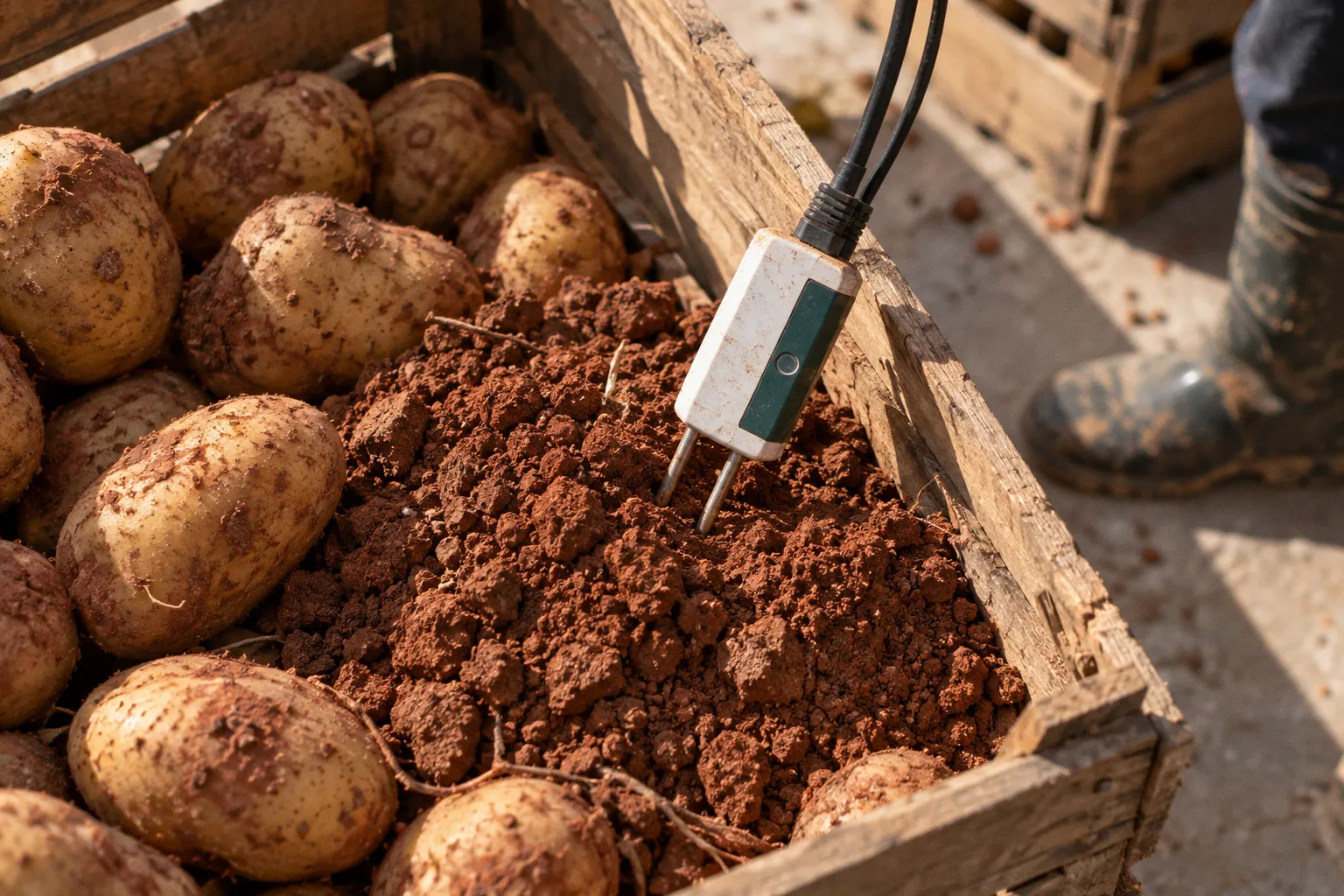
Drought-Resistant Crops: Selecting Varieties for Lebanese Soil
That matters well beyond the farm gate: the Bekaa contains approximately 42% of Lebanon’s cultivated land, so climate stress in this region can affect the country’s supply of cereals, vegetables, legumes, and fruit.
The practical response is not to search for one miraculous drought-proof seed. The better strategy is to match crop species, local landraces, soil cover, rotation, and irrigation planning to the field’s actual water limits. For farmers selecting drought resistant crop varieties for Lebanon, the question is not simply which plant survives dry weather. It is which crop maintains useful yield, protects soil structure, and remains acceptable to buyers and export markets when the season becomes difficult.
The climate challenge: why Lebanese cereal yields are at risk
Cereals are especially exposed because their yield depends on several sensitive stages occurring in sequence: establishment, tillering, flowering, grain filling, and maturation. A dry period during early establishment can reduce plant density. Heat arriving around flowering can limit grain formation. Water stress during grain filling produces light kernels even when the field looked healthy a few weeks earlier.
Studies on Lebanese cereal production indicate that a 1°C rise in temperature can cause cereal yields to fall by up to 13%. That figure should not be read as a universal prediction for every farm or every variety. It is a warning about sensitivity. A small change in seasonal temperature can become a large production problem when it arrives alongside irregular rainfall, depleted organic matter, shallow rooting, or poorly timed irrigation.
The same climate pressure does not affect every crop in the same way. Lebanon’s agricultural production is distributed across fruit trees, olives, cereals, vegetables, and industrial crops. Fruit trees and olives have permanent root systems, but they also carry long-term exposure to heat and water shortages. Annual cereals offer more flexibility because they can be rotated or replaced, yet they are vulnerable when planting dates and rainfall no longer follow familiar patterns.
This is why selecting crops for arid Lebanese soil begins with the field rather than the catalogue. Before choosing seed, assess:
- whether the soil seals or crusts after rain;
- how quickly water disappears from the root zone;
- whether compaction restricts rooting below the plough layer;
- how much crop residue remains on the surface;
- whether irrigation water can be applied at the crop’s most sensitive stages;
- and whether the farm can rotate cereals with legumes or forage crops.
A drought-adapted variety cannot compensate for a compacted root zone. Nor can efficient irrigation rescue a crop planted into soil with little organic matter and no protection from evaporation. Resilience is a chain of decisions, and the seed is only one link.
A drought-resistant crop is not one that needs no water. It is one that uses limited water more effectively within a well-managed soil system.
Four proven species for rainfed resilience
Under Lebanese rainfed conditions, four species have demonstrated value for cover cropping and resilience: oats, barley, common vetch, and faba beans. They do not perform the same function, and treating them as interchangeable would miss the main agronomic advantage.
Barley is often the strongest candidate where rainfall is limited and the crop must establish quickly. It is useful in cereal rotations and can provide substantial surface residue after harvest. That residue slows evaporation, moderates soil temperature, and helps protect the soil from wind and intense rainfall. Barley is not a substitute for irrigation during prolonged drought, but its growth habit and relatively efficient use of water can make it a practical component of a dryland rotation.
Oats can produce valuable biomass and contribute to soil cover. They are particularly useful when the objective is to keep living roots in the soil for part of the season and leave protective residue afterward. Their performance still depends on planting date and available moisture. In a dry year, a farmer may need to decide whether the crop is intended for grain, forage, or early termination as a cover crop. Those are different management goals, and the seed rate and termination timing should follow the goal.
Common vetch brings a different benefit. As a legume, it can contribute to biological nitrogen cycling and improve the nutritional balance of a rotation that has been dominated by cereals. Vetch is often more useful in a mixture than as a stand-alone answer to drought. Combined with barley, it can provide both structural biomass and nitrogen-fixing potential, while the cereal supports the climbing legume and helps maintain ground cover.
Faba beans are valuable where the soil needs a stronger legume component and the farm can support their moisture requirements. They can improve rotation diversity, provide a marketable grain or food crop, and contribute to soil fertility. They should not be planted on the assumption that all legumes are low-water crops. Their performance depends on establishment conditions, rooting depth, planting time, and water availability during reproductive growth.
A practical comparison looks like this:
| Crop or mixture | Main resilience function | Soil contribution | Best fit in a rotation | Main caution |
|---|---|---|---|---|
| Barley | Reliable establishment and useful residue under relatively dry conditions | Protects the surface with cereal biomass and roots | Cereal rotation, cover crop, or grain production | Repeated cereal planting can increase disease and nutrient pressure |
| Oats | High biomass and surface cover | Adds organic residues and helps reduce bare soil | Cover crop, forage, or rotation break | Biomass production can draw down soil moisture if termination is delayed |
| Common vetch | Legume component for nitrogen cycling | Supports biological nitrogen inputs and diversity | Mixed with barley or another support crop | Needs careful establishment and should not be treated as risk-free under drought |
| Faba beans | Food, feed, and legume rotation value | Legume roots and residues support soil fertility | Rotation with cereals and other annual crops | Moisture demand during flowering and pod filling can be significant |
| Barley–vetch mixture | Combines cereal structure with legume function | Balances residue production and nitrogen contribution | Cover cropping or mixed forage systems | The seed ratio and termination date determine which component dominates |
The best choice may be a sequence rather than a single crop. A barley crop followed by faba beans will behave differently from barley followed by another cereal. A barley–vetch mixture terminated early will behave differently from the same mixture harvested for forage. The cropping objective must be decided before the seed is ordered.
Soil health synergy: why legumes matter
Drought adaptation is often discussed as a plant breeding problem, but soil microbiology determines how much of a variety’s potential can be expressed. A crop with a deep and active root system needs pore space, oxygen, and a soil structure that allows roots to move downward. It also needs access to nutrients at the moment of rapid growth.
A field trial at the LARI-Abdeh station in Akkar found that soil mineral nitrogen and organic matter increased under legume-containing treatments, including faba beans and a barley–vetch mixture. The significance is practical: legumes can do more than add another crop to the farm calendar. They can change the fertility trajectory of the soil when incorporated into a well-managed rotation.
Nitrogen fixation is not a free input that appears instantly after sowing. It depends on effective root nodulation, suitable soil conditions, plant health, and the amount of biomass returned to the system. If the legume is removed entirely from the field, the soil receives less of the potential benefit. If the crop is terminated too late, however, it may consume moisture needed by the following crop. That is the central trade-off in dry farming: build soil while protecting the next planting window.
A useful rotation should answer four questions:
1. What is the crop feeding on?
Repeated cereals can increase demand for available nitrogen and leave the farm dependent on purchased inputs.
2. What is the crop leaving behind?
A harvest that removes nearly all above-ground biomass gives a different soil result from a crop that returns residues or is terminated as green manure.
3. How deep are the roots working?
Alternating rooting patterns can reduce the pressure placed on the same soil layer year after year.
4. When does the field need to be empty?
Cover crops must be terminated early enough to conserve water for the main crop, especially in a dry spring.
The field should not be judged by colour alone. A dense green cover may look productive while consuming the remaining moisture in the profile. Conversely, a deliberately terminated cover crop may look like a loss in the short term but provide better soil protection and a more reliable following crop. The correct decision depends on the season’s rainfall, soil depth, and the intended planting date.
When a mixture is stronger than a single species
A barley–vetch mixture is a useful example of complementarity. Barley contributes upright biomass and a fibrous root network. Vetch contributes a legume function and can improve the nutritional balance of the rotation. Together, they can produce a more resilient cover than either crop would provide for the same purpose.
But mixtures are not automatically superior. If barley is sown too densely, it may suppress vetch and reduce the legume contribution. If vetch dominates, the stand may lodge or produce less durable residue. Seed proportions should therefore be adjusted according to the goal:
- for erosion protection, prioritise rapid ground cover and durable residue;
- for nitrogen contribution, ensure the legume has enough space and light;
- for forage, select a mixture that can be harvested at the intended growth stage;
- for water conservation, set an early termination date before the cover crop reaches peak water demand.
This is where local observation matters more than a universal recipe. Soil texture, elevation, planting date, and seasonal rainfall can change the balance between the two species.
Selecting climate-resilient seed for the Bekaa Valley
ICARDA conducts research and seed preservation at Terbol in the Bekaa Valley, including work on heat- and drought-adapted varieties of wheat, barley, fava beans, and lentils. That local research base matters because climate resilience is not only about a variety’s performance under controlled conditions. It is about whether the plant fits the region’s soils, planting calendar, disease pressure, and market requirements.
When comparing climate resilient seeds for the Bekaa Valley, ask the supplier or seed programme for information on:
- the crop’s maturity period;
- the conditions in which it was selected;
- tolerance to heat or moisture stress;
- susceptibility to locally relevant diseases;
- suitability for rainfed or irrigated production;
- expected plant height and lodging risk;
- grain, pod, or fruit quality requirements;
- and whether the seed is certified and traceable.
The maturity period deserves particular attention. An earlier variety may escape late-season heat by completing grain filling sooner. That can be useful in a warming climate, but early maturity may also reduce biomass or yield potential when spring conditions are favourable. A later variety may exploit a longer season, yet expose its reproductive stages to a hotter and drier period.
Seed selection should therefore be based on the farm’s water curve, not only on the highest yield listed in a trial. Draw a simple seasonal calendar showing when rainfall usually arrives, when irrigation is available, and when the crop is most vulnerable. Then compare varieties against that calendar.
For farms supplying fresh produce or export-oriented cooperatives, agronomic performance is only part of the decision. Buyers may require consistent size, maturity, residue compliance, traceability, and documentation of inputs. Organic systems add further requirements around permitted inputs and soil fertility management. A variety that survives drought but produces inconsistent quality may still create problems at collection and packing.
The connection between field resilience and export certification is direct. Lowering pesticide use, maintaining clear input records, preventing contamination, and keeping lots traceable are not separate administrative tasks. They depend on a cropping system that is predictable enough to manage. A diverse rotation can reduce pressure from some pests and diseases, but only if the cooperative coordinates planting records and harvest segregation across member farms.
Building a water-efficient crop plan
Water efficient farming in Lebanon is not simply a matter of installing better irrigation equipment. Equipment determines how water is delivered; crop planning determines how much water the farm needs and when.
The first step is to protect the water already present in the soil. Surface residue, reduced disturbance where appropriate, organic matter, and living roots can all influence infiltration and evaporation. The exact method should fit the soil and machinery available. No-till or reduced-tillage systems are not universal solutions if compaction, weeds, or poor residue management are left unresolved. The principle is to disturb the soil only as much as necessary while preserving structure and cover.
The second step is to reserve irrigation for the stages where it protects yield most effectively. A small amount of water applied at establishment may secure plant population. Another application near flowering or grain filling may protect reproductive development. The correct timing depends on the crop and soil, but the logic remains consistent: irrigation should be planned around crop sensitivity rather than applied according to a fixed calendar.
The third step is to avoid placing all of the farm’s risk in one crop. In a region where approximately 360,000 hectares are arable, crop diversity is not an abstract ecological benefit. It is a way to spread exposure across different harvest windows, root systems, and market channels. Cereals, legumes, olives, fruit trees, and vegetables each respond differently to heat and water stress.
A diversified plan may include:
- a drought-tolerant cereal on the driest fields;
- a legume on fields with enough moisture for establishment and reproductive growth;
- a cover crop or forage mixture where soil exposure is the main concern;
- perennial crops on sites where long-term irrigation and soil depth justify the investment;
- and vegetable blocks concentrated where water quality, irrigation control, and market access are strongest.
Heat tolerant vegetable varieties in Lebanon should be evaluated with the same discipline as cereal varieties. A tomato, pepper, cucumber, or leafy crop may tolerate high daytime temperatures yet fail when nights remain warm, flowering coincides with water stress, or salts accumulate in the root zone. Variety choice must be paired with shade management, irrigation scheduling, soil organic matter, and harvest planning.
From farm resilience to market resilience
A cooperative can achieve more than an individual farm when it treats seed selection and rotation as a shared system. Members can compare varieties across different elevations and soil types, coordinate planting windows, and separate lots according to crop and management method. That creates better information for the next season and more consistent supply for buyers.
The cooperative model is especially useful for sustainable farming in the Bekaa because climate conditions are not uniform across the valley. Two farms may receive similar rainfall but have very different outcomes because of soil depth, irrigation access, salinity, slope, or planting date. A shared record of what was planted, when it was terminated, how much irrigation was used, and what quality reached the collection point is more useful than a general claim that one variety is drought resistant.
For export markets, the practical questions are familiar:
- Can the cooperative document seed and input use?
- Are fields mapped and harvest lots traceable?
- Can produce be kept separate by variety or certification status?
- Does the crop meet buyer specifications after a heat-stressed season?
- Can the cooperative provide a reliable volume without forcing farmers into excessive irrigation or chemical inputs?
A resilient crop plan should improve the answers to these questions, not create a new layer of uncertainty. Certification is easier to maintain when the agronomy is clear: planned rotations, defined input records, controlled irrigation, and consistent harvest handling.
A seasonal transition plan for Lebanese farms
Farmers do not need to convert an entire operation in one season. A staged transition allows the soil and the market to provide feedback before the system is expanded.
Before the autumn rains
Map the fields by soil depth, texture, irrigation access, and previous crop. Mark areas that crust, pond, or dry first. Review last season’s harvest records and identify where heat or water stress caused the greatest quality loss.
Choose a small number of seed lots rather than buying several untested varieties. Include at least one locally relevant barley or oat option and, where conditions allow, a legume such as vetch or faba bean. Confirm maturity, disease information, certification status, and the intended market before planting.
At planting
Establish the crop as early as soil moisture and field conditions allow, without working wet soil into compaction. Use residue and soil cover strategically. In mixtures, record the seed proportions; otherwise, it will be difficult to understand why one component dominated.
If the field is irrigated, decide in advance which growth stages receive priority. Do not wait until the crop is visibly wilted to create a water plan.
During winter
Inspect plant density, rooting, weed pressure, and surface cover. A field walk should include a small soil examination, not only a visual crop rating. Look for hard layers, poor infiltration, shallow roots, and signs that water is moving away from the active root zone.
For legume-containing crops, check whether the plants are establishing evenly and whether the mixture remains balanced. Record observations by field rather than relying on memory.
Before spring moisture declines
Set the termination or irrigation decision early. If a cover crop is intended to protect soil rather than produce grain or forage, terminate it before it consumes the moisture needed by the following crop. If a grain or bean crop is approaching flowering, prioritise water according to its yield sensitivity and the farm’s available supply.
This is also the point to review expected market requirements. A crop destined for export may need more careful harvest scheduling and lot separation than one sold locally.
After harvest
Measure more than yield. Record grain or produce quality, irrigation events, planting and harvest dates, residue remaining, weed pressure, and the condition of the soil surface. Compare the field with a previous crop, not with an idealised benchmark.
Use those records to select the next rotation. If barley performed well but left the soil exposed after intensive removal of residue, the next improvement may be better residue management rather than a new seed. If faba beans improved soil condition but suffered during pod filling, the next adjustment may be planting date, irrigation timing, or a different field placement.
The transition is successful when the farm becomes less dependent on a perfect rainfall pattern. That does not mean drought disappears. It means the system has more ways to absorb stress: deeper roots, better soil aggregation, more crop diversity, improved water timing, and seed selected for the conditions that actually exist.
The practical position
Lebanon’s climate pressure will not be solved by replacing every traditional crop with a marketed drought-tolerant variety. The stronger approach is to combine adapted species with soil cover, crop rotation, legumes, careful irrigation, and locally informed seed selection.
For the Bekaa Valley, barley, oats, common vetch, and faba beans offer a practical starting point because they address different weaknesses in the farming system. Barley and oats can protect the soil and provide biomass. Vetch and faba beans can strengthen the legume component and support nitrogen cycling. ICARDA’s work at Terbol provides an important local resource for identifying varieties adapted to heat and drought, but the final decision still belongs to the field: its soil, water, planting date, and market.
The most resilient farm is not the one that promises to use no water or inputs. It is the one that understands where each input produces the greatest return, keeps the soil biologically active, and can explain how a crop moved from seed to market. That is the standard worth building toward—one that protects harvests in difficult seasons and gives Lebanese cooperatives a more dependable place in global fresh-produce supply.