Cover crop selection for Lebanese farms: a regional guide
Cover crop selection for Lebanese farms is not a seed-catalogue decision. It is a water, soil, and harvest-timing decision.
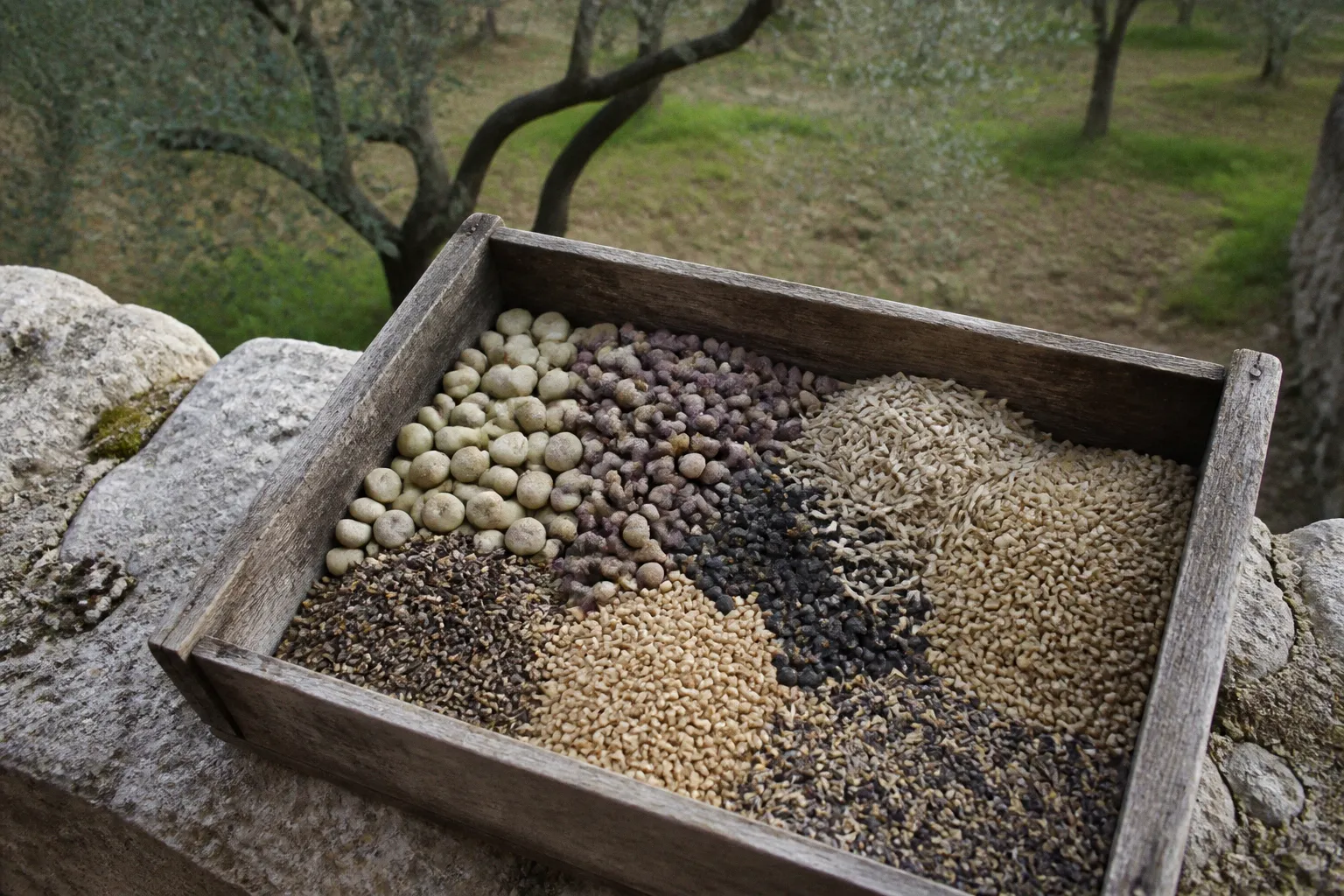
Choose the wrong species for the field, and you can increase competition for moisture, delay orchard operations, or create more residue than your equipment can handle. Choose the right one, and the same winter window can protect topsoil, improve nitrogen availability, and build organic matter before the next production cycle.
Lebanon gives you sharply different operating conditions within a relatively compact agricultural system. The Bekaa Valley extends across approximately 150,000 hectares, while annual rainfall varies from about 230 mm in the northern valley to 610 mm in the central valley. Coastal orchards, highland plots, and irrigated Bekaa fields cannot run one universal cover crop programme. Your protocol has to match the rainfall pattern, soil objective, crop spacing, and termination capacity.
The correct cover crop is not the one that grows fastest. It is the one you can terminate on time without stealing water from the cash crop.
Start with the field problem, not the seed
A winter cover crop has four jobs in Lebanese production systems:
- Hold soil in place during heavy seasonal rainfall.
- Increase soil organic matter and improve aggregation.
- Capture or fix nutrients before they leave the root zone.
- Suppress weeds and reduce the need for repeated bare-soil tillage.
These jobs overlap, but no single species performs all of them equally well. A legume can contribute nitrogen. A cereal can produce fibrous roots and durable ground cover. A mixed stand can distribute risk across different weather conditions. Spontaneous vegetation may protect soil at low input, but it gives you less control over species composition and nutrient behaviour.
The first decision is therefore diagnostic.
If erosion is the immediate threat
Use a winter-growing species or mixture that establishes ground cover before the main rainfall period. In olive orchards and sloping fields, the priority is not maximum biomass. It is root anchoring and surface protection during rain events.
Oats and barley are useful in this role because they develop a fibrous root system and provide a relatively predictable residue structure. In the Bekaa Valley, winter oats and vetch have been used at Turba farm specifically to reduce rain-driven soil erosion. That is a practical signal: the cover should be established before the field enters its highest-risk runoff period, not introduced after rills and sediment movement are already visible.
If nitrogen and organic matter are the bottleneck
Prioritise a legume or a legume-cereal mixture. Faba bean and vetch are the most relevant options in the available Lebanese field evidence. Their value is not simply that they are green. Their value is that they add a different nutrient function from a cereal-only stand.
LARI and Lebanese University trials at the Abdeh station in Akkar evaluated faba bean, broccoli, a barley-vetch mixture, and spontaneous vegetation in olive orchards. Preliminary results showed increased soil mineral nitrogen and organic matter in the faba bean and barley-vetch treatments. That does not mean the crops eliminate fertiliser requirements. It means they can move the soil in a more productive direction when integrated into a broader fertility plan.
If weed suppression is the priority
Choose a species that can close the inter-row canopy during the winter growth period and that fits the orchard’s light conditions. Oat was identified in coastal Lebanon research as an overwinter cover crop capable of suppressing weeds and improving nutrient cycling.
Do not confuse weed suppression with permanent ground cover. If the stand remains alive too long into a dry spring, the same crop that controlled winter weeds can compete with trees or vegetables for soil moisture. The termination date is part of the selection decision from day one.
What the Lebanese trials tell you about species choice
The most useful local evidence does not point to one universal winner. It points to functional differences between species.
Faba bean: the nitrogen-focused option
Faba bean, or Vicia faba, is the strongest candidate when your target is nitrogen contribution and organic matter improvement. In the Abdeh olive orchard trial, the faba bean treatment was associated with increased soil mineral nitrogen and organic matter in preliminary results.
Operationally, faba bean is attractive when:
- The field needs a legume component.
- You can manage a taller, broader-leaved winter stand.
- The orchard or field has sufficient moisture for establishment.
- You have a clear termination plan before the cash crop enters its high-demand period.
The risk is management complexity. A vigorous legume stand may produce substantial biomass and can become difficult to incorporate or roll once mature. If your machinery is light, your access lanes are narrow, or your spring schedule is compressed, do not select faba bean simply because it has a strong fertility profile.
Use it when the field can support the biomass and your operation can terminate it cleanly.
Barley-vetch: the balanced mixture
A barley-vetch mixture combines a cereal structure with a legume function. Barley contributes fibrous rooting and surface cover. Vetch contributes nitrogen fixation and a more nutrient-rich biomass component. In the LARI-Abdeh trial, the mixture was among the treatments linked with increased mineral nitrogen and organic matter.
This is often the most operationally balanced choice for an orchard manager who needs both erosion control and soil improvement. The cereal helps the stand carry itself through wet conditions. The vetch broadens the nutrient function beyond carbon-heavy residue.
But mixtures need monitoring. The final stand can shift depending on establishment conditions, soil fertility, moisture, and planting density. If barley dominates, you may get excellent residue but less legume contribution. If vetch dominates, termination and residue handling may become more demanding.
Treat the mixture as a managed system, not a bag of seed that can be left unattended.
Oat: the coastal and erosion-control workhorse
Oat, Avena sativa, has been identified in coastal Lebanon as an overwinter cover crop for weed suppression and nutrient cycling. It is also relevant in erosion-control programmes where a fibrous root system and winter ground cover are the immediate targets.
Oat is a practical option when:
- Your main concern is exposed soil during winter.
- You need a relatively straightforward cereal stand.
- Weed suppression matters more than maximum nitrogen fixation.
- You want a crop that can fit into an orchard-floor management programme.
Its limitation is straightforward: oat is not a legume. It should not be presented as a nitrogen-fixing crop. If your soil programme is nitrogen-deficient, pair it with a legume where conditions allow, or use it as the structural component of a broader rotation.
Broccoli: a trialled option, not an automatic recommendation
Broccoli, Brassica oleracea italica, was included in the Abdeh cover crop trial. That makes it relevant to the local evidence base, but trial inclusion is not the same as a universal commercial recommendation.
Brassicas can contribute a different root architecture and biomass profile from cereals and legumes. However, you need to account for crop rotation, residue breakdown, pest pressure, and the demands of the following crop. If brassicas are already part of your commercial rotation, adding broccoli as a cover crop requires more discipline around disease and pest carryover.
Use trial results to justify a local test—not to bypass one.
Spontaneous vegetation: low input, low control
Allowing spontaneous vegetation to develop can reduce the cost and complexity of sowing. It may also provide some winter soil cover. But species composition varies, and so does the balance between beneficial ground cover, aggressive weeds, and moisture competition.
This option makes sense only when you can monitor the stand and intervene before the vegetation becomes a problem. It is not a no-management system. It is a low-input system with less predictable output.
| Cover crop option | Primary function | Strongest fit | Main management issue |
|---|---|---|---|
| Faba bean | Nitrogen contribution and organic matter | Fields prioritising fertility improvement | Biomass and spring termination |
| Barley-vetch mixture | Erosion control plus nitrogen contribution | Olive orchards and mixed-objective fields | Stand balance and residue handling |
| Oat | Winter cover, weed suppression, nutrient cycling | Coastal fields and erosion-prone inter-rows | Limited nitrogen fixation |
| Broccoli | Alternative biomass and root function | Controlled trial plots and suitable rotations | Rotation and pest-management fit |
| Spontaneous vegetation | Low-cost surface protection | Monitored low-input orchard floors | Unpredictable species mix and competition |
Regional protocols: coast, highland, and Bekaa
The phrase “Lebanese farm” hides too much variation to be useful operationally. Start with the region, then adjust for field slope, irrigation, and crop type.
Coastal Lebanon: prioritise establishment and moisture control
Coastal farms generally face a different winter profile from the drier northern Bekaa. Oat has been identified as an overwinter option in coastal Lebanon for weed suppression and nutrient cycling. That gives you a practical starting point when the orchard floor is exposed and weeds are competing for management attention.
Use this sequence:
1. Map the exposed zones. Identify inter-rows where runoff, weed pressure, or soil crusting is already visible.
2. Select a winter species based on the main failure mode. Choose oat where ground cover and weed suppression dominate. Add a legume only if the soil-fertility objective and termination capacity support it.
3. Protect the tree line. Keep the cover crop strategy focused on inter-row protection unless you have verified that the root zone can tolerate additional competition.
4. Set the spring termination trigger before sowing. The trigger should be linked to soil moisture and crop demand, not to a calendar date copied from another region.
5. Inspect after major rainfall. Look for sediment movement, bare patches, wheel-track concentration, and water flow paths. Those observations determine where the next season’s cover needs to be denser.
If the coastal orchard has shallow soil or limited irrigation, keep the stand controlled as spring approaches. A cover crop that protects the soil in January can become a water competitor in April.
Bekaa Valley: design around rainfall variability
The Bekaa Valley is not one climate block. Annual rainfall averages range from approximately 230 mm in the north to 610 mm in the central valley. That spread changes the risk calculation.
In the drier northern Bekaa:
- Establishment moisture is the first constraint.
- A dense stand may not be realistic without adequate rainfall or irrigation.
- Termination must happen before the cover crop consumes scarce spring moisture.
- Species selection should favour a clear return on limited water.
In the central Bekaa:
- Higher rainfall can support more vigorous winter growth.
- Erosion and runoff remain serious concerns during intense rain.
- Oats, vetch, and barley-vetch mixtures can be evaluated for different balances of soil cover and fertility.
- Biomass management becomes more important because a productive stand can be harder to terminate.
At Turba farm in the Bekaa Valley, oats and vetch have been planted as winter cover crops to mitigate rain-induced erosion. The relevant lesson is not to copy a fixed recipe. It is to match the winter stand to the local rainfall pattern and the field’s erosion exposure.
If the field is irrigated but still loses soil during winter storms, prioritise surface protection and runoff control. If the field is rain-fed in the northern valley, reduce the risk of spring moisture competition before increasing biomass targets.
In the Bekaa, rainfall total is only half the decision. The distribution of that rainfall determines whether a cover crop protects the field or consumes the reserve.
Highland and sloping farms: build for runoff, not appearance
Highland plots and sloping orchards need a different success metric. A visually thick stand is not automatically a stable stand. What matters is whether roots and residue slow water movement and keep soil from leaving the field.
Use cover crops as one component of an erosion-control protocol:
- Establish continuous or near-continuous cover in the most exposed inter-rows.
- Avoid creating bare wheel tracks that become drainage channels.
- Keep machinery traffic controlled during wet conditions.
- Inspect the lower edge of the field for sediment accumulation.
- Adjust the mixture if one species fails to establish on the slope.
A barley-vetch mixture can be useful here because it combines fibrous cereal rooting with a legume component. Oat is another practical candidate where the primary objective is winter cover. Faba bean may support soil fertility, but you still need to verify whether the stand remains stable on the slope and whether spring residue management is feasible.
Do not judge performance only from the upper field. If the lower boundary is collecting soil, the cover strategy is not controlling the full runoff pathway.
Build a selection matrix before buying seed
A regional guide becomes useful only when it produces a field-level decision. Record the following before selecting a species or mixture:
- Cash crop: olive, vegetable, cereal, or another production system.
- Soil exposure: flat, sloping, compacted, eroded, or already well covered.
- Rainfall pattern: coastal, highland, northern Bekaa, or central Bekaa conditions.
- Irrigation status: rain-fed, supplemental irrigation, or fully irrigated.
- Primary objective: nitrogen, organic matter, erosion control, weed suppression, or a combination.
- Termination equipment: mower, roller, shallow incorporation tools, or manual labour.
- Spring water demand: low, moderate, or high for the cash crop.
- Rotation constraints: especially where legumes or brassicas could affect future crops.
- Access requirements: whether harvesting or pruning equipment must enter the orchard during winter.
- Monitoring capacity: how often the stand can be inspected after rainfall and before termination.
Then apply a simple if-then filter.
If your primary objective is nitrogen
Choose faba bean or a barley-vetch mixture, provided the field can support the stand and you can terminate it before spring moisture becomes limiting.
If your primary objective is erosion control
Choose oat or a cereal-containing mixture. Focus on early establishment, inter-row continuity, and runoff inspection rather than maximum biomass.
If your primary objective is weed suppression in a coastal orchard
Evaluate oat first, then adjust the programme if the stand leaves gaps or competes with the trees.
If you need both soil cover and fertility improvement
Start with barley-vetch or another locally tested cereal-legume combination. Monitor which component dominates; the label on the seed bag does not tell you what the field will produce.
If you have no reliable termination equipment
Do not select a high-biomass stand as if it were a low-maintenance ground cover. Choose a manageable option, reduce the scale of the trial, or improve the termination plan before expanding.
Soil health: measure the direction, not just the colour
Cover crops are often judged by visual biomass. That is the wrong endpoint. A green field may still have weak soil structure, poor infiltration, or an unstable nutrient cycle.
The more useful indicators are:
- Soil organic matter over repeated sampling periods.
- Mineral nitrogen before and after the cover crop cycle.
- Surface runoff and visible sediment movement after rainfall.
- Soil aggregation and infiltration behaviour.
- Weed pressure in the following crop.
- Ease and timing of termination.
- Spring soil moisture in the cash-crop root zone.
- Residue breakdown and planting conditions after termination.
Research from 26 small-scale farms in Mount Lebanon found that 61% had adopted cover crops and 85% practised intercropping. The same study reported soil organic matter ranging from 1.86% in conventional farms to 3.32% in regenerative farms. These figures are useful as a local reference range, not as a guaranteed outcome from one season of planting.
The difference between a conventional and regenerative system is rarely one seed choice. It is the result of repeated management: reduced disturbance, living roots, residue retention, diversified cropping, and better water handling. A cover crop can support that system, but it cannot carry the entire programme alone.
Green manure is a management cycle
The term “green manure” is useful only when you define the operation behind it. The cover crop must be established, grown, terminated, and returned to the soil at a point that supports the next crop.
A faba bean stand terminated too late may create a moisture problem. An oat stand incorporated under wet conditions may create compaction. A barley-vetch mixture left unmanaged may become difficult to handle. The agronomic function and the logistics function have to align.
For each field, document:
1. The sowing window. Base it on expected winter establishment conditions for the region.
2. The inspection window. Check emergence, gaps, weed pressure, and runoff after establishment.
3. The termination trigger. Use soil moisture, crop demand, and stand maturity rather than habit.
4. The residue plan. Decide whether the material will be mowed, rolled, shallowly incorporated, or managed another way.
5. The following-crop handoff. Confirm that the field will be accessible and plantable when the cash crop requires it.
That is the point where sustainable farming stops being a slogan and becomes an operating system.
Reduce tillage without creating a new failure point
Conventional bare-soil tillage exposes the field to winter erosion and repeatedly breaks soil structure. Cover crops can reduce that exposure, but only if the soil is not disturbed aggressively after every cycle.
A practical transition does not require a dramatic all-at-once conversion. Start with the most erosion-prone blocks. Compare a covered inter-row with a conventional bare-soil inter-row under the same farm conditions. Track soil movement, weed pressure, soil moisture, and field access.
If the cover crop improves soil protection but delays spring operations, fix the termination protocol. If it produces biomass but does not improve soil organic matter, review residue handling and the wider rotation. If it reduces weeds but increases water stress, narrow the covered area or move termination earlier.
Use the results to modify the system. Do not abandon cover crops because the first programme was poorly matched to the field.
A cooperative-level approach improves the economics
Small farms often face practical limits that individual agronomy trials ignore: limited machinery, irregular seed access, and narrow labour windows. Lebanese cooperatives can reduce those constraints by standardising the parts of the process that benefit from scale.
A cooperative can:
- Test faba bean, oat, and barley-vetch on representative fields rather than relying on one demonstration plot.
- Coordinate shared mowing or rolling equipment before the spring termination window.
- Record emergence, biomass, soil organic matter, and mineral nitrogen using the same method across farms.
- Separate coastal, highland, and Bekaa protocols instead of distributing one generic seed mix.
- Purchase seed in batches while preserving field-specific selection.
- Create a shared rainfall and erosion log for member farms.
- Compare cover crop performance under rain-fed and irrigated conditions.
This is especially important because nationwide adoption rates and long-term cost-benefit ratios for specific Lebanese cover crop mixes are not established by the available evidence. A cooperative should therefore treat the programme as a controlled operational rollout, not a guaranteed input return.
Start with a pilot block. Define the success metrics. Review after one winter. Expand only when the farm can handle establishment, monitoring, termination, and the next crop without bottlenecks.
The operating protocol for the next season
For a farm deciding now, the sequence is direct:
1. Classify the field by region and water regime. Coastal, highland, northern Bekaa, and central Bekaa conditions require different assumptions.
2. Name one primary soil problem. Erosion, low organic matter, nitrogen depletion, or weed pressure.
3. Select a functional crop. Faba bean for a legume-focused fertility strategy; oat for winter cover and weed suppression; barley-vetch for a combined structure-and-nitrogen approach.
4. Run a small local comparison. Include at least one alternative treatment where equipment and land allow.
5. Set the termination plan before establishment. No termination capacity means no high-biomass strategy.
6. Inspect after rainfall. Record runoff, sediment, bare patches, and stand density.
7. Check soil indicators. Track organic matter and mineral nitrogen over time instead of relying on visual growth.
8. Review spring moisture and access. The cash crop must receive priority at the handoff.
9. Keep the best-performing protocol by region. Do not average coastal and Bekaa results into one misleading recommendation.
10. Scale through the cooperative only after the logistics are stable.
Compliance checklist before deployment
- The selected species matches the field’s primary objective.
- Rainfall and irrigation conditions have been classified.
- Spring water competition has been considered.
- Termination equipment and labour are available.
- The following crop’s rotation constraints are documented.
- Erosion-prone zones and machinery tracks are mapped.
- Soil organic matter and mineral nitrogen have a baseline record.
- A post-rainfall inspection schedule is assigned.
- The first season is treated as a local trial, not a guaranteed formula.
- Results will be recorded separately for coastal, highland, and Bekaa fields.
Cover crop selection for Lebanese farms works when it is treated as a regional logistics plan with agronomic consequences. Faba bean, oat, and barley-vetch mixtures each have a defensible role in Lebanese conditions, but the correct choice depends on water, slope, soil objective, and termination capacity. The strongest system is not the one with the most biomass. It is the one that protects soil through winter, improves the nutrient cycle, and hands the field back to the cash crop on schedule.