Green manure selection for dry Lebanese soils
In dry Lebanese soils, green manure is not a decorative sustainability measure. It is a water-management and nitrogen-management decision made months before the cash crop enters the field.
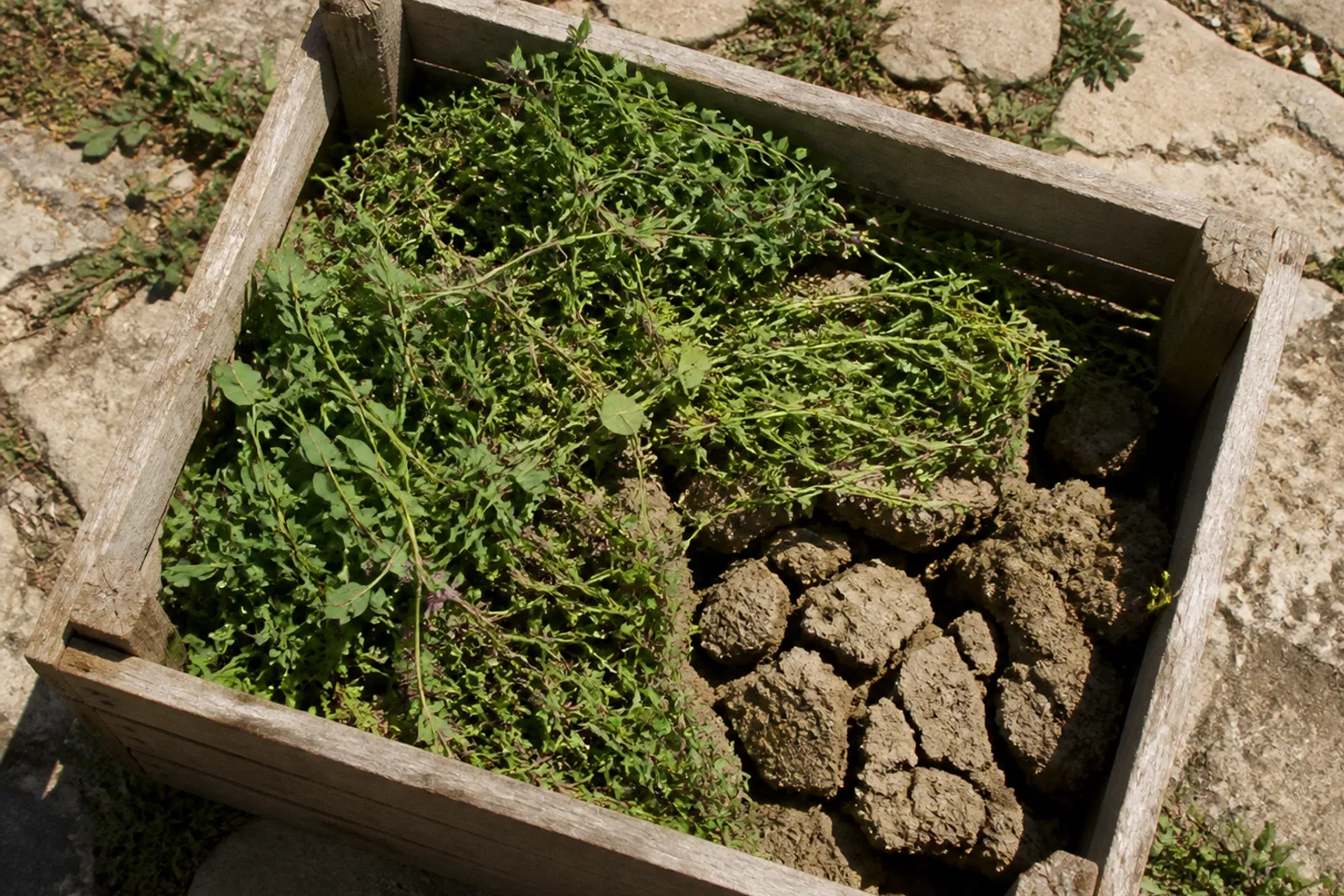
The wrong cover can leave you with weak biomass, temporary nitrogen lock-up, or a difficult residue burden at planting. The right cover can improve spring soil moisture by roughly 5–15% and raise soil organic matter by approximately 2–6% after one rotation cycle under dry Mediterranean conditions. Those are useful ranges—but only if the species matches the field, the rainfall window, and the next crop.
For drought tolerant green manure on Lebanese farms, the operational choice is not simply oat versus vetch. You are balancing four variables:
- winter biomass;
- nitrogen contribution;
- water use before termination;
- residue behavior after incorporation.
That balance changes between a rainfed field in the Bekaa, a coastal plot, and an olive orchard with permanent tree roots competing for moisture.
Start with the moisture window, not the seed catalogue
A cover crop must establish while the soil still has enough moisture to support germination. In Lebanon, that usually means working with the autumn-to-spring rainfall cycle rather than assuming the cover will survive on winter rain alone.
The first decision is therefore the field’s moisture profile:
- Rainfed and dryland fields: prioritize rapid establishment, moderate water demand, and termination before the cover begins drawing heavily on spring reserves.
- Coastal fields: higher winter biomass potential gives cereals such as oat a stronger position, particularly where rainfall supports dense growth.
- Semi-arid Bekaa plots: use a conservative seeding and termination plan. The objective is not maximum standing biomass; it is enough biomass to protect and feed the soil without compromising the cash crop.
- Olive orchards: avoid treating the inter-row as an empty field. Tree roots, orchard traffic, and harvest timing all affect how long the cover can remain in place.
If the soil dries early in spring, terminate the cover before peak water demand. If the field retains moisture and the following crop is planted later, you can carry the cover longer—but only after checking the residue and planting implications.
This is where many green manure plans fail. They optimize the cover crop instead of the rotation. A cover that produces impressive biomass but depletes the seedbed before maize or vegetables are established is not a successful input. It is a delayed cost.
In dry farming, the best cover crop is not the one that grows the most. It is the one that leaves the best planting window behind.
What the Lebanese field trials show
The available Lebanese field data give a clear starting point for comparing common overwinter cover crops.
In coastal Lebanon trials conducted between mid-November and March, oat produced 915 g/m² of dry biomass. Narbon vetch produced 402 g/m², while forage radish reached 292 g/m². Oat was the clear biomass leader in that trial window.
That result matters for soil cover, erosion control, and organic matter input. It does not automatically make oat the best choice for every rotation.
| Cover crop | Dry biomass in coastal winter trial | Main operational value | Main management risk |
|---|---|---|---|
| Oat | 915 g/m² | Strong winter biomass, soil cover, carbon input | Residue can temporarily immobilize nitrogen after incorporation |
| Narbon vetch | 402 g/m² | Legume biomass and nitrogen contribution | Lower biomass than oat in the cited trial; establishment must be protected |
| Forage radish | 292 g/m² | Fast-growing residue and root contribution | Higher short-term nitrogen release and rapid residue loss can complicate timing |
| Alfalfa | No comparable figure in the cited overwinter trial | Drought-tolerant perennial legume and strong nitrogen fixer | Requires fertile soil for optimal growth; not a plug-in answer for degraded land |
| Barley, rye, clover, and other vetches | No comparable figure in the cited trial | Useful rotation options depending on orchard and field conditions | Performance depends heavily on rainfall, soil fertility, and termination timing |
The numbers are not a universal ranking. They describe one trial environment and one overwinter period. Treat them as a decision signal, not a guaranteed yield forecast for every governorate.
Oat: the biomass engine
Oat is the most straightforward choice when your immediate constraint is bare soil and weak winter cover. Its 915 g/m² dry biomass result substantially exceeded Narbon vetch and forage radish in the coastal trial.
Use oat when you need:
- a dense protective canopy during the wet season;
- substantial residue for soil surface coverage;
- a strong carbon input before the next rotation;
- a cereal cover that is easy to position in a mixed system.
The constraint is nitrogen behavior. Oat residue contained 15.6 g nitrogen per kilogram and lost 31% of its nitrogen during a 10-day in-situ incubation in the cited work. That does not mean oat removes nitrogen from the system permanently. It means decomposition dynamics can temporarily tie up available nitrogen, particularly when a high-carbon cereal residue is incorporated immediately before a demanding cash crop.
If maize follows oat, do not assume the residue will supply enough readily available nitrogen during early crop establishment. Allow decomposition time where the calendar permits, combine oat with a legume, or plan nitrogen management around the actual soil and crop requirement.
Narbon vetch: the nitrogen-focused option
Narbon vetch produced less winter biomass than oat in the coastal trial—402 g/m²—but its role is different. It is a legume, and legumes are valuable where the rotation needs biological nitrogen contribution as well as residue.
The strongest result in the cited Lebanese work appeared after whole-plant Narbon vetch residue was incorporated: succeeding corn reached 7.6 Mg/ha of dry matter at the 50% dough stage. That is a meaningful signal for maize rotations, but it should not be converted into a blanket yield promise. The result belongs to the specific trial conditions, residue treatment, and crop sequence.
Use Narbon vetch when:
- the next crop has a meaningful nitrogen demand;
- you can establish the cover before moisture becomes limiting;
- the soil can support legume growth;
- you want to reduce dependence on chemical fertilizer inputs without pretending to eliminate them;
- the field can tolerate lower winter biomass than an oat-dominant system.
The operating question is whether the vetch can establish strongly enough to justify its place in the rotation. A weak legume stand gives you neither reliable biomass nor a robust nitrogen contribution. If autumn establishment is poor, do not defend the original plan out of habit. Reassess the field and adjust the following crop’s nutrient strategy.
Forage radish: fast residue, fast decisions
Forage radish produced 292 g/m² in the same coastal trial. It can contribute a quickly developing cover and a residue that breaks down more rapidly than oat.
The cited residue data show why timing matters. Radish residue contained 21.1 g nitrogen per kilogram and lost 66% of its nitrogen during a 10-day incubation, compared with 31% for oat. That faster loss can support nutrient release, but it also narrows the management window. If termination, incorporation, and planting are poorly sequenced, the benefit can move out of sync with crop demand.
Use radish where you can control:
- termination date;
- incorporation depth and timing;
- planting date for the following crop;
- the risk of rapid nutrient release or residue disappearance.
Radish is not a universal replacement for a legume. It is a tactical component. In a dry system, it can work as part of a mixture or short-window cover, but the field must be ready for the transition into the cash crop.
Nitrogen is a timing problem, not just a fertility problem
Green manure is often described as a substitute for fertilizer. That framing is too blunt for commercial field management.
The practical question is not whether a cover crop contains nitrogen. It is when that nitrogen becomes available, how much is retained in the soil, and whether release aligns with the next crop’s uptake curve.
Cereal residue and temporary immobilization
Oat, barley, and rye can deliver strong dry matter and durable surface protection. Their residues also tend to have a higher carbon load relative to immediately available nitrogen. When incorporated shortly before planting, microorganisms may use soil nitrogen while decomposing the residue. The cash crop then enters its most sensitive establishment phase with less mineral nitrogen available than the residue analysis might suggest.
If the following crop is maize:
1. Terminate the cereal cover early enough to start decomposition.
2. Avoid treating the full residue mass as immediately available fertilizer.
3. Check soil fertility and crop demand rather than relying on the cover label.
4. Consider a legume component if the rotation needs stronger nitrogen contribution.
5. Watch early crop color and vigor after emergence; a cover plan is not complete until the cash crop is established.
This is not an argument against oat. It is an argument for using oat for what it does best: biomass, surface protection, and carbon input.
Legume residue and nitrogen contribution
Narbon vetch and alfalfa bring a different function. Alfalfa is recognized in Mediterranean climates as drought-tolerant once established and as a strong nitrogen fixer. But it performs best in fertile soils. If the soil is degraded, compacted, or nutrient-poor, alfalfa is not a rescue button. Amend the field first or select a less demanding rotation component.
For a legume-based green manure program, establish a realistic target:
- enough stand density to produce useful biomass;
- enough growing time to develop before termination;
- enough soil fertility to support the legume;
- enough moisture to prevent the cover from becoming a competitor to the next crop.
If those conditions are not present, the supposed nitrogen benefit may be theoretical rather than operational.
A legume does not fix a poor field by reputation. It fixes nitrogen only after the field lets it establish, grow, and survive the season.
Soil moisture and organic matter: the real return
The strongest reason to use green manure in dry Lebanese agriculture is not a single nutrient figure. It is the combined effect on soil structure, infiltration, residue cover, and water retention.
Field evidence from dryland Mediterranean conditions indicates that green manure incorporation can increase soil moisture content by 5–15% in the following spring and raise soil organic matter by approximately 2–6% after one rotation cycle.
Those ranges should be treated as field-dependent. Texture, rainfall, biomass quantity, termination timing, and incorporation method will all change the result. A light cover on a depleted, compacted soil will not behave like a dense cover on a field with adequate fertility.
Still, the mechanism is practical:
- roots create channels and improve soil aggregation;
- residues reduce direct exposure of the soil surface;
- organic inputs improve the soil’s capacity to retain water;
- better cover reduces the speed at which rain runs off bare ground;
- increased biological activity supports longer-term soil function.
For organic soil improvement in the Bekaa, the priority is to keep the soil covered during the vulnerable period and avoid turning the cover into a late-season water drain.
Surface mulch or incorporation?
The choice depends on your equipment, crop, and water strategy.
Incorporate the cover when you need faster soil contact and a decomposition cycle before planting. This is useful when the following crop can tolerate the transition period and you have enough time between termination and establishment.
Leave residue closer to the surface when erosion, evaporation, or soil crusting is the immediate concern. Surface cover can protect the seedbed, but it may complicate planting if the residue is heavy or uneven.
Use a mixed approach in orchards: maintain a controlled inter-row cover, terminate before it competes with olive trees for spring moisture, and keep machinery access open for pruning and harvest operations.
Do not bury a wet, immature cover simply because the calendar says incorporation day has arrived. Residue moisture, soil trafficability, and planting timing still control the outcome.
Build the rotation around the cash crop
Green manure selection becomes more precise when you start with the crop that pays the bills.
If maize follows the cover
Maize needs a clean establishment window and reliable nitrogen availability. Narbon vetch is a strong candidate when the legume can produce adequate biomass and the field has enough time for residue integration. The cited result of 7.6 Mg/ha dry matter in succeeding corn following whole-plant vetch incorporation supports that direction.
If oat is the cover, plan for the possibility of temporary nitrogen immobilization. Do not make a cereal cover responsible for a nitrogen function it was not selected to perform.
If vegetables follow the cover
Vegetable systems are less tolerant of rough residue, uneven seedbeds, and uncertain nutrient release. Use a cover that can be terminated and managed cleanly before bed formation. Radish may fit a short, tightly controlled window, while oat may require more residue handling.
The rule is simple: if the planting equipment cannot work through the residue consistently, the cover is too large, too late, or poorly matched to the vegetable sequence.
If olives are the permanent crop
Olive agroforestry systems can use leguminous green manures such as clover, alfalfa, and vetch, alongside cereal options including barley, rye, and oat. The orchard floor is not a conventional annual field, so the cover must coexist with tree water demand and traffic.
Choose shorter or more easily terminated covers when:
- the orchard is young;
- spring moisture is limited;
- the inter-row must remain accessible;
- harvest traffic requires a firm surface.
Use stronger biomass-producing covers only where the orchard can support them without sacrificing tree performance.
A practical selection protocol for Lebanese farms
Run the decision in this order. It prevents the common mistake of selecting a species first and inventing a management plan afterward.
1. Define the next crop.
Maize, vegetables, olives, and forage each impose different residue and nutrient requirements.
2. Measure the field’s limiting resource.
If moisture is the constraint, choose for establishment and early termination. If erosion and low organic matter dominate, stronger biomass may justify a cereal component.
3. Classify the soil.
Alfalfa needs fertile soil for optimal growth. Do not place it into a severely depleted field without a fertility and amendment plan.
4. Set the termination date before seeding.
The date must protect the following crop’s planting window and spring water supply. If you cannot state when the cover comes out, the plan is incomplete.
5. Choose the residue function.
Oat gives high biomass. Narbon vetch gives a legume pathway. Radish offers a faster-decomposing option. Mixtures can balance functions, but they also require more precise termination and residue management.
6. Plan nitrogen separately.
Cereal residues can temporarily immobilize nitrogen. Legumes can contribute nitrogen but do not eliminate the need to assess soil fertility and crop demand.
7. Record the field response.
Track establishment, biomass, termination date, planting conditions, early crop vigor, and soil moisture. Without field records, the next rotation is still guesswork.
This protocol works because it converts green manure from a generic sustainability claim into a controlled supply of biomass, nutrients, and soil cover.
The strongest strategy is usually functional, not ideological
There is no reason to force every farm into a single cover-crop recipe. Sustainable farming in Lebanon needs regional and rotational precision.
A coastal field with reliable winter growth may justify oat for maximum biomass. A maize rotation with adequate establishment conditions may gain more from Narbon vetch. A tightly managed short window may support forage radish. An olive orchard may need a lower-risk mix of legumes and cereals, terminated before spring competition becomes expensive.
The best drought resistant green manure in Lebanon is therefore conditional:
- Choose oat when biomass and soil cover are the priority.
- Choose Narbon vetch when legume contribution and maize succession are central.
- Choose forage radish when rapid growth and faster residue turnover fit the planting calendar.
- Choose alfalfa only where soil fertility and long-term management support it.
- Combine species when you need to balance carbon, nitrogen, and ground cover—but do not ignore the extra complexity.
Before seeding, lock these points into the field plan:
- target establishment period;
- expected rainfall and soil moisture risk;
- cover termination date;
- residue destination: surface or incorporated;
- following crop and planting equipment;
- nitrogen adjustment;
- spring moisture check;
- recorded biomass and crop response.
That is the operating standard. Green manure earns its place in regenerative agriculture in Lebanon when it protects the next crop, not when it merely looks sustainable on paper. In dry soils, every cover crop must pay its way through water retention, soil structure, nitrogen timing, or erosion control. If it cannot do that within the rotation, replace it.