Agrotech & Infrastructure: what to check before you decide
A new irrigation controller, solar pump, greenhouse system, or soil sensor can look like an obvious investment when water is expensive, electricity is unreliable, and every blemished crate makes export conversations harder.
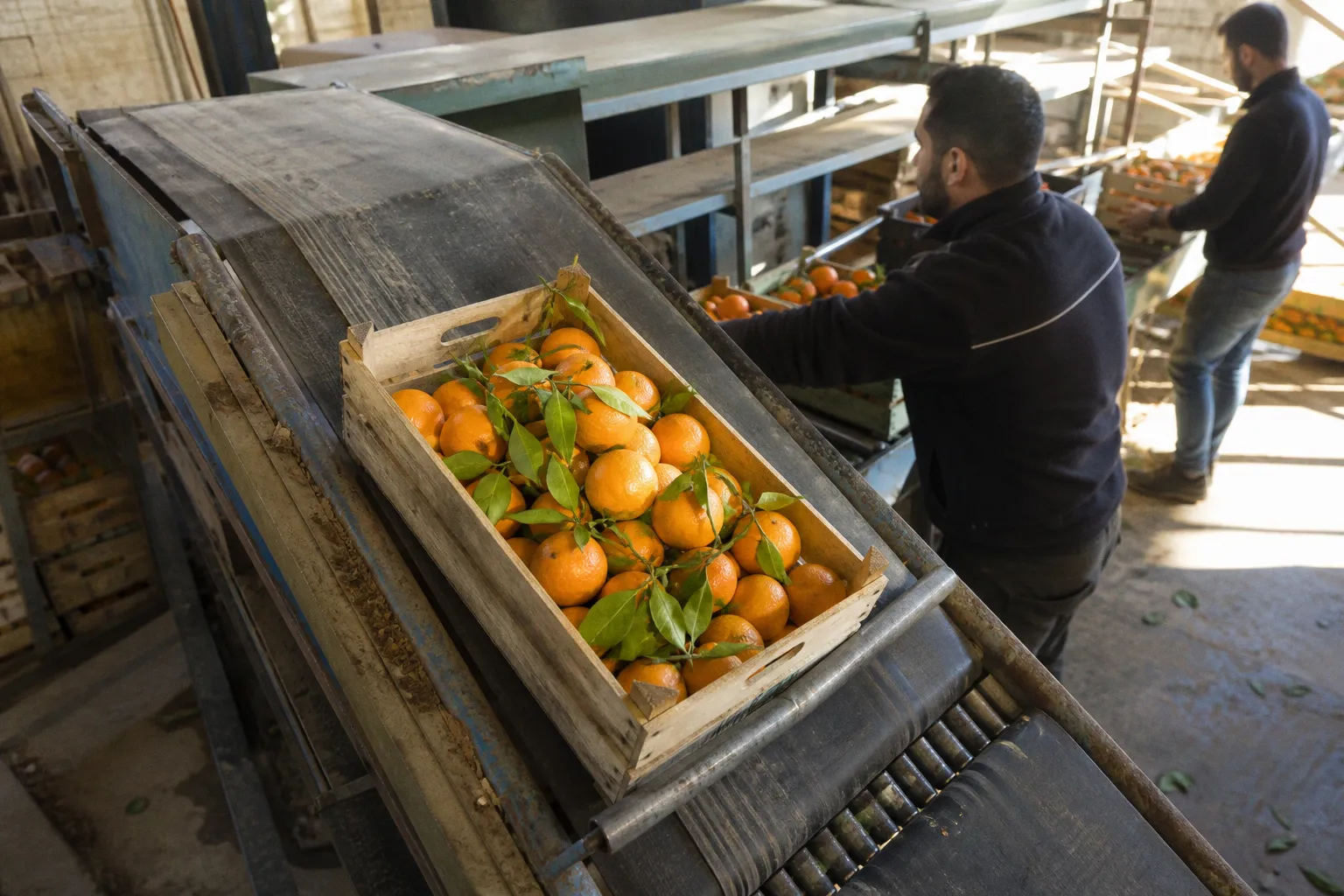
But on Lebanese farms, technology rarely succeeds as a stand-alone purchase. It succeeds when the pump, pipes, power source, soil data, crop calendar, maintenance routine, and cooperative team are designed to work together.
That is the real answer for anyone searching how to check what to check before you decide about agrotech: begin with the farm’s operating pattern, not with the equipment catalogue. A crisp apple, a firm cucumber, or a blemish-free tomato is the final result of many quiet decisions made weeks earlier—how evenly water moved through the field, when fertilizer entered the line, whether the soil had dried below the root zone, and whether someone could repair the system when a filter clogged.
For our growers, the best investment is not necessarily the most advanced one. It is the one that reduces waste without creating a new layer of fragility.
Start with the water system, not the solar panel
In Lebanon, irrigation is where infrastructure decisions become practical very quickly. Agriculture represents approximately 80 percent of local GDP in Southern Lebanon, Northern Bekaa, and Akkar, and around 87,000 hectares of irrigated farmland operate across the country. At this scale, even a modest improvement in water delivery can affect farm income, crop quality, and the reliability of cooperative supply.
Yet a solar-powered pump cannot correct a poorly planned irrigation network. If the pump is oversized, it may draw more power than necessary and cycle inefficiently. If it is undersized, pressure will fall before water reaches the farthest beds or orchard blocks. If filters are neglected, emitters will clog regardless of how much energy the photovoltaic system produces.
Before comparing equipment, map the existing system in practical terms:
- Water source and seasonal reliability: Record the source, approximate depth where relevant, seasonal changes in availability, and any periods when pumping becomes difficult.
- Required flow and pressure: Identify how many zones operate at once, the flow rate of each zone, the elevation difference across the farm, and the pressure needed by the emitters or sprinklers.
- Pipe condition: Look for leaks, flattened hoses, mismatched diameters, poorly sealed joints, and long runs where pressure gradually disappears.
- Filtration: Note the filter type, cleaning frequency, and the quality of the water entering the system. Sand, sediment, algae, and mineral deposits each create different maintenance problems.
- Irrigation timing: Compare the crop’s root-zone needs with the current schedule. Irrigating by habit often means that some areas remain saturated while others are already dry.
- Fertilizer delivery: Check whether the injector or fertigation unit can dose consistently at the actual operating flow, rather than only under ideal conditions.
A cooperative can make this assessment far more useful by measuring together. One grower’s pressure reading may reveal a local problem; readings from several fields can show whether the issue is a pump, a shared water line, a filter design, or a common irrigation habit.
A simple water-energy baseline
For one irrigation cycle, record:
1. The pumping start and stop time.
2. The number of active irrigation zones.
3. Pressure at the pump and at the farthest emitter line.
4. Water flow where it enters each zone.
5. Electricity or fuel consumed during the cycle.
6. Any visible leaks, blocked emitters, or uneven wetting.
7. Weather and crop stage.
The point is not to create a perfect engineering report. It is to establish a baseline before spending money. Without that baseline, a cooperative may install a sensor and still be unable to tell whether the system is saving water because the irrigation design improved, because rainfall changed, or because one field simply received less water than it needed.
Solar power can lower the cost and volatility of pumping, but it does not remove the cost of correct pump sizing, filtration, cleaning, and field maintenance.
PV-integrated fertigation works when the whole chain is balanced
PV-integrated drip fertigation is attractive because it addresses two pressures at once: the cost of pumping and the cost of fertilizer. Improved Lebanese irrigation and fertigation practices have shown nitrogen-fertilizer recovery in the range of 55 to 80 percent. That is a meaningful technical opportunity, but it is not an automatic result of purchasing a dosing unit.
Nitrogen recovery depends on whether fertilizer reaches the active root zone at the right time and in the right concentration. If irrigation is too short, nutrients may remain near the surface. If it is too long, they may move below the root zone. If emitters deliver unevenly, one section of the field receives excess fertilizer while another remains underfed. Soil texture, crop stage, emitter uniformity, and irrigation timing all matter.
For our cooperatives, the investment should therefore be evaluated as a chain:
| Part of the system | What to examine | Failure if overlooked |
|---|---|---|
| Solar array | Daily pumping demand, seasonal sunlight, space, protection from dust and damage | The system produces less usable energy than the farm requires |
| Pump | Flow, pressure, lift, motor efficiency, starting requirements | Uneven irrigation, high wear, or insufficient pressure |
| Controller | Compatibility with pump, valves, sensors, and manual operation | The system becomes difficult to operate or impossible to troubleshoot |
| Filtration | Water quality, filter capacity, cleaning access, spare parts | Clogged emitters and unreliable fertigation |
| Fertilizer injector | Dosing range, calibration, mixing procedure, compatibility with inputs | Nutrient concentration varies from one zone to another |
| Drip network | Pipe diameter, emitter spacing, pressure compensation, leaks | Water and fertilizer distribution remains uneven |
| Maintenance plan | Cleaning, replacement parts, technical support, operator training | A promising system gradually becomes an expensive unused asset |
The last row is often treated as an afterthought, although it should influence the purchase from the beginning. A system that depends on a specialist who visits from another region may be inappropriate for a cooperative whose growers need a same-day repair during a heatwave. A slightly simpler pump with locally available seals, filters, and connectors may protect yields better than a sophisticated imported system with no dependable service pathway.
Soil sensors are useful only when someone acts on the information
Digital soil sensors are among the more promising tools for Lebanese farms because they can make an invisible problem visible. Moisture stress does not always show itself in the leaves before yield or quality has already suffered. A sensor can help growers see how quickly a particular soil dries, how deeply irrigation penetrates, and whether the next irrigation is actually needed.
Pilot projects in Akkar and the Bekaa demonstrated reductions in water use ranging from 22 to 40 percent, with fertilizer consumption reduced by up to two-thirds when sensor information was incorporated into irrigation and nutrient decisions. Those figures show what coordinated management can achieve; they should not be treated as a guaranteed return for every field.
The sensor is not the decision. It is evidence for a decision.
A cooperative choosing a soil-monitoring system should ask:
- What is being measured? Moisture, temperature, electrical conductivity, salinity, or a combination?
- At what depths? A shallow sensor may report dry conditions while deeper roots still have access to water, or the reverse.
- How many soil zones exist on the farm? One sensor cannot represent different textures, elevations, varieties, or irrigation blocks.
- How is the data transmitted? Cellular, Wi-Fi, radio, or local storage each has different implications for coverage and maintenance.
- Who reads the data? If no named person reviews the information, the sensor becomes an expensive weather ornament.
- What action follows a reading? The team should agree in advance how moisture thresholds affect irrigation duration, fertilizer timing, or field inspection.
- Can the readings be checked manually? Sensors need calibration and occasional comparison with direct field observations.
Build a shared interpretation routine
The strongest cooperative use of sensors is not to place a device in every corner and leave each grower alone with an application. It is to create a shared routine.
A practical arrangement might include:
1. Select representative fields. Begin with contrasting soil types or crop blocks rather than installing devices randomly.
2. Install at meaningful root-zone depths. The placement should reflect the crop, soil profile, and irrigation method.
3. Record readings alongside farm observations. Note weather, plant condition, irrigation duration, and fertilizer applications.
4. Review the data weekly during the active season. Look for patterns, not isolated numbers.
5. Compare sensor guidance with yield and quality. The goal is not merely lower water use; it is reliable, marketable produce.
6. Adjust the irrigation rule gradually. Avoid changing every zone at once before the team understands the result.
This process also helps our growers develop a common language. Instead of saying that a field feels dry, the team can discuss how quickly moisture is falling, whether the decline is uniform, and how that relates to the crop’s development. That is where technology becomes cooperative knowledge rather than another device on the farm.
Financial planning must include the years after installation
Lebanon’s economic conditions make the financial side of agrotech impossible to separate from the technical side. The country’s GDP fell from $52 billion in 2019 to $23 billion in 2021, and Lebanon was reclassified from upper-middle-income to lower-middle-income status within three years. For small and medium-sized farms, a technology decision must therefore protect cash flow as carefully as it protects water.
Kafalat is a reference financial company supporting small-to-medium farmers seeking credit opportunities for PV-integrated fertigation packages. That kind of financing can help cooperatives move from emergency spending toward planned infrastructure, but borrowed capital still needs a clear operating case.
Before approaching a lender or equipment provider, prepare a cooperative-level investment picture:
- What is the current monthly or seasonal cost of pumping?
- Which costs are paid individually and which could be shared?
- How much water is currently applied to each crop block?
- What losses come from leaks, clogging, or uneven irrigation?
- Which crops have the strongest quality or export requirements?
- What portion of the investment is equipment, installation, training, and civil works?
- What will filters, batteries if used, controllers, sensors, and pump parts cost over time?
- Who owns the system, and who pays when a shared component fails?
- What happens if the harvest is delayed or an export route is disrupted?
The final question deserves more attention than it usually receives. A cooperative serving international markets needs infrastructure that remains useful when the market changes. If one crop becomes difficult to export, the system should still support other crops or production cycles. Modular equipment can be more valuable than a highly specialized installation that works beautifully only under one set of conditions.
Separate essential infrastructure from optional intelligence
When budgets are tight, we should distinguish between the equipment that makes irrigation possible and the equipment that makes it more measurable.
Essential infrastructure may include:
- Correctly sized pumps.
- Adequate filtration.
- Repaired or redesigned pipe networks.
- Pressure regulation.
- Reliable drip lines and valves.
- Safe electrical connections.
- A clear maintenance and spare-parts plan.
Decision-support technology may include:
- Soil-moisture sensors.
- Remote pump monitoring.
- Automated valves.
- Digital fertigation controls.
- Weather-linked irrigation scheduling.
- Solar production and consumption dashboards.
This does not mean sensors or automation are luxuries. It means their value depends on the physical system beneath them. A sensor cannot compensate for a cracked mainline. An application cannot repair a blocked filter. Digital monitoring will not improve nitrogen recovery if the injector is poorly calibrated.
Local agrotech can strengthen the cooperative ecosystem
Lebanese agrotech is not limited to imported hardware. Several local initiatives sit at the intersection of water, energy, farming, and resource recovery.
Caesar’s Flame works with biomass fuel made from farm waste, pointing toward a more productive use of residues that might otherwise be burned or discarded. Green Grid Trade focuses on shared digital solar trading, an approach that reflects the practical reality that energy assets can be more useful when managed collectively. Nuwatt develops real-time solar and irrigation monitoring, connecting energy production with the farm’s actual water demand.
For cooperatives, these examples matter because they broaden the question. We are not only deciding whether to buy a pump. We are deciding how our farms can share energy, data, by-products, machinery, and technical services.
A cooperative may not need to own every tool itself. In some cases, the stronger model is a shared service:
- A mobile technician maintains pumps and filters across member farms.
- A cooperative purchases sensors and allocates them to priority fields during the season.
- A shared solar installation supports several irrigation blocks where the hydraulic design allows it.
- A trained operator manages fertigation records for multiple growers.
- Agricultural waste is collected and directed toward a useful energy or composting pathway.
- Machinery is scheduled collectively around planting and harvest windows.
The structure needs written responsibilities, even if the cooperative culture is informal. Shared infrastructure fails when everyone assumes that someone else is cleaning the filter, checking the pressure, renewing the software subscription, or recording fertilizer use.
Make responsibility visible
A simple responsibility map can prevent many disputes:
- System owner: Holds the asset records and approves major repairs.
- Daily operator: Starts, stops, and inspects the system.
- Agronomist or crop lead: Interprets soil and crop information.
- Maintenance contact: Handles filters, valves, pump servicing, and spare parts.
- Finance lead: Tracks energy savings, input use, loan payments, and member contributions.
- Quality lead: Connects irrigation decisions with size, firmness, appearance, shelf life, and buyer requirements.
This is not cold administration. It is how collective effort stays fair. When duties are visible, growers can contribute according to their skills and the cooperative can identify training gaps before they become crop losses.
Greenhouses and hydroponics need a different level of discipline
Greenhouse technology and hydroponics can help growers control water, nutrients, and growing conditions, particularly where land or water availability is restrictive. But these systems should not be treated as an automatic upgrade from open-field production.
A high-tech closed-loop hydroponic system can require substantial upfront capital, reliable technical training, careful sanitation, stable electricity, and consistent access to replacement parts and nutrient inputs. It may be appropriate for some crops, locations, and cooperative business models; it is not universally viable for every Lebanese smallholder.
Before moving into greenhouse automation or hydroponics, assess:
- The market price and regularity for the intended crop.
- Whether buyers value the quality advantage enough to support the added cost.
- The availability and quality of water for the system.
- Backup power requirements for pumps, cooling, ventilation, and monitoring.
- The team’s ability to manage nutrient concentrations and sanitation.
- Access to replacement pumps, dosing equipment, sensors, and growing media.
- The consequences of a system failure during a hot period.
- Whether the greenhouse design suits local temperature, wind, and dust conditions.
- The availability of a trained operator every day, including weekends and holidays.
Hydroponics concentrates both opportunity and risk. In open-field farming, one irrigation error may affect a section of a crop. In a recirculating system, a nutrient imbalance, pathogen issue, or pump failure can move quickly through the entire production loop. The technology can produce clean, uniform, attractive crops, but only when the operating discipline is equally strong.
The best pilot is small enough to learn from
Large infrastructure decisions are often framed as a choice between doing nothing and modernizing the entire farm. That is a false choice. A cooperative can begin with a contained pilot that answers a specific question.
For example:
- Can pressure-compensating drip irrigation improve uniformity in one orchard block?
- Can soil sensors reduce irrigation in a known high-water-use greenhouse?
- Can a solar pump cover the daytime irrigation load without creating pressure problems?
- Can a shared fertigation operator improve nitrogen recovery across several members?
- Can remote monitoring reduce response time when a pump stops?
- Can a waste-to-energy arrangement lower disposal or fuel costs?
Choose a block with a clear crop cycle, a cooperative team willing to record results, and a problem that is already understood. Do not begin in the most chaotic field with three unknown water sources and five varieties. A pilot should make learning easier, not make every variable impossible to separate.
Set the measures before installation:
- Water used per irrigation cycle.
- Energy or fuel used for pumping.
- Fertilizer applied and crop response.
- Pressure variation across the irrigation block.
- Labour time spent on operation and maintenance.
- Marketable yield and the proportion meeting quality requirements.
- Number and duration of system interruptions.
- Repair and replacement costs.
After one season, the cooperative can decide whether to expand, modify, or stop. Stopping an unsuitable pilot is not failure. It is protection against multiplying the same mistake across dozens of farms.
The most valuable agrotech pilot is not the one with the most sensors; it is the one that teaches the cooperative what to do differently next season.
A decision should survive the field, the market, and the repair shop
Agrotech investments are often presented through their ideal outputs: less water, lower fertilizer use, cleaner energy, higher yield. Those outcomes are possible, and Lebanese pilot projects show encouraging results. But the system also has to survive dust, voltage instability, hard water, clogged filters, delayed spare parts, staff turnover, changing crop plans, and the daily pressure of harvest.
Before approving a purchase, bring the proposal into the field and ask the installer to explain it in operational language:
- Where is the main filter, and how is it cleaned?
- What pressure should appear at the pump and at the farthest irrigation zone?
- Which part fails most often?
- What can the cooperative repair itself?
- How long do common replacement parts take to obtain?
- What happens if the sensor loses its connection?
- Can the system be operated manually?
- What records must the operator keep?
- How will fertilizer dosing be calibrated?
- What is the safe shutdown procedure?
- Which components are proprietary, and which can be replaced locally?
A good supplier should welcome these questions. Our growers are not buying a demonstration model; we are building a working production system.
The same practical standard applies to export readiness. Water and fertilizer efficiency are valuable, but they must connect to the quality requirements of buyers. More uniform irrigation can support more uniform fruit size. Better nutrient timing can support firmness and shelf life. Cleaner records can help a cooperative explain how crops were produced and managed. Technology becomes commercially meaningful when it improves not only the farm’s internal efficiency but also the reliability of the product leaving the farm.
The cooperative advantage is coordination
The decision about agrotech is never only technical. It is also a decision about how a group of growers will share information, costs, responsibilities, and risk.
A farm that operates alone may purchase a pump and hope it solves a problem. A cooperative can do more: compare field data, negotiate service, train operators, standardize irrigation records, pool demand for spare parts, and connect infrastructure decisions to a consistent produce program. That collective effort is especially important when economic conditions make every investment consequential.
The right question is not whether a system looks modern. It is whether our growers can operate it, maintain it, finance it, and use its information to produce a more reliable harvest.
Start with water. Measure the energy burden. Repair the physical network before decorating it with digital tools. Add sensors where someone is ready to interpret them. Treat solar pumping as part of a hydraulic and maintenance plan, not as a magic replacement for one. Use local agrotech where it strengthens the service ecosystem, and pilot larger changes before spreading them across the cooperative.
When those pieces align, technology stops being an isolated purchase. It becomes shared infrastructure: a quieter pump, a cleaner fertigation line, a steadier greenhouse, a more confident grower, and produce that reaches the market crisp, uniform, and ready to represent the work behind it.