Southern Lebanon’s Agricultural Crisis: How Insecurity Stalls Harvest Recovery
The Food Security Outlook from ReliefWeb lands at a moment our growers are already feeling in the field: localized insecurity across southern Lebanon is keeping farming families from returning to…
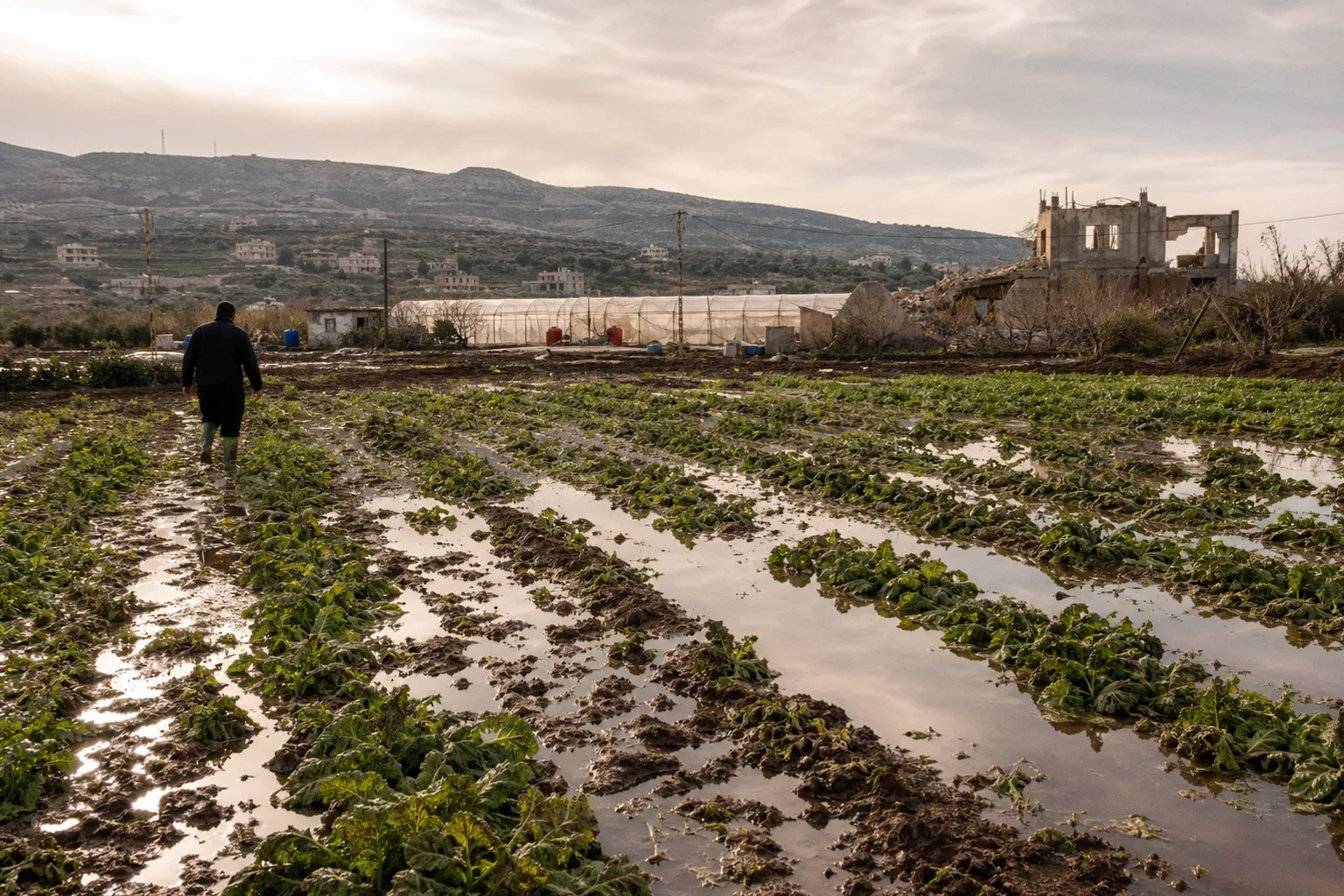
The Food Security Outlook from ReliefWeb lands at a moment our growers are already feeling in the field: localized insecurity across southern Lebanon is keeping farming families from returning to their land and resuming the harvest rhythms that feed our export pipeline. The August 2026 through January 2027 update frames the next six months as a recovery window, one that hinges on whether southern communities can safely get back to work. For our cooperative network, that window is not abstract — it shapes what we can promise buyers, when we can promise it, and how we plan for winter and early-spring shipments.
The agricultural toll in the south
According to data from the Lebanese National Council for Scientific Research (CNRS), roughly 160 square kilometers of land have burned in southern Lebanon since October 2023, with about half of that area being agricultural. Translated into the language our growers speak every day, it is close to 8,000 hectares of crops, orchards, and tended ground.
The destruction came in waves. CNRS director Chadi Abdallah estimates about 85 square kilometers burned during the 2023–2024 war, followed by an additional 75 square kilometers since fighting flared again in 2026. Even after the June agreement between Lebanese and Israeli parties, roughly 350 hectares went up in the weeks that followed.
Lebanese scientists link the burned areas to military activity rather than natural summer fire patterns, and Environment Minister Tamara Elzein has described the scale as ecocide. The fires have also spread beyond the original border band: CNRS notes that blazes tied to military operations now reach deeper into Lebanese territory, into areas Israel presents as a security zone roughly ten kilometers from the border. Field crews report that firefighters cannot always reach the flames in real time because they must coordinate safe passage near Israeli positions. That delay, our growers know, is the difference between a saved grove and ash.
What this means for our cooperative work
For our network, the practical question is not just what happened but what we can responsibly plan around for the August-to-January window. A few angles worth our collective attention:
- Harvest predictability. If southern orchards and field crops remain inaccessible or unharvestable, buyers will start asking harder questions about origin and continuity. We should be ready with current inventories from unaffected regions and honest timelines for southern recovery.
- Documentation and records. Cooperatives with members in affected areas may want to gather dated evidence now — satellite imagery, field photographs, local authority statements — while the season is still fresh. This kind of file is easier to assemble than to reconstruct later, and it supports both cooperative claims and buyer conversations.
- Buyer conversations. Export partners are reading the same headlines. Proactive updates — what we can ship, what we cannot, and why — tend to protect contracts more than silence. A short, clear note to our key accounts now can prevent harder conversations later.
- Shared response. No single cooperative can absorb this alone. The Outlook treats the next six months as a recovery window, not a guaranteed return. Pooling information across our network — which orchards are accessible, which roads are workable, which warehouses are intact — gives every member of our community a stronger picture than any of us could gather alone.
The path forward is the one our growers have taken before: stay close to the land, stay honest with our partners, and keep the conversation moving even when the season is uncertain. If the next update from ReliefWeb brings better news about southern access, we want to be ready to move — and if it does not, we want our cooperatives standing on solid ground, together.