Leveraging Collaborative Robotics to Modernize Lebanese Agricultural Exports
According to the DEFRA Farming Blog, the UK government has just opened applications for Round 2 of its Farming Futures Automation and Robotics competition, offering a share of up to £20 million to…
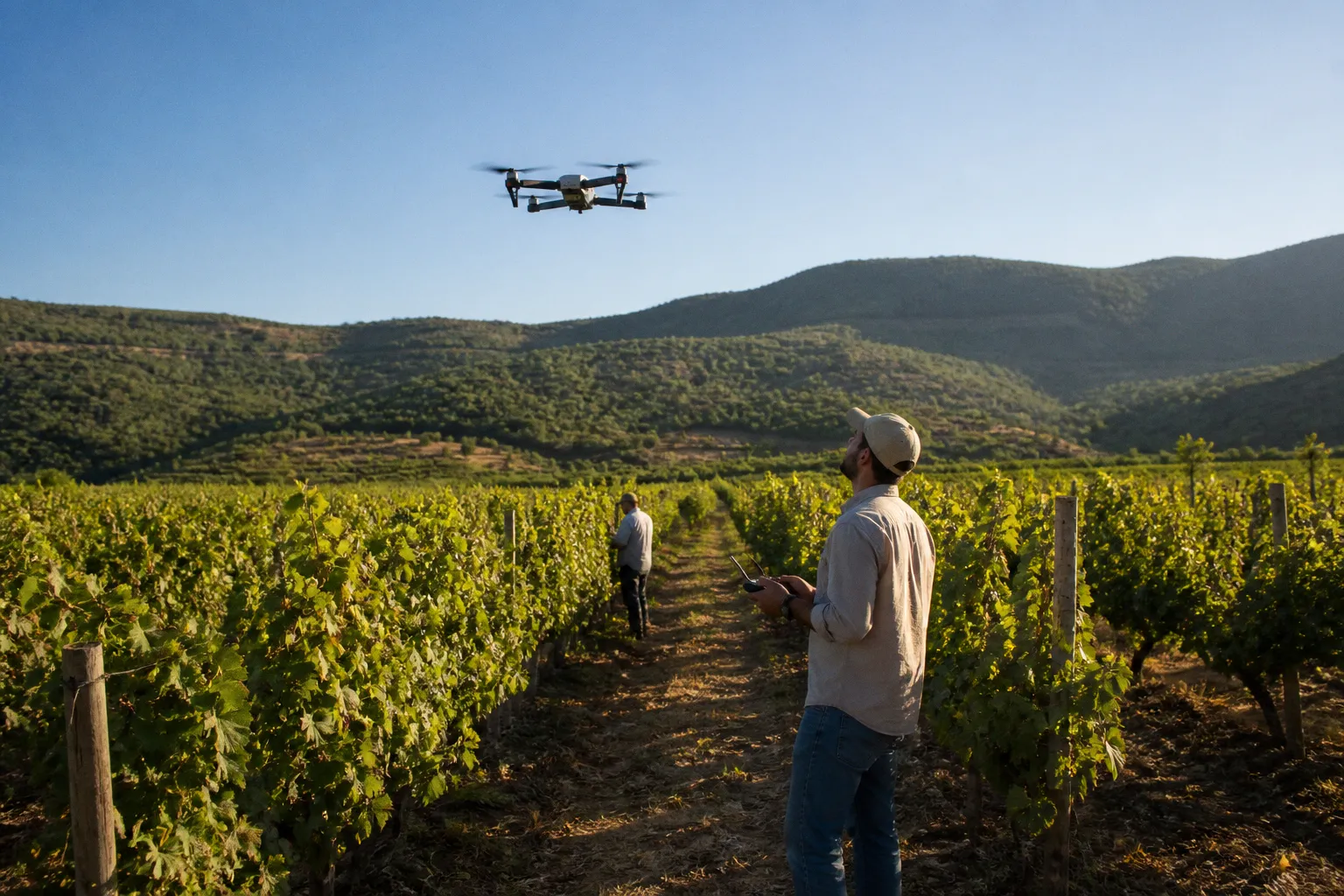
According to the DEFRA Farming Blog, the UK government has just opened applications for Round 2 of its Farming Futures Automation and Robotics competition, offering a share of up to £20 million to collaborative projects that bring advanced technology into fields, orchards and forests across England. For our growers watching from Lebanon, the announcement is less about the pounds and more about the pattern it reveals — and there is real momentum worth tracking on our own doorstep this week.
Why the consortium rule is the real story
The funding pool grabs the headline, but the eligibility clause is where the lesson lives. Projects must be collaborative, with total values sitting between £500,000 and £2.5 million, and must pair researchers, businesses and industry partners around solutions with clear commercial potential and practical on-farm benefits. The 2023 round, as DEFRA notes, awarded £786,220 to Outfield Technologies Ltd and its partners — a vineyard, a robotics firm, a university and an agri-tech centre — to build VISTA, a drone-and-robot mapping platform that delivers high-resolution yield estimates for harvest planning. Better estimates, better prices at the gate, less crisp fruit left to spoil in the row. That is the same discipline our export cooperatives are asked to demonstrate every time a European buyer asks for traceability and consistent blemish-free grading.
The 2026 round also broadens the scope. Ornamental plant propagation, growing and monitoring now sit alongside food horticulture, and forestry projects — tree nursery operations, woodland monitoring and management systems — are eligible. Heavy machinery and harvesting operations remain out of bounds.
Closer to home: the EU-backed support landing in our fields
While the UK opens its doors, a more immediately relevant intervention has just begun on our ground. As reported by UNRIC, the Government of Lebanon, together with WFP and the FAO and with European Union funding, has launched a joint programme to assist conflict-affected farming households, led by the Ministry of Agriculture and aligned with the national Shock-Responsive Safety Net. The initial phase targets 2,000 households with cash-based assistance, drawing on the national Farmers' Registry and conflict-related agricultural registration to reach them. UN figures cited in the announcement place 46,500 hectares of agricultural land among those affected by conflict and displacement, and 1.24 million people across Lebanon in acute food insecurity. For our cooperatives, the practical signal is clear: the Registry is now the targeting backbone for major donor support, so member registration and current conflict-impact data are no longer optional paperwork.
Three moves for our week
- Map your consortium readiness before any call lands. Name the partners you would actually bring to the table — a tech provider, a university lab, a logistics buyer — and write down who owns each relationship.
- Treat field data as your export passport. The throughline from a UK vineyard mapping project to Colombia's recent parametric insurance contracts covering over 14,000 smallholders to Ethiopia's push to formalise farm clusters into agribusinesses is the same: verified, shareable data is what turns a grower collective into a serious counterparty for funders and buyers alike.
- Get every member on the Farmers' Registry. With EU support flowing through the Ministry of Agriculture's targeting systems, unregistered households risk being invisible to the very assistance designed for them.
The lesson running from Lincolnshire to Beirut to Addis Ababa is consistent: collaboration paired with clean data is the muscle our cooperatives need to build, regardless of which country's cheque arrives next. We do not have to wait for a UK invitation to start training it.