International grants for Lebanese co-ops: An application plan
The GATE project — a joint Government of Lebanon–World Bank initiative implemented through UNDP — offers cooperative grants of up to $35,000 per entity. The application period runs from July 15 through July 31, 2026.
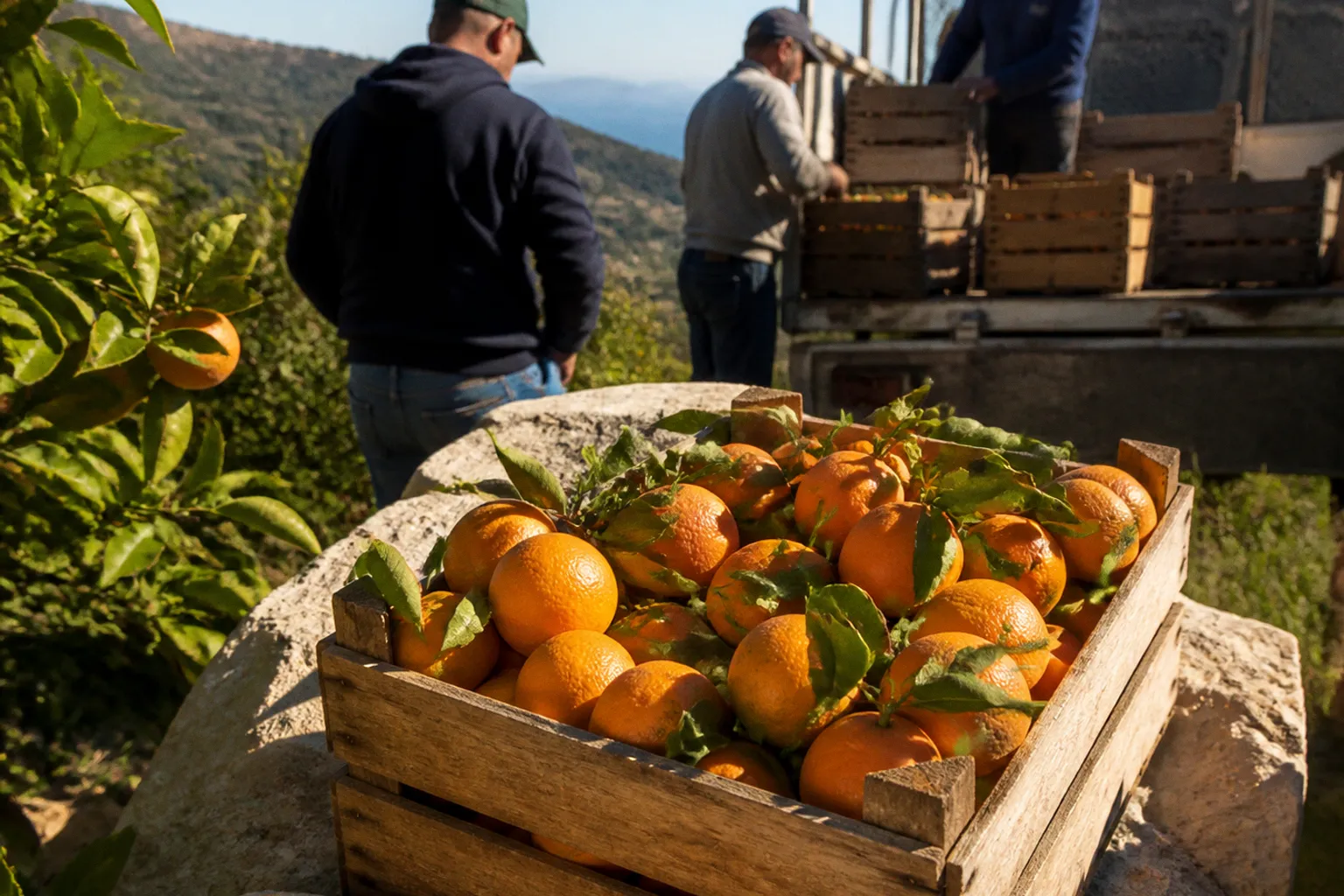
July 15 opens a 16-day window — and most cooperatives will miss it
That is a short window in which to verify registration with the General Directorate of Cooperatives, assemble financial records, obtain supplier quotations, and submit a proposal that can withstand evaluator scrutiny.
For individual smallholder farmers, the route is different. Their grant window runs through August 31, with smaller awards and separate matching requirements. A cooperative that misses its own deadline cannot simply switch into the individual-farmer track as a substitute; the eligibility rules, documentation, and project scale are not the same.
Meanwhile, the war stabilization micro-grant pipeline has already closed its May 22 cycle. The funding landscape for agricultural cooperatives in Lebanon is layered, the deadlines are firm, and the entities that move fastest are usually the ones that prepared before the window opened. If your paperwork is still scattered across committee members, accountants, and suppliers, the first task is not writing a grand proposal. It is establishing what already exists, what is missing, and what can realistically be completed before submission.
Navigating the GATE Project: Eligibility and Financial Scope
The numbers come first because they determine which application strategy makes sense.
GATE — Green Agri-food Transformation for Economic Recovery — operates through two broad grant tracks. A cooperative should identify its track before spending time on technical design or equipment sourcing.
| Applicant type | Maximum grant | Matching contribution | Application deadline |
|---|---|---|---|
| Cooperatives and farmers’ associations | Up to $35,000 | Required; amount varies by activity | July 31, 2026 |
| Individual smallholder farmers | $500–$5,000 | 20%; 10% for women farmers | August 31, 2026 |
For a cooperative, the $35,000 ceiling is only useful if the entity clears the basic eligibility gates. The application has to demonstrate legal standing, financial traceability, and enough operational history for evaluators to understand what the cooperative actually does.
The main requirements include:
- Registration with the General Directorate of Cooperatives. The entity must be legally registered under the Ministry of Agriculture’s GDC framework and have the required Ministry of Finance registration. A cooperative that cannot document its legal status should resolve that issue before building a budget around a grant.
- A balance sheet filed with the GDC. The balance sheet is not an optional attachment. It gives the evaluator a way to assess whether the cooperative has an operating structure, financial records, and the capacity to manage grant funds.
- At least two cumulative years of operation since 2019. GATE requires evidence of operational activity over the relevant period. Conflict-related interruptions may be considered in context, but the cooperative still needs to demonstrate a cumulative history rather than relying only on its date of incorporation.
A newly established cooperative is not automatically excluded from every funding opportunity. It may submit incorporation documents together with a detailed social and economic proposal, but it should expect the application to face closer questions about governance, membership, revenue, and implementation capacity. A new entity cannot compensate for a thin operating history with adjectives such as “innovative” or “high-impact.” It needs a credible explanation of who will manage the project and how the proposed investment connects to actual production.
The individual farmer route
The individual-farmer track has a different gatekeeper: the matching contribution. Applicants generally need to demonstrate a contribution equal to 20% of the requested grant, while women farmers face a reduced 10% threshold. The contribution may involve cash, documented in-kind inputs, or verified labor, depending on the applicable rules and the way the application is assessed.
Registration also needs to be handled carefully. An individual farmer may already be listed in the Ministry of Agriculture’s Farmers Registry, or may be willing to register as part of the application process. The practical question is whether the farmer can demonstrate a clear path to registration and complete the required step within the program’s procedures. “Not registered today” is not the same as “ineligible under all circumstances,” but an applicant should not leave the issue until after submitting the proposal.
That distinction matters for cooperatives as well. A cooperative may help eligible farmers prepare their documents, explain the registration process, and coordinate applications, but it should not present individual farmers as fully compliant unless their status has been confirmed or the required registration commitment has been properly documented.
The cooperatives that secure funding fastest are not always the ones with the most ambitious project ideas. They are the ones whose paperwork was in order before the application window opened.
Eligible GATE activities cover much of the agricultural value chain:
- climate-smart infrastructure;
- irrigation systems and water-efficiency improvements;
- renewable-energy installations;
- processing and grading equipment;
- storage and cold-chain facilities;
- food-safety improvements;
- certification and quality systems;
- packaging and market preparation;
- marketing linked to a viable agricultural activity;
- rehabilitation of war-damaged productive assets.
The range is broad, but broad eligibility does not mean that every expense belongs in the same proposal. A cooperative asking for a cold room, a solar system, a new grading line, staff training, packaging materials, and market-development support must show how those elements work together. Otherwise, the application reads as a shopping list rather than an investment plan.
A stronger proposal chooses one operational problem and follows it through the value chain. For example, if the cooperative loses market value because produce cannot be cooled quickly after harvest, the proposal can connect collection, pre-cooling, storage, grading, and delivery. The evaluator can then see what the grant changes and why each cost is necessary.
Essential Documentation for Ministry of Agriculture Compliance
Documentation is not bureaucratic overhead added after the “real” proposal is finished. It is part of the proposal. A technically impressive project can still fail if the applicant cannot prove that it is a functioning legal entity or cannot show where the grant money will go.
For the Lebanese farming grants process, it helps to organize the file by function rather than by the order in which documents happen to be found.
Registration and legal standing
The core file should include:
- the certificate of registration with the General Directorate of Cooperatives;
- confirmation of Ministry of Finance registration;
- the current balance sheet filed with the GDC;
- incorporation documents and amendments, where relevant;
- the names and roles of authorized signatories;
- meeting minutes or a formal resolution authorizing the application, when required by the cooperative’s governance documents.
The purpose is to establish that the applicant exists, is authorized to act, and can receive and administer funds. If the cooperative has changed its board, address, signatory, or membership structure, those changes should be reconciled across the file. Inconsistencies between the registration certificate, bank account, application form, and authorization letter create avoidable questions.
Operational history
The application should make the cooperative’s activity legible to someone who does not know the organization. Useful evidence can include:
- proof of at least two cumulative years of operation since 2019;
- records of production, collection, processing, or sales;
- previous contracts or invoices;
- minutes showing regular cooperative activity;
- records of member participation;
- documentation of interruptions caused by conflict or damaged infrastructure.
A cooperative does not need to turn its entire archive into an application. It does need to select evidence that demonstrates continuity and relevance. If the proposal concerns a packhouse, show that the cooperative already collects or handles produce at a meaningful level. If it concerns irrigation, show the farms, members, or production areas that the system will serve.
For a cooperative established within the last fiscal year, the incorporation file should be accompanied by a detailed social and economic proposal. That proposal should explain the membership base, governance structure, target commodities, service area, expected users, and the practical reason the entity can implement the proposed investment despite its limited history.
Financial readiness
A cooperative should also prepare:
- a bank account in the cooperative’s name;
- evidence of the required matching contribution;
- a clear explanation of any in-kind contribution or labor contribution;
- supplier quotations in USD for equipment and infrastructure;
- a budget that distinguishes capital costs from operating costs;
- a simple plan for recording expenditure after approval.
Grant funds should be traceable through the institution. Personal accounts, informal cash arrangements, and supplier estimates without a named company or date make an application harder to defend. The goal is not to create an elaborate finance department. It is to show that the cooperative can separate grant spending from ordinary transactions and preserve the evidence.
Technical proposal
The technical file should contain:
- a description of the current agricultural problem;
- the proposed activities and their connection to eligible GATE categories;
- an itemized budget;
- supplier quotations for major purchases;
- an implementation timeline with milestones;
- the expected operational result;
- a maintenance and post-grant management plan.
Precision beats ambition. A well-documented $15,000 cold-storage upgrade with supplier quotations, a maintenance schedule, and a reasoned estimate of reduced spoilage is easier to evaluate than a $35,000 request to “modernize the cooperative.” Evaluators can score what they can verify. They cannot score a promise that has not been translated into activities, costs, and results.
The war stabilization micro-grants track, separate from GATE and capped at $6,000 per entity, has its own documentation requirements. Applications are submitted online by the cooperative president or an authorized representative with a notarized letter of mandate. Budgets and supplier quotations should be in USD, and documents must be provided in Arabic or English. A cooperative should not assume that a file prepared for GATE can be copied into the stabilization application without adjustment.
Strategic Approaches to Stabilization Micro-Grants
The stabilization micro-grants program is designed for recovery rather than broad transformation. If GATE supports new or improved capacity, the stabilization track is aimed at restoring productive capacity that has been damaged or destroyed.
The maximum grant is $6,000 per entity, disbursed in two tranches: 70% on approval and 30% after verified proof of expenditure. That structure changes how the cooperative needs to manage the project. The first payment is not unrestricted working capital. It is the beginning of a documented recovery activity.
The cooperative should decide in advance:
- who will approve purchases;
- who will collect invoices and receipts;
- who will photograph the work or delivered equipment;
- where delivery confirmations will be stored;
- who will prepare the expenditure report;
- how the board will record the use of the funds.
The second tranche depends on satisfactory documentation of the first. If receipts, photographs, delivery confirmations, or other required evidence are missing, delayed, or inconsistent with the approved budget, the release of the balance may be affected. The safest approach is to treat documentation as part of implementation from the first day, not as a reconstruction exercise at the end.
If you are seeking NGO funding for Lebanese agriculture through this channel, match the damage assessment to the eligible cost categories. The application should show what was damaged, how the damage affected production, what the requested item will restore, and how the cost was calculated.
Relevant activities may include:
- Rehabilitation of damaged productive assets: repairs to greenhouses, packhouses, farm buildings, or other structures used for production and handling;
- Replacement of destroyed equipment and infrastructure: irrigation manifolds, cold-room panels, grading tables, pumps, or similar productive components;
- Restoration of storage and processing capacity: repairs that return the cold chain, sorting, packing, or processing operation to service.
Photographs alone are not enough. Pair them with a short written assessment and a costed repair or replacement plan. A photograph of a damaged cold room tells the evaluator what happened; a supplier quotation and implementation timeline explain what the grant will accomplish.
This program does not cover every financial problem a cooperative may face. Working capital, routine operational expenses, and general overhead are different from the repair or replacement of a damaged productive asset. If the main need is cash flow during a revenue gap, a stabilization grant may not be the appropriate instrument. Understanding that boundary early prevents the cooperative from investing application hours in a proposal that does not fit the funding purpose.
For cooperatives that missed the May 22 deadline, preparation remains useful. Keep monitoring UNDP Lebanon’s announcements for a subsequent stabilization round, and prepare the damage file before a new window opens. The file should contain current photographs, a description of the affected asset, ownership or use information where relevant, supplier quotations in USD, and a realistic repair schedule.
Prioritizing Inclusivity: Leveraging Female Membership for Funding
Funding architecture is also cooperative strategy. A cooperative’s membership and leadership structure can affect how its application is positioned, particularly in programs with gender-responsive allocation or evaluation criteria.
Under the German Government-funded wheat value-chain grant program, implemented by UNDP through KfW Development Bank, cooperatives with at least 10% female membership receive priority evaluation. Cooperatives in which women hold named leadership positions — such as president, treasurer, or operations manager — may compete under a separate allocation target. At least 30% of these grants are earmarked for women-led cooperatives.
Those provisions should be treated as requirements to document, not as language to insert into a narrative after the project has been designed. If a cooperative has 50 members and five are women, the 10% threshold is met numerically. But the application still needs a membership record that supports the calculation. If women hold leadership roles, those appointments should appear in meeting minutes, governance records, or other official documents.
Three practical moves are useful before the next application cycle:
- Audit the membership roster. Count female members as a percentage of total membership and make sure the roster is current. If the cooperative is below the relevant threshold, recruitment can be part of a longer-term governance strategy, but it should not be presented as an accomplished fact before it happens.
- Document leadership appointments. A statement that women participate actively is weaker than a formal record showing who holds which role and what responsibilities that role carries.
- Connect inclusion to the project. If women manage post-harvest handling, packaging, bookkeeping, quality control, or marketing, explain how the proposed equipment or training supports those responsibilities.
The strongest gender-responsive proposals do not treat female membership as a decorative paragraph. They show how women participate in decisions, production, processing, and revenue generation. A packaging upgrade, for instance, can be linked to the women’s work in sorting and quality control, provided that this reflects the cooperative’s actual organization.
The GATE individual farmer grants use a similar logic in the matching requirement: women farmers need to provide 10% rather than 20%. Female smallholders who meet the program’s conditions should consider applying under their own names instead of waiting for a cooperative to aggregate their interests. The cooperative can still support them with registration guidance, technical information, supplier contacts, and documentation, but the individual application must accurately reflect the farmer’s own status and contribution.
For rural development grants in Lebanon, a proposal that describes who benefits, who manages the investment, and who controls the resulting income is stronger than one that uses “women’s empowerment” as a general label. Inclusivity becomes persuasive when it is visible in the membership records, the governance documents, the work plan, and the budget.
Technical Requirements for Infrastructure and Equipment Proposals
This is where many Lebanese agricultural cooperatives underperform. They know what is missing — a grading line, a cold room, a drip-irrigation retrofit, a solar installation — but the application has to translate that operational need into a fundable investment.
A technically credible proposal answers five questions:
1. What is failing now?
2. Who is affected?
3. What exactly will be purchased or repaired?
4. How much will it cost?
5. What will the cooperative be able to do after implementation that it cannot do today?
Quantify the current loss
“We need better storage” is a valid starting point for a committee discussion, but it is not yet a persuasive problem statement. The proposal should identify the volume handled, the point at which losses occur, the effect on quality or price, and the number of members or buyers affected.
Useful measures include:
- quantity collected or processed during the relevant season;
- percentage rejected, spoiled, or downgraded;
- average time between harvest and cooling;
- storage capacity before and after the project;
- number of producers served;
- additional markets that become feasible after the investment.
A cooperative does not need to manufacture a sophisticated statistical model. It should use records, invoices, delivery notes, production logs, or a transparent estimate and explain the basis. “The cooperative loses product during the summer because it has no controlled storage” becomes stronger when accompanied by a documented seasonal volume and a description of how the loss is observed.
Cost the equipment at specification level
A line reading “cold room: $12,000” leaves too many questions open. What capacity? What installation work? What electrical requirements? What warranty? What is included in the price?
A more useful budget line identifies the equipment and its functional specification: cold-room installation, pallet capacity, insulation, refrigeration system, delivery, installation, and warranty. The same principle applies to irrigation pumps, solar panels, grading machines, packaging equipment, and processing units.
For major budget lines, obtain supplier quotations that are:
- issued by an identifiable supplier;
- dated and valid for the application period;
- denominated in USD;
- specific about quantity and technical specifications;
- clear about delivery, installation, warranty, and taxes where applicable.
Three quotations can help demonstrate that the budget is grounded in the market rather than selected to reach the grant ceiling. If three quotations are not available for a specialized item, explain why and provide the strongest available documentation instead of filling the file with generic estimates.
Show what happens after the grant
The grant pays for an investment; the cooperative has to operate it afterward. A proposal for a photovoltaic system should address maintenance, replacement of critical components, and how the cooperative will manage the system. A cold-room proposal should identify the operator, cleaning and maintenance procedures, energy needs, and the method used to schedule member deliveries.
Sustainability does not require a glossy five-year business plan. It requires credible answers:
- Who owns or controls the asset?
- Who will be trained to use it?
- Who pays for repairs and routine maintenance?
- How will members access the service?
- What revenue, savings, or productivity improvement supports continued operation?
- What happens if the harvest is smaller than expected?
These details distinguish a cooperative investment from a one-time purchase. They also protect the cooperative from receiving equipment that cannot be used because no one budgeted for electricity, servicing, spare parts, or management.
Build compliance into the design
Phytosanitary compliance can become the invisible wall between a cooperative’s ambition to export and its ability to deliver to a destination market. If the proposal includes export-oriented activity, include the relevant quality and certification costs in the design from the beginning.
GlobalG.A.P. certification, food-safety procedures, traceability, packaging standards, and documentation systems may be more important than a new machine if the cooperative’s problem is access to formal buyers. The proposal should explain which compliance gap the investment addresses and how the cooperative will maintain the system after certification.
Cold-chain investments deserve the same level of detail. A cold room is not simply a box with refrigeration. Its value depends on placement, loading practices, electricity reliability, temperature monitoring, humidity requirements, pre-cooling, and the commodities being stored. The proposal should connect the equipment to the cooperative’s actual crop mix and marketing calendar.
A cooperative that wants to serve higher-value domestic or export channels should also explain the sequence from harvest to dispatch. Produce that enters storage warm, is packed without grading, or leaves without temperature records may not receive the benefit the application claims. Technical design has to follow the product, not just the equipment catalogue.
Your 72-hour protocol
A short deadline requires a sequence, not panic. The following order keeps legal and financial gaps from appearing after the technical proposal is already written.
1. Hours 0–8: Verify registration and authority. Confirm that the GDC and Ministry of Finance records are current. Locate the balance sheet filed with the GDC. Check the cooperative’s authorized signatory and prepare any required board resolution or mandate.
2. Hours 8–24: Assemble the financial file. Confirm that the cooperative has a bank account in its own name. Document the matching contribution and identify whether any part will be provided in cash, in kind, or through verified labor. Request supplier quotations for every major budget line, all in USD.
3. Hours 24–48: Write the technical proposal. Describe the current loss or constraint, quantify it where the records allow, and select activities that clearly fit the published GATE categories. Add a milestone-based timeline and identify who will operate and maintain the investment.
4. Hours 48–60: Cross-check the application. Compare every attachment with the eligibility requirements. Check that names, registration details, bank information, budgets, and signatories match. Confirm that documents are in Arabic or English and that the proposed costs are eligible.
5. Hours 60–72: Submit and preserve evidence. File through the official portal before the deadline. Retain the submission confirmation, timestamp, uploaded file list, and final version of the application. If the portal produces an acknowledgment number, save it in more than one location.
The same discipline applies to stabilization applications, although the purpose and cost categories differ. There, the damage assessment and proof-of-expenditure process deserve particular attention. Photograph the asset before and after the work where appropriate, retain invoices and delivery records, and keep a simple internal register of each purchase made with the first tranche.
A funding window does not evaluate intentions. It evaluates the paperwork, the precision of the budget, and the cooperative’s ability to turn an approved activity into documented work.
Agricultural funding for Lebanese cooperatives can reach up to $35,000 per entity through GATE, while stabilization micro-grants provide a separate route of up to $6,000 for eligible recovery work. Those figures are not an automatic $41,000 entitlement. The tracks have different purposes, deadlines, eligibility conditions, and documentation. A cooperative should treat them as separate applications and confirm that its proposed costs are appropriate for each one.
The practical advantage belongs to the cooperative that makes its project easy to understand. The registration is verified. The balance sheet is available. The individual farmers connected to the project have a clear registration pathway where required. Matching funds are documented. Supplier quotations use consistent specifications and USD pricing. The proposal explains who benefits, what changes, and how the investment will operate after the grant is spent.
That is the real application plan. Not a wish list, and not a race to fill the form at the last minute. It is an operations file built early enough that the cooperative can correct a missing document, replace a weak quotation, or narrow an overambitious project before the deadline closes.