Lessons from Gaza: Why Lebanese Cooperatives Must Strengthen Their Export Resilience
A joint assessment by the UN Food and Agriculture Organization and UNOSAT has found that just three percent of Gaza's cropland remains usable, with the rest lost to access restrictions and damage to…
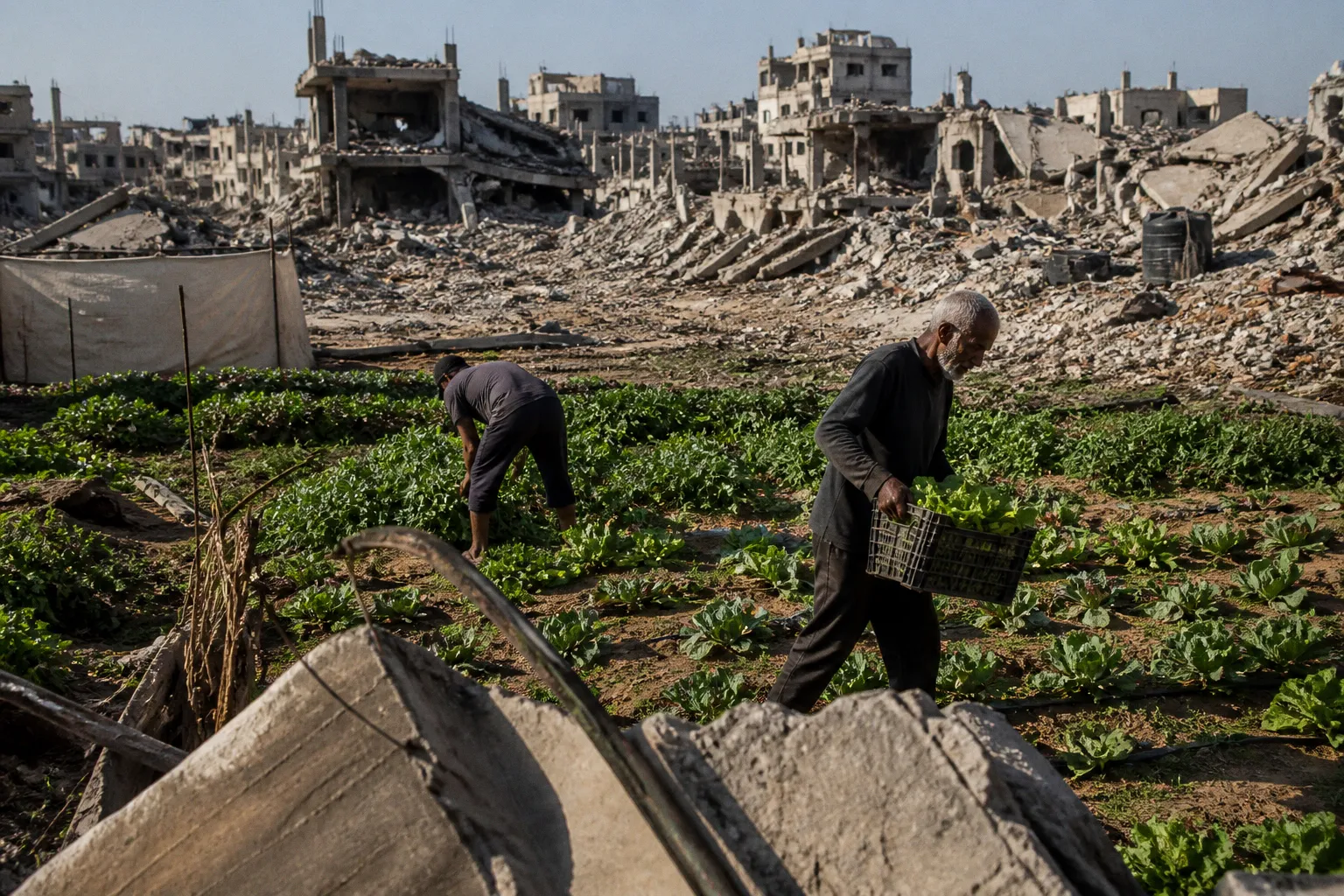
A joint assessment by the UN Food and Agriculture Organization and UNOSAT has found that just three percent of Gaza's cropland remains usable, with the rest lost to access restrictions and damage to agricultural infrastructure, according to UN News. For our growers here in Lebanon, the figure lands like a quiet alarm bell—proof of how swiftly productive ground can vanish when systems collapse around it, and a reason to keep tightening the cooperative frameworks that hold our own export pipeline together.
Why a regional number matters to a Lebanese cooperative
The FAO–UNOSAT analysis points to conflict-driven access constraints, not soil exhaustion or weather stress, as the primary driver of the collapse. That framing should resonate with anyone who has watched a single road closure or border delay ripple through an entire harvest season. Our cooperative model already absorbs shocks—through buffer storage, staggered planting windows, and shared transport logistics—but the Gaza finding underlines just how thin that margin really is. When the land itself is taken out of reach, there is no seed variety or planting schedule that brings it back on its own; recovery runs through negotiation, patient infrastructure rebuild, and the slow work of replanting season after season. The same disciplines we already practice in the Bekaa Valley, in Akkar, and along the southern coastal plain—mapping our fields, documenting yields, coordinating the cold chain end to end—are the ones that will determine how quickly any neighboring agricultural community can stand back up after disruption. We are, in effect, rehearsing for the kind of pressure our neighbors are already living through.
Three priorities for the season ahead
For those of us planning the next export cycle, this report sharpens a few practical commitments worth acting on now. First, widen the geographic base we draw from, so that no single valley becomes our sole point of failure if access routes shift mid-season. Second, keep investing in cold-chain capacity and protective packaging, the quiet insurance that lets crisp apples and tender stone fruit survive detours and longer routes without losing grade or shelf appeal. Third, hold our records tight—variety, grade, harvest date, certification, lot origin—so that when international buyers ask about continuity and traceability, our cooperatives can answer with the same clarity that an FAO satellite assessment brings to any food system. The land beneath our feet is only a fraction of what it could be in many places across the region; what we choose to grow on it, and how we organize to bring it to market together, remains entirely ours to shape.