Lebanon Shifts Agricultural Fire Strategy Toward Proactive Land Management
According to L'Orient Today, the Ministry of Agriculture has now issued a circular asking the country to move its forest fire strategy from reactive firefighting toward proactive land management and clearing operations.
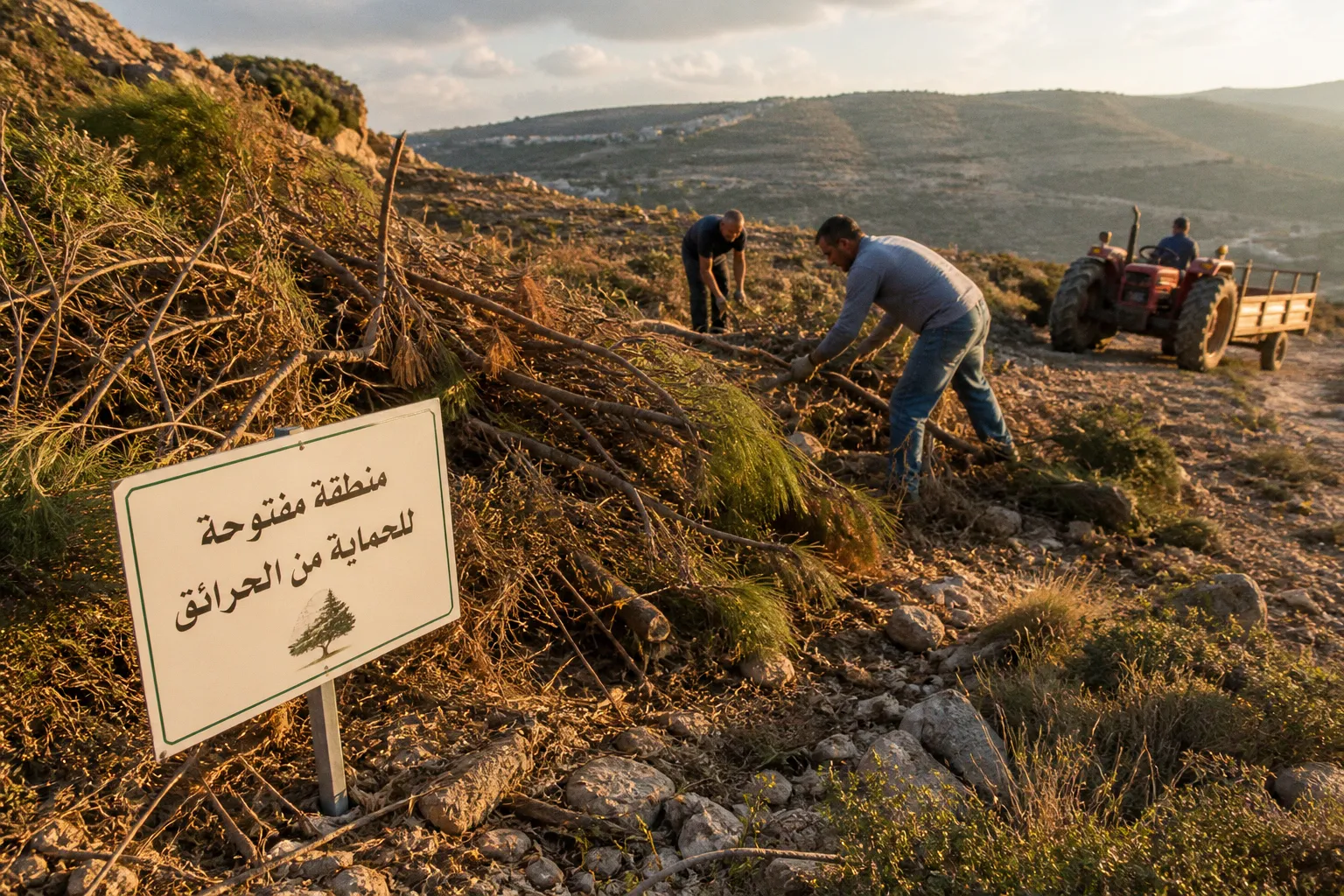
The slopes around Lebanon's orchards don't burn the same way twice. After a fire, the regenerated underbrush is drier, faster, and closer to the fruit trees. According to L'Orient Today, the Ministry of Agriculture has now issued a circular asking the country to move its forest fire strategy from reactive firefighting toward proactive land management and clearing operations.
What "proactive" actually means on a farm
The verbs in the ministry's language matter more than the noun land management. Clearing operations, defensible buffer zones, and managed removal of dry fuel are not new to forestry, but they are still rare in the working calendar of most cooperatives. The shift demands that fuel reduction be scheduled before July, not after the first smoke column is visible from Beirut.
For a cooperative that exports apples, olives, or table grapes, this discipline already exists inside the hygiene and traceability binder. Buyers reading compliance documents want a documented chain of prevention, not a heroic last-minute rescue. Fire preparedness, in that sense, is a missing chapter in the certification file.
Coordination is the operational part
The circular explicitly leans on four actors working together: the ministry, municipalities, local communities, and environmental associations. None of them is a checkbox. The ministry sets the framework; the municipality opens access roads and equipment; the community knows which ridge holds fuel and which spring still runs in September; the association brings ecological context. If that four-way conversation has not happened in your village before the dry season, the circular will not save the orchard.
A few items to put on the calendar
- Walk the perimeter of your orchards and apiaries with a municipal representative before the next dry spell. Mark fuel loads, access points, and the nearest reliable water source.
- Keep a written record — dates, photos, signed lists — of any clearing work done. Export clients auditing fire-buffer zones will ask for proof next season.
- Ask your buyer what their standard requires. Some importers now request a fire-risk statement as part of annual compliance.
The fire season in Lebanon is recurring, not rare. The circular changes how the country talks about it; the certification-friendly work happens in soil, on slopes, and in meetings, before the first spark.