Lebanese permaculture: 5 techniques for dry climates
Lebanese agriculture consumes approximately 60–70% of the country’s annual freshwater diversions. That number changes the operating question. The issue is not whether farms can install more irrigation.
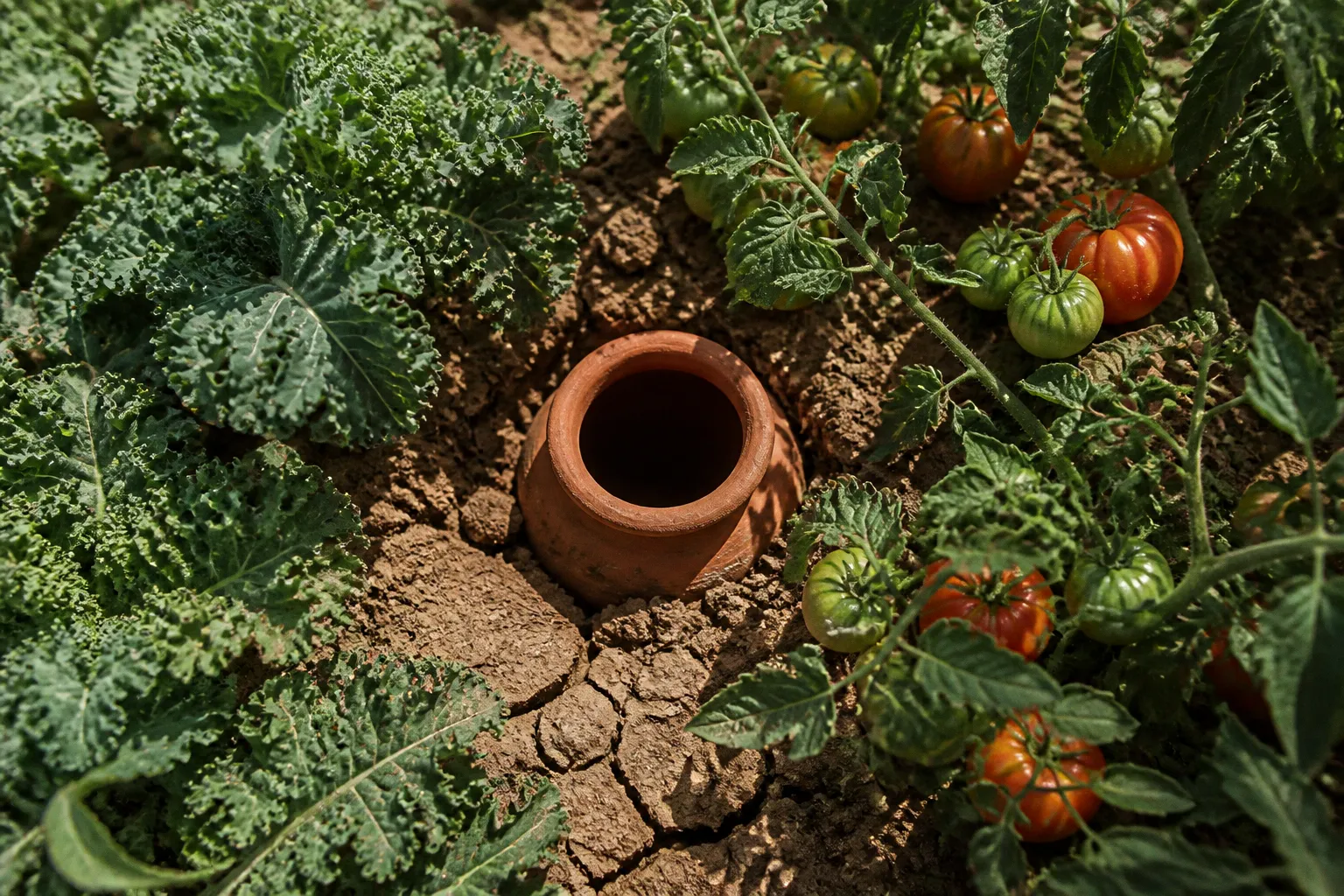
It is whether they can hold water in the landscape long enough to protect crops through a four- to six-month Mediterranean summer dry season.
That is where Lebanese permaculture design for dry climates becomes practical. The strongest systems do not depend on one technology. They combine contour earthworks, greywater reuse, organic mulch, locally adapted seeds, compost, and diverse planting patterns. Each intervention slows water loss, reduces stress on the soil, or gives the farm more than one productive output.
For exporters and cooperatives, this is not a lifestyle layer added after production. It is infrastructure. A farm that loses less moisture, protects its topsoil, and maintains reliable crop diversity is better positioned to meet harvest schedules, consolidate loads, and protect quality before the cold chain begins.
1. Capture water before the slope sends it downhill
Rainfall in Mediterranean dryland regions may arrive in intense seasonal events, followed by long periods with little or no precipitation. On sloping land in the Chouf, South Lebanon, or the Bekaa Valley, the operational failure is predictable: runoff moves quickly across the surface, carrying soil with it, while the root zone dries out before the next rainfall event.
The first dryland permaculture technique is therefore simple: slow the water at contour level.
Contour swales: a passive water-control system
A contour swale is a shallow, level earthwork built across the slope. It is designed to intercept runoff, spread it horizontally, and give it time to infiltrate rather than allowing it to form channels downhill.
The system works best when the layout follows the land instead of forcing a straight-line field pattern.
A practical sequence looks like this:
1. Map the slope and water movement. Identify where runoff concentrates, where soil is already eroding, and where water naturally collects after heavy rain.
2. Set the swale on contour. The trench or shallow basin must follow the same elevation across the slope. A poorly aligned swale can concentrate water instead of distributing it.
3. Place the excavated soil on the downhill side. This creates a low berm that helps hold the captured water in place.
4. Stabilize the berm immediately. Use perennial plants, grasses, shrubs, or other rooted cover suited to the site. Bare earth is an erosion liability.
5. Connect the swale to production zones. Planting should take advantage of the improved moisture conditions without turning the trench into a permanent standing-water basin.
6. Inspect after major rainfall. Repair breaches before the next storm. One failed section can redirect the entire flow path.
The design target is not to eliminate irrigation. That claim would be operationally wrong, especially during prolonged drought. The target is to improve infiltration and reduce the amount of irrigation required to keep the root zone functional.
Greywater and rainwater: separate the streams
Rainwater harvesting and greywater reuse solve different problems and should not be treated as interchangeable.
- Rainwater harvesting captures relatively clean precipitation from roofs, storage surfaces, or managed runoff.
- Greywater reuse redirects selected household or facility wastewater for approved landscape uses after appropriate filtration and treatment.
- Surface runoff management keeps stormwater from stripping soil and nutrients from fields.
On a cooperative farm, the first control point is source separation. Water from sinks, showers, or wash areas should not be mixed casually with blackwater, chemical cleaning streams, or discharge containing unsuitable contaminants. The system needs clear routing, filtration, maintenance access, and a defined end use.
SOILS Permaculture Association Lebanon has produced localized guidance on greywater reuse and rainwater harvesting, including manuals covering water efficiency in dry conditions. Its work includes micro-garden systems established in Bekaa refugee camps and practical material on adapting water systems to local constraints.
UN-Habitat, working with ESCWA, UNICEF, and the Lebanese Agricultural Research Institute, also implemented the Resilient Water Solutions Against Climate Change project in the Bekaa Valley. The approach combined contour swales, greywater reuse, and rainwater harvesting rather than treating them as isolated interventions.
Water harvesting works only when the farm controls the full path: capture, infiltration, storage, filtration, distribution, and maintenance.
If-then protocol for farm water design
Use a strict decision sequence:
- If runoff is cutting channels into the field, then address contour and infiltration before expanding irrigation capacity.
- If roof or facility runoff is available, then route it into a storage or infiltration system rather than allowing it to bypass the productive area.
- If greywater is being considered, then separate sources and define treatment requirements before sending it toward crops.
- If the site has a steep or unstable slope, then start with a small, monitored intervention. Do not scale earthworks across the entire parcel before the first heavy rain tests the design.
The critical metric is not the size of the tank. It is whether the system keeps water available in the root zone during the dry window.
2. Keep moisture in the soil with mulch and compost
Water captured on the surface still disappears if the soil is exposed. High temperatures, wind, repeated cultivation, and bare ground accelerate evaporation. On dry slopes, surface drying also reduces biological activity and leaves topsoil vulnerable to erosion.
Organic mulching is the fastest practical layer of defense.
Mulch is a logistics input, not garden decoration
A mulch system uses crop residues, leaves, straw, prunings, or other suitable organic materials to cover the soil around plants. The material should be clean, appropriate for the crop, and managed so it does not create a pest or disease problem.
The functions are direct:
- Reduce direct solar exposure on the soil surface.
- Slow evaporation from the root zone.
- Limit surface crusting after rainfall.
- Reduce splash erosion.
- Moderate soil temperature.
- Add organic matter as the material breaks down.
- Suppress some competing weeds and reduce repeated disturbance.
On arid slopes in the Chouf and South Lebanon, mulching and composting are used to preserve moisture and improve topsoil structure. The benefit is cumulative. A single mulch application may protect the current crop, but repeated organic inputs improve the soil’s capacity to hold and cycle water over time.
Do not bury fresh, unstable material directly against stems. Keep the crown and stem base clear, and adjust the thickness to the crop, material, and local moisture conditions. Mulch that stays wet against plant tissue can create a different set of problems from the ones it was meant to solve.
Thermal composting closes the nutrient loop
Composting converts organic waste into a more stable soil amendment. Thermal composting requires active management of moisture, oxygen, carbon-rich material, nitrogen-rich material, pile structure, and turning or aeration.
The farm does not need a complicated system, but it does need control.
A functioning compost workflow should answer five questions:
- What materials enter the pile?
- Which materials are excluded?
- How is moisture monitored?
- How is heat and aeration maintained?
- When is the finished compost mature enough for field use?
A cooperative can create separate collection streams for crop residues, packing waste, livestock bedding, and kitchen or market organics. That makes contamination easier to identify and gives the farm a more consistent amendment.
The output is not an instant fertilizer substitute. Mature compost contributes organic matter, supports soil structure, and helps create a more stable growing medium. Its value is strongest when combined with mulch, reduced soil disturbance, and better water placement.
The operational sequence
For a dryland field, the order matters:
1. Correct obvious runoff and erosion routes.
2. Apply mature compost where soil structure needs improvement.
3. Cover the soil with suitable organic mulch.
4. Plant into the protected zone.
5. Replenish the mulch before the surface becomes fully exposed.
6. Track crop performance by soil zone, not just by total field average.
If you mulch without fixing concentrated runoff, water may still remove the material. If you compost without managing the field surface, the soil can continue to lose moisture faster than the amendment can compensate. The system works as a chain.
3. Use baladi seeds to reduce climate and irrigation risk
Seed selection is often treated as a procurement decision. In a dry climate, it is also a risk-control decision.
The Buzuruna Juzuruna experimental farm in the Bekaa Valley has collected more than 300 heirloom baladi seed varieties. These locally adapted lines are associated with dry Lebanese conditions and may perform with lower irrigation demand than some hybrid varieties. That does not mean every heirloom seed will outperform every hybrid in every field. It means the seed portfolio can be designed around local climate exposure instead of relying on a single commercial profile.
Why genetic diversity matters to a cooperative
A cooperative serving fresh markets has to manage several risks at once:
- Heat during flowering or fruit set.
- Irregular rainfall.
- Water restrictions.
- Disease pressure.
- Harvest timing.
- Market specifications.
- Seed availability for the next cycle.
A narrow seed base concentrates those risks. A broader portfolio gives the cooperative more options across microclimates, planting dates, and customer requirements.
Heirloom varieties may also support local food identity and provide traits that are valuable in direct and specialty markets. But they still need field records. Local origin is not a substitute for production data.
Track each variety against:
- Germination and establishment.
- Irrigation frequency.
- Days to harvest.
- Heat response.
- Pest and disease pressure.
- Yield consistency.
- Shelf life and handling tolerance.
- Buyer acceptance.
- Seed-saving performance.
For export-oriented production, one additional issue matters: a variety that performs well in the field may still be unsuitable for long transit if its skin, firmness, or post-harvest behavior does not meet the route’s requirements. The best seed portfolio separates field resilience from market readiness, then measures both.
Build a seed portfolio, not a single winner
A practical cooperative approach is to assign varieties to roles:
| Seed role | What to prioritize | Operational use |
|---|---|---|
| Dryland performer | Heat tolerance, stable establishment, lower irrigation demand | Higher-risk plots and water-limited seasons |
| Market standard | Shape, size, color, and buyer familiarity | Contracted or predictable fresh-produce orders |
| Short-cycle crop | Rapid maturity and flexible planting window | Filling gaps between main harvests |
| Resilience reserve | Strong local adaptation and seed-saving potential | Protecting future seasons and reducing dependence on purchased seed |
| Specialty line | Distinctive flavor, appearance, or local identity | Direct sales, premium channels, and cooperative branding |
The goal is not to replace all commercial varieties. It is to reduce exposure to a single seed and water strategy.
A resilient farm does not ask one variety to solve climate, yield, shelf life, and market demand. It assigns each risk to a portfolio.
If-then seed protocol
- If a variety performs well under local dry conditions but fails the buyer’s size or transit specification, then keep it for local or short-route markets rather than forcing it into an export program.
- If a commercial hybrid delivers the required market profile but needs intensive irrigation, then place it only where water access and margin justify the exposure.
- If a baladi line shows stable performance across multiple seasons, then document and multiply the seed under controlled conditions.
- If a variety is being marketed as climate resilient, then support that description with farm records rather than assumption.
This is how sustainable farming in Lebanon becomes a supply-chain advantage instead of a branding phrase.
4. Replace single-crop exposure with polyculture and food forests
A monocrop field has one harvest window, one main nutrient demand, one pest profile, and one commercial failure mode. Polyculture spreads those risks across species and layers.
The design is particularly relevant on arid Mediterranean slopes, where the farm must use limited water and soil resources without exhausting the site.
Layer the farm according to function
A polyculture system can combine plants with different heights, rooting depths, maturity periods, and ecological roles. The exact mix must be adapted to the site, but the design logic is consistent:
- Tall trees create long-term structure and shade.
- Shrubs occupy intermediate space.
- Herbaceous crops provide seasonal production.
- Ground covers protect exposed soil.
- Root crops use lower layers of the soil profile.
- Nitrogen-fixing or support species can contribute to fertility management.
- Flowering plants can improve habitat diversity for beneficial insects.
This is not a license to pack every available species into one plot. Poorly planned diversity creates competition for water, complicates harvest, and makes pest monitoring harder. The system needs access lanes, pruning protocols, harvest sequencing, and clear crop roles.
Buzuruna Juzuruna developed a 5,000-square-meter food forest in Mejdlaya using chemical-free permaculture principles to support local food security. The project illustrates the core design move: build a productive ecosystem rather than organizing the entire farm around one crop layer.
Design for the harvest route
A food forest intended for local food security can accept different economics from a cooperative supplying distant buyers. If fresh produce is moving through a packhouse, the planting plan must account for:
- Harvest labor by crop and date.
- Crate and pallet compatibility.
- Field heat removal.
- Packhouse intake capacity.
- Product segregation.
- Phytosanitary documentation.
- Transit windows.
- Rejection risk at destination.
Do not plant a diverse system without mapping its post-harvest flow. Diversity at the field edge can become disorder at the loading dock.
A useful layout separates crops by operational behavior:
1. High-frequency harvest crops near access paths and wash stations.
2. Long-cycle tree and shrub crops in stable structural zones.
3. Fragile products close to shade and rapid cooling capacity.
4. Bulkier products where crates and vehicles can move without damaging the soil.
5. Seed and nursery areas away from contamination and uncontrolled traffic.
The sustainable design is the one that survives contact with labor, equipment, and shipping schedules.
Manage competition for water
Polyculture does not automatically reduce irrigation. It can increase total demand if the species mix is poorly matched to the site.
Use a simple decision rule:
- If two crops occupy the same root zone and peak water demand at the same time, then reduce competition through spacing, pruning, staggered planting, or substitution.
- If a tree layer shades a crop that requires full sun, then redesign the canopy before yield declines.
- If ground cover is competing with young trees for limited moisture, then manage the cover zone rather than assuming all living material is beneficial.
- If a diverse planting system is too complex to harvest or inspect, then simplify the design before expanding it.
A food forest is a production system. It still requires crop maps, irrigation zones, access plans, pest surveillance, and harvest records.
5. Scale through cooperative infrastructure, not isolated plots
The strongest sustainable practices often fail at the scaling stage. One farmer can build a swale, save seed, or produce compost. A cooperative has to coordinate standards, labor, records, packhouse procedures, and buyer expectations across multiple holdings.
That is where organizations such as SOILS Permaculture Association Lebanon and Buzuruna Juzuruna offer useful lessons. SOILS was founded in 2014 in Saidoun and has developed localized manuals on greywater reuse, rainwater harvesting, thermal composting, and micro-gardens. Its work shows the value of adapting methods to Lebanese conditions rather than importing generic dryland templates.
Buzuruna Juzuruna’s seed collection and food forest work show a different scaling mechanism: build local biological assets that remain useful across seasons. More than 300 heirloom varieties are not just a conservation collection. They can become a testing library for cooperatives deciding which crops and traits fit specific elevations, soils, irrigation limits, and markets.
Standardize the method, not every field
Cooperatives should create a common operating protocol while allowing site-level decisions.
Standardize:
- Seed documentation.
- Compost maturity requirements.
- Greywater source separation.
- Irrigation records.
- Pesticide and input logs.
- Harvest hygiene.
- Crate and lot identification.
- Phytosanitary documentation.
- Cold-chain handoff.
- Buyer specification checks.
Allow local variation in:
- Swale spacing.
- Mulch material.
- Crop combinations.
- Planting dates.
- Tree selection.
- Irrigation frequency.
- Slope stabilization methods.
The reason is simple: a Bekaa Valley plot, a Chouf slope, and a South Lebanon farm do not share identical soil, rainfall, elevation, or logistics. A rigid template will either fail in the field or force growers to ignore it.
Create a field-to-export control loop
A cooperative’s sustainability system should feed directly into its logistics system.
At field level, record:
- Water source and irrigation schedule.
- Crop and seed line.
- Input application.
- Compost and mulch use.
- Pest-management action.
- Harvest date.
- Lot identity.
At packhouse level, connect those records to:
- Receiving temperature.
- Sorting and grading.
- Pack date.
- Rejection reason.
- Storage time.
- Dispatch date.
- Container or truck reference.
- Destination and transit window.
This creates traceability without pretending that every sustainable method automatically produces export-grade quality. The data tells you which practices protect moisture and soil, which ones support yield stability, and which ones create new handling constraints.
If a cooperative is exporting fresh produce, the sustainability claim must remain compatible with food safety, phytosanitary rules, residue requirements, and cold-chain discipline. A crop cannot be called resilient if it arrives late, overheated, poorly documented, or outside specification.
A practical deployment sequence for Lebanese farms
Do not install all five techniques at once. Start with the constraint that is currently costing the farm the most.
Phase one: diagnose the water path
Map runoff, slope, exposed soil, irrigation points, storage capacity, and the summer stress zones. Identify where water is lost before buying equipment.
Phase two: protect the soil
Begin with mulch and mature compost in the most vulnerable production areas. Record soil condition, crop response, and replenishment requirements.
Phase three: test water-harvesting infrastructure
Install a limited contour-swale or rainwater-harvesting section. Monitor it through a rainfall event and repair failures before expanding.
Phase four: introduce seed diversity
Test a controlled set of baladi and commercial varieties under the same record-keeping system. Compare irrigation demand, harvest timing, quality, and market fit.
Phase five: add polyculture deliberately
Start with one manageable block. Design access, pruning, harvesting, irrigation, and packhouse handling before adding more species or layers.
Phase six: connect the data to cooperative sales
Use lot records and buyer feedback to determine which sustainable practices support the best combination of field performance and commercial reliability.
The correct scale is the scale you can maintain. A neglected swale, contaminated greywater line, unstable compost system, or undocumented seed lot is not resilience. It is another failure point.
Mandatory compliance check before scaling
Before a cooperative expands a dryland permaculture program, confirm that:
- Contour works have been inspected after significant rainfall.
- Greywater sources are separated from unsuitable wastewater streams.
- Reused water has a defined treatment and application protocol.
- Compost inputs are controlled and the finished material is mature.
- Mulch is free from known contamination and kept clear of plant crowns.
- Seed lots are labeled by variety, origin, season, and performance history.
- Polyculture blocks have mapped access and harvest routes.
- Irrigation zones reflect the water demand of each crop layer.
- Input records support residue and food-safety requirements.
- Harvest lots remain traceable through packing and dispatch.
- Phytosanitary documentation is aligned with the destination market.
- Cold-chain capacity matches the crop’s field-to-market transit window.
- Buyers understand the product profile before the cooperative commits acreage.
- No sustainability claim exceeds the evidence recorded on the farm.
Lebanese permaculture design for dry climates works when it is treated as a coordinated operating system. Contour swales manage movement. Greywater and rainwater systems extend supply. Mulch and compost protect the soil. Heirloom seeds reduce dependence on a narrow genetic base. Polyculture spreads ecological and commercial risk.
The objective is not to eliminate irrigation, machinery, standards, or export controls. It is to make the farm less exposed before those systems are called upon. In Lebanon’s dry conditions, that is the practical definition of resilience: capture more water, lose less soil, preserve more options, and move a consistent product through the supply chain.