Bridging the Gap Between Lebanese University Research and Agricultural Cooperatives
According to Lebanon’s National News Agency, the president of Lebanese University and the Agriculture Minister discussed research cooperation.
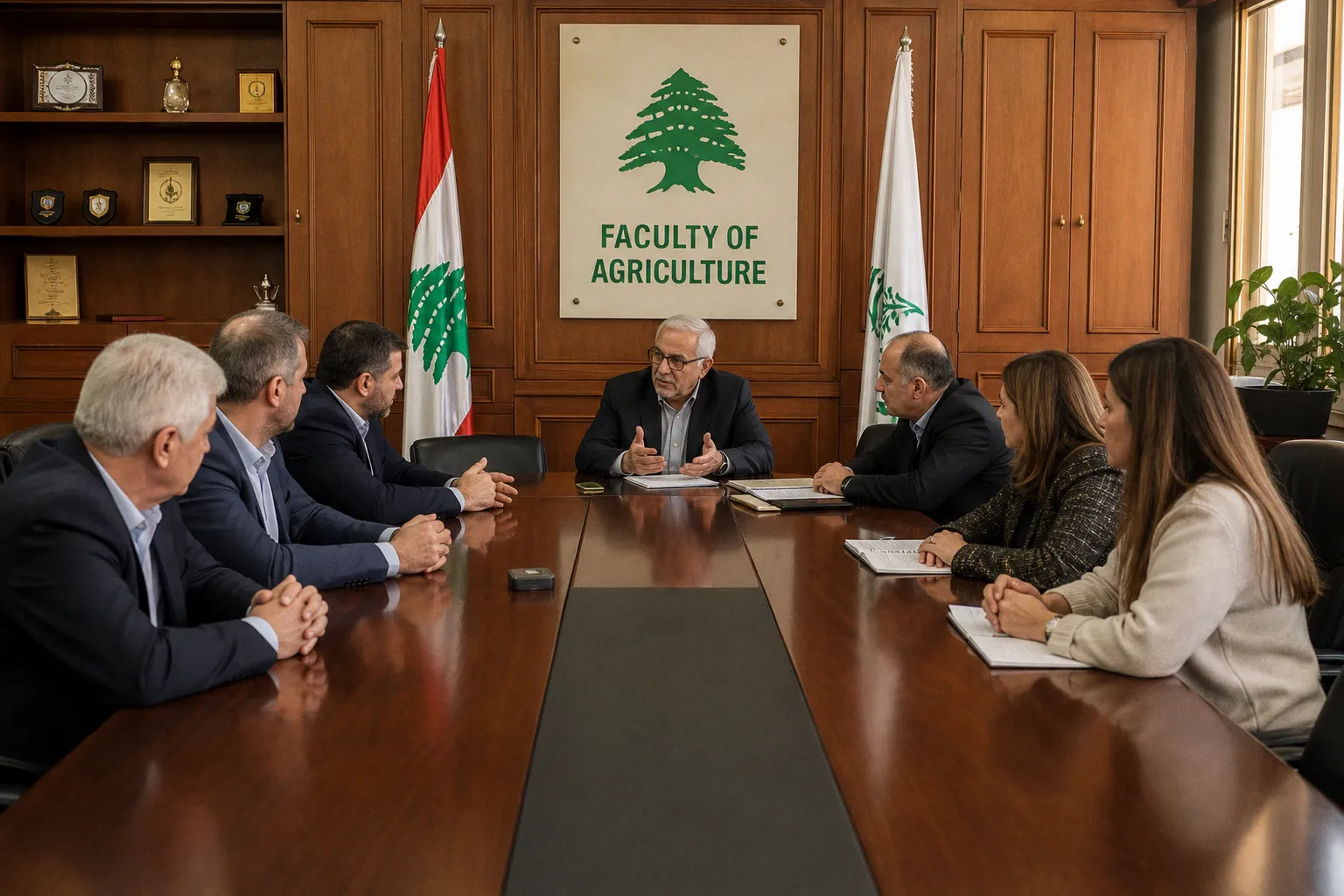
The announcement is brief, but it points to a familiar hurdle for our agricultural cooperatives: good harvests need dependable knowledge, testing, and shared systems before they can move confidently toward demanding markets. For growers and producer groups, the important question now is whether this discussion develops into practical support that can be used in the field.
From a meeting to something growers can use
Research cooperation matters when it helps our cooperatives solve ordinary, costly problems: maintaining a crisp and consistent harvest, reducing blemishes, improving storage, or meeting the documentation expected by buyers. At this stage, the source confirms the discussion but does not provide details about specific projects, crops, laboratories, funding, or timelines.
That makes the next step one of careful follow-up rather than assumption. Cooperative leaders should watch for announcements that identify:
- the research areas and crops involved;
- which university departments or agricultural bodies will participate;
- whether growers will receive field guidance, testing services, or training;
- how results will reach smaller cooperatives, not only large commercial operators;
- and whether any work will address export quality, traceability, or post-harvest handling.
A research partnership becomes valuable to our communities when its findings can be translated into a shared calendar, a simple quality protocol, or a repeatable system that several growers can afford to follow together.
Why food safety belongs in the same conversation
A separate report from SANA describes discussions between Syria’s Agriculture Minister and EMBS on food safety and rural development. The report mentions work around food-supply chains, agricultural-product safety, regulation of pesticides, fertilizers, and veterinary medicines, as well as monitoring and laboratory analysis. It also highlights training, packaging, marketing, rural products, and support for rural women.
These are Syrian discussions, not confirmed details of the Lebanese University meeting. Still, they show the kind of practical questions that make research cooperation meaningful for agricultural communities across the region. A cooperative cannot improve market access through production research alone if it lacks a clear way to verify quality, manage inputs, package products, and document what happens between the field and the buyer.
For Lebanese producer groups, the useful benchmark is therefore straightforward: will cooperation produce tools that can be shared across farms and harvests? A common testing arrangement, accessible training, and guidance that helps members handle produce consistently would be more valuable than a partnership that remains only at the level of formal meetings.
What our cooperatives should track next
Until further details are published, cooperatives can prepare their own questions and records. Note the quality problems that appear repeatedly during sorting, the points where produce loses value, and the information buyers request but growers cannot easily provide. These observations give researchers a grounded starting point and help cooperative representatives ask for solutions that fit real working conditions.
The announcement is a starting signal, not yet a completed programme. Its promise will be measured by whether university knowledge reaches our growers in practical form—clearer standards, stronger food-safety habits, better handling, and a more reliable path from a healthy Lebanese harvest to a buyer who can trust it.