Lessons from Indonesia: Scaling Cooperative Agribusiness Through Professional Management
Across the ocean, Indonesia's Ministry of Cooperatives and SMEs has rolled out a new internship program designed to immerse 90 cooperative administrators in the rhythms of integrated farming and…
Growing Our Growers: What Indonesia's Cooperative Internship Could Mean for Us
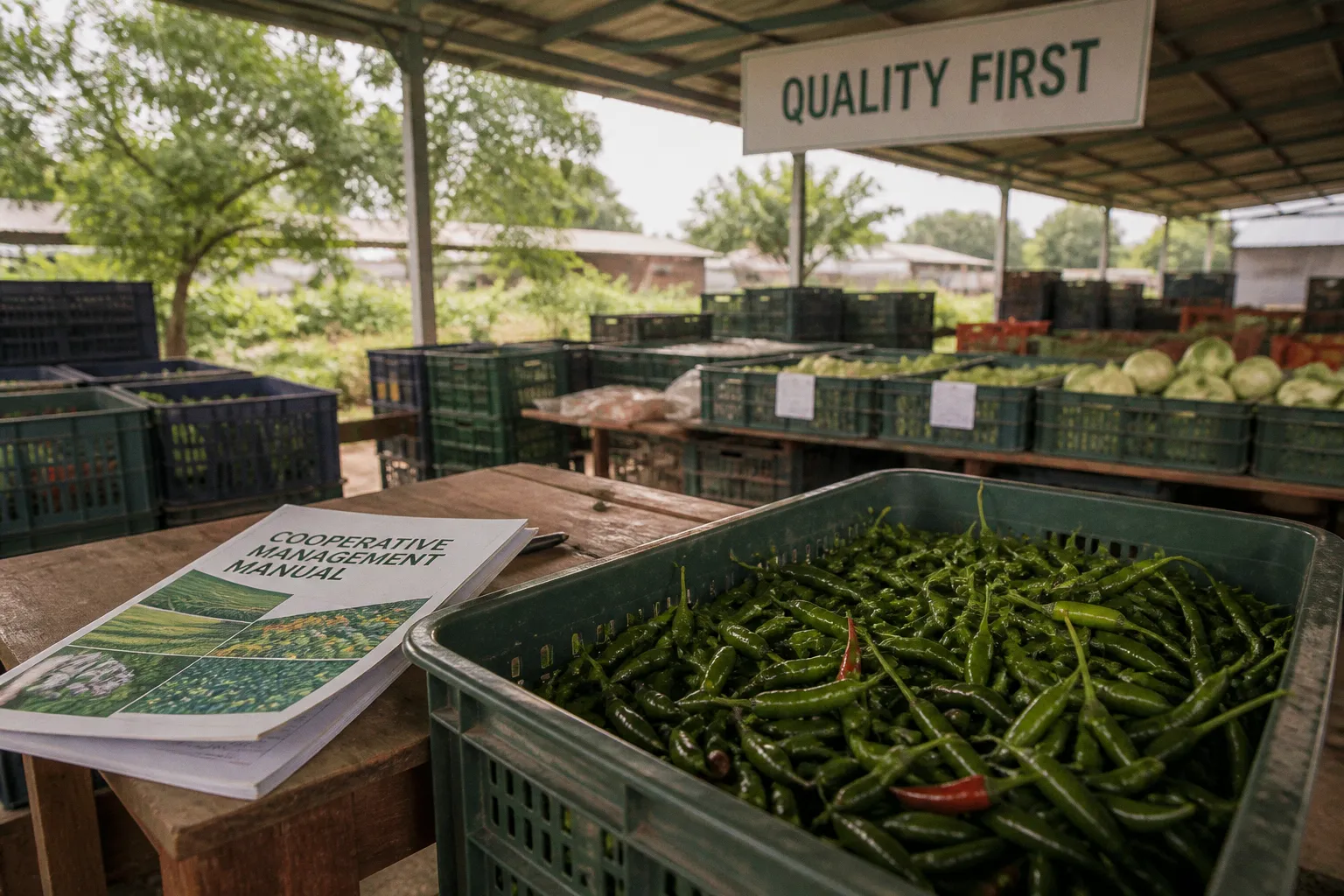
Across the ocean, Indonesia's Ministry of Cooperatives and SMEs has rolled out a new internship program designed to immerse 90 cooperative administrators in the rhythms of integrated farming and agribusiness management, as reported by Antara News. The curriculum centers on three pillars our own boards know by heart: cultivation, entrepreneurship, and harvest management. While the geography differs from our Lebanese valleys, the challenge is strikingly familiar — how do we turn a group of talented farmers into a coordinated enterprise that holds its weight in competitive export markets?
For our cooperatives, the timing could not be better. Many of us have felt the squeeze of larger buyers expecting consistent sizing, reliable shelf-life, and documentation that reads like a customs handbook. A program that invests in training managers — not just field workers — signals something worth noticing: the gap between growing beautiful produce and moving it profitably often lives in the middle layer, the people who translate harvest schedules into shipping calendars.
Where the Indonesian Model Points Us
The Indonesian approach zeroes in on what cooperative leaders actually do day to day. Entrepreneurship is not a buzzword here; it means understanding margins, negotiating with packhouses, and knowing when to hold stock for a better price window rather than rushing it to the first buyer who calls. Integrated farming systems, meanwhile, ask our managers to see the orchard, the cooler, and the container as one continuous chain — the same way our best-run cooperatives already view a blemish-free apple moving from hand to carton to refrigerated truck.
For those of us tracking global agribusiness trends, the takeaway is less about replicating the program and more about recognizing what it confirms. When a national ministry invests in cooperative manager training as infrastructure, it treats collective enterprise as something worth building deliberately. Our associations can borrow that posture by carving out structured learning time for board members — whether through peer exchanges with other Mediterranean producer groups or short residencies with packing and logistics partners.
What Our Cooperatives Can Practice This Season
We do not need a government-funded internship to begin strengthening the link between our fields and our freight. A few conversations our grower-leaders can initiate this month:
- Map one season's bottlenecks — where did crop quality dip, where did pricing slip, where did paperwork cause a shipment delay? Treat that map as the syllabus.
- Pair younger administrators with experienced exporters for two harvest cycles. The mentorship mirrors what Indonesia's cohort will experience, scaled to our own rosters.
- Build one shared spreadsheet that tracks variety, grade, pack date, and destination for every lot. The discipline of integrated systems is less about technology than about consistent habits.
The harvest does not wait for perfect programs. But when our boards treat their own development with the same seriousness Indonesia is investing in its cooperative managers, our apples, citrus, and stone fruit move into global markets with the confidence of a well-coordinated team rather than a loose collection of farms. That is the standard we are working toward — together, one crisp fruit and one trained manager at a time.