Supporting Lebanese Farming Cooperatives Through Economic and Environmental Crisis
The ICRC is now working directly with those households to restore productive assets and rebuild the agricultural water infrastructure that keeps our orchards and fields alive.
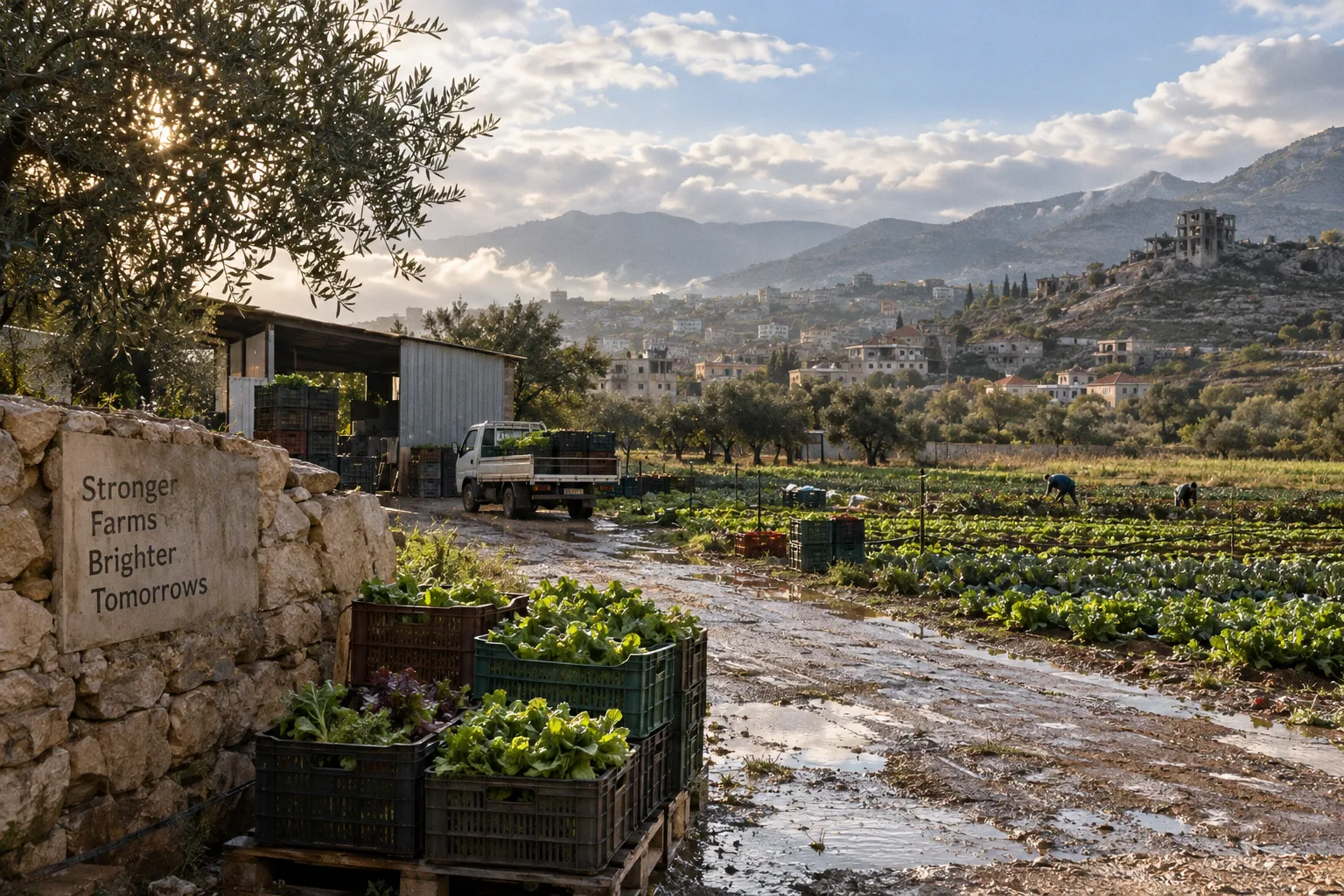
We know the weight our farming families carry right now. According to the International Committee of the Red Cross, humanitarian needs across Lebanon remain acute, and the latest livelihood assessments paint a stark picture — an estimated 72% of farmers in conflict-affected communities have seen their incomes shrink. The ICRC is now working directly with those households to restore productive assets and rebuild the agricultural water infrastructure that keeps our orchards and fields alive. For our cooperatives, this moment is both a warning and an opening.
What the ICRC assessment tells us
The ICRC's livelihoods review zeroes in on the practical backbone of farming life — irrigation systems, household tools, storage, and the small machinery that turns a harvest into a paycheck. When nearly three-quarters of growers in affected areas report income loss, the ripple reaches our packing houses, our collection points, and our export calendars. If your cooperative serves members in those regions, this is the moment to document what is working, what is broken, and what is needed — not as a formality, but as a shared map we can carry into conversations with humanitarian partners and buyers who want to stand alongside us.
The soil question we cannot skip
Separately, a new scientific study reported by L'Orient Today has mapped soil and groundwater vulnerability to wartime munitions and explosive residues across southern Lebanon. For growers preparing to return to or work near previously contaminated lands, that risk mapping is essential reading. Before any cooperative commits a harvest to an export grade, we owe it to our members — and to the families who will eat that produce — to know what the land is telling us. If your area falls inside the mapped risk zones, build soil and water testing into your pre-season plan, and flag it openly in your buyer conversations. Clean provenance is quietly becoming part of the price.
What to track in the coming weeks
Watch for the ICRC's region-specific findings as the assessments roll out, and for any cooperative-level engagement pathways the program opens. Pair that with the soil study's full methodology once it is publicly available — the more precisely we understand the contamination footprint, the more confidently we can protect both our growers and our export reputation. And keep the conversation alive inside your cooperative: which members need support this season, which plots need testing, which buyers are willing to wait for a verified-safe harvest. Our strength has always been in showing up for each other — this is one more season where that showing up matters.