New UAE-Lebanon Trade Agreements Open Export Pathways for Local Growers
When a cooperative's harvest outgrows its usual buyers, the next step often feels larger than the season's yield can carry.
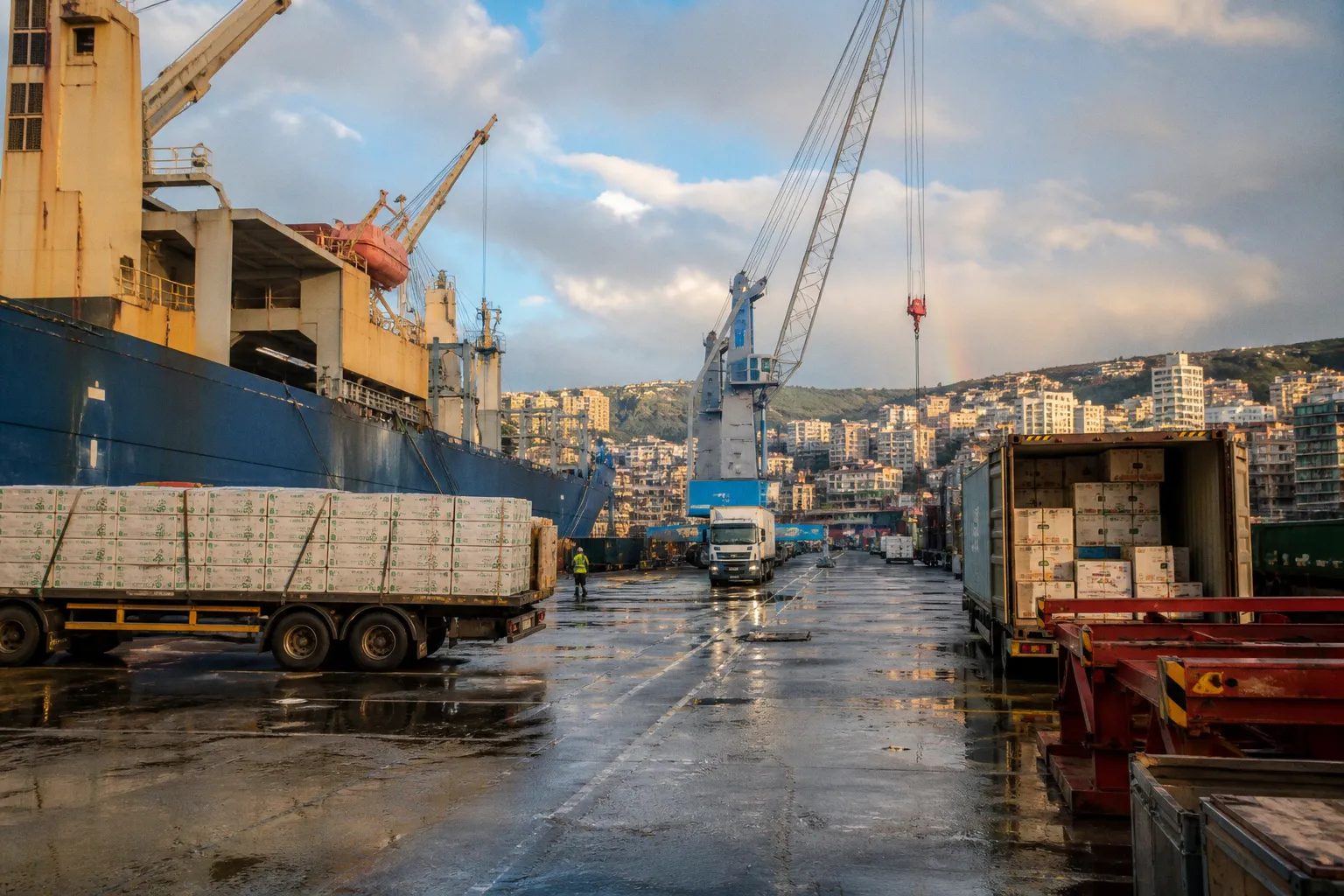
That is the crossroads our growers know well, and it is the same space the UAE-Lebanon Business Forum in Beirut tried to widen this week, as four memoranda of understanding opened channels for food security research, greenhouse technology and a standing business council between the two countries.
What the Forum Actually Set in Motion
The gathering at Beirut's Seaside Arena brought an eighty-member UAE delegation led by Dr. Thani bin Ahmed Al Zeyoudi, Minister of Foreign Trade, into the same room as Lebanese counterparts including Dr. Nizar Hani, Minister of Agriculture, alongside the Ministers of Economy and Trade, Public Works and Transport, Industry, and Technology and AI. On the sidelines, four MoUs were signed.
Two of those agreements land closest to our fields and packing houses. Elite Agro Holding and the American University of Beirut committed to collaborate on food security, arid agriculture research and agritech innovation. A second MoU paired Elite Agro with Georges Daccache & Sons to cooperate across the full greenhouse lifecycle — design, supply, installation, commissioning, maintenance and joint development. A foundational MoU also established the Joint UAE-Lebanon Business Council, and the Abu Dhabi Chamber signed a cooperation agreement with the Beirut and Mount Lebanon Chamber of Commerce, Industry and Agriculture to broaden investment and business opportunities between the two parties.
Where Our Cooperatives Fit
We have watched Lebanese growers wrestle with the same puzzle for years: how to scale up to blemish-free, export-grade volumes without losing the rhythm of smallholder farming. Greenhouse partnerships like the Elite Agro–Daccache agreement sketch a way through — shared infrastructure, shared maintenance know-how, and a partner who already understands how to move produce across borders. The Beirut and Mount Lebanon Chamber tie-up, meanwhile, gives our cooperatives a more formal doorway into investment conversations that previously felt closed.
According to figures cited at the forum, UAE–Lebanon bilateral non-oil trade reached $4.2 billion in 2025, up nearly 36 per cent year on year — a reminder that appetite on the Emirati side is real and growing.
What to Watch Next
The Joint UAE-Lebanon Business Council held its inaugural meeting at the close of the forum, with members outlining plans to facilitate investment, organize sector-focused events and remove trade barriers. For us, the practical question is whether the agritech and greenhouse partnerships will translate into pilots our growers can actually join — not just press conferences in the capital. We will be watching for working groups, published timelines, and the first cooperative-level invitations. That is where the collective work begins.