Lebanon’s New Fisheries Law: A Strategic Shift for Coastal Aquaculture and Fishing
Daily Beirut reports that Minister of Agriculture Nizar Hani convened a working meeting at the Marine Sciences and Technology Institute (MARSA TI) near Batroun port, drawing together fishermen…
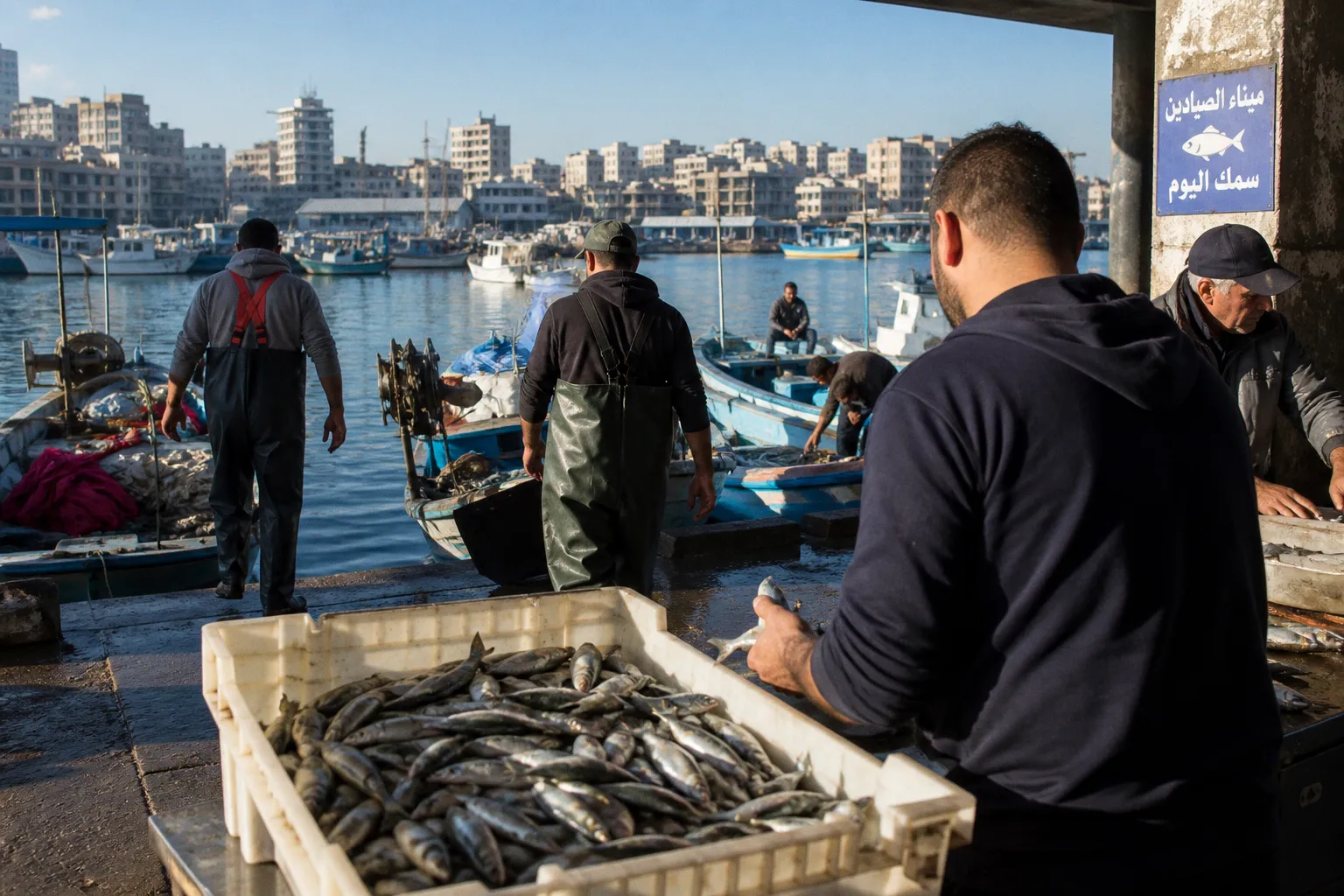
Daily Beirut reports that Minister of Agriculture Nizar Hani convened a working meeting at the Marine Sciences and Technology Institute (MARSA TI) near Batroun port, drawing together fishermen, cooperative leaders, and senior ministry officials to address the state of Lebanon's marine fishing sector. The room brought together an unusually broad coalition—MP Gebran Bassil, the General Director of Land and Maritime Transport Colonel Mazen Bseiso, General Directors Louis Lohoud and Shadi Mahna from the Ministry of Agriculture, and Etienne Assal, president of the Batroun Fishermen Cooperative—alongside Mayor Marcellino Harik and dozens of working fishermen. For our coastal cooperatives, the signal is unmistakable: the long-stalled Fisheries Law is being treated as a turning point, not a formality.
A Shared Table at the Harbor
MARSA TI director Stefan Assal opened with a frank assessment of three pressing challenges: fragmented authority across multiple administrative bodies, the absence of a legal framework protecting the profession, and inadequate standardized training. He told attendees that "the sea does not recognize administrative boundaries between ministries, and the fisherman leaving Batroun harbor at dawn asks only who protects him and ensures his dignity of life." Assal, who once led a fishermen's cooperative himself before founding MARSA TI, drew on nine years inside the cooperative movement to argue that genuine reform rests on three pillars—modern legislation, organized professional training, and serious institutional cooperation.
What the Numbers Tell Us
According to the latest port authorities' statistics cited at the meeting, Lebanon currently has 3,715 fishing vessels operated by roughly 6,197 fishermen across 28 officially recognized ports. While the Fisheries Law requires every professional fisherman to hold a personal card and an annual license, it does not currently mandate any maritime training or competence assessment for obtaining or renewing that license. Assal pointed to collision avoidance rules, first aid, maritime communications, and environmental protection as fundamental—not optional—skills for anyone working at sea. That gap is exactly what the modernized framework will need to close.
Where Our Cooperatives Come In
This is where our collective effort matters most. A licensing framework with competency checks will only succeed if cooperatives help shape the training pathways, accredit the instructors, and walk their members through the transition. Etienne Assal's seat at the table—alongside ministry leadership—shows what organized representation can unlock when a cooperative shows up prepared. For cooperatives in other ports, the moment to engage is now: shaping what those training modules look like, ensuring the licensing process respects seasonal work patterns, and making sure small-scale fishermen are not priced out of a profession written without their input.
The meeting closed on a forward note: real reform will need to weave together legislation, training, and cooperation between institutions. For our cooperatives, the practical work begins—mapping shared responsibilities, pooling resources, and showing up to the next conversation as one unified sector.